A vibrating screen should match the products you need to separate, the material entering the machine and the installation space available. Comparing screen dimensions or motor power alone will not establish whether a machine suits your plant.
For equipment buyers, the practical questions are straightforward: How many decks are needed? Which screen media should be fitted? Can the machine connect to the existing conveyors? How easily can worn parts be replaced?
This guide focuses on the machine components and configuration details to check before requesting a vibrating screen quotation.
Define Your Product Sizes Before Choosing a Screen Model
Start with the size fractions your plant needs to produce.
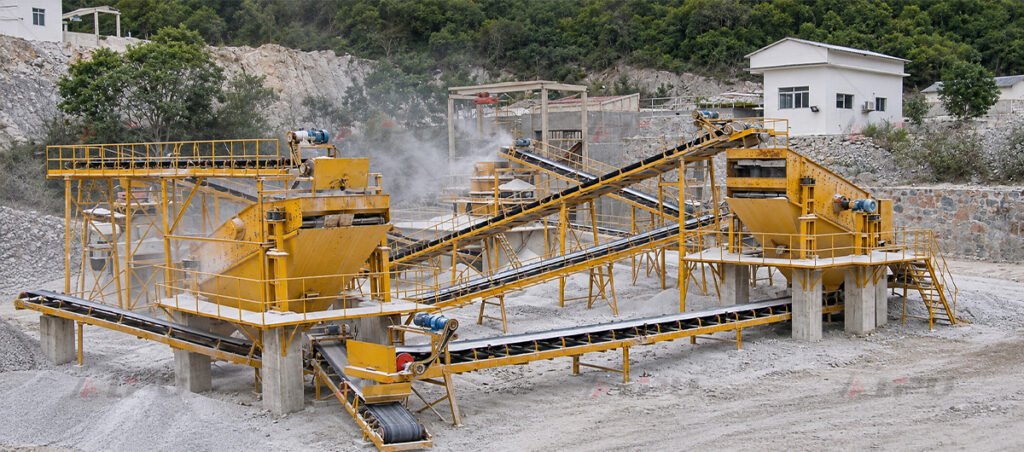
Vibrating screens integrated into a quarry processing plant
A screen used to remove oversized material has a different duty from one producing several saleable aggregate grades. A machine screening dry crushed stone may also need a different arrangement from one handling wet, sticky feed.
Prepare the following information:
Required product sizes and acceptable misplaced material.
Normal and maximum feed rate.
Maximum feed size and particle-size distribution.
Moisture variation and clay content.
Material abrasiveness and bulk density.
Dry screening or screening with added water.
Describe each product outlet, including any oversize that must return to a crusher. This gives the supplier a clear starting point for selecting the decks, media and discharge arrangement.
If you are replacing an existing machine, include product sampling results where available. Explain whether the current problem is insufficient output, poor separation, rapid wear or difficult maintenance.
Single-Deck or Multi-Deck: Match the Screen to Your Product Range
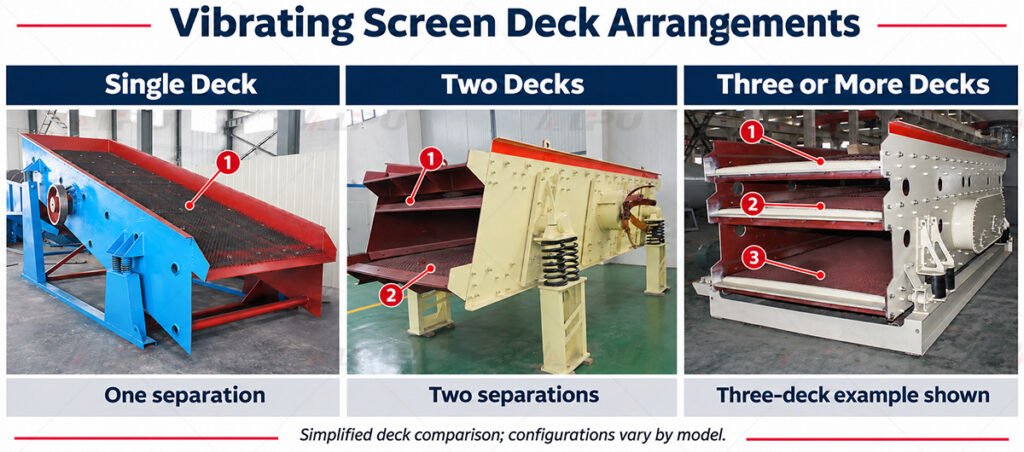
Each deck provides a screening surface with a selected opening size. In a conventional multi-deck arrangement, larger openings are generally placed above smaller openings.
A single deck separates feed into oversize and undersize streams. Additional decks can create more size fractions, provided the outlets remain separate and the material can be screened effectively.
Screening surfaces in single-deck and multi-deck vibrating screens
Arrangement
Typical Purpose
What to Check
Single deck
One size separation or removal of oversize
Feed loading and discharge routing
Two decks
Separation into up to three fractions
Load reaching the lower deck and outlet access
Three or more decks
Production of several size fractions
Lower-deck duty, deck spacing and maintenance access
More decks do not automatically make a machine a better choice. Each additional separation must be checked against the material reaching that deck.
A lower deck may receive less total tonnage but still face a demanding separation. Ask the supplier to explain the duty on each deck rather than relying on total screen area alone.
Also check whether the available space between decks allows practical access for inspection and media replacement.
Look Beyond the Screen Box: Components That Affect Daily Operation
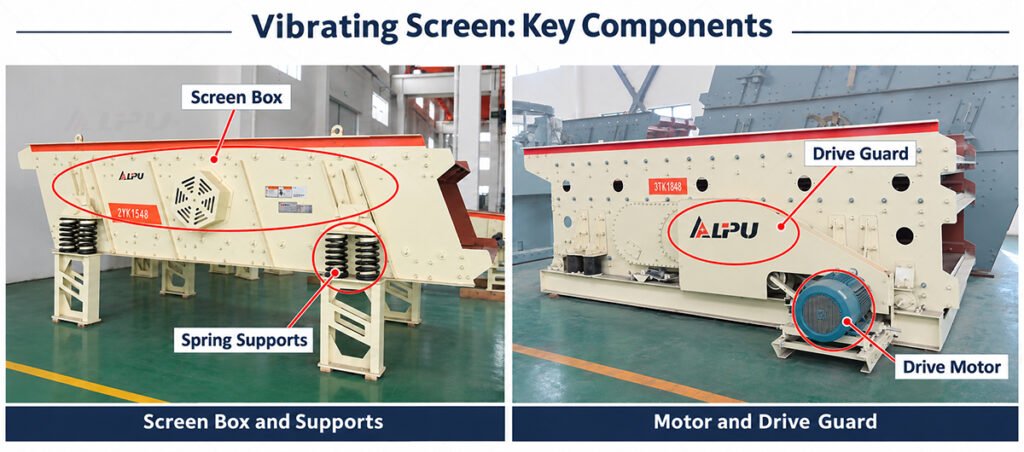
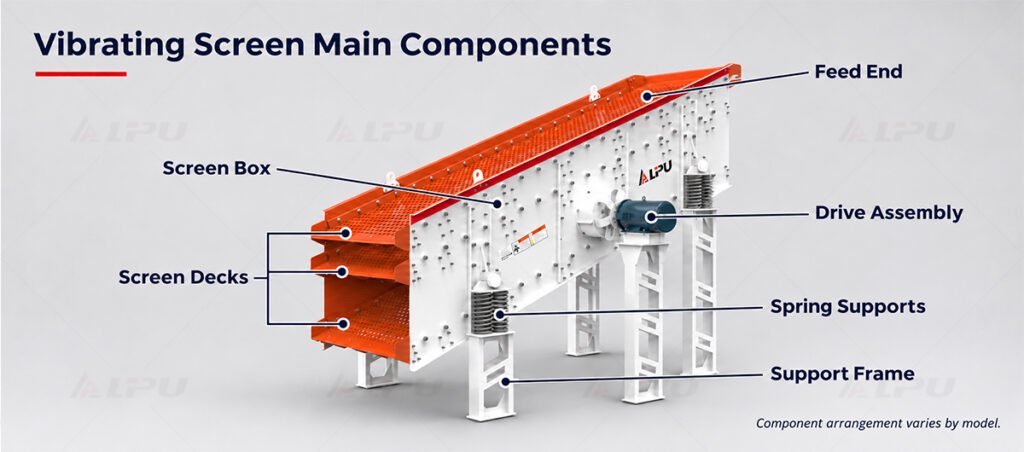
The screen box and its supporting assemblies must work together. Request a general arrangement drawing and identify the main service points before approving the machine.
Check component access as well as machine dimensions
Component
Main Function
Buyer’s Check
Screen box
Carries the decks and contains the material
Construction, wear protection and inspection access
Screen media
Provides the openings used for separation
Material, aperture and fixing arrangement
Deck supports
Support the media
Compatibility with replacement panels or mesh
Exciter or vibrating drive
Generates the specified motion
Drive type, guarding and maintenance requirements
Motor and transmission
Supply power to the vibrating mechanism
Installation position and service access
Springs or isolators
Support and isolate the vibrating assembly
Support arrangement and replacement access
Feed box and liners
Receive incoming material
Impact protection and distribution across the deck
Discharge arrangements
Separate the outgoing fractions
Chute interfaces and prevention of stream mixing
Pay attention to components that are difficult to reach after installation. A motor position that looks convenient in a product photograph may conflict with a walkway, chute or adjacent conveyor at your site.
Confirm which items are standard equipment and which are supplied separately. Platforms, chutes, spray equipment and supporting steelwork should not be assumed to be included.
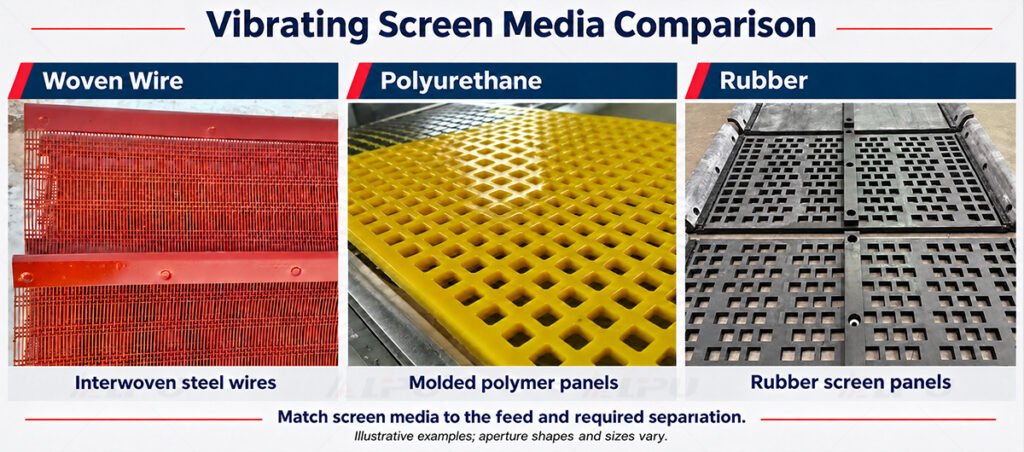
Woven Wire, Polyurethane or Rubber: Choose Media for the Actual Feed
Screen media selection involves more than choosing a hole size. The material, opening shape, open area and fixing system affect how the deck operates and how it is maintained.
Match screen media to the feed and required separation
Woven wire mesh
Woven wire is an option to evaluate where open area and a suitable separation are priorities. Confirm wire specification, tensioning requirements and replacement access.
Polyurethane panels
Polyurethane media may be considered for suitable wear and wet-screening duties. Check panel thickness, aperture design, open area and compatibility with the deck supports.
Rubber media
Rubber media may be considered where impact, abrasion or noise is a concern. The proposed construction must still provide the required screening performance.
Specialised anti-clogging media
Where feed tends to blind the surface or lodge in the openings, discuss suitable aperture designs and flexible media options. Changing media should follow an assessment of the material and operating conditions.
Media Option
Main Points to Compare
Woven wire
Open area, wire specification, tensioning and replacement method
Polyurethane
Aperture design, panel thickness, fixing system and deck compatibility
Rubber
Impact duty, opening design, support requirements and panel handling
Anti-clogging media
Suitability for the specific blinding or pegging problem
No media type is best for every application. Compare expected performance, replacement requirements and operating experience with similar material.
Aperture Size Is Only Part of Achieving the Required Product Grade
The nominal opening is part of the selection, but it does not guarantee a perfectly sharp product boundary.
Particle shape, feed loading and operating conditions affect which particles pass through. Screen wear can also change the effective opening over time.
Square and slotted apertures should therefore be compared against the required product specification. Confirm both the opening dimensions and orientation when discussing slotted media.
Avoid selecting a different aperture solely to increase output without checking its effect on product grading. A higher tonnage is of limited value if the resulting fractions do not meet the intended specification.
Where grading is important, agree on how representative feed and product samples will be collected and assessed.
Inclined or Horizontal: Check Installation Height and Material Movement
Inclined and horizontal screens differ in their installation geometry and motion arrangements. Selection should consider the application and site layout together.
For an inclined machine, check the overall installation height, feed elevation and discharge positions. For a horizontal machine, examine the proposed drive arrangement and how material movement is achieved.
Neither description establishes capacity by itself. Compare the proposed configurations against the same feed and product requirements.
Installation Detail
Why It Matters
Feed elevation
Determines how the upstream conveyor or chute connects
Discharge elevations
Affect product chutes and downstream conveyors
Available headroom
Limits the machine, covers and maintenance arrangements
Support locations
Determine foundation or steelwork interfaces
Operating clearances
Allow the vibrating assembly to move freely
Service space
Provides access to media, drives and wear parts
For replacement projects, provide existing drawings and measured conveyor elevations. A suitable screening machine can still require substantial installation changes if its interfaces do not match the plant.
Compare Capacity Under the Same Feed and Screening Conditions
A catalogue capacity range is only a starting point.
A useful proposal states the conditions behind the rating, including feed grading, moisture, selected apertures and required separation quality. It should also account for material returning through a closed crushing circuit.
Capacity Information
Clarification to Request
Feed tonnage
Normal duty and expected peak loading
Feed grading
Size distribution, including material close to the separation size
Moisture
Normal condition and likely variation
Deck openings
Aperture size, shape and media type
Product requirements
Required grading and acceptable misplaced material
Circuit arrangement
Fresh feed and any circulating load
Ask whether the quoted duty represents fresh plant feed or the total material entering the screen. These figures may differ in a closed circuit.
Avoid comparing two quoted capacities if they are based on different feed conditions or screen openings. Request a clear operating basis before using capacity to choose between machines.
Feed Chutes and Product Outlets Can Limit an Otherwise Suitable Screen
The feed chute should distribute material across the usable screen width. Concentrating feed on one side can leave part of the deck underused and create uneven wear.
Check the impact area, liners and access for clearing buildup. The connection must also allow the vibrating assembly to move without contacting surrounding structures.
At the discharge end, confirm that each fraction reaches its intended chute or conveyor. The arrangement should prevent separated streams from mixing again.
Allow room for inspection and media replacement without dismantling unnecessary downstream equipment. If washing is required, include the water supply, spray arrangement, drainage and downstream slurry handling in the layout review.
These interfaces should be checked before equipment dimensions and support positions are finalised.
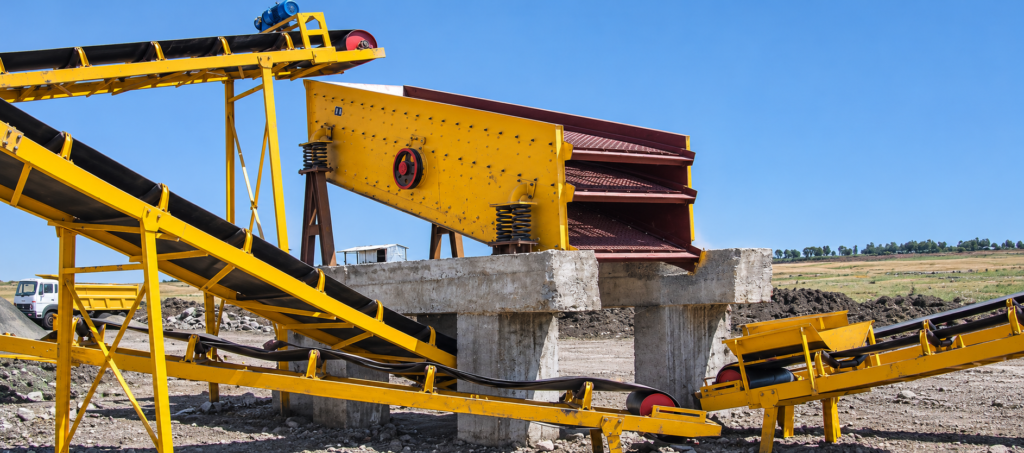
Vibrating screen installation with concrete supports and conveyor interfaces
Plan Screen Media Replacement Before the Machine Is Installed
Deck spacing and access can make a substantial difference during maintenance.
Ask the supplier to explain how panels or mesh are removed, especially from the lower decks. Check the tools, lifting arrangements and working space required.
Also confirm:
How the media is secured and tensioned.
Whether individual sections can be replaced.
How worn support surfaces are inspected.
Which liners, fasteners and fixing parts should be stocked.
Whether access platforms are included.
Routine inspection should also cover media condition, feed-box wear, fasteners and the relevant drive and support components, following the machine manual.
Maintenance procedures must use the specified isolation and access arrangements. Stop and isolate the equipment before entering or working on the machine.
Compare the Complete Supply Scope, Not Just the Screen Price
A clear quotation identifies the complete supply boundary.
Two offers may list similar screen dimensions while including different drives, media, supports or installation items. Compare them against the same equipment requirements.
Item
Scope to Confirm
Screen assembly
Screen box, decks and specified media
Vibrating mechanism
Exciter or vibrating motors and associated parts
Drive equipment
Motor, transmission and guards
Supports
Springs or isolators and mounting arrangements
Material interfaces
Feed box, liners and discharge items
Optional equipment
Spray system, covers and access platforms
Spare parts
Media, fixing parts, liners and recommended service items
Documentation
Drawings, operating manual and maintenance information
State foundation and supporting-steel responsibilities separately. Confirm any installation guidance, commissioning support and operator training included in the offer.
Performance commitments should refer to the agreed feed conditions and product requirements.
Prepare These Details for a LIPU Vibrating Screen Proposal
Send the material name, feed rate, particle-size distribution, moisture condition and required product fractions.
Include site photographs, available installation dimensions, conveyor elevations and any existing machine drawings. For a replacement screen, explain the current problem, such as insufficient output, frequent media replacement or difficult maintenance.
For projects involving an entire plant, review the screen together with the crushing stages and product conveyors. This helps confirm that the selected machine fits both the screening duty and the installation layout.
Contact LIPU to discuss vibrating screen configuration and quotation scope.
Frequently Asked Questions About Vibrating Screen Selection
Does a three-deck screen always produce four finished products?
It can separate feed into up to four size streams. Whether each stream is a finished product depends on the selected openings and whether oversize returns for further crushing.
Can I change the screen mesh to produce another size?
Possibly, but a different opening changes the screening duty. Confirm that the machine, deck supports and downstream equipment suit the revised requirement.
Is polyurethane screen media better than woven wire?
Neither is best for every application. Compare open area, wear conditions, feed characteristics and replacement requirements before choosing.
Can the same vibrating screen handle dry and wet screening?
Suitability depends on the machine and material. Wet screening may require spray equipment, suitable media, drainage and downstream slurry handling.
What information is needed to select a vibrating screen?
Provide the material, feed rate, particle-size distribution, moisture and required product sizes. Include installation dimensions and conveyor elevations, especially when replacing an existing machine.


We will reply to you within 24 hours