Gypsum from industrial by-products, mining and chemical processes often reaches the plant with high and variable moisture. Before it can be stored, transported, calcined or used in downstream products, the moisture level must be reduced in a controlled way.
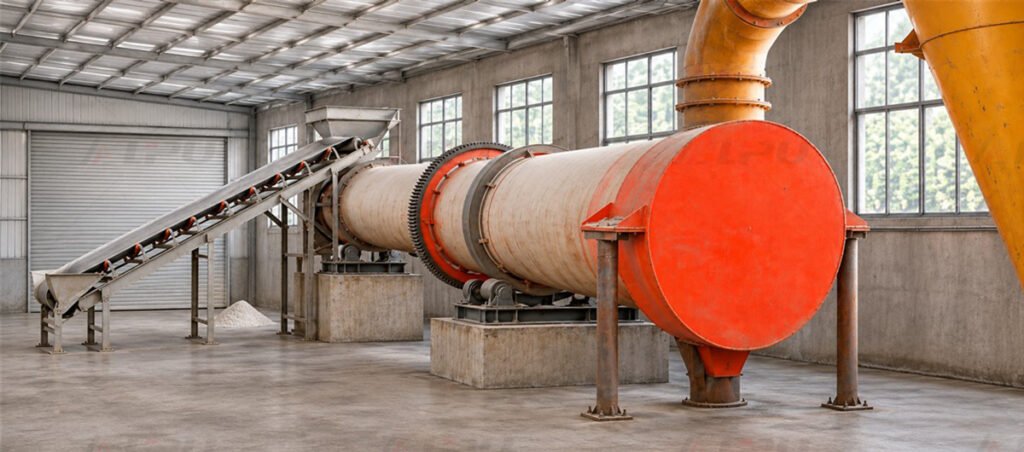
A gypsum rotary dryer reduces moisture through controlled feeding, heated drying and stable material discharge
A gypsum dryer machine is not selected by throughput alone. Feed moisture, material stickiness, particle-size distribution, target moisture, heat source and gas-treatment requirements all affect the final system design. A machine that handles dry, free-flowing gypsum may not be suitable for wet, sticky or fine gypsum with a tendency to form deposits.
LIPU gypsum dryer machines are used for compatible gypsum materials and should be configured around the actual feed condition rather than a nominal capacity figure.
What Gypsum Feed Data Is Needed Before Dryer Selection?
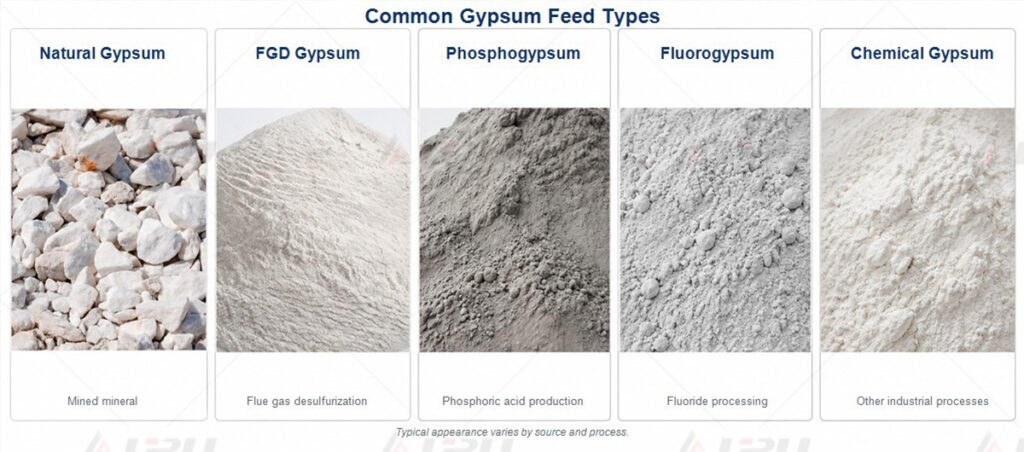
The first selection step is to define what enters the dryer. “Gypsum” can refer to very different materials, including natural gypsum, flue-gas desulfurization gypsum, phosphogypsum, fluorogypsum and chemical gypsum. Their moisture behavior, particle size and handling properties can vary significantly.
Gypsum feed can originate from mined mineral deposits or industrial processes, with moisture and handling properties varying by source
Confirm the following before selecting a gypsum rotary dryer:
Average and maximum feed moisture
Required moisture after drying
Hourly feed rate and operating hours per day
Particle-size distribution and oversize content
Bulk density and flowability
Clay, sludge, soluble salt or impurity content
Tendency to cake, stick or form lumps
Feed temperature and seasonal variation
Designing around average moisture only can create problems during wet-weather operation or when the upstream dewatering system changes. The dryer and its conveying system should handle the expected operating range, not only ideal feed.n the upstream dewatering system changes. The dryer and its conveying system should handle the expected operating range, not only ideal feed.
How to Define the Required Final Moisture for Gypsum
The required final moisture depends on the next process step. Some gypsum applications require only improved storage and conveying. Others require a lower and more stable moisture level before calcination, grinding, blending or product manufacture.
An unnecessarily low moisture target increases fuel demand and can reduce operating efficiency. A target that is too high may cause stockpile instability, poor flow through bins or inconsistent downstream processing.
The process team should define:
Maximum final moisture
Moisture consistency required by the next process
Product-temperature limit at discharge
Allowable dust generation during handling
Required storage time before downstream use
A dryer supplier needs this information to estimate evaporation duty and size the thermal system correctly.
Gypsum Drying Process: From Dewatered Feed to Dry Product
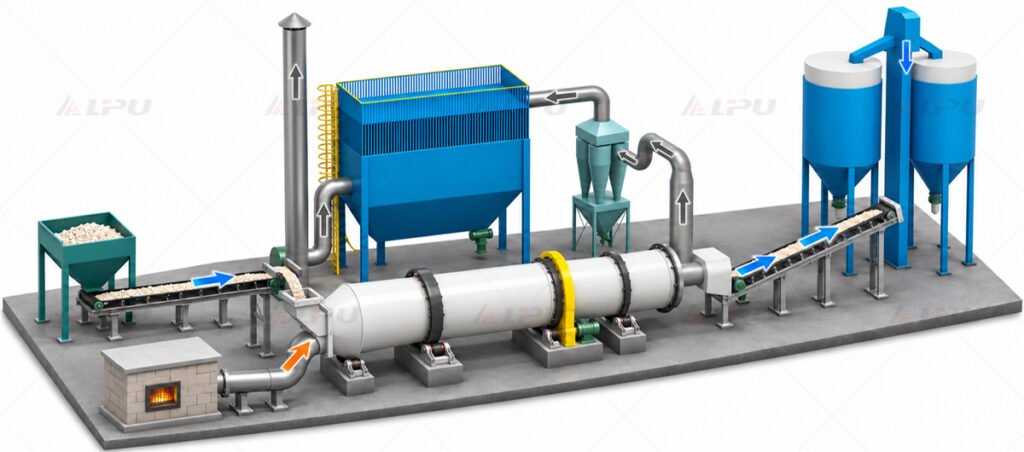
A gypsum drying line is more than a rotating drum. It normally combines feed preparation, drying, gas handling, dust collection and discharge equipment.
A typical process may include:
A gypsum drying line separates material feeding, hot-air supply, exhaust-gas treatment and dry-product storage
The exact layout depends on the gypsum source and the moisture reduction required. Very wet or sticky feed may need controlled feeding, anti-bridging hopper design or upstream mechanical dewatering. Fine material may require more attention to dust collection and gas velocity.
The dryer should be integrated with the complete drying equipment system, rather than specified as an isolated drum.
How to Size a Gypsum Dryer by Water Evaporation Duty
A common selection mistake is to request a dryer based only on tonnes per hour of wet feed. The more important thermal question is how much water must be evaporated per hour.
For example, two gypsum feeds may have the same wet-feed capacity but very different drying duties:
Item
Feed A
Feed B
Wet feed rate
20 t/h
20 t/h
Feed moisture
12%
30%
Target moisture
2%
2%
Water-removal requirement
Lower
Much higher
The second case needs a substantially higher evaporation duty, even though both systems process 20 t/h of wet gypsum.
A proper gypsum dryer selection should calculate:
Dry-solids flow rate
Inlet water carried with the feed
Water remaining in the dried product
Water to be evaporated per hour
Heat demand, including an operating margin
Expected exhaust-gas volume and dust load
This calculation provides a more reliable starting point for selecting drum size, heat source, induced-draft fan and dust-control equipment.
How to Choose a Heat Source for a Gypsum Rotary Dryer
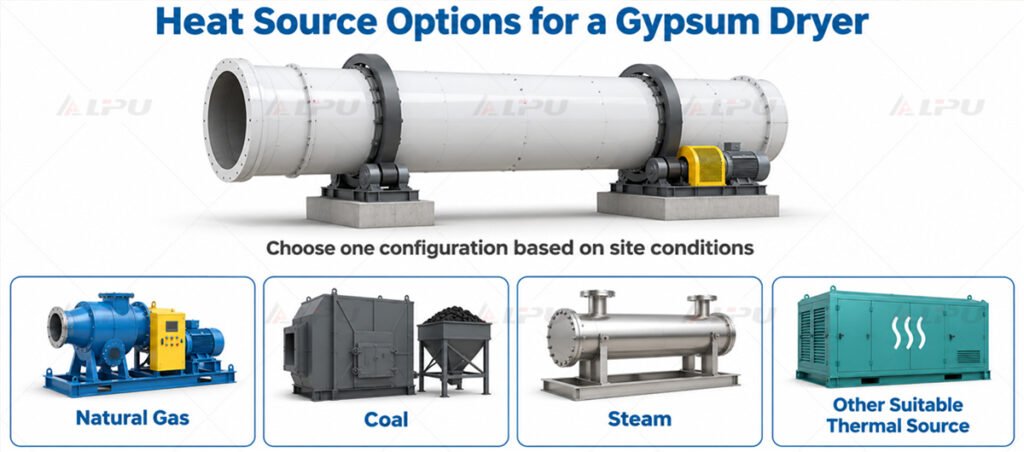
The available heat source affects operating cost, controls, emissions and plant layout. Depending on the material and site conditions, a gypsum dryer system may use natural gas, coal, steam or another suitable thermal source.
Select one gypsum dryer heat-source configuration according to local energy availability, operating cost, emissions requirements and process conditions
When comparing heat sources, consider:
Local fuel availability and price
Required temperature-control accuracy
Start-up and shutdown frequency
Emissions-control requirements
Dust-collection configuration
Maintenance capability on site
Available electrical capacity for fans, conveyors and controls
The selected heat source must suit the gypsum and complete gas-handling arrangement. A low-cost fuel is not automatically the lowest-cost solution if it creates more complex dust collection, unstable temperature control or higher maintenance needs.
How Residence Time Affects Gypsum Moisture and Product Quality
Residence time is the period that gypsum stays inside the dryer. It is influenced by drum diameter and length, internal lifting flights, rotational speed, inclination, feed rate and material-flow characteristics.
Too little residence time can leave the product above the required moisture. Too much residence time may waste energy and expose the material to unnecessary heat.
For gypsum drying, residence time should be considered together with:
Hot-gas temperature
Material temperature
Internal flight arrangement
Feed distribution at the inlet
Gypsum particle size
Feed moisture variation
Dryer slope and rotational speed
The objective is stable moisture removal with consistent product discharge, not the longest possible retention time.
Feeding Sticky Gypsum Without Bridging or Buildup
Wet gypsum can bridge in hoppers, build up on chutes or feed unevenly into the dryer. An unstable feed rate causes unstable moisture, temperature swings and inconsistent final product quality.
The feed section should be designed around the actual material behavior. Depending on the feed condition, the system may require:
A hopper with suitable wall angle and outlet geometry
Controlled metering equipment
Anti-bridging devices where necessary
Lined chutes in high-wear areas
Access doors for cleaning and inspection
A feed arrangement that distributes material across the dryer inlet
A steady feed rate is essential. Heat control alone cannot compensate for large changes in feed moisture or feed volume.
Dust Collection and Exhaust-Gas Design for Gypsum Drying
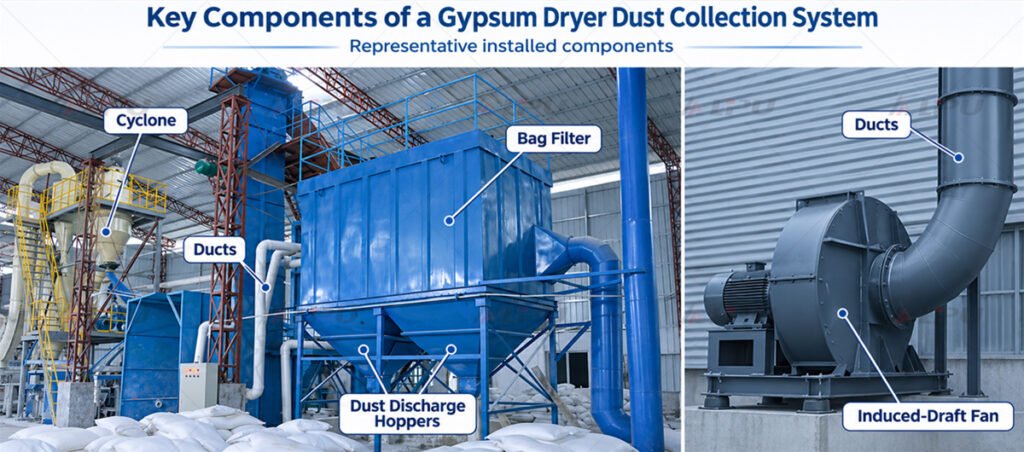
Gypsum drying creates exhaust gas that can carry fine particles. The dust-control system is therefore part of the dryer selection, not an optional addition after the dryer is installed.
The final configuration may include cyclones, bag filters, induced-draft fans, ducts and discharge systems. Selection depends on feed fineness, gas temperature, expected dust load and local environmental requirements.
Cyclone, bag filter and induced-draft fan control gypsum dryer exhaust dust
Key design checks include:
Exhaust-gas temperature at the dust collector
Gas volume and system pressure loss
Filter-media suitability
Dust discharge and return arrangement
Inspection and maintenance access
Potential condensation or buildup points in ducts
A well-matched dust-collection system helps maintain product yield, cleaner working conditions and more stable dryer operation.
When Upstream Dewatering Can Reduce Dryer Fuel Consumption
Mechanical dewatering is often more energy-efficient than thermal evaporation. If feed gypsum has very high moisture, improving the upstream dewatering stage may reduce the dryer’s fuel consumption and required thermal capacity.
Possible upstream equipment may include settling, thickening, filtration or other dewatering arrangements, depending on the slurry and project process.
Before selecting a larger gypsum dryer machine, compare the cost of additional mechanical dewatering with the long-term fuel cost of evaporating more water. The best solution often combines both stages.
Gypsum Dryer Selection Checklist for a Technical Quotation
A useful technical inquiry should include more than capacity. Provide the following information:
Gypsum source and material description
Feed-moisture range and target final moisture
Wet feed rate and required operating hours
Particle size and bulk density
Material temperature at the dryer feed point
Existing upstream dewatering equipment
Available fuel and electricity
Installation location and climate
Dust-emission requirement
Available space and preferred equipment layout
Downstream use of the dried gypsum
With this data, the supplier can evaluate an appropriate rotary dryer configuration and identify potential operating risks before manufacture.
Choose the Complete Gypsum Drying System, Not Just the Drum
The best gypsum drying solution balances moisture control, fuel use, stable feeding, dust collection, maintenance access and downstream handling. A rotary dryer can provide reliable gypsum moisture reduction when it is selected around actual material data and connected to a complete process system.
For a project-specific recommendation, review the gypsum dryer product page and provide representative feed information, required capacity and target final moisture.
FAQ
What is a gypsum dryer machine used for?
A gypsum dryer machine reduces the moisture of natural gypsum or suitable industrial gypsum materials so they can be handled, stored or processed more consistently downstream.
Can a gypsum rotary dryer process FGD gypsum?
It may be suitable, but FGD gypsum should be assessed for moisture, particle size, stickiness, impurities and required final moisture before equipment selection.
How is gypsum dryer capacity calculated?
Capacity should be calculated from wet-feed rate and the amount of water that must be removed per hour, not from wet tonnes per hour alone.
What heat source can be used for gypsum drying?
The suitable heat source depends on local availability, operating cost, emissions requirements and the required level of temperature control. Common options can include gas, coal or steam-based systems.
Why is upstream dewatering important before gypsum drying?
Removing water mechanically before thermal drying can reduce fuel consumption and may allow a smaller, more efficient dryer system.


We will reply to you within 24 hours