LIPU helps define gold processing routes around ore type, mineral association, feed size, target capacity, final product requirements, and site conditions. From hard rock and sulfide ores to alluvial deposits, we configure practical preparation, recovery, and downstream stages based on available project information.
Gold ores do not respond to one universal processing route. Free gold, sulfide-associated gold, oxide ore, and alluvial material may require different preparation and recovery methods.
Before selecting equipment, the project should consider ore mineralogy, gold occurrence, liberation size, clay and moisture content, feed size, required capacity, water availability, and the intended final product. These inputs help determine whether gravity recovery, flotation, leaching, or a combined route is appropriate.
Choose a Gold Processing Route by Ore Type
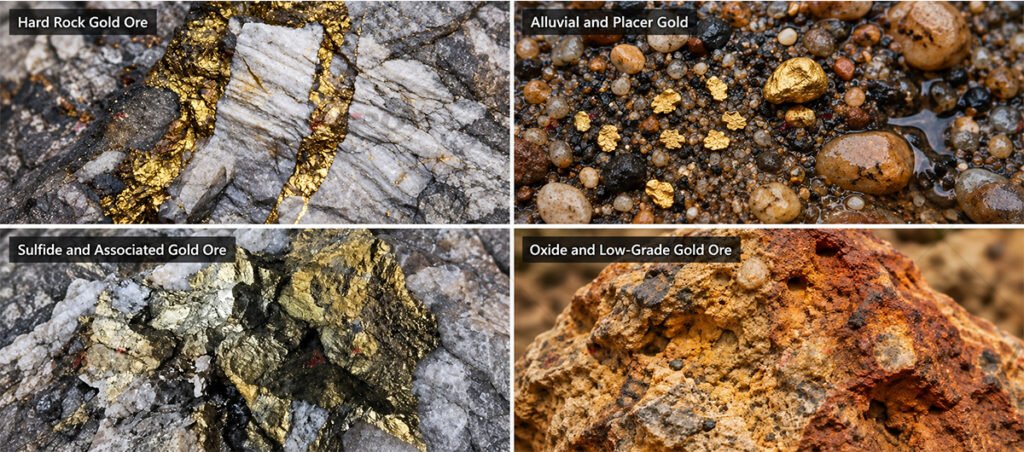
Ore type and gold occurrence guide the selection of a processing route
Hard Rock Gold Ore
Hard rock gold may contain coarse free gold, fine gold in quartz veins, sulfide-associated gold, or a combination of these mineral forms. Crushing, grinding, classification, and gravity recovery are often considered first, while flotation or another downstream stage may be added when ore characteristics require it.
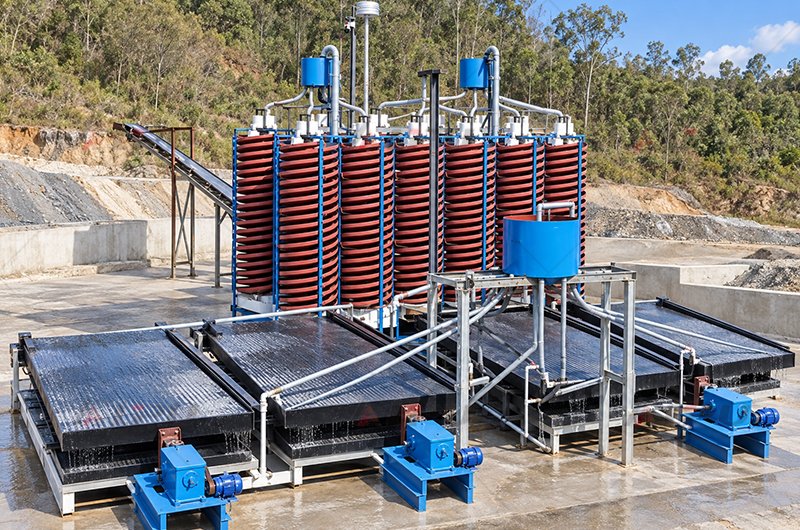
Alluvial gold is commonly found in unconsolidated sand, gravel, and clay-rich material. The route may focus on washing, screening, desliming, classification, and gravity separation. Equipment selection depends on clay content, feed size, gold particle size, and site conditions.
Sulfide and Associated Gold Ore
Gold associated with sulfide minerals or polymetallic ores may require a more selective route. After suitable size reduction and conditioning, flotation can be considered to produce a gold-bearing concentrate for further treatment.
Oxide and Low-Grade Gold Ore
For some oxide or low-grade gold ores, leaching-based routes may be evaluated. Route selection should be based on mineralogical information, metallurgical evaluation, environmental requirements, and project conditions.
Gold Recovery Methods That May Be Combined
Gravity Recovery
Flotation
CIL
Heap Leaching
Gravity Recovery
Gravity recovery may be suitable where gold is sufficiently liberated and has a useful density difference from surrounding gangue minerals. It is often considered for coarse or free gold.
Flotation
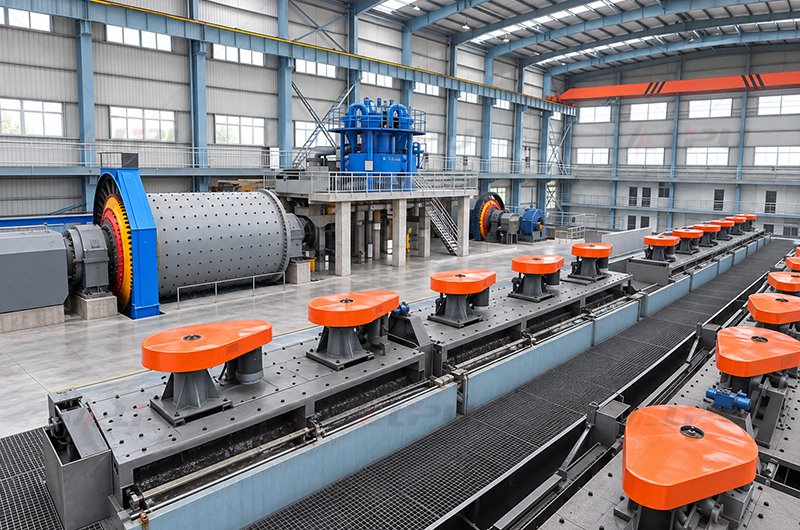
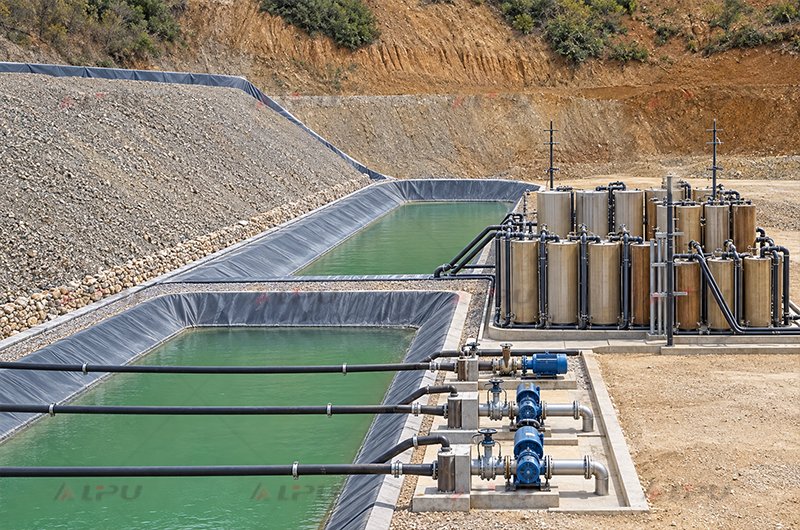
Flotation may be considered when gold is associated with sulfides or other floatable carrier minerals. The resulting flotation concentrate can require thickening and dewatering before further handling.
CIP and CIL
CIP and CIL routes may be evaluated when cyanidation is suitable for the ore and project requirements. These routes require careful process design and responsible operational planning.
Heap Leaching
Heap leaching may be considered for selected ore types where crushing characteristics, permeability, gold liberation, and leach response support the method.
From Ore Information to Plant Configuration
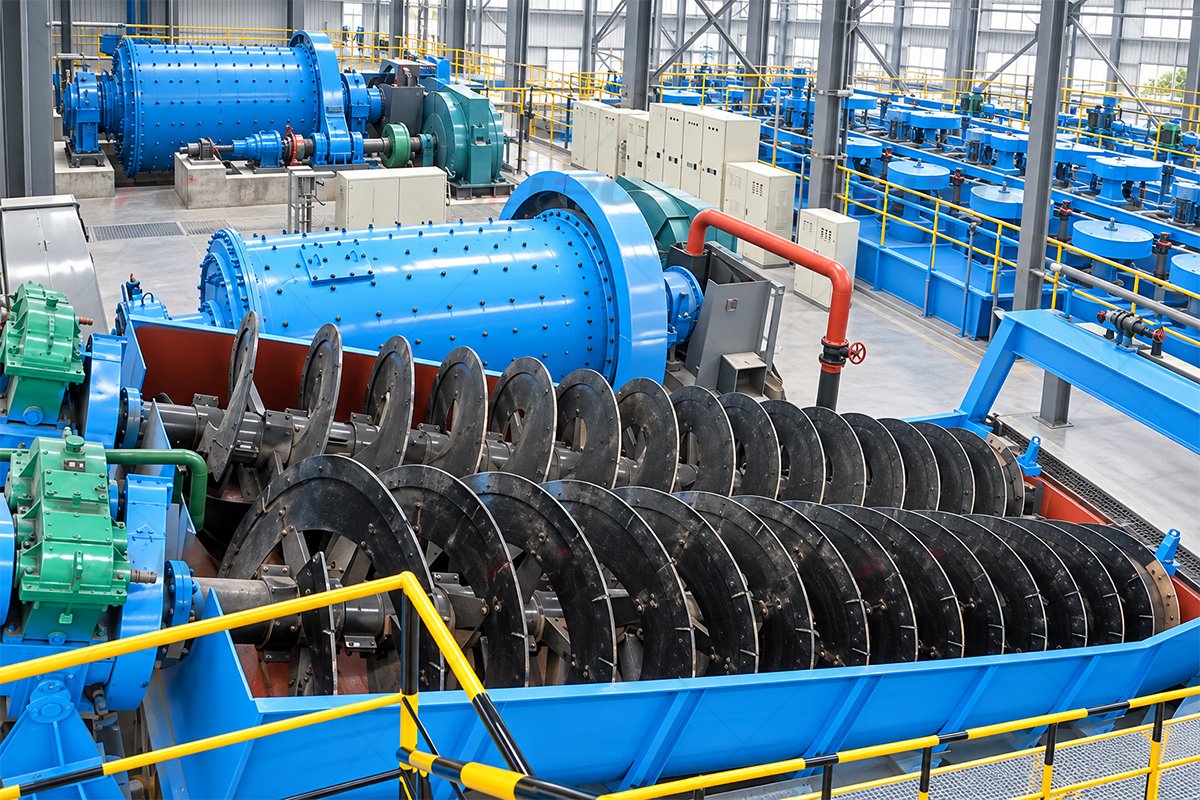
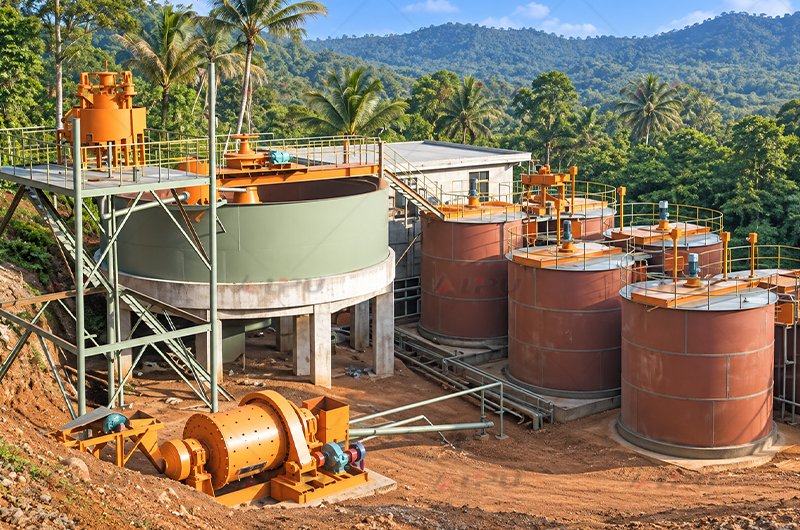
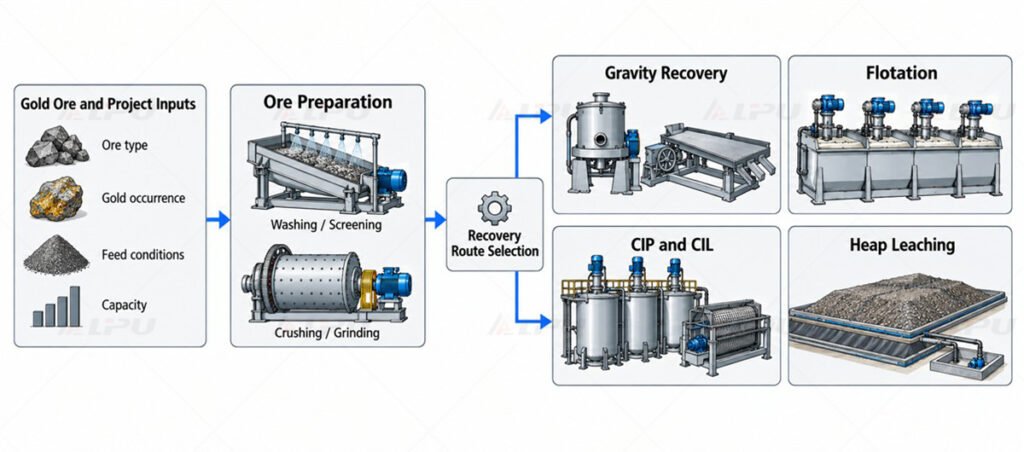
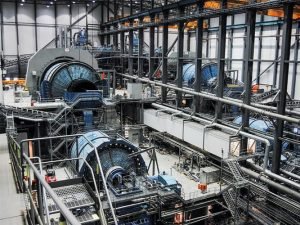
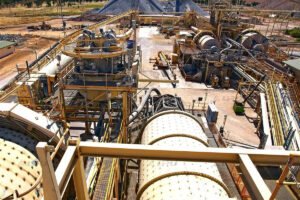
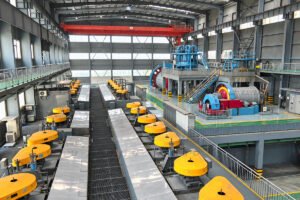
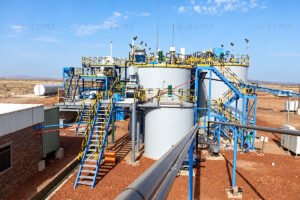
A gold processing plant is a connected system rather than a fixed equipment list. Depending on the selected route, the plant may combine ore preparation, crushing, grinding, classification, recovery, concentrate handling, tailings management, and water-return stages.
A practical gold plant connects the preparation, recovery, and downstream stages selected for the ore
LIPU helps organize these stages into a practical equipment configuration based on the available project information. The final route should be confirmed according to ore characteristics, required throughput, site conditions, and downstream product requirements.
What Information Helps Define a Gold Processing Plant
Ore type and known mineral association
Gold occurrence and available assay information
Feed size, moisture content, and clay content
Required processing capacity
Target product or recovery route
Site layout, power, water, and tailings requirements
Existing equipment that may be incorporated into the plant
Frequently Asked Questions
What is the best gold processing method?
There is no single best method for every gold ore. The appropriate route depends on how gold occurs in the ore, its liberation size, associated minerals, feed conditions, and project requirements.
Can one plant process both hard rock and alluvial gold?
Some plants can be configured for more than one feed type, but hard rock and alluvial material often require different preparation and recovery stages. The route should be reviewed against the expected feed.
When is gravity recovery suitable for gold ore?
Gravity recovery may be suitable when gold is sufficiently liberated and a useful density difference exists between gold and gangue minerals. It is commonly considered for coarse free gold.
When should flotation be considered?
Flotation may be considered when gold is associated with sulfide minerals or other floatable carriers, especially when gravity recovery alone may not be sufficient.
Does every gold plant need CIP, CIL, or heap leaching?
No. These routes are selected only when they are appropriate for the ore, the recovery objective, and the project’s operating conditions.
How can I start a gold processing plant inquiry?
Provide available ore information, feed size, desired capacity, site conditions, and your target product requirements. This helps define an appropriate route for further discussion.
LET US REACH YOUNeed detailed customization and latest price? Chat online or leave message below!
How we use cookies
This Cookie Privacy Policy statement explains how Zoneding Machine (hereinafter referred to as "we", "our", or "this website") uses cookies and similar technologies (collectively referred to as "cookies") to identify you when you visit our website lepuu.com. It explains what these technologies are, why we use them, and your rights to control our use of them.
Privacy Policy
Leave a Message
We will reply to you within 24 hours
Hello, I am Lipu Heavy Industry, what can we do for you please?