A flotation machine should be selected by its air-supply arrangement, tank volume, mixing mechanism and installation requirements—not processing capacity alone.
For buyers comparing machines, the practical questions are straightforward: Does it need a blower? Can it be connected into a cell bank? Which parts wear, and what equipment is included in the quotation?
This guide explains the main equipment features to compare before choosing a flotation machine for your mineral processing plant.
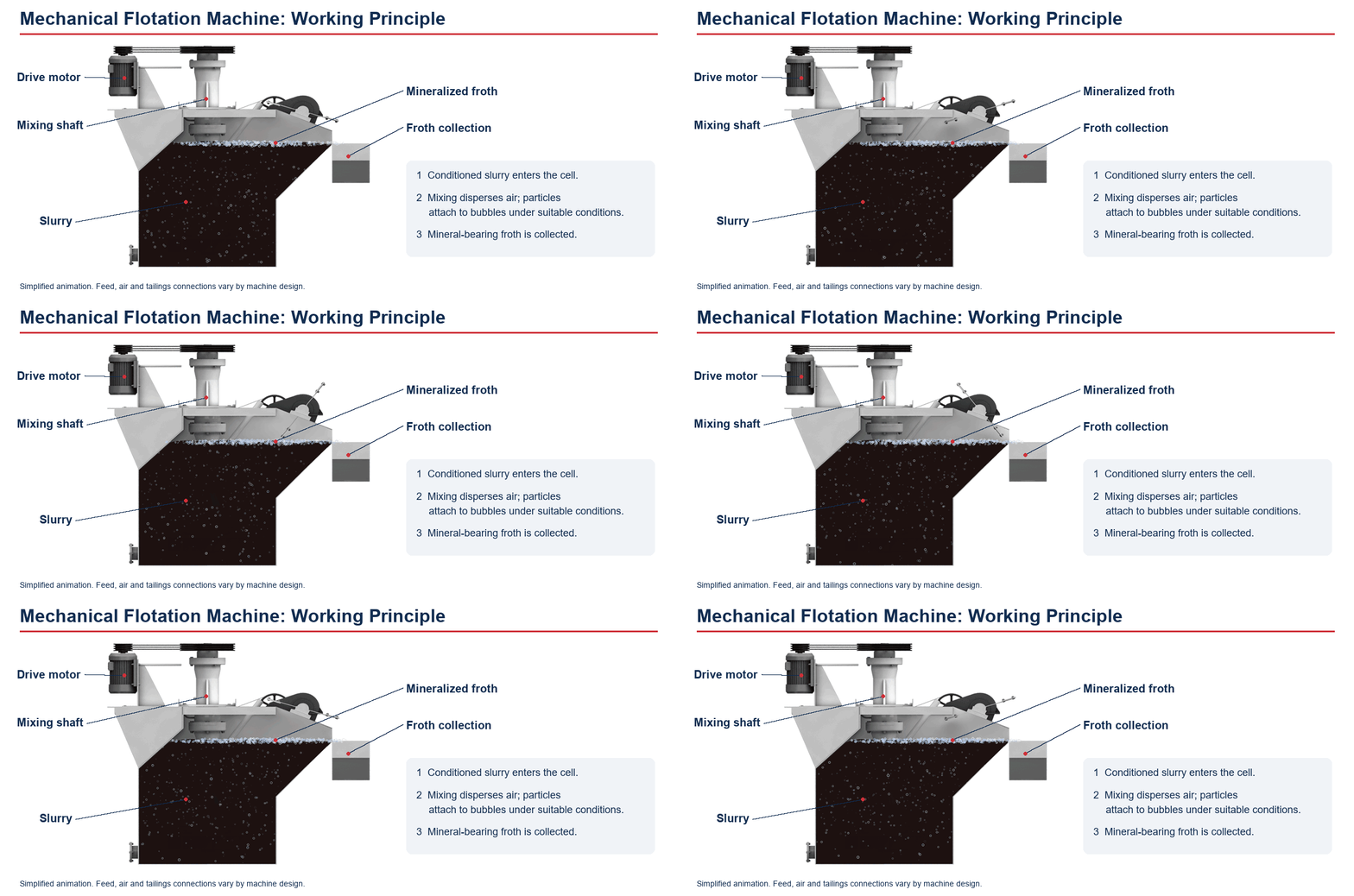
Prepared slurry enters the flotation cell, where a driven mixing mechanism helps suspend particles and disperse air.
Working Principle of Flotation Machines
Under suitable reagent conditions, selected mineral particles attach to bubbles and rise into a froth layer. Froth enters a collection launder, with mechanical scrapers assisting removal where fitted. The remaining slurry leaves through the discharge arrangement.
The machine must coordinate mixing, aeration, froth removal and slurry-level control. Its performance also depends on the material and feed preparation, so equipment selection should be supported by appropriate flotation testwork.
What Are the Main Components?
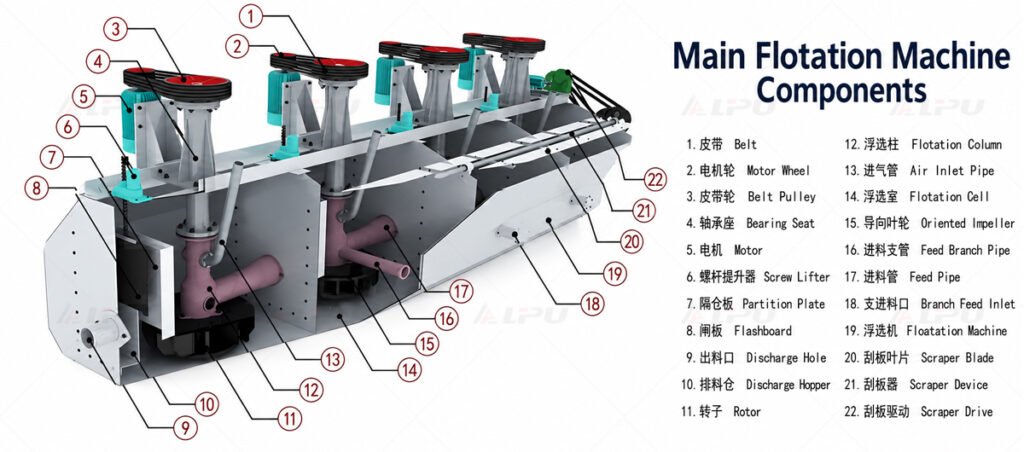
The exact structure varies by model, but mechanically agitated flotation machines commonly include the following assemblies.
Main components of a mechanical flotation machine
Component
Main Function
What Matters When Comparing Machines
Tank
Holds slurry and supports the mechanism
Working volume, construction and wear protection
Impeller or rotor
Mixes slurry and assists air dispersion
Design, wear material and replacement method
Stator or diffuser, where fitted
Controls flow around the rotating mechanism
Wear protection, operating clearances and access
Shaft and bearing assembly
Supports and transmits rotation
Lubrication, sealing and service access
Drive system
Powers the mixing mechanism
Motor specification, transmission and guarding
Air system
Introduces air into the cell
Self-aspiration or external supply
Froth collection system
Collects and removes mineral-bearing froth
Launder arrangement and scrapers where fitted
Level-control arrangement
Regulates operating level and slurry discharge
Adjustment method, valves and instruments
Use the proposed machine drawing when comparing offers. A general product illustration may show components or accessories that are optional rather than standard.
Should You Choose Self-Aspirating or Forced-Air Equipment?
The air-supply arrangement affects both the machine and its supporting equipment.
Arrangement
How Air Enters
Main Selection Consideration
Self-aspirating
The mixing mechanism draws air into the cell
Whether air delivery remains suitable across the intended operating range
Forced-air
An external system supplies air
Required airflow, pressure, distribution and control equipment
Self-aspirating equipment may avoid a dedicated external process-air blower for aeration. However, air intake still depends on the machine design and operating conditions. Check its adjustment method and working limits.
Forced-air equipment requires a suitable external air supply. It can provide a separate means of adjusting air delivery, but the available control range depends on the complete installation.
Neither arrangement is automatically more efficient or better for recovery. Compare the proposed machine under the same material, feed and separation requirements.
Also distinguish air aspiration from slurry suction. The ability to draw air into a cell does not establish whether the machine can draw or transfer slurry between stages without additional equipment.
How Should You Compare Different Flotation Machine Series?
Series names alone are insufficient for selection. Compare the actual functions of the proposed models.
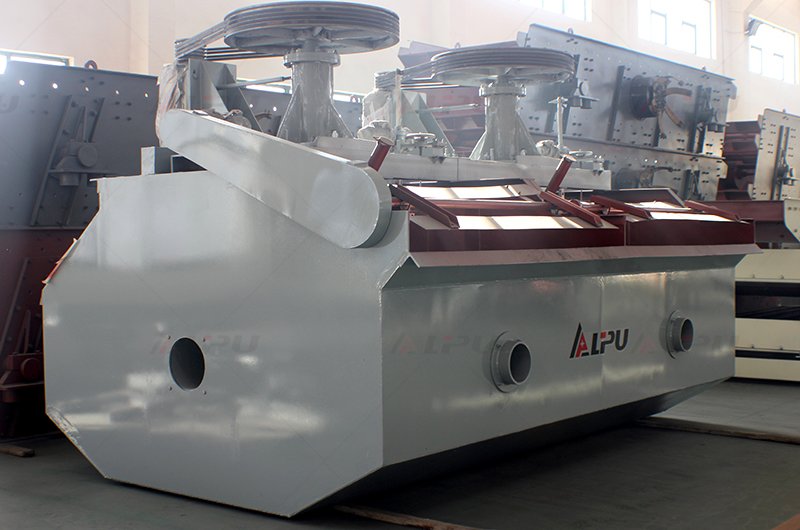
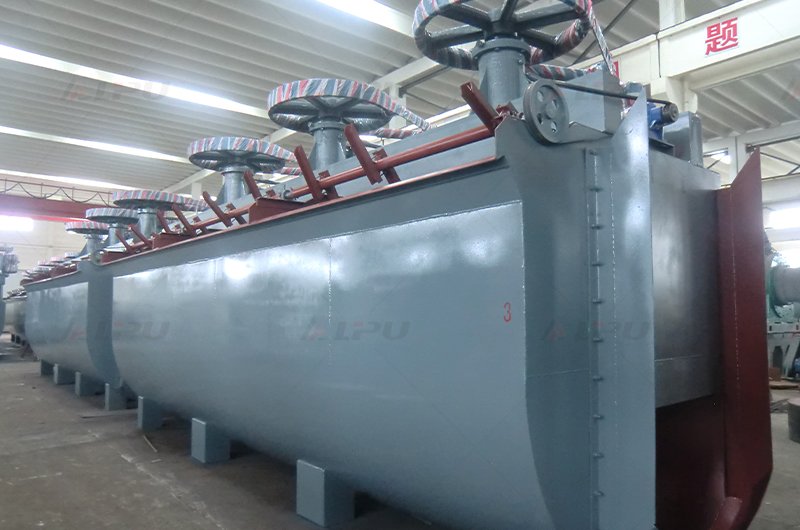
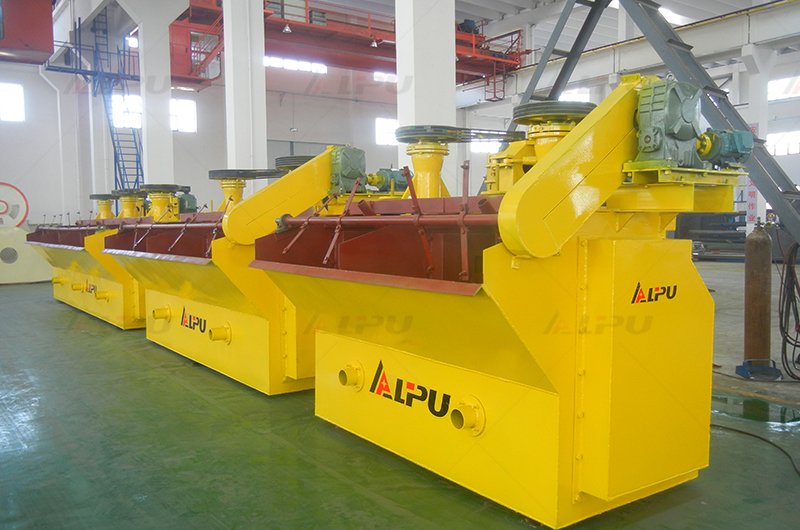
SF Flotation Machine
BF Flotation Machine
KYF Flotation Machine
XCF Flotation Machine
Ask for a series-specific comparison covering:
Air-supply arrangement.
Slurry-suction and transfer capability.
Tank sizes and permitted cell combinations.
Mixing and froth-removal drives.
Level-control arrangement.
Required auxiliary equipment.
A machine offered for one duty should not be assumed interchangeable with another machine of similar tank volume.
For LIPU equipment, use the confirmed specification sheet and arrangement drawing to establish these differences before selecting a series.
Which Technical Parameters Matter Most?
A specification table is useful for narrowing options, provided the rating conditions are clear.
Tank volume. Establish whether the published figure represents nominal tank volume or effective working volume. The two should not be treated as identical without confirmation.
Processing capacity. Review the material, feed size and slurry concentration behind the quoted range. Dry tonnes per hour alone do not describe the volume of slurry entering the machine.
Feed requirements. Compare the proposed machine’s requirements with the actual particle-size distribution and solids concentration.
Motor power. Identify the main mixing motor, scraper drives where fitted and auxiliary power requirements separately. Installed motor power is not the same as measured energy consumption.
Air requirements. For forced-air machines, obtain the required airflow and pressure. For self-aspirating machines, review the conditions needed to maintain suitable air intake.
Dimensions and weight. Check transport dimensions, installation loads, connection positions and maintenance clearances.
The final model should meet these requirements together. Selecting the largest available tank does not resolve every mixing, aeration or feed problem.
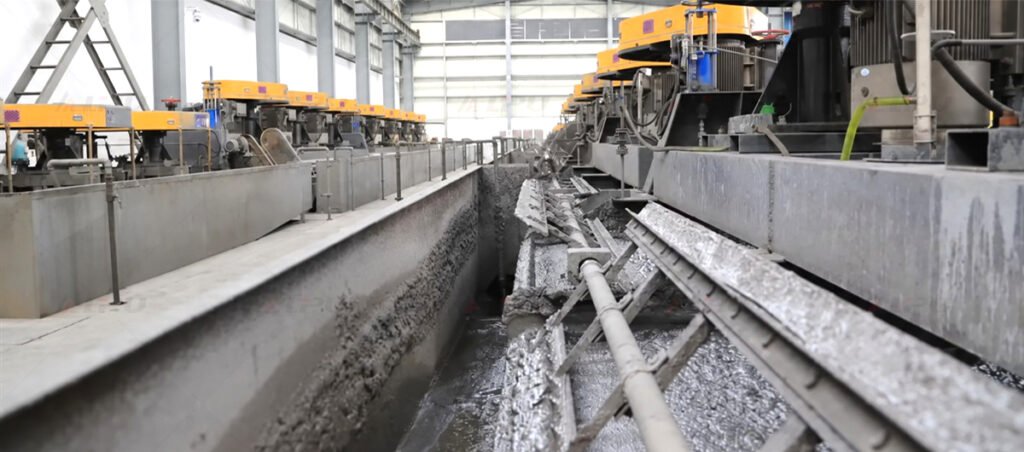
How Are Single Cells and Multi-Cell Banks Configured?
Depending on the selected series, flotation cells may be supplied individually or configured as connected banks.
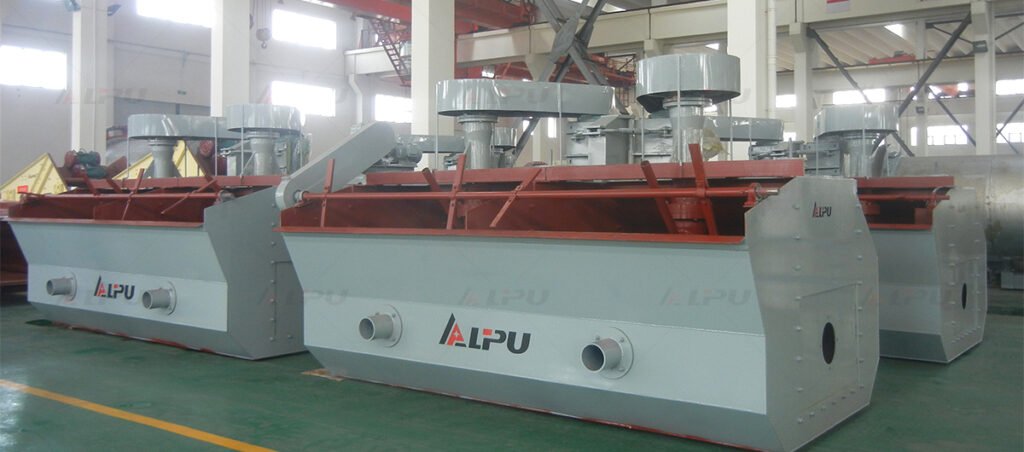
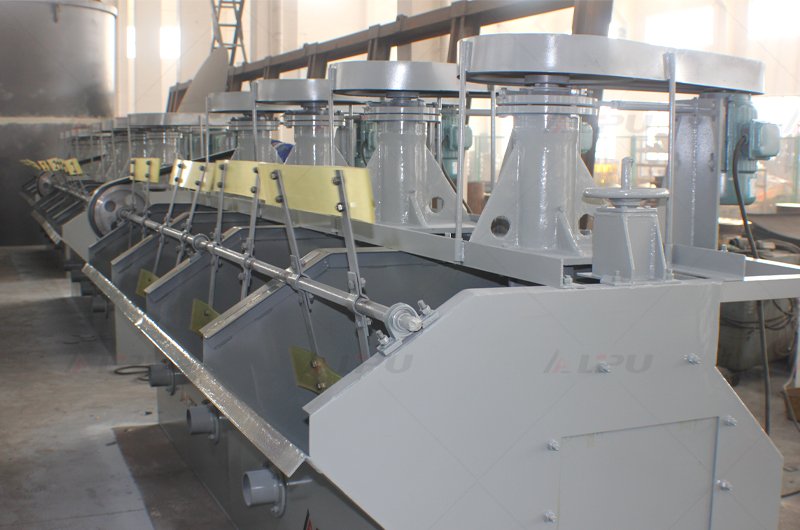
The permitted arrangement is determined by the equipment design and processing duty. Cell quantity, connection type and drive arrangement should not be assumed from a photograph.
Cell bank layout and equipment connections
A bank proposal should identify:
Cell model, quantity and volume per cell.
Feed, intermediate and discharge boxes.
Mixing and scraper-drive arrangements.
Level-control locations.
Concentrate launders and outlet positions.
Transfer elevations and any required pumps.
Clarify what “one set” includes. It may refer to a single cell, a group of cells or a bank supplied with selected accessories.
When extending an existing installation, check the added flow and the available transfer arrangement. Extra cells cannot simply be connected without reviewing the complete bank.
What Froth Removal and Control Features Should You Look For?
The froth collection arrangement should suit the expected concentrate load and provide practical access for observation and cleaning.
Where mechanical scrapers are fitted, review the blade arrangement, drive, adjustment and maintenance access. Other designs may rely on different froth-removal arrangements.
For slurry-level control, identify the discharge device and how it is adjusted. Instrumentation and automation should be described by function rather than a general claim of “automatic operation.”
A clear control specification separates:
Control Level
What the Proposal Should Describe
Manual adjustment
Functions adjusted locally by the operator
Local measurement
Readings available at the equipment
Plant-system connection
Signals supplied to the plant control system
Automatic control
Instruments, actuators and control functions included
This makes it easier to compare a basic machine package with a more extensively instrumented installation.
Which Parts Wear, and How Are They Replaced?
The rotor and stator, where fitted, deserve particular attention because wear can affect slurry movement and air dispersion.
Other inspection and replacement items may include tank liners, scraper blades, shaft seals, drive belts and slurry-control valve components.
When reviewing wear parts, obtain:
Part numbers and material specifications.
Inspection procedures and replacement limits.
Removal methods and component weights.
Recommended commissioning spares.
Normal supply lead times.
Avoid comparing machines using an unsupported wear-life promise. Service life depends on the feed, operating conditions and component specification.
Maintenance access matters as much as spare-part availability. Check whether the shaft and mixing mechanism can be lifted out, whether bearings and drives are accessible, and whether nearby piping obstructs removal.
Internal inspections must follow the manufacturer’s isolation, draining and access procedures.
What Should Be Included in the Quotation?
A machine price becomes meaningful only when the supply boundaries are clear.
Equipment or Service
Scope to Confirm
Flotation cells
Series, model, quantity and volume definition
Drives
Motors, transmission components and guards
Froth removal
Launders, scraper assemblies and drives where applicable
Air supply
Blower, distribution piping, valves and instruments where required
Level control
Discharge devices, sensors, actuators and controls
Electrical equipment
Control cabinet, local controls and connection boundaries
Installation items
Supports, platforms and responsibility for foundations
Spare parts
Part numbers, quantities and delivery schedule
Documentation
Arrangement drawings, operating instructions and maintenance information
Conditioning tanks, pumps and interconnecting piping should be listed separately where required. Do not assume they are included with the flotation machine.
What Information Should You Send LIPU?
Provide the mineral type, feed-size information, required dry throughput, slurry concentration and available flotation test results.
Explain whether you need a single machine, a new cell bank or replacement equipment. For an existing plant, include photographs, dimensions and connection details.
LIPU supplies flotation machines for mineral processing applications. Share your requirements to discuss equipment selection, configuration and supply scope.
Frequently Asked Questions
Does every flotation machine need an external blower?
No. Some machines use self-aspiration, while others require externally supplied air. The proposed model determines the air-supply requirement.
Does every flotation machine have a froth scraper?
No. Froth collection and removal arrangements differ. Check the actual equipment drawing rather than assuming a scraper is standard.
Which spare parts should be ordered with the machine?
Request a model-specific recommendation covering the mixing mechanism and other wear components, together with part numbers and supply lead times.
Are the blower, control cabinet and pumps included?
Only if they are listed in the quotation. These items may be supplied separately or provided by others.
Can a new machine directly replace an existing flotation cell?
Not automatically. Check duty, working volume, dimensions, elevations, connections and auxiliary requirements before confirming interchangeability.


We will reply to you within 24 hours