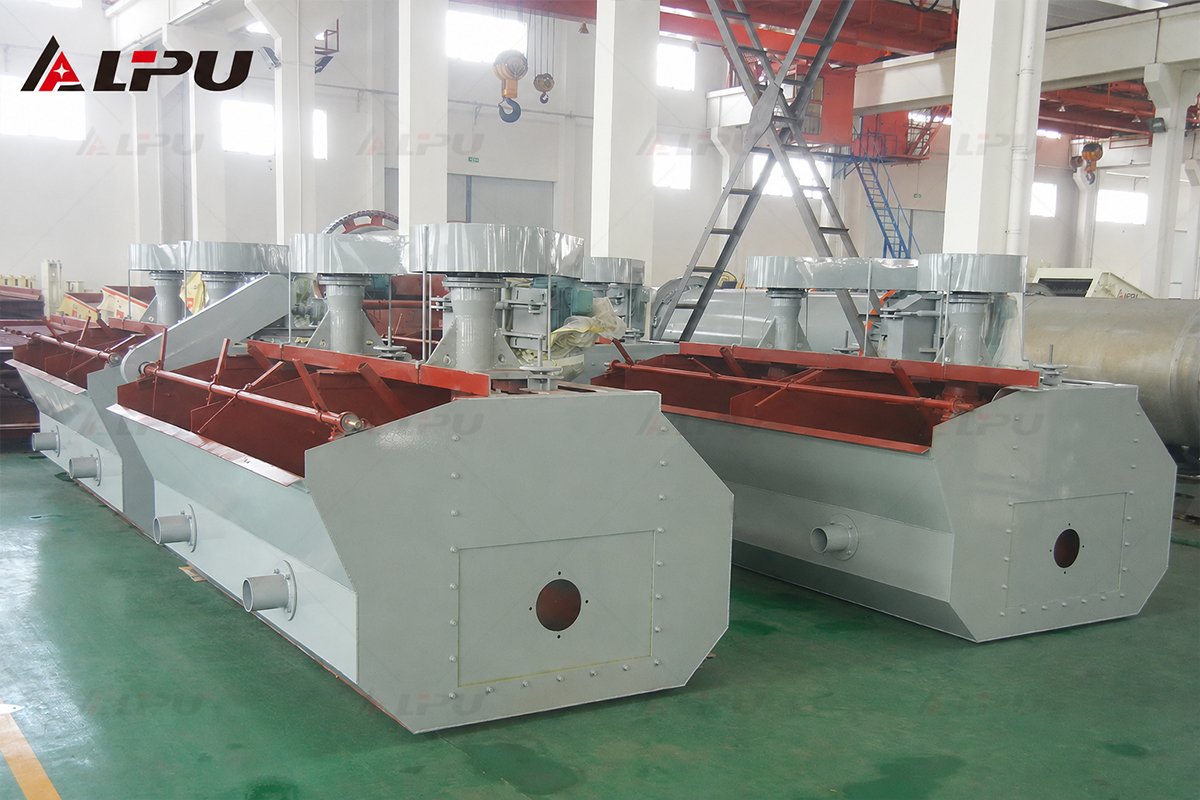
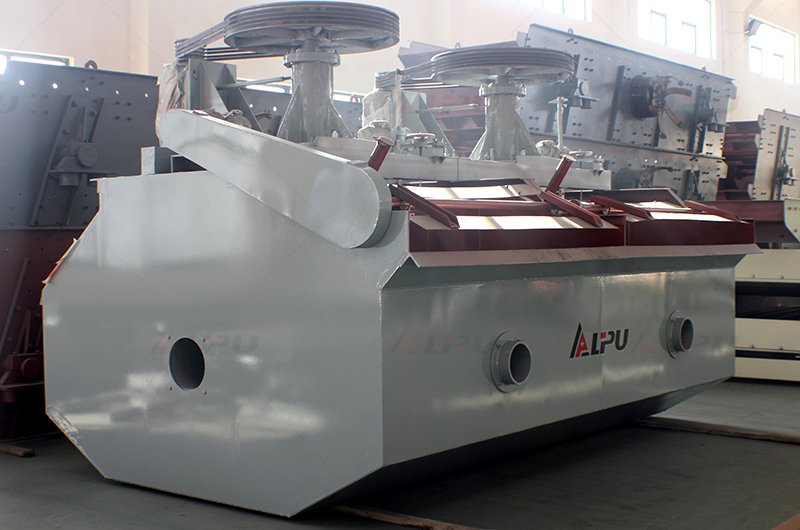
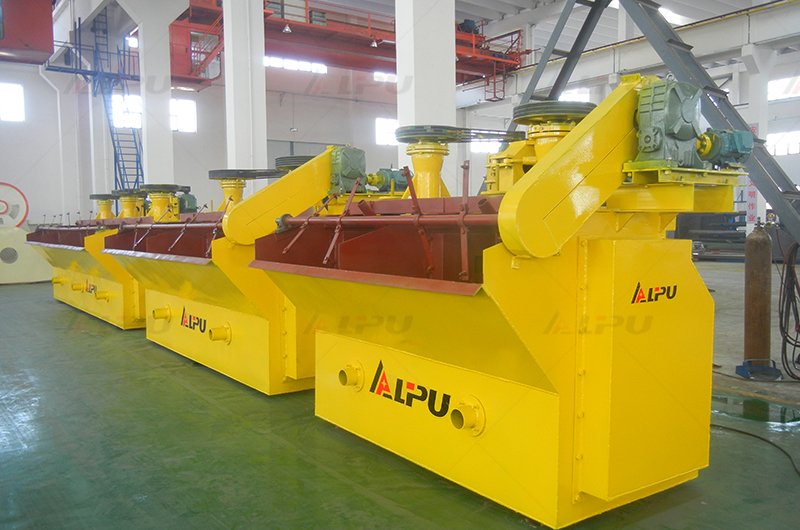
A flotation machine is mineral processing equipment used to separate minerals according to differences in surface properties.
After grinding and classification, ore is mixed with water and flotation reagents to form slurry. Air is introduced into the flotation cell, where bubbles contact selected mineral particles. Mineral-loaded bubbles rise to the surface and form froth, which is removed as concentrate.
Flotation machines are commonly used after grinding and classification in metallic and non-metallic mineral processing plants.
LIPU provides several flotation machine series for different processing requirements.
SF and BF Flotation Machines
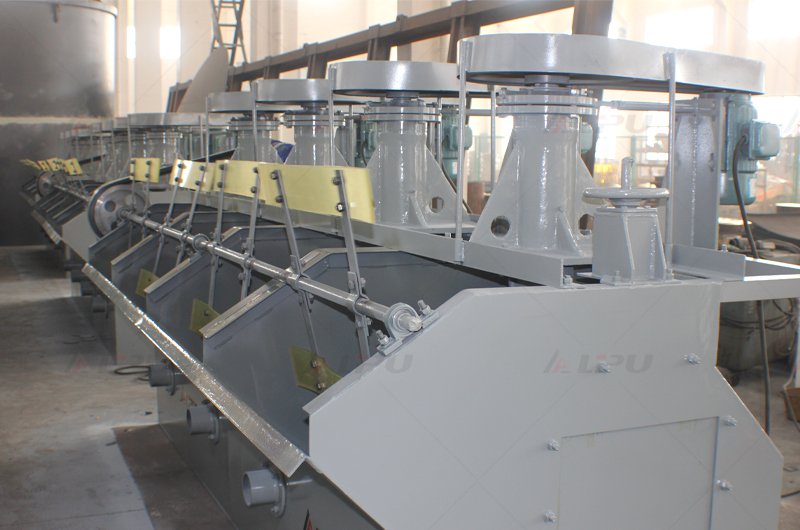
SF and BF flotation machines use mechanical agitation to keep particles suspended and promote contact between mineral particles and air bubbles.
Depending on the circuit design, they can be used for roughing, scavenging, and cleaning stages.
SF Flotation Machine
BF Flotation Machine
Typical characteristics include:
Mechanical agitation
Stable pulp circulation
Air dispersion
Multiple cell arrangements
Suitable for different flotation stages
KYF, XCF and BS-K Flotation Machines
KYF Flotation Machine
XCF Flotation Machine
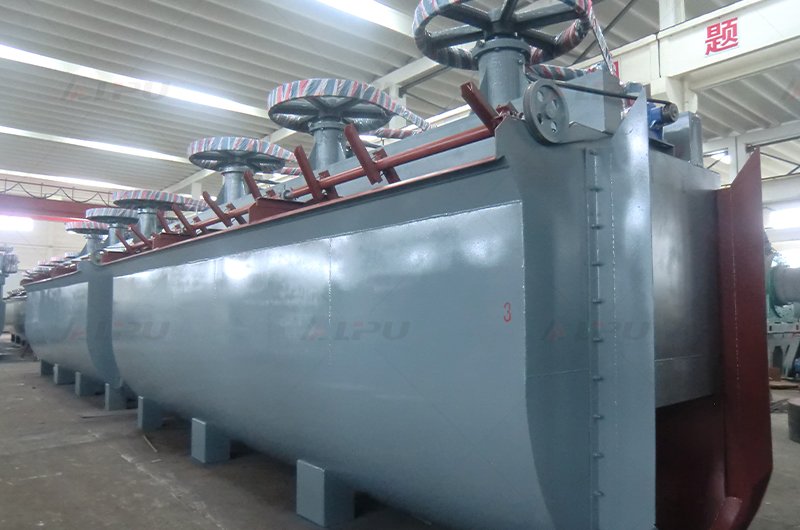
KYF, XCF, and BS-K flotation machines are suitable for larger or more complex flotation circuits.
KYF cells generally use external air supply, while XCF cells can be used where pulp suction is required in the circuit arrangement.
The final flotation machine type should be selected according to ore characteristics, flotation test results, pulp density, required capacity, and process design.
Materials and Applications
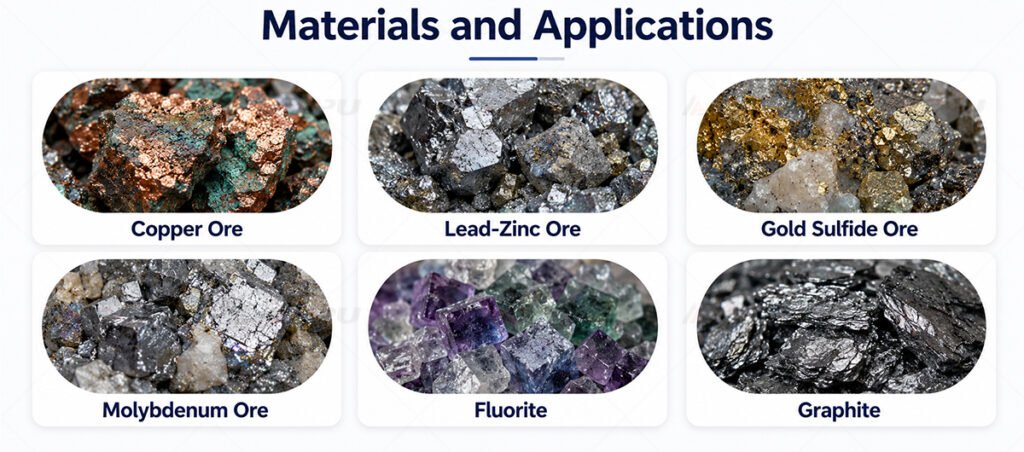
LIPU flotation machines can be used for a range of metallic and non-metallic minerals.
Typical materials include:
Flotation machine application material
Copper ore
Lead-zinc ore
Gold-bearing sulfide ore
Molybdenum ore
Nickel ore
Fluorite
Graphite
Phosphate minerals
Other floatable minerals
Typical applications include:
Copper flotation plants
Lead-zinc beneficiation plants
Gold flotation circuits
Molybdenum processing plants
Fluorite processing plants
Graphite flotation systems
Flotation performance depends on grinding size, pulp density, reagent conditions, aeration, and circuit design.
How Does a Flotation Machine Work?
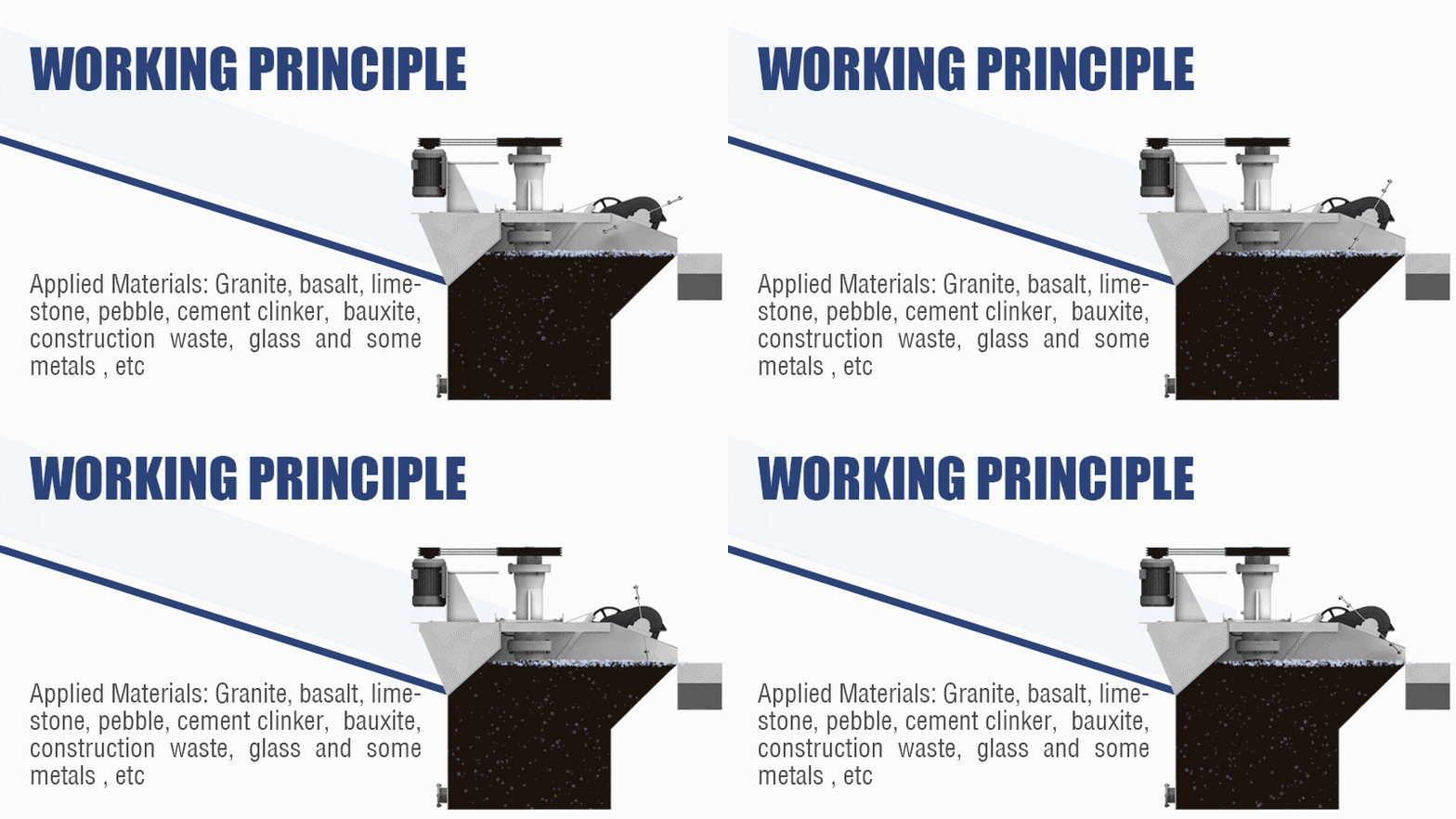
Conditioned slurry enters the flotation cell, where the impeller or rotor creates agitation and keeps mineral particles suspended.
Air is introduced and dispersed into bubbles. Hydrophobic mineral particles attach to the bubbles and rise to the surface, forming a mineralized froth layer.
The froth scraper removes the concentrate, while the remaining slurry moves to the next flotation cell or process stage.
Principle of Flotation Machine
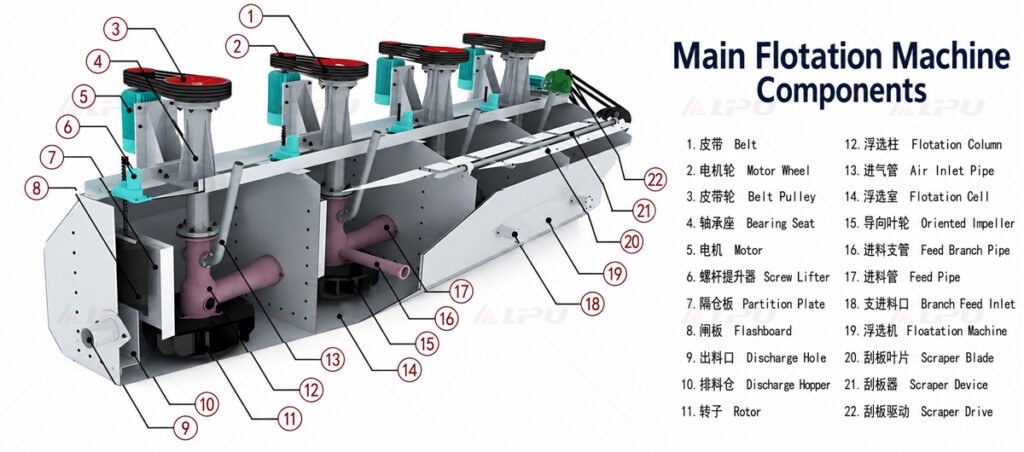
Main Flotation Machine Components
A typical flotation machine includes:
Main Flotation Machine Components
Flotation cell
Impeller or rotor
Stator
Main shaft
Air inlet or air supply system
Pulp inlet and outlet
Froth scraper
Level-control device
Drive motor
Transmission system
The exact structure varies according to the flotation machine series and aeration method.
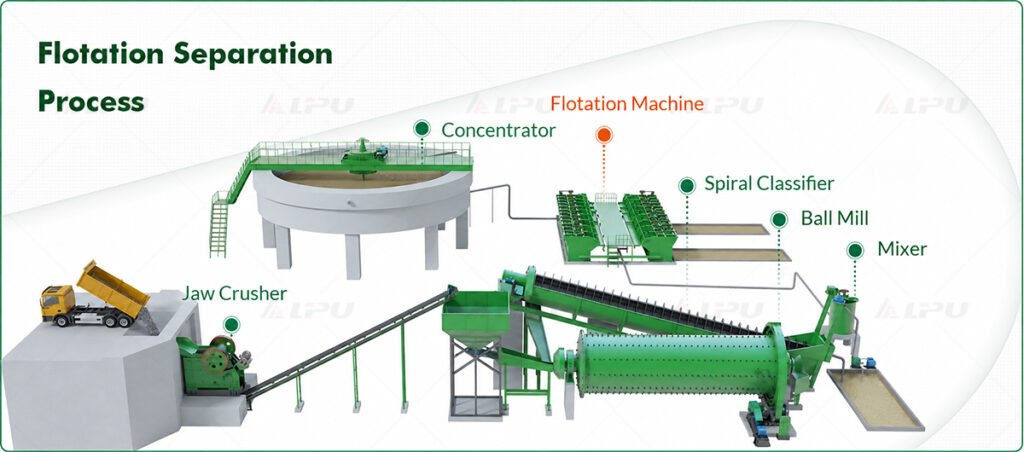
Flotation Process Circuit
A flotation machine normally works as part of a complete beneficiation system.
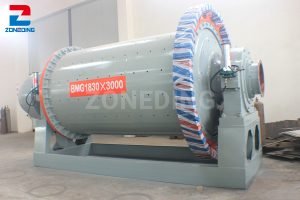
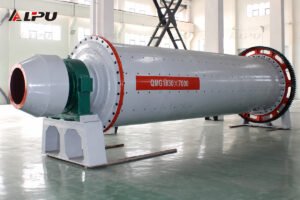
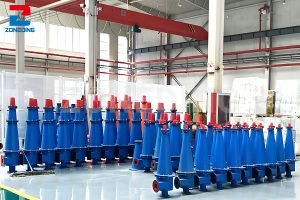
Ball mills are commonly used before flotation to reduce the ore to the required liberation size, while classifiers or hydrocyclones separate qualified fine material from coarse particles before flotation.
A flotation circuit may include:
Roughing
Scavenging
Cleaning
Recleaning
The number of stages depends on ore characteristics and concentrate quality requirements.
Flotation Machine Technical Parameters
Flotation machine selection depends on tank volume, processing capacity, aeration requirements, mineral characteristics, and the complete flotation circuit.
SF Flotation Machine
Model
Tank volume (m3)
Impeller diameter(mm)
Impeller speed(r/min)
Processing capacity (m3/min)
Main motor power(kW)
Scraper motor power(kW)
Weight (t/slot)
SF0.37
0.37
300
442
0.2-0.4
1.5
1.1
0.4
SF0.7
0.7
350
400
0.3-1
3
1.1
0.9
SF1.2
1.2
450
312
0.6-1.2
5.5
1.1
1.4
SF2.8
2.8
550
268
1.5-3.5
11
1.1
2.2
SF4
4
650
235
2-4
15
1.5
2.6
SF8
8
760
191
4-8
30
1.5
4.3
SF16
16
850
190
5-16
45
1.5
7.4
BF Flotation Machine
Model
Tank volume (m3)
Impeller diameter(mm)
Impeller speed(r/min)
Air intake(m3/m2.min)
Processing capacity (m3/min)
Power(kW)
Weight (t/slot)
BF2.8
2.8
550
278
0.9-1.1
1.4-3
11
2.1
BF4
4
650
235
0.9-1.1
2.4-4
15
2.6
BF6
6
700
205
0.9-1.1
3-6
18.5
3.3
BF8
8
760
188
0.9-1.1
4-8
22
4.1
BF10
10
760
188
0.9-1.1
5-10
22
4.5
BF16
16
850
195
0.9-1.1
8-16
37
8.3
BF20
20
850
195
0.9-1.1
10-20
45
8.7
BF24
24
920
181
0.9-1.1
12-24
45
9
KYF series inflatable flotation machine
Model
Tank volume
(m3)
Impeller diameter
(mm)
Impeller speed
(r/min)
Blower air pressure
(kpa)
Aeration rate
(m3/m2.min)
Processing capacity
(m3/min)
Main motor power
(kW)
Scraper motor power
(kW)
Weight
(t/slot)
KYF1
1
340
281
≥12.6
2
0.2-1
4
1.1
0.8
KYF2
2
410
247
≥14.7
2
0.4-2
5.5
1.1
1.5
KYF3
3
480
219
≥19.8
2
0.6-3
7.5
1.5
1.9
KYF4
4
550
200
≥19.8
2
1.2-4
11
1.5
2.2
KYF8
8
630
175
≥21.6
2
3.0-8
15
1.5
4.2
KYF16
16
740
160
≥25.5
2
4.0-16
30
1.5
6
KYF24
24
800
150
≥30.4
2
4.0-24
30
1.5
7.5
KYF38
38
880
138
≥34.3
2
10-38
37
1.5
10.3
XCF series inflatable flotation machine
Model
Tank volume
(m3)
Impeller diameter
(mm)
Impeller speed
(r/min)
Blower air pressure
(kpa)
Aeration rate
(m3/m2.min)
Processing capacity
(m3/min)
Main motor power
(kW)
Scraper motor power
(kW)
Weight
(t/slot)
XCF1
1
400
358
≥12.6
2
0.2-1
5.5
1.1
1.2
XCF2
2
470
331
≥14.7
2
0.4-2
7.5
1.1
1.7
XCF3
3
540
266
≥19.8
2
0.6-3
11
1.5
2.3
XCF4
4
620
215
≥19.8
2
1.2-4
15
1.5
2.7
XCF8
8
720
185
≥21.6
2
3.0-8
22
1.5
4.5
XCF16
16
860
160
≥25.5
2
4-16
37
1.5
6.6
XCF24
24
950
153
≥30.4
2
4-24
37
1.5
8
XCF38
38
1050
148
≥34.3
2
10-38
45
1.5
11
BS-K series inflatable flotation machine
Model
Tank volume
(m3)
Impeller diameter
(mm)
Impeller speed
(r/min)
Blower air pressure
(kpa)
Aeration rate
(m3/m2.min)
Processing capacity
(m3/min)
Main motor power
(kW)
Scraper motor power
(kW)
Weight
(t/slot)
BS-K2.2
2.2
420
260
≥12.6
2
0.2-1
5.5
1.1
1.2
BS-K4
4
500
220/230
≥14.7
2
0.4-2
7.5
1.1
1.7
BS-K6
6
650
197
≥19.8
2
0.6-3
11
1.5
2.3
BS-K8
8
650
180/190
≥19.8
2
1.2-4
15
1.5
2.7
BS-K16
16
750
160/170
≥21.6
2
3.0-8
22
1.5
4.5
BS-K24
24
830
154/159
≥25.5
2
4-16
37
1.5
6.6
BS-K38
38
910
141
≥30.4
2
4-24
37
1.5
8
Actual processing capacity may vary according to ore characteristics, pulp conditions, flotation stage, and operating parameters. The technical tables should be used for preliminary model selection.
How to Select the Right Flotation Machine
Flotation machine selection should be based on the complete process rather than tank volume alone.
For preliminary selection, the most useful project information includes:
Ore type and mineral composition
Required processing capacity
Grinding size
Pulp density
Target concentrate
Flotation stage
Aeration requirement
Flotation test results, if available
Project location
Ore testing is especially important for complex ores because flotation performance may vary significantly even when the main mineral type is similar.
Why Choose LIPU?
LIPU Heavy Industry provides equipment for crushing, grinding, classification, flotation, gravity separation, magnetic separation, thickening, and dewatering.
For flotation projects, LIPU can assist with:
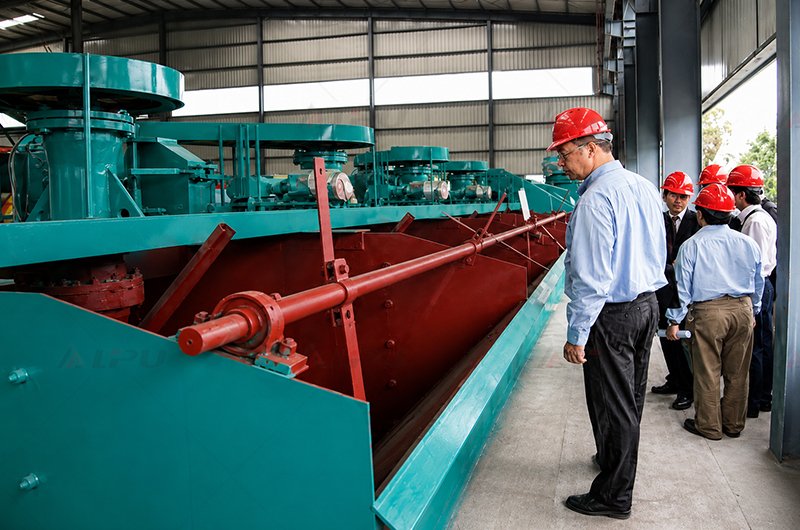
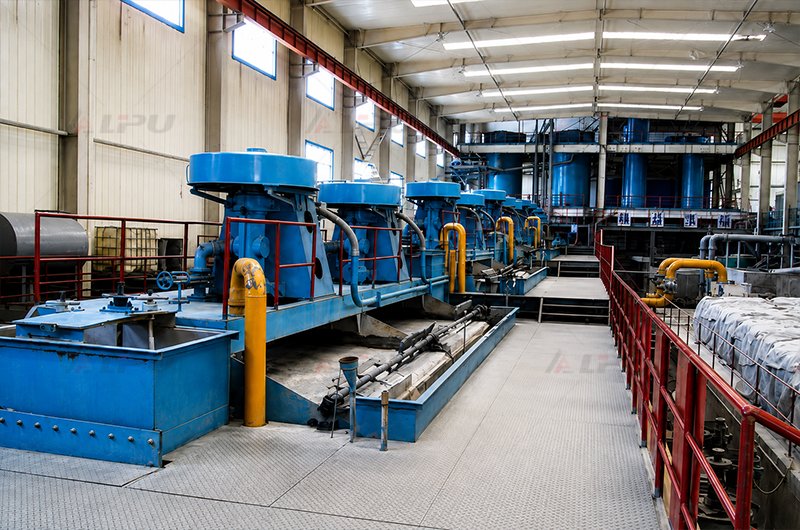
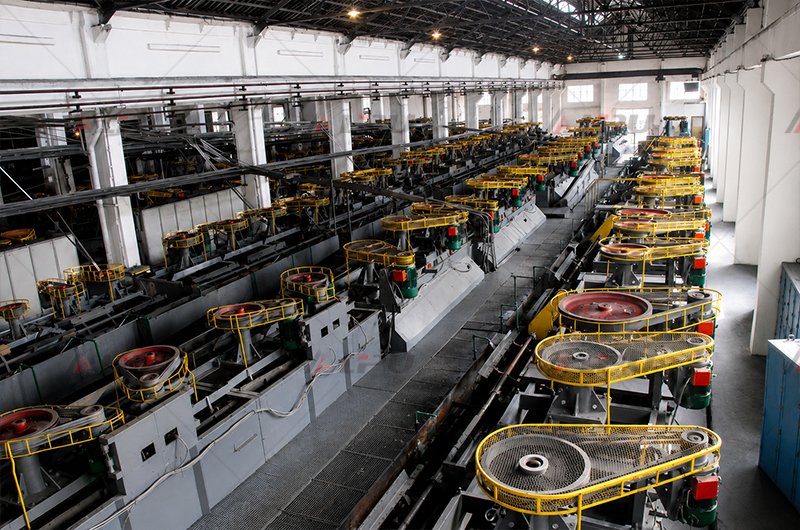
Flotation machine malaysia customer site
Flotation machine turkey customer site
Flotation machine india customer site
Flotation machine model selection
Cell quantity and volume selection
Grinding and flotation equipment matching
Flotation circuit arrangement
Equipment manufacturing
Factory inspection and testing
Installation and commissioning support
Spare parts and technical service
For complete beneficiation projects, flotation equipment should be selected together with upstream grinding and downstream concentrate handling equipment.
Frequently Asked Questions
What minerals can be processed by a flotation machine?
Flotation machines are commonly used for copper, lead-zinc, molybdenum, sulfide gold ores, fluorite, graphite, phosphate, and other floatable minerals.
Does a flotation machine require air?
Yes. Air is required to form bubbles in the flotation cell. Depending on the machine type, air may be introduced by self-aeration or an external air supply system.
What is the difference between roughing, scavenging, and cleaning?
Roughing recovers most of the valuable minerals from the feed. Scavenging treats rougher tailings to recover additional valuable material, while cleaning improves concentrate grade.
What information is needed to select a flotation machine?
Ore type, capacity, grinding size, pulp density, mineral composition, flotation stage, and preferably flotation test data are useful for model selection.
Can LIPU provide a complete flotation processing line?
Yes. LIPU can provide equipment matching for crushing, grinding, classification, flotation, thickening, filtration, and other related mineral processing stages.
LET US REACH YOUNeed detailed customization and latest price? Chat online or leave message below!
How we use cookies
This Cookie Privacy Policy statement explains how Zoneding Machine (hereinafter referred to as "we", "our", or "this website") uses cookies and similar technologies (collectively referred to as "cookies") to identify you when you visit our website lepuu.com. It explains what these technologies are, why we use them, and your rights to control our use of them.
Privacy Policy
Leave a Message
We will reply to you within 24 hours
Hello, I am Lipu Heavy Industry, what can we do for you please?