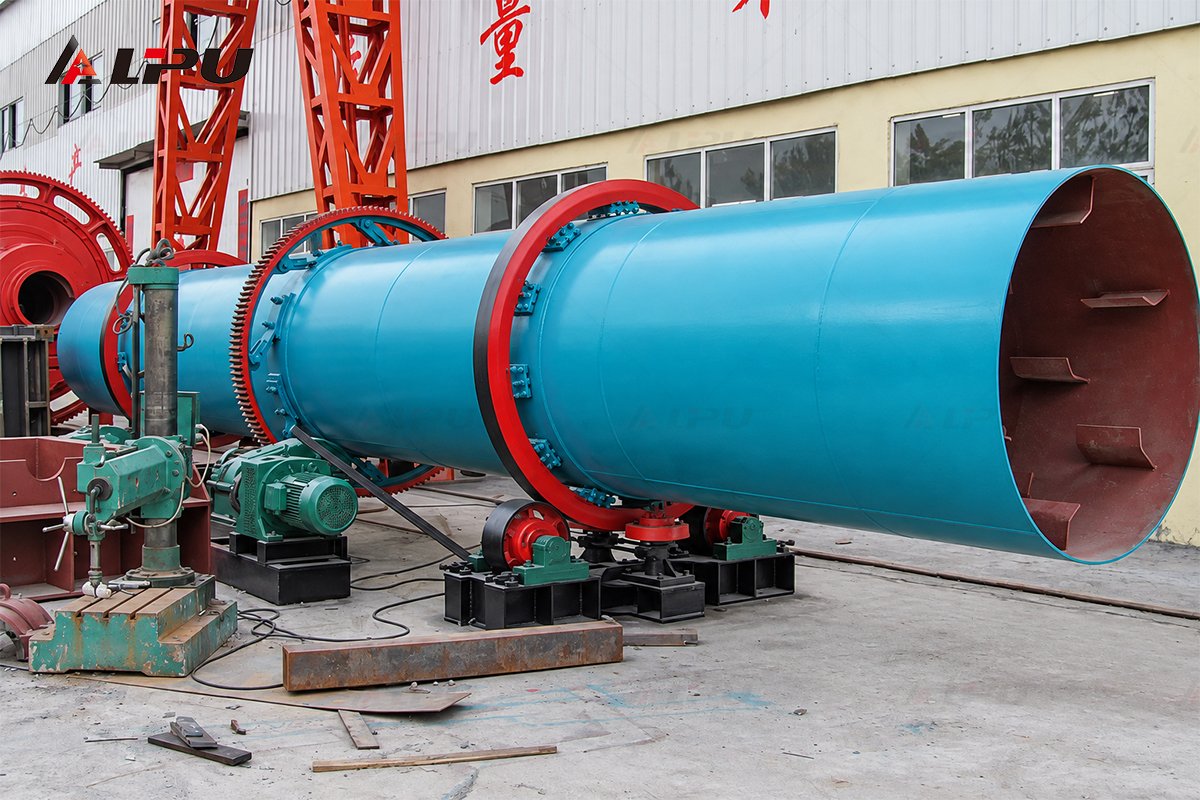
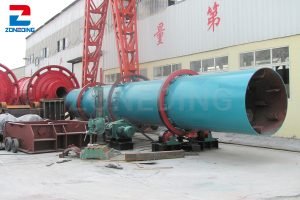
A rotary anthracite dryer reduces moisture in wet coal particles and fines before storage, transport or further processing. The system combines controlled feeding, a rotating drum, heat supply and exhaust treatment to achieve the required product moisture.
Selecting the right machine starts with the wet feed rate, inlet moisture, target outlet moisture and particle-size distribution.
Send your material information to LIPU to discuss equipment selection and quotation scope.
What Is an Anthracite Dryer Machine?
An anthracite dryer machine is an industrial system designed to reduce moisture in anthracite coal before handling, storage, or further processing. Its configuration depends on the feed’s moisture content and particle size, required throughput, target moisture, and available heat source.
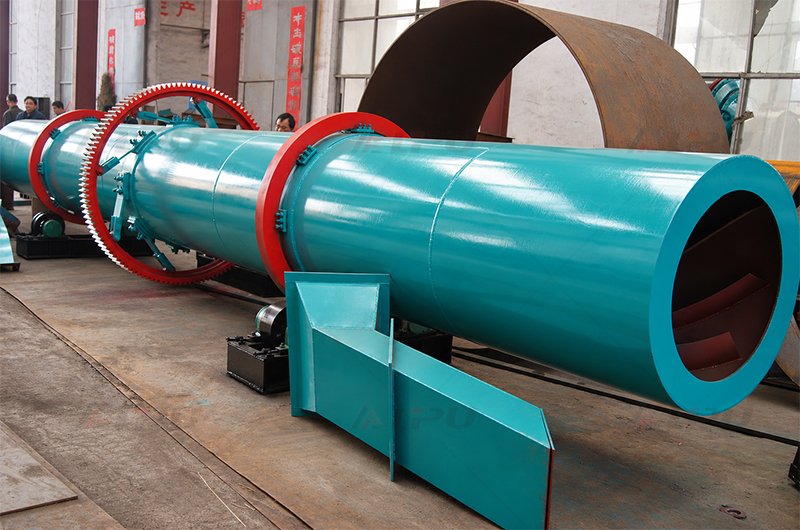
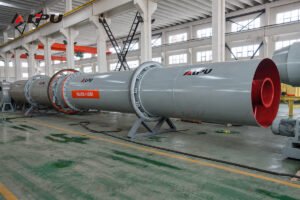
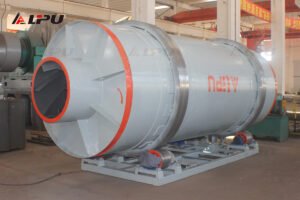
Rotary drum dryer during factory assembly
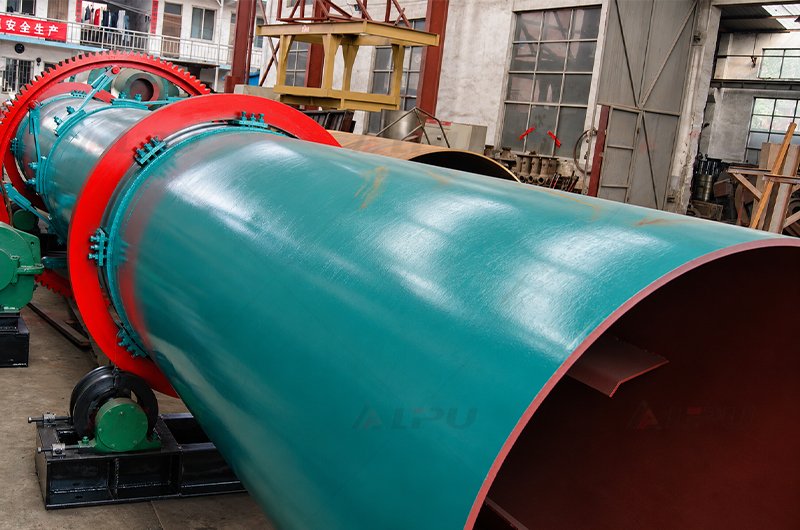
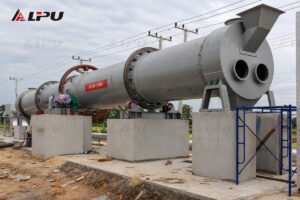
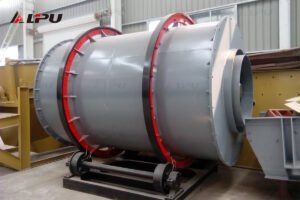
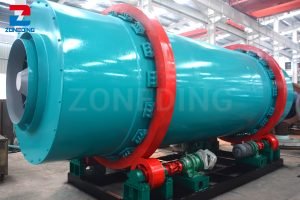
Rotary dryer drum and drive assembly
Drying reduces moisture; it does not remove mineral impurities or upgrade coal by itself.
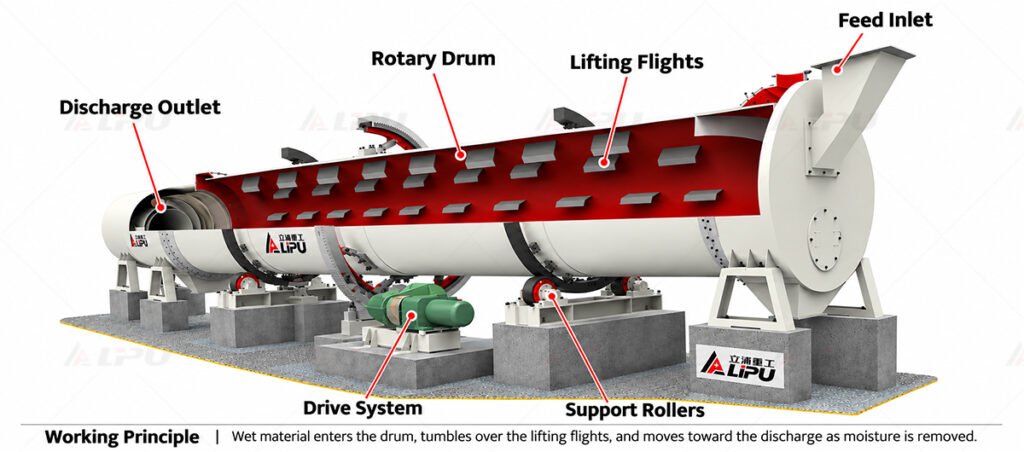
Anthracite Rotary Dryer Structure and Working Principle
Wet anthracite enters the drum through the feed arrangement. As the drum rotates, internal lifters raise and redistribute the material, exposing it to the drying gas.
Moisture evaporates as the material travels through the drum. The dried product leaves through the discharge arrangement, while moisture-laden exhaust gas passes through the selected dust collection system.
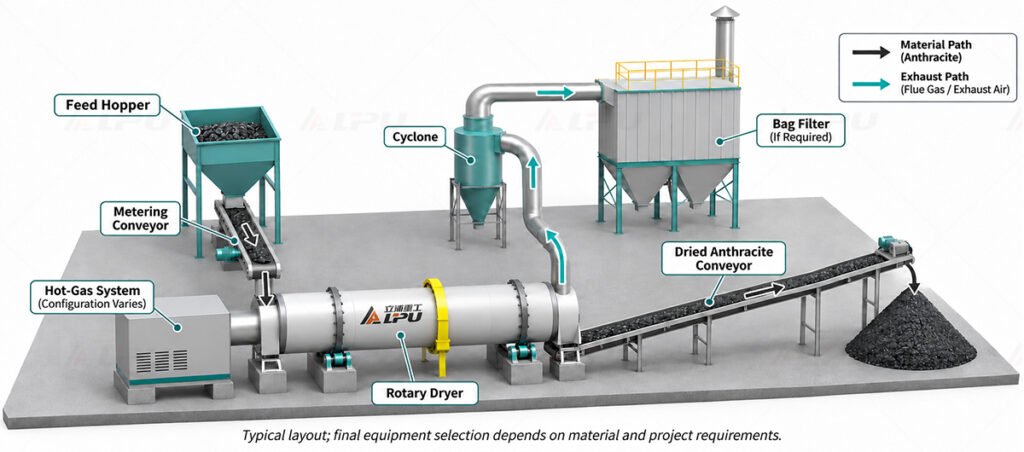
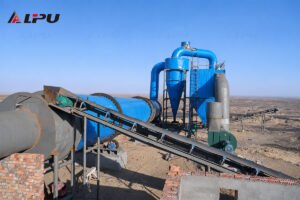
A typical installation includes metered feeding equipment, the rotary dryer, heat supply, dust collection and an exhaust fan. Product cooling and additional handling equipment may be required before storage or further processing.
Drum dimensions, internal lifters, gas-flow arrangement and operating conditions must be selected together. A configuration suitable for coarse particles may require changes when processing a feed containing more fines.
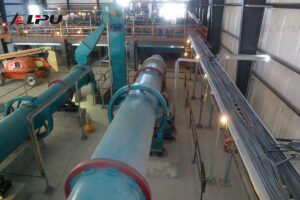
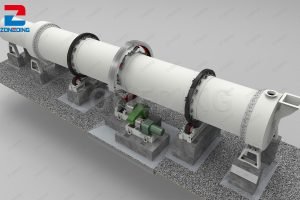
Rotary dryer structure and working principle
Main Components of an Anthracite Dryer
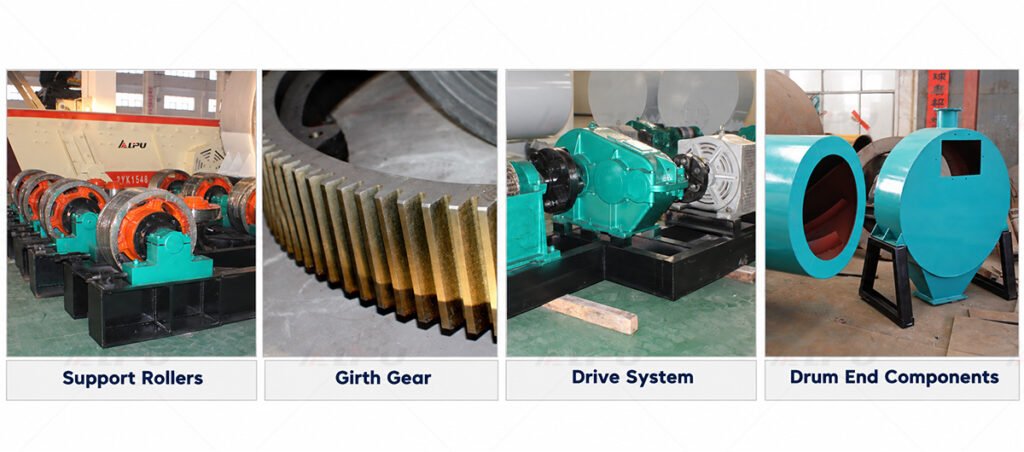
Key rotary dryer components: support rollers, girth gear, drive system, and drum ends
Component
Main Function
Selection Considerations
Rotary drum
Contains and conveys material during drying
Dimensions, construction and installation requirements
Internal lifters
Lift and distribute material through the gas stream
Particle size, moisture and material handling behaviour
Feed arrangement
Introduces wet anthracite into the drum
Feed consistency, sealing and buildup prevention
Support tyres and rollers
Support the rotating drum
Alignment, bearing access and maintenance
Drive assembly
Rotates the drum
Motor, transmission, guarding and speed-control requirements
Inlet and outlet seals
Limit unwanted air leakage
Seal construction, wear and service access
Discharge arrangement
Transfers dried material downstream
Product temperature, chute layout and dust containment
When comparing suppliers, confirm whether the offer covers the dryer assembly alone or a complete drying system.
Anthracite Dryer Applications
Anthracite dryers are used to reduce moisture in anthracite coal before storage, transport, or further processing. Depending on the project configuration and material characteristics, a rotary dryer may be considered for:
Anthracite briquettes
Anthracite particles
Fine Anthracite
Wet anthracite from washing or beneficiation processes
Anthracite prepared for storage or transport
Coal processing lines that require moisture reduction before a downstream stage
Dryer selection depends on feed moisture, particle size, required throughput, target moisture, and the available heat source. Confirm suitability for the specific material and process before selecting a model.
Benefits of a Rotary Anthracite Dryer
Continuous processing: A rotary drum can support continuous material movement through the drying process.
Multiple model options: Drum sizes and motor powers can be selected to suit different throughput requirements.
Process integration: The dryer can be configured with feeding, conveying, heating, dust collection, and discharge equipment.
Adjustable operating conditions: Operating settings can be matched to the feed material, heat source, and required product condition.
Project-specific layout: Auxiliary equipment and system arrangement can be planned around site and process requirements.
Drying performance depends on the anthracite’s moisture content, particle size, heat source, system configuration, and operating conditions. Confirm expected capacity and product moisture with LIPU during project evaluation.
Anthracite Dryer Models and Technical Specifications
LIPU anthracite dryer models are available in different drum sizes and configurations to meet a range of processing requirements. Compare the specifications below, including drum dimensions, rotation speed, capacity, inlet temperature, and motor power, to identify suitable options for your project.
Actual throughput depends on the feed’s moisture content, particle size, heat source, and operating conditions. Contact LIPU with your material and production requirements to confirm the appropriate model.
Anthracite Dryer Machine
Model
Volume of the drum(m³)
Capacity(t/h)
Installation slope(%)
Maximum intake temperature (℃)
Main motor power(kw)
Weight(t)
Φ0.6×8
2.2
0.4-0.6
3-5
700-850
3
3.2
Φ0.8×10
5
1.3-1.8
3-5
700-850
4
4.4
Φ1.0×10
7.8
2.0-3.0
3-5
700-850
5.5
5.3
Φ1.2×10
11.3
3.0-4.0
3-5
700-850
7.5
8.1
Φ1.2×1.2
13.5
3.5-5.0
3-5
700-850
11
9.1
Φ1.5×12
21.2
5.5-7.5
3-5
700-850
15
14.6
Φ1.5×15
26.5
7.0-10
3-5
700-850
15
16.5
Φ1.8×12
30.5
8.0-11
3-5
700-850
18.5
21.9
Φ1.8×18
45.8
12-16
3-5
700-850
18.5
26.6
Φ2.0×20
62.8
16-23
3-5
700-850
22
36.5
Φ2.2×22
83.6
22-30
3-5
700-850
30
43.9
Φ2.4×22
99.5
26-35
3-5
700-850
45
53.1
Φ2.5×25
122.7
32-45
3-5
700-850
45
62.6
Φ2.6×24
127.4
33-46
3-5
700-850
45
63.0
Φ2.8×28
172.4
44-62
3-5
700-850
45
85.0
Φ3.0×25
176.6
45-64
3-5
700-850
75
89.0
Φ3.2×25
201
50-72
3-5
700-850
90
95.0
Φ3.4×28
254
65-92
3-5
700-850
110
122.0
Φ3.6×28
285
73-103
3-5
700-850
160
129.0
Supporting Equipment to Confirm
Feeding equipment
A hopper and metering device help maintain a consistent feed. Their design should suit the material’s moisture, particle size and tendency to build up. Oversized lumps or agglomerates may need preparation before entering the dryer.
Heat supply
Heat-source selection depends on the required evaporation duty, available fuel and material characteristics. The proposal should define the combustion equipment, temperature-control approach and suitability of direct gas contact with the product.
Dust collection and exhaust
Fine coal can enter the exhaust stream. The collector, fan and ductwork must suit the expected gas volume, temperature, moisture and dust characteristics. Collected-dust handling should also be included in the system discussion.
Product handling
Discharge conveyors and storage arrangements must suit the dried product. Confirm whether cooling is needed before the anthracite enters storage or the next process.
How to Select Dryer Capacity
Wet feed tonnage alone does not define dryer capacity. The amount of water to be removed is also a major selection factor.
Two feeds entering at the same hourly tonnage can require different drying duties if their inlet moisture differs. A capacity proposal should therefore state the material and operating conditions behind the quoted output.
Typical anthracite drying line layout; final equipment configuration varies by project
Required Information
Why It Matters
Wet feed rate
Establishes the incoming material load
Normal and maximum inlet moisture
Defines the range of incoming water load
Target outlet moisture
Establishes the required moisture reduction
Particle-size distribution
Affects drying behaviour and dust carryover
Bulk density and flow characteristics
Influence feeding and drum loading
Coal analysis
Supports assessment of process suitability and operating safeguards
Available fuel and utilities
Helps define supporting equipment requirements
State whether moisture is measured on a wet or dry basis. Also confirm whether quoted capacity refers to wet feed or dried product.
Temperature Control and Operating Safeguards
Coal-drying conditions must be determined for the specific material and installation. A general dryer temperature range should not be treated as an operating instruction for anthracite.
The system design should address:
Coordination of material feeding and heat input.
Monitoring of relevant gas and product temperatures.
Airflow and pressure control.
Start-up, shutdown and loss-of-feed procedures.
Dust containment and collection.
Fire and explosion protection appropriate to the assessed hazards.
The required instruments, alarms, interlocks and protective equipment should be defined during project engineering and confirmed in the supply scope.
Maintenance and Service Access
Maintenance access should be considered before the machine is installed.
Check access to support rollers, bearings, drive components and seals. Feed and discharge chutes should allow inspection and clearing of buildup, while the dust collection system requires separate cleaning and maintenance provisions.
Ask for information covering:
Lubrication points and maintenance intervals.
Drum alignment and roller inspection.
Seal and internal-component replacement.
Recommended wear parts and spare parts.
Access clearances and lifting requirements.
These details help compare the practical maintenance requirements of different equipment proposals.
What Should the Quotation Include?
A clear quotation identifies the equipment included and the responsibilities remaining with the buyer.
Equipment or Service
Scope to Confirm
Dryer assembly
Drum, internals, supports, drive and seals
Feeding equipment
Hopper, metering device and transfer equipment
Heat supply
Combustion equipment, fuel handling and connecting ductwork
Exhaust treatment
Dust collector, fan, ducting and dust discharge
Product handling
Discharge equipment and cooling where required
Electrical equipment
Control panel, instruments and agreed protective functions
Installation items
Platforms, supports and foundation responsibilities
Documentation and services
Drawings, manuals and any agreed installation or commissioning support
Capacity commitments, fuel-consumption estimates, delivery time and warranty terms should be stated against the agreed project conditions.
Request an Anthracite Dryer Proposal
Send LIPU your wet feed rate, inlet and target moisture, particle-size distribution, available coal analysis, heat-source preference and installation location.
Material photos can support an initial discussion. Representative samples or drying tests may be needed before the final configuration and performance conditions are agreed.
Contact LIPU to discuss your anthracite drying requirements.
Frequently Asked Questions
Can a rotary dryer process anthracite fines?
Anthracite fines can be considered, but their proportion affects feeding, dust carryover and exhaust-system selection. Provide the particle-size distribution before choosing a configuration.
What outlet moisture can the dryer achieve?
The achievable moisture depends on the material and operating conditions. Any performance commitment should specify the feed rate, inlet moisture, particle size and target outlet moisture.
Does drying remove ash or sulfur?
Drying primarily removes moisture. It does not replace washing or separation processes used to reduce mineral impurities.
Can the same dryer process different types of coal?
A different coal may require changes to the operating conditions or equipment configuration. Confirm suitability before processing material outside the original design basis.
How is fuel consumption estimated?
Fuel consumption depends on the water evaporation duty, fuel properties, feed conditions and system design. Estimates should include these assumptions.
Is a dust collector included with the dryer?
This depends on the quotation. Confirm the collector, exhaust fan, ductwork, dust discharge and controls included in the proposed system.