A rod mill can prepare crushed ore for gravity separation, magnetic separation or a subsequent grinding stage. However, the mill is only one part of the circuit. Feed size, product requirements, classification and downstream equipment all influence how the system should be configured.
The best arrangement depends on the ore and the process objective. A plant producing a relatively coarse feed for gravity separation may have different requirements from a plant using a rod mill ahead of a ball mill.
This guide explains where a rod mill can fit in a mineral processing circuit, what data is needed for configuration and how to evaluate the main equipment connections.
Where Does a Rod Mill Fit in a Mineral Processing Circuit?
A rod mill generally receives material from a crushing circuit and reduces it to a coarser ground product. Depending on the project, that product may proceed to separation, classification or another grinding stage.
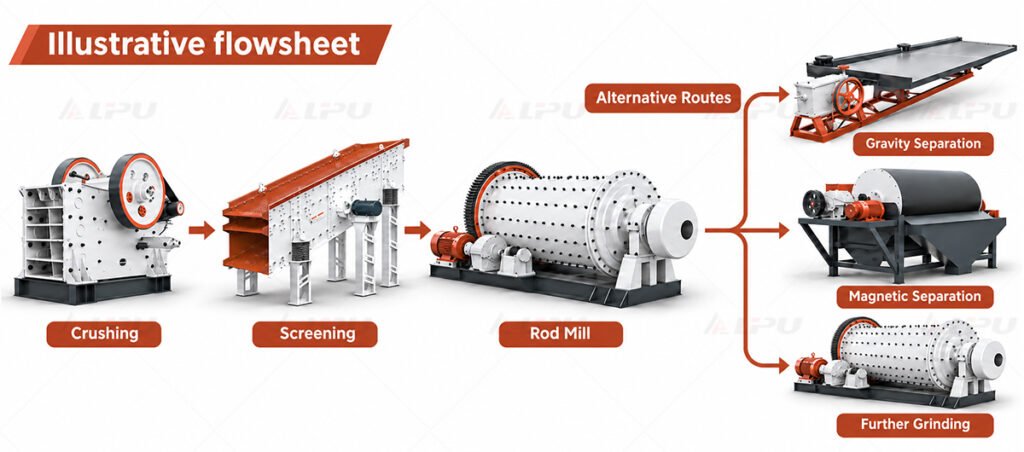
In a typical arrangement, ore is first crushed and screened to produce a suitable feed for the rod mill. The mill discharge may then pass through screening or classification if additional size control is required. Depending on the ore and process objective, the prepared material can proceed to gravity separation, magnetic separation or further grinding.
For example, a rod mill may be used to prepare relatively coarse material for a gravity circuit where excessive fines could make separation more difficult. In another application, it may prepare feed for a ball mill that performs additional grinding.
A rod mill can prepare crushed ore for different downstream processes
The actual flowsheet depends on the ore, the required particle size and the performance of downstream equipment. A rod mill should therefore be selected for its role in the complete process, not only for its listed capacity or discharge size.
What Feed Data Is Needed Before Configuring a Rod Mill?
The crushing circuit determines the material delivered to the rod mill. To evaluate whether the proposed mill and its upstream equipment are compatible, collect information about both the size and characteristics of the feed.
The most useful feed information includes:
Ore type and mineral composition: Different minerals and gangue materials respond differently to grinding.
Feed size distribution: A sieve analysis shows how much material is present in each size range.
Maximum feed size: Oversized particles must remain within the limits of the selected mill and circuit.
Hardness and grindability: Test results help estimate grinding requirements and compare equipment configurations.
Moisture and clay content: These affect material handling, feeding and the choice between wet and dry processing.
Feed rate: The design should consider the required throughput and expected variations in operation.
Do not rely only on the largest particle size. Two feed samples can have the same maximum size but very different proportions of coarse and fine particles. A representative size distribution gives a better basis for circuit design.
If the crushed product is too coarse or varies widely, the project may require changes to the crushing or screening stage before finalizing the rod mill configuration.
How Does Target Product Size Affect Circuit Design?
The target product size should be determined by the requirements of the next process stage.
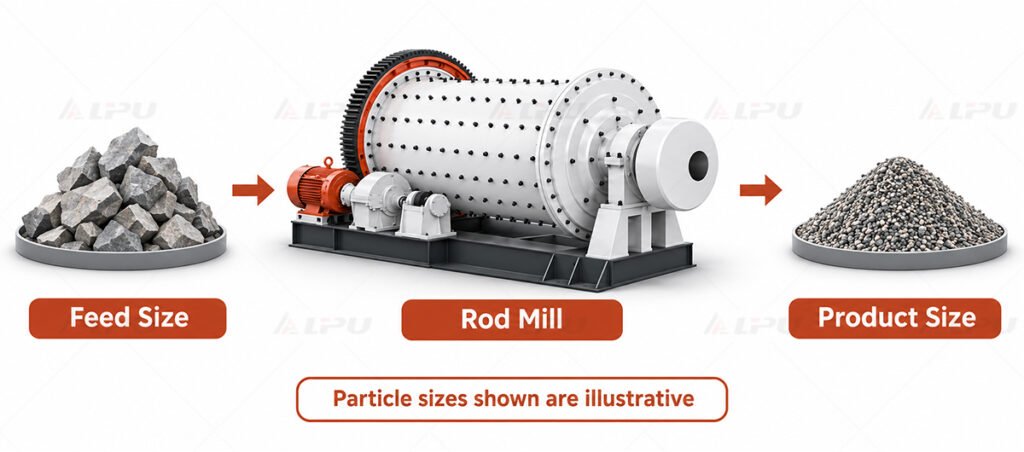
Feed and product size requirements guide rod mill circuit design
For example:
A gravity separation circuit may require a suitable size range rather than simply the finest possible product.
A magnetic separation circuit may need sufficient mineral liberation before separation.
A subsequent ball mill may require a controlled feed size and stable throughput.
A final mineral product may need to meet a specified top size or size distribution.
When defining the target, provide more than a single number where possible. Useful information includes:
The required percentage passing a specified size.
The maximum acceptable particle size.
Any limit on fine particles or slimes.
The size range preferred by downstream separation equipment.
Available liberation and beneficiation test results.
A finer product is not automatically better. Additional grinding can increase energy use and may create fines that are difficult for some downstream processes to recover. On the other hand, insufficient grinding may leave valuable minerals locked with gangue.
Grinding and separation tests help determine a practical balance between liberation, product size and recovery.
Open-Circuit or Closed-Circuit Rod Milling: How Should You Decide?
A rod mill may be arranged in an open or closed circuit, depending on the required product and the performance of the downstream process.
Open-Circuit Rod Milling
In an open circuit, crushed ore passes through the rod mill and proceeds to the next process stage without a classification return stream to the mill.
This arrangement may be considered when the mill discharge can meet the downstream requirement without a return of coarse material. It can offer a simpler layout, but product size still depends on feed characteristics, operating conditions and mill configuration.
An open circuit should be evaluated against the actual size distribution required by the next stage, rather than assumed suitable for every coarse-grinding application.
Closed-Circuit Rod Milling
In a closed circuit, the rod mill discharge passes to a screen or classifier for size separation. Material that requires further grinding returns to the mill, while the acceptable product proceeds to the next process stage.
A closed circuit can provide additional control over the product delivered downstream. However, it also introduces classification equipment, return flow and additional design considerations.
The classifier and rod mill must be sized as a system. A high circulating load can increase the material passing through the mill even when fresh feed remains unchanged.
Which Arrangement Is Better?
Neither arrangement is universally better. The decision should consider:
Design question
Open circuit
Closed circuit
Is a coarse product acceptable?
May be suitable if the discharge meets the requirement
May be used when additional size control is needed
Classification efficiency, circulating load and equipment capacity
Ore testing and circuit calculations are necessary before selecting either arrangement.
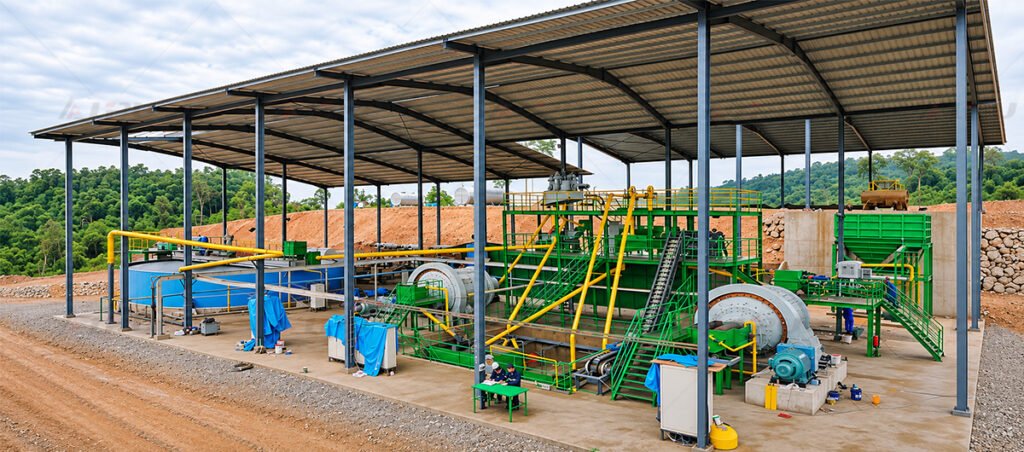
Illustrative view of grinding equipment in a mineral processing plant
How Can Screening or Classification Be Combined With a Rod Mill?
Screening or classification can be used when the process requires additional control over the material sent to downstream equipment.
A screen separates material using an opening size. Depending on the application, it may be used before grinding to control feed or after grinding to separate the mill discharge.
A classifier separates particles according to their settling or flow behavior in a slurry. Its selection depends on factors such as particle size, solids concentration, water use and the required separation performance.
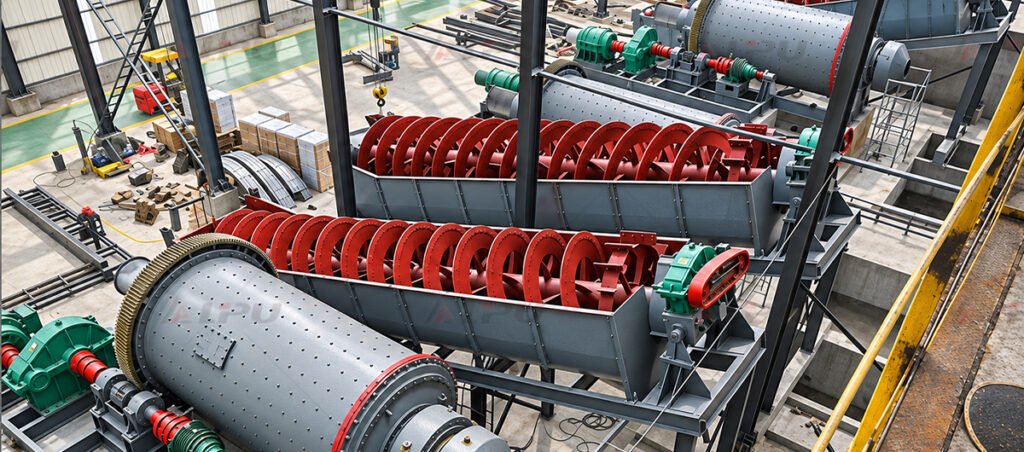
Illustrative view of grinding and classification equipment
When evaluating classification, consider the following:
What size range does the next process need? Define the required product before choosing the separating equipment.
Is the circuit wet or dry? This affects the types of equipment and material handling arrangements available.
Where will coarse material go? It may return to grinding or proceed to another stage, depending on the flowsheet.
How will water be managed? A wet circuit requires suitable pumps, piping and water control.
Can the equipment handle variations? Feed size, solids concentration and throughput may change during operation.
The objective is not to add classification to every circuit. It is to use the equipment only where it supports the required product and improves the overall process.
How Should Rod Mill Discharge Match the Next Separation Stage?
The mill discharge must be suitable for the next piece of equipment. This means checking particle size, slurry conditions, feed rate and mineral liberation together.
Rod Mill Before Gravity Separation
Gravity equipment separates minerals according to differences in properties such as density and particle behavior. Its performance can be affected by feed size distribution and the proportion of very fine particles.
When configuring a rod mill before gravity separation, evaluate:
The size range at which valuable minerals are liberated.
The feed size range accepted by the selected gravity equipment.
Whether screening or classification is needed.
The amount of fine material produced during grinding.
Whether a staged grinding and recovery arrangement is justified by testing.
For some ores, recovering liberated minerals between grinding stages may be worth evaluating. The final arrangement should be based on test results rather than ore name alone.
Rod Mill Before Magnetic Separation
When magnetic separation follows grinding, the key question is whether the magnetic minerals are sufficiently liberated at the proposed grind size.
The circuit should also deliver a feed that matches the selected separator’s operating requirements. Further grinding or classification may be required if valuable minerals remain locked or if the particle size distribution is unsuitable.
Rod Mill Before a Ball Mill
A rod mill may also prepare feed for a subsequent ball mill. In this arrangement, the rod mill performs an initial grinding duty, while the following mill provides additional size reduction where required.
The two mills should be evaluated as one circuit. The rod mill product size, transfer system, ball mill capacity and classification arrangement all influence overall performance.
What Operating Conditions Affect Rod Mill Circuit Performance?
A suitable flowsheet still needs stable operation. Changes in feed or water conditions can alter the mill discharge and affect downstream equipment.
The most useful operating measurements depend on the circuit, but may include:
Fresh feed rate.
Feed size distribution.
Mill discharge particle size distribution.
Mill power or motor load.
Water addition and slurry density in a wet circuit.
Classifier feed and return flow, where installed.
Grinding media condition and wear.
Throughput and performance of downstream separation equipment.
For example, if the feed becomes coarser while the target product remains unchanged, the circuit may require review of the crushing stage, feed rate or grinding duty. If the product becomes finer than necessary, the team should examine feed conditions, mill operation and classification performance before changing equipment.
Operating limits, media specifications and maintenance procedures should follow the equipment supplier’s instructions and the results of commissioning.
What Information Should You Provide for a Rod Mill Proposal?
A complete project brief helps the equipment supplier evaluate the mill together with the rest of the circuit.
Information
What to provide
Material
Ore type, mineral composition and representative samples
Feed size
Maximum size and sieve analysis or size distribution
Capacity
Required fresh feed rate and operating schedule
Product requirement
Target size distribution and limits on coarse or fine material
Process method
Wet or dry grinding and available process water
Downstream stage
Gravity separation, magnetic separation, flotation or further grinding
Test results
Grindability, liberation and beneficiation data, if available
Site conditions
Power supply, space, climate and installation requirements
If test data is not yet available, provide the information already known and identify the missing items. A preliminary discussion can then establish which samples and tests are needed before final equipment sizing.
To discuss a project, review the LIPU rod mill product page and provide the feed, capacity and product requirements for an equipment assessment.
Design the Rod Mill Around the Complete Process
A rod mill grinding circuit should begin with the requirements of the ore and the downstream process. Crushing controls the feed presented to the mill, while screening or classification may be added where the required product size justifies it.
Start with representative feed data, define the target product, compare suitable circuit arrangements and verify the proposed configuration through testing. This approach provides a stronger basis for selecting equipment than choosing a mill model from capacity figures alone.
FAQ
1. What is a rod mill grinding circuit?
A rod mill grinding circuit is the combination of a rod mill and the equipment used to feed, transfer and, where required, classify its product. It may operate as an open circuit or include a coarse return stream.
2. Can a rod mill operate in an open circuit?
Yes. A rod mill can operate in an open circuit when its discharge meets the requirements of the next process stage without returning coarse material for additional grinding.
3. Does every rod mill need a classifier?
No. Classification depends on the required product size, downstream process and results of circuit evaluation. Some applications may use open-circuit grinding without a classifier return.
4. Can a rod mill be installed before gravity separation?
Yes. A rod mill may prepare feed for gravity separation where testing shows that the resulting size distribution and mineral liberation are suitable for the selected equipment.
5. What data is needed to size a rod mill circuit?
Typical information includes ore characteristics, feed size distribution, throughput, target product size, grinding test data, wet or dry operation and the requirements of downstream equipment.

We will reply to you within 24 hours