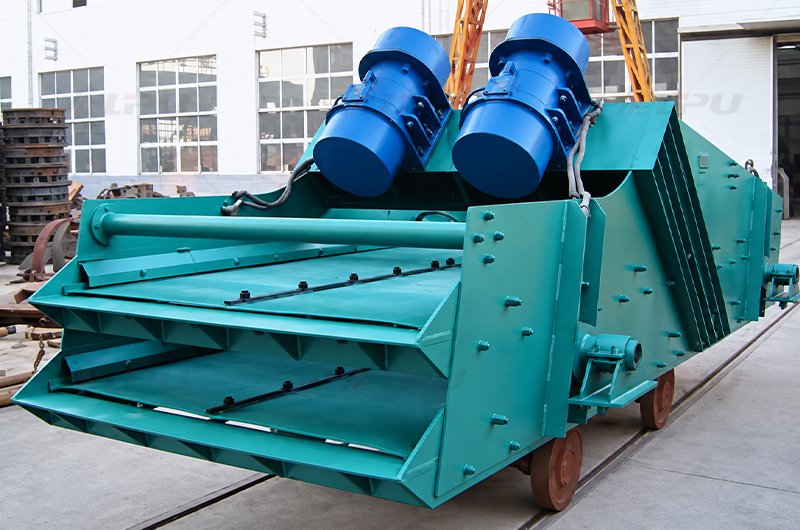
LIPU linear vibrating screens are designed for efficient screening of dry, free-flowing powders, granular materials and fine aggregate.
Driven by dual vibration motors, the screen moves material forward in a linear direction and can be configured with single or multiple decks for different size fractions.
A linear vibrating screen is screening equipment that moves material across the screen surface in a straight-line motion.
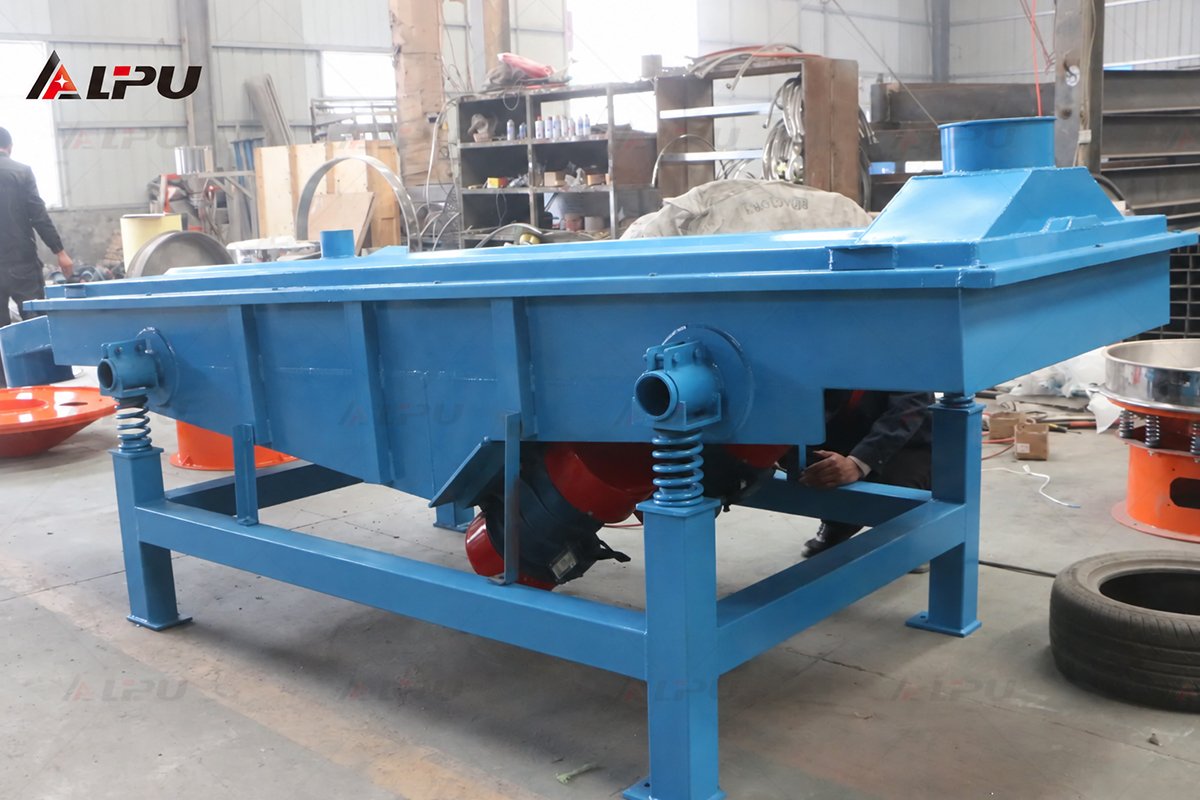
Linear Vibrating Screen
Linear Vibrating Screen
Linear Vibrating Screen
Two vibration motors are normally installed symmetrically on the machine. When they rotate in opposite directions, the excitation forces in one direction cancel each other while the forces in the perpendicular direction combine.
This produces the linear vibration required to move material forward.
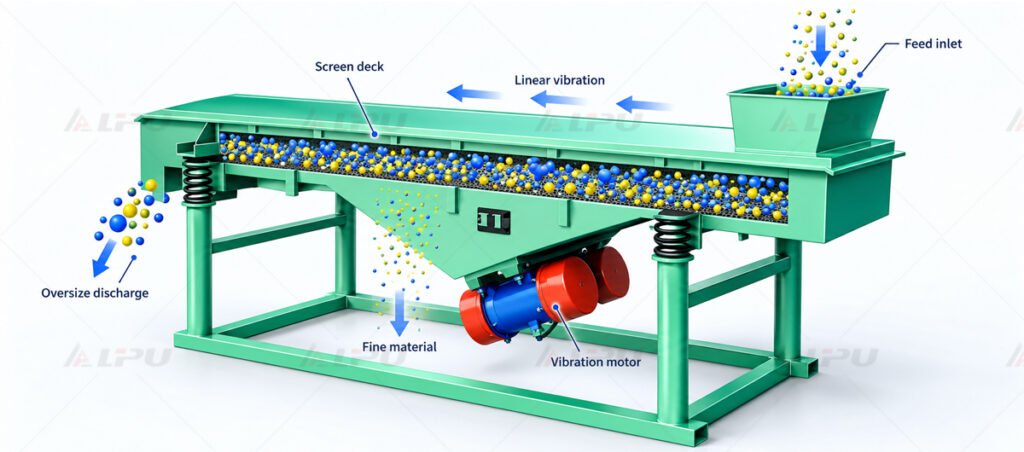
As the feed travels across the screen deck, particles smaller than the screen opening pass through the mesh, while oversized particles continue toward the discharge outlet.
Depending on the number of screen decks, one machine can separate the feed into two or more particle-size fractions.
Linear vibrating screens are especially suitable for relatively dry, free-flowing and non-sticky materials.
How Does a Linear Vibrating Screen Work?
The screening process can be summarized as:
Feed → Linear Vibration → Material Stratification → Screen Passing → Separate Size Fractions
Working Principle of Linear Vibrating Screens
Material enters through the feed end and spreads across the screen surface.
The two vibration motors generate synchronized linear motion, causing the material to repeatedly lift, move forward and contact the screen deck.
During this movement, smaller particles pass through the screen openings, while larger particles remain on the deck and continue toward the discharge end.
With multiple screen decks, each layer can use a different opening size to produce several finished particle fractions in one screening operation.
Screening performance depends on feed size distribution, material moisture, screen opening, screening area, vibration amplitude and feed rate.
Main Components
The main components of a linear vibrating screen include:
Linear Vibrating Screen Structure
Screen box
Screen deck
Screen mesh
Dual vibration motors
Motor base
Damping springs
Support frame
Feed inlet
Discharge outlets
The screen box provides the main screening area, while the vibration motors generate the excitation force required for linear movement.
Damping springs isolate vibration from the supporting structure, and the screen media can be selected according to the material and required separation size.
Single-Deck and Multi-Deck Screening
Linear vibrating screens can be configured with different numbers of screen decks according to the required finished products.
A single-deck screen makes one separation and normally produces two particle-size fractions:
Feed → Oversize + Undersize
A double-deck screen can produce three fractions, while additional decks can provide more size classifications where the machine design allows.
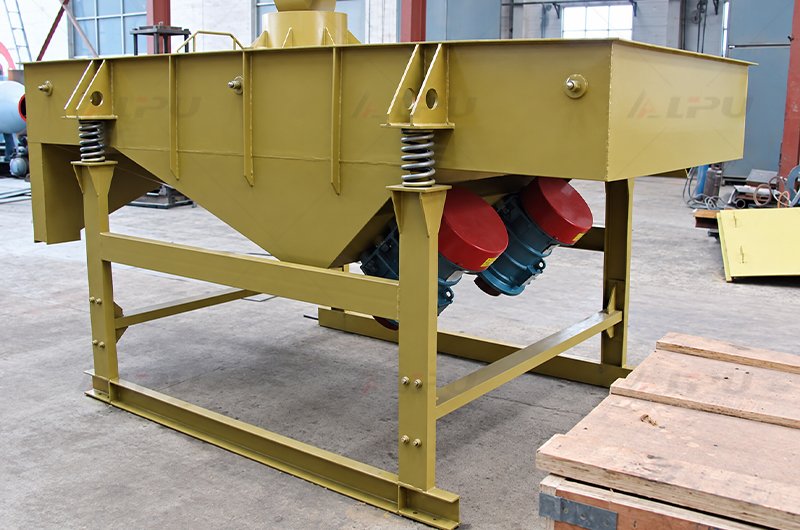
Single-deck linear vibrating screen
Double-deck linear vibrating screen
Configuration
Screening Function
Typical Output
Single deck
One cut size
2 fractions
Double deck
Two cut sizes
3 fractions
Multi-deck
Multiple cut sizes
Multiple fractions
The number of decks should be selected according to the required final products rather than simply maximizing the number of screening layers.
Additional decks can increase classification flexibility, but they also affect available screening area, material distribution and maintenance access.
Applicable Materials
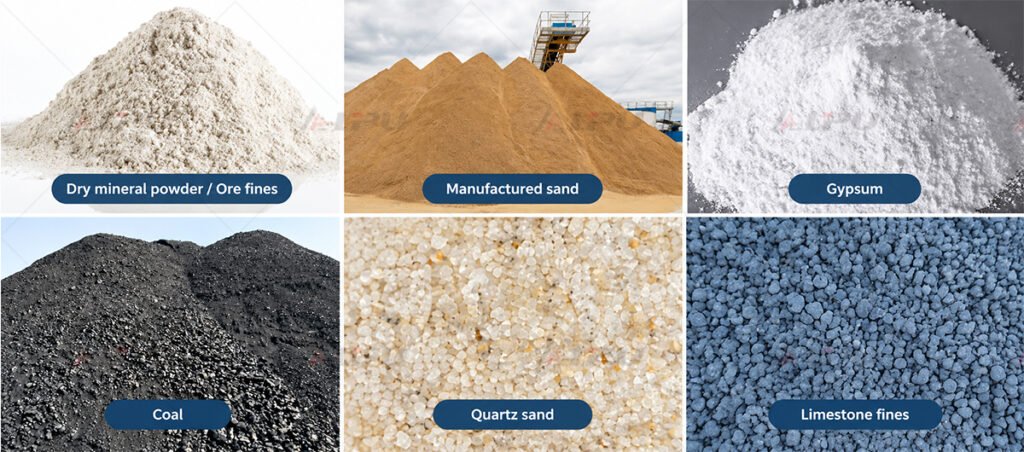
Linear vibrating screens are suitable for many dry, relatively free-flowing powdery and granular materials.
Typical materials include:
Materials processed by the linear vibrating screen
Quartz sand
Limestone fines
Gypsum
Coal
Ore fines
Fine aggregate
Manufactured sand
Dry mineral powder
Granular materials
Other suitable bulk solids
Materials with excessive moisture, strong adhesion or severe screen-blinding tendencies may require a different screening solution or special screen media.
For this reason, material characteristics should be evaluated before selecting the screen.
Linear Vibrating Screen Applications
Linear vibrating screens can be used in several material-processing applications.
Fine aggregate screening
Fine aggregate and manufactured sand can be separated into different particle-size fractions before downstream processing or stockpiling.
Mineral fines classification
Crushed or ground mineral materials can be screened where the required cut size is suitable for mechanical screening.
Quartz sand screening
Quartz sand can be separated into different size ranges for industrial mineral applications.
Coal screening
Suitable coal fractions can be classified according to the required particle size.
Dry powder classification
Free-flowing powder or granular material can be separated into different specifications using suitable screen openings.
Small crushing and screening systems
A compact linear vibrating screen can also be incorporated into smaller material processing lines after crushing or feeding equipment.
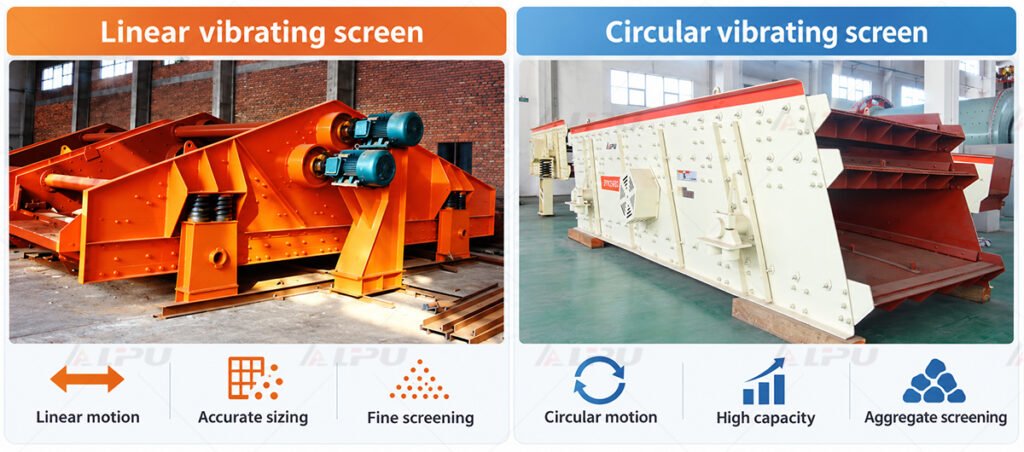
Linear Vibrating Screen vs Circular Vibrating Screen
Linear and circular vibrating screens both separate materials by particle size, but their motion, structure and typical applications are different.
Linear Vibrating Screens vs. Circular Vibrating Screens
Factor
Linear Vibrating Screen
Circular Vibrating Screen
Motion
Linear
Circular or elliptical
Typical drive
Dual vibration motors
Exciter or eccentric system
Main material range
Fine and granular materials
Coarser aggregate and rock
Typical application
Fine classification
Quarry and crushing screening
Structure
Relatively compact
Usually larger and heavier
Multi-deck screening
Available
Available
A linear vibrating screen is commonly selected for finer, relatively dry materials where controlled linear conveying and multi-size separation are required.
For quarry and aggregate plants handling larger crushed stone, a conventional vibrating screen is often more suitable.
The correct screen type should be selected according to feed size, material characteristics, required capacity and final product specifications.
Advantages of Linear Vibrating Screen
LIPU linear vibrating screens provide several practical advantages for fine and granular material screening.
Linear material movement: Material travels steadily toward the discharge end.
Multi-layer screening: Different screen decks can produce several size fractions.
Compact structure: Suitable for installations where screening space is limited.
Flexible screen configuration: Screen openings and deck arrangements can be selected according to product requirements.
Simple drive system: Dual vibration motors provide the excitation force.
Easy maintenance: Screen media and other wear components can be inspected and replaced as required.
Flexible screen media: Different mesh or screen materials can be selected according to the feed and operating conditions.
Where dust control is required, the screening system can also be combined with suitable covers, sealing arrangements or dust collection equipment.
Linear Vibrating Screen Technical Parameters
LIPU ZK series linear vibrating screens are available in different screening areas and capacities for mineral, aggregate and bulk material screening.
Model
Mesh Size
Mesh Opening (mm)
Max. Feeding Size (mm)
Capacity (t/h)
Motor Power (kW)
Weight (kg)
ZK1237
4.5
0.25–50
<250
9–180
5.5 × 2
3,118
ZK1445
6.3
0.25–50
<250
12–252
7.5 × 2
4,040
ZK1845
8.1
0.25–50
<250
16–324
11 × 2
5,436
ZK2060
12
0.25–50
<250
24–480
15 × 2
7,558
ZK2460
14.4
0.25–50
<250
28–576
15 × 2
9,235
ZK3060
18
0.25–50
<250
17–525
22 × 2
11,062
2ZK1237
4.5
0.25–50
<250
9–180
7.5 × 2
4,460
2ZK1445
6.3
0.25–50
<250
12–252
15 × 2
6,883
2ZK1845
8.1
0.25–50
<250
16–324
15 × 2
8,116
2ZK2060
8.1
0.25–50
<250
24–480
22 × 2
10,875
2ZK2460
14.4
0.25–50
<250
28–576
22 × 2
13,560
2ZK3060
18
0.25–50
<250
17–525
37 × 2
18,253
Actual screening capacity may vary according to feed particle size, material density, moisture content, screen opening and operating conditions.
How to Select the Right Linear Vibrating Screen
Linear vibrating screen selection should be based on the material and required separation result rather than machine size alone.
Feed particle size
The maximum feed size should be compatible with the screen deck and feed arrangement.
For larger upstream material, a Jaw Crusher or other suitable crushing equipment may be required before screening.
Required cut size
The screen opening should correspond to the required product particle size.
Very fine separation may require different screen media or another classification method.
Number of final fractions
Determine how many finished particle-size products are required. This determines whether a single-deck, double-deck or multi-deck screen is appropriate.
Screening area
Higher feed rates generally require sufficient screening area to maintain effective material distribution.
Material moisture
Dry and free-flowing materials are normally easier to screen. High moisture or sticky feed can reduce screening performance and cause screen blinding.
Screen media
Wire mesh, perforated plate, polyurethane or other suitable screen media can be selected according to aperture size, wear conditions and material characteristics.
Bulk density and capacity
Feed rate alone is not enough for model selection. Bulk density and particle-size distribution should also be considered.
Linear Vibrating Screen in a Material Processing Line
A linear vibrating screen normally operates as part of a complete feeding, crushing, screening or sand-processing system.
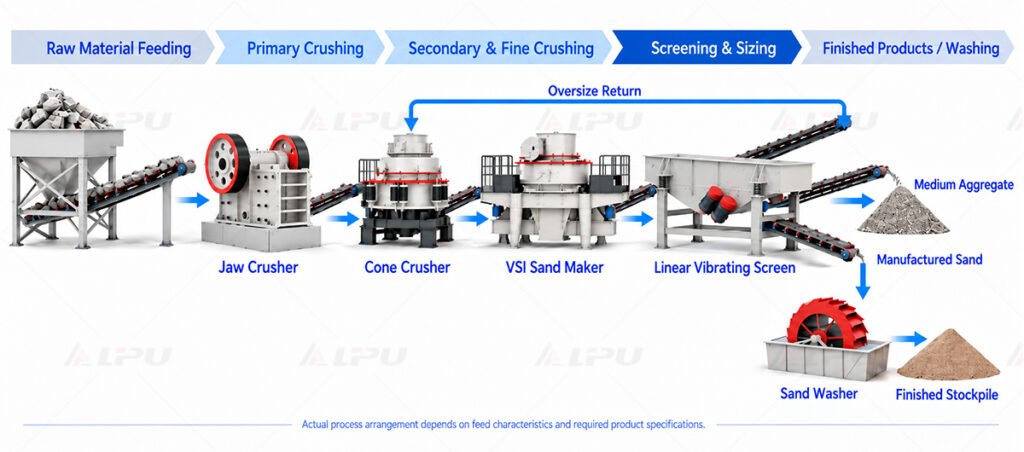
For fine aggregate or manufactured sand, a typical process can be arranged as:
Raw Material → Crushing → Fine Crushing / Sand Making → Linear Screening → Different Size Fractions
Linear vibrating screen in sand processing line
A VSI Sand Maker can produce manufactured sand or fine aggregate before screening.
A Belt Conveyor can transfer material between the crushing, screening and stockpiling stages.
In suitable systems, screened material can then proceed to washing, further classification or finished-product storage.
The final process arrangement should be based on feed characteristics and required product specifications.
Why Choose LIPU?
LIPU provides screening, crushing, grinding and mineral processing equipment for different industrial applications.
For linear vibrating screen projects, equipment configuration can consider:
Feed particle size
Required screening area
Target separation size
Number of screen decks
Material moisture
Bulk density
Screen media
Required processing capacity
LIPU can also match the linear vibrating screen with feeding, crushing, conveying and other processing equipment to configure a complete material handling system.
Frequently Asked Questions
What materials can a linear vibrating screen handle?
Linear vibrating screens are suitable for many dry, relatively free-flowing powdery and granular materials, including quartz sand, limestone fines, gypsum, coal, ore fines and fine aggregate.
What is the difference between a linear and circular vibrating screen?
A linear vibrating screen moves material in a straight-line direction and is commonly used for finer materials. A circular vibrating screen uses circular or elliptical motion and is often used for larger aggregate and quarry screening.
How many screen decks can a linear vibrating screen use?
The number of decks depends on the machine design and required number of finished size fractions. Single-deck, double-deck and multi-deck configurations can be selected for different applications.
What screen media can be used?
Screen media can be selected according to the material, aperture size and wear conditions. Options may include wire mesh, perforated plate, polyurethane or other suitable materials.
How do I choose the correct linear vibrating screen?
Selection should consider feed size, required cut size, number of product fractions, material moisture, bulk density, screening area, screen media and required processing capacity.