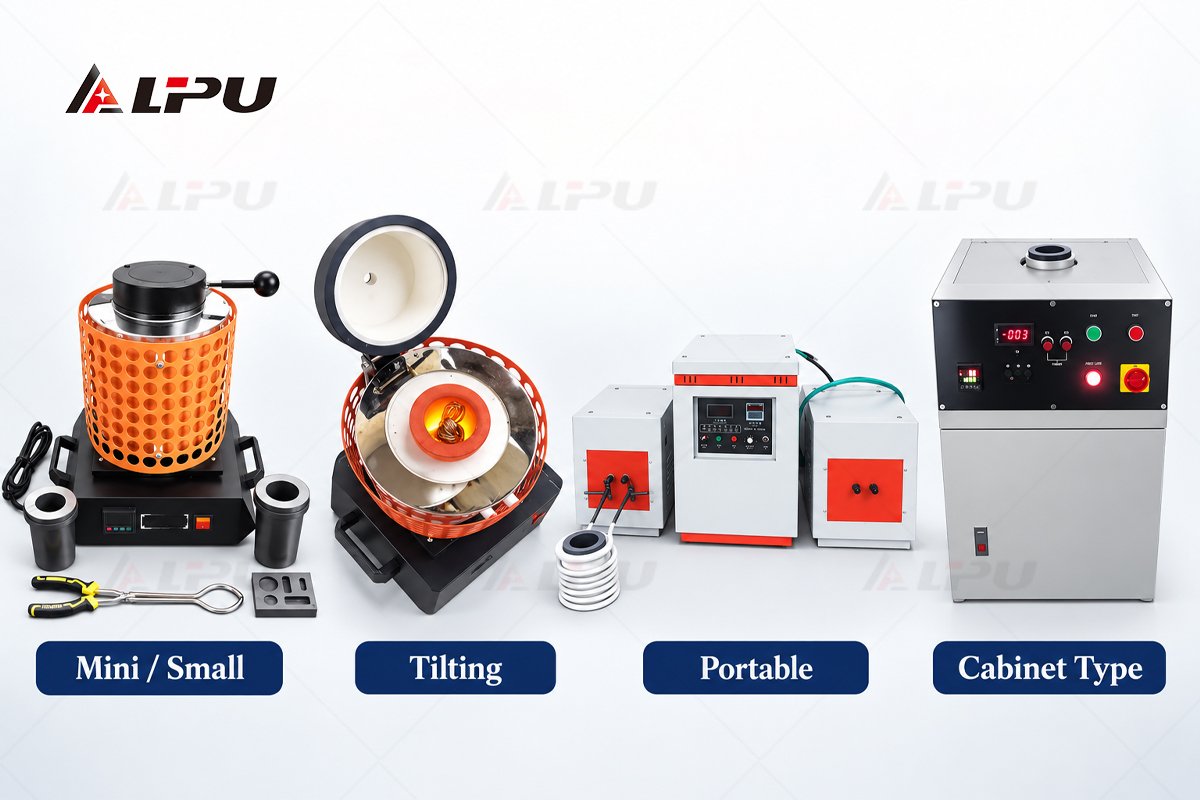
LIPU Gold Melting Furnaces are available in mini, portable, cabinet-type, and tilting configurations for different batch sizes and working environments. Depending on the model, heating may use an electric resistance element or an induction system.
Choose a furnace according to the metal, batch capacity, power supply, and pouring requirements. Contact LIPU to confirm model availability and technical specifications.
Furnace Types: Mini, portable, cabinet-type, and tilting
Materials: Gold, silver, copper, and other compatible metals
Capacity: Model-dependent; confirm the rated capacity for your material
A gold melting furnace heats gold or other compatible metals until they become liquid for casting or further processing. It is used in jewelry workshops, precious-metal processing, metal casting, and other applications that require controlled batch melting.
Melting and refining are separate processes. A furnace melts the charge; additional steps may be needed to remove impurities.
Gold Melting Furnace Types for Different Batch Sizes
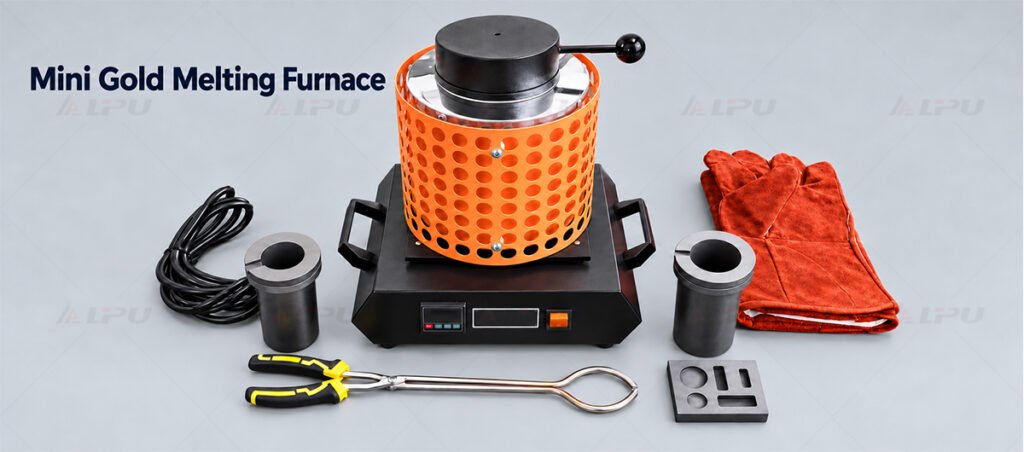
Mini/Small Gold Melting Furnace
Compact furnace for small-batch metal melting
A compact option for small batches and workshop use. Confirm the model’s rated capacity, heating method, crucible compatibility, and power supply.
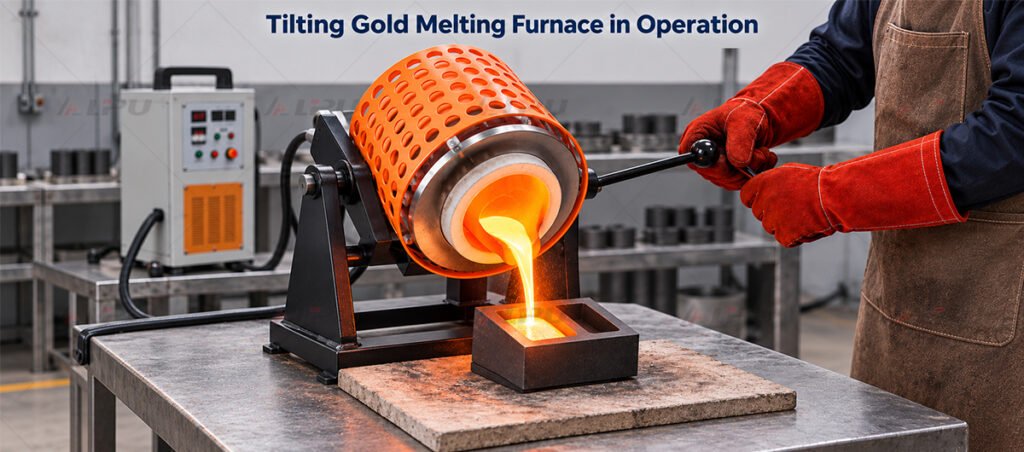
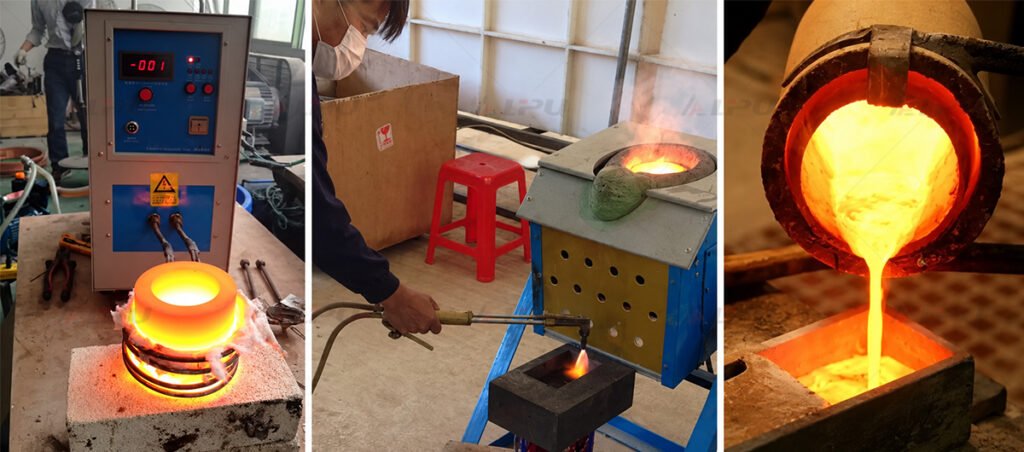
Tilting Gold Melting Furnace
Tilting furnace shown during a melting operation
A tilting design supports pouring according to the machine configuration. It may suit larger batches or workflows that require controlled pouring.
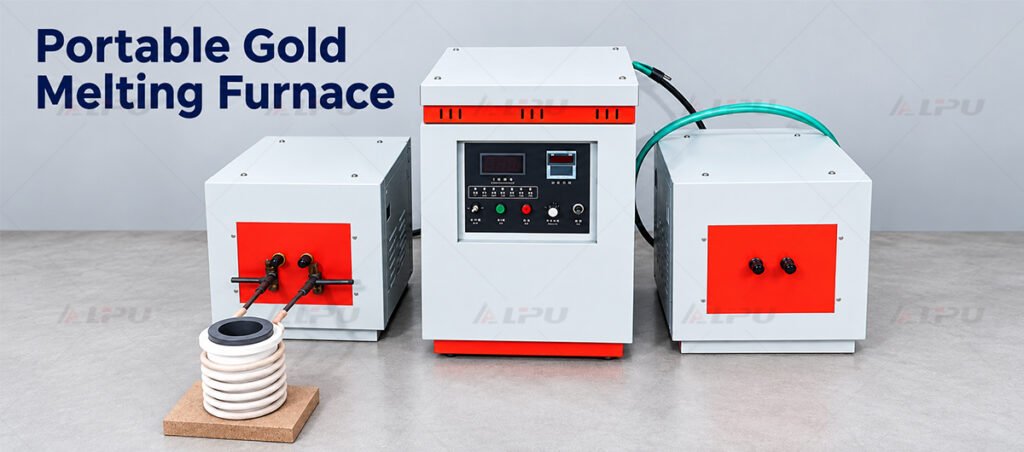
Portable Gold Melting Furnace
Portable furnace setup for flexible metal-melting work
A compact configuration for applications where a movable setup is preferred. Check the required electrical supply and operating conditions for the selected model.
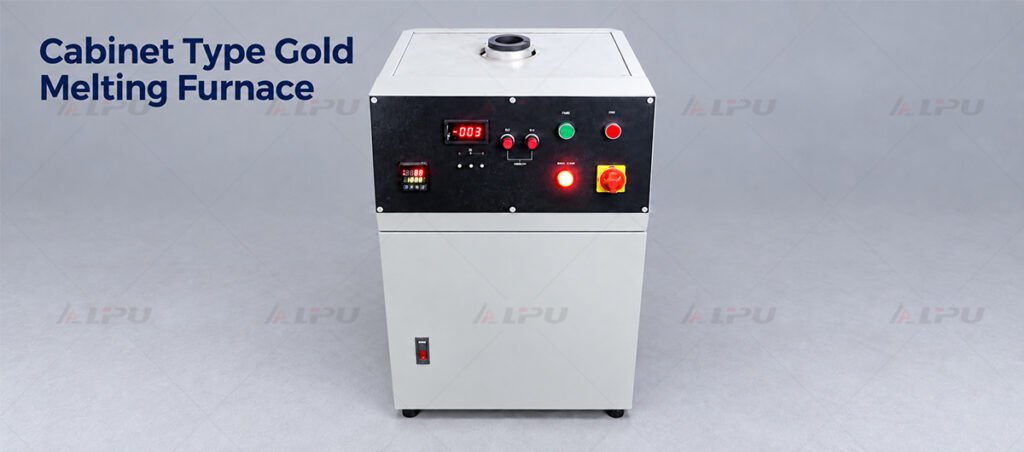
Cabinet Type Gold Melting Furnace
Cabinet-style furnace with integrated controls
A cabinet-style unit for organized installation and operation. Compare capacity, voltage, phase, input power, dimensions, and workspace requirements.
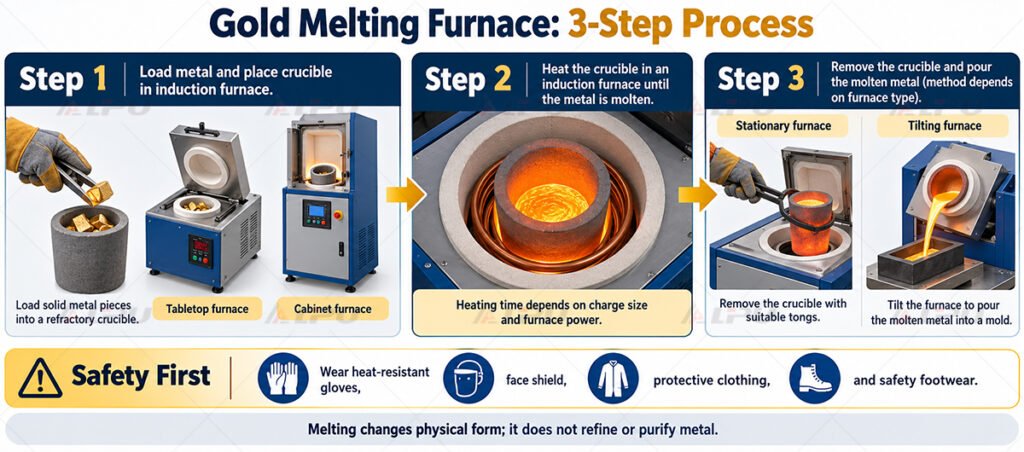
How Does a Gold Melting Furnace Melt Metal?
The operator places the prepared metal charge in a compatible crucible and selects the operating settings. The furnace heats the charge until it melts, after which the metal is removed or poured using the method provided for that model.
The furnace heats a compatible metal charge until it melts for removal or pouring
Heating depends on the furnace design:
Resistance heating: An electric element transfers heat to the crucible and metal.
Induction heating: An electromagnetic field generates heat in a conductive charge or compatible crucible setup.
Follow the model-specific operating and safety instructions.
Key Features to Compare When Choosing a Gold Melting Furnace
Mini/small, tilting, portable, and cabinet-type configurations
Resistance or induction heating, depending on the model
Model-specific controls, power requirements, and pouring arrangements
Options for compatible precious and non-ferrous metals
Features vary by model. Confirm the configuration against the technical data before ordering.
Metals and Applications for Gold Melting Furnaces
Depending on the selected model and material compatibility, gold melting furnaces may be used for:
Melting applications for precious metal processing and casting
Gold and silver melting
Jewelry production and casting
Precious-metal processing
Copper and other compatible metal melting
Workshop or production-batch melting
For impurity removal or metal separation, additional refining processes may be required.
Mini Gold Melting Furnace: Technical Specifications
Model Reference*
Input Power*
Power Supply*
Measurement Accuracy*
Working Environment*
Net Dimensions*
Packing Dimensions*
Net Weight*
Gross Weight*
Maximum Temperature*
Mini Model 1
1500 W
220 V, 50/60 Hz, 7 A; 110 V, 50/60 Hz, 14 A
±0.5% FS
0–50°C, 30–85% RH
310 × 360 × 370 mm
380 × 380 × 420 mm
11 kg
13 kg
1150°C
Tilting Gold Melting Furnace: Power and Batch Capacity
Model Reference*
Rated Power*
Capacity: Steel, Iron & Stainless Steel*
Capacity: Gold, Silver, Platinum & Copper*
Capacity: Aluminum & Zinc Alloys*
Tilting Model 1
3 kW
10 kg
3 kg
3 kg
Tilting Model 2
5 kW
20 kg
5 kg
5 kg
Tilting Model 3
10 kW
30 kg
10 kg
10 kg
Tilting Model 4
20 kW
50 kg
20 kg
20 kg
Tilting Model 5
25 kW
100 kg
25 kg
25 kg
Tilting Model 6
40 kW
120 kg
40 kg
40 kg
Tilting Model 7
50 kW
150 kg
50 kg
50 kg
Tilting Model 8
100 kW
250 kg
100 kg
100 kg
Cabinet-Type Gold Melting Furnace: Electrical and Dimensional Data
Model Reference*
Rated Capacity*
Input Voltage*
Phase*
Input Current*
Output Current*
Weight*
Dimensions (L × W × H)*
Cabinet Model 1
1 kg/batch
220 / 380 V
Single / Three
14 A
100–400 A
80 kg
610 × 590 × 1030 mm
Cabinet Model 2
2 kg/batch
220 / 380 V
Single / Three
15 A
100–400 A
80 kg
610 × 590 × 1030 mm
Cabinet Model 3
3 kg/batch
220 / 380 V
Three
18 A
100–400 A
80 kg
610 × 590 × 1030 mm
Cabinet Model 4
4 kg/batch
220 / 380 V
Three
20 A
200–450 A
80 kg
610 × 590 × 1030 mm
Cabinet Model 5
5 kg/batch
380 V
Three
22 A
200–500 A
80 kg
610 × 590 × 1030 mm
Cabinet Model 5.5
5.5 kg/batch
380 V
Three
24 A
200–500 A
80 kg
610 × 590 × 1030 mm
Cabinet Model 6
6 kg/batch
380 V
Three
26 A
200–550 A
80 kg
610 × 590 × 1030 mm
Cabinet Model 8
8 kg/batch
380 V
Three
28 A
200–600 A
80 kg
610 × 590 × 1030 mm
* Model references and specifications are provisional. Confirm model names, capacity basis, heating method, power supply, current definitions, dimensions, and weights with LIPU before publication.
How to Select a Gold Melting Furnace for Your Operation
When requesting a quotation, provide:
Metal type and charge composition
Required batch capacity
Available voltage, phase, and electrical supply
Preferred furnace type and pouring method
Crucible, workspace, and installation requirements
Capacity and melting time depend on the metal, batch size, furnace model, and operating conditions.
What Determines Gold Melting Furnace Price?
Price depends on furnace type, batch capacity, heating system, power configuration, controls, and included accessories. Share your material and operating requirements with LIPU to receive a model-specific quotation.
Gold Melting Furnace FAQs
Does a gold melting furnace refine gold? A melting furnace heats metal until it becomes liquid. Melting alone does not guarantee impurity removal; refining may require additional processes.
Can one furnace melt different metals? Some models may be suitable for multiple metals. Compatibility depends on the furnace, crucible, temperature requirements, and charge composition. Confirm the intended materials with LIPU before selecting a model.
How is furnace capacity specified? Capacity is generally stated as the amount of material processed per batch. Usable capacity can vary by metal and model, so confirm the rated capacity for your material.
What information is needed for a quotation? Provide the metal type, batch size, available power supply, preferred furnace configuration, and pouring or installation requirements.