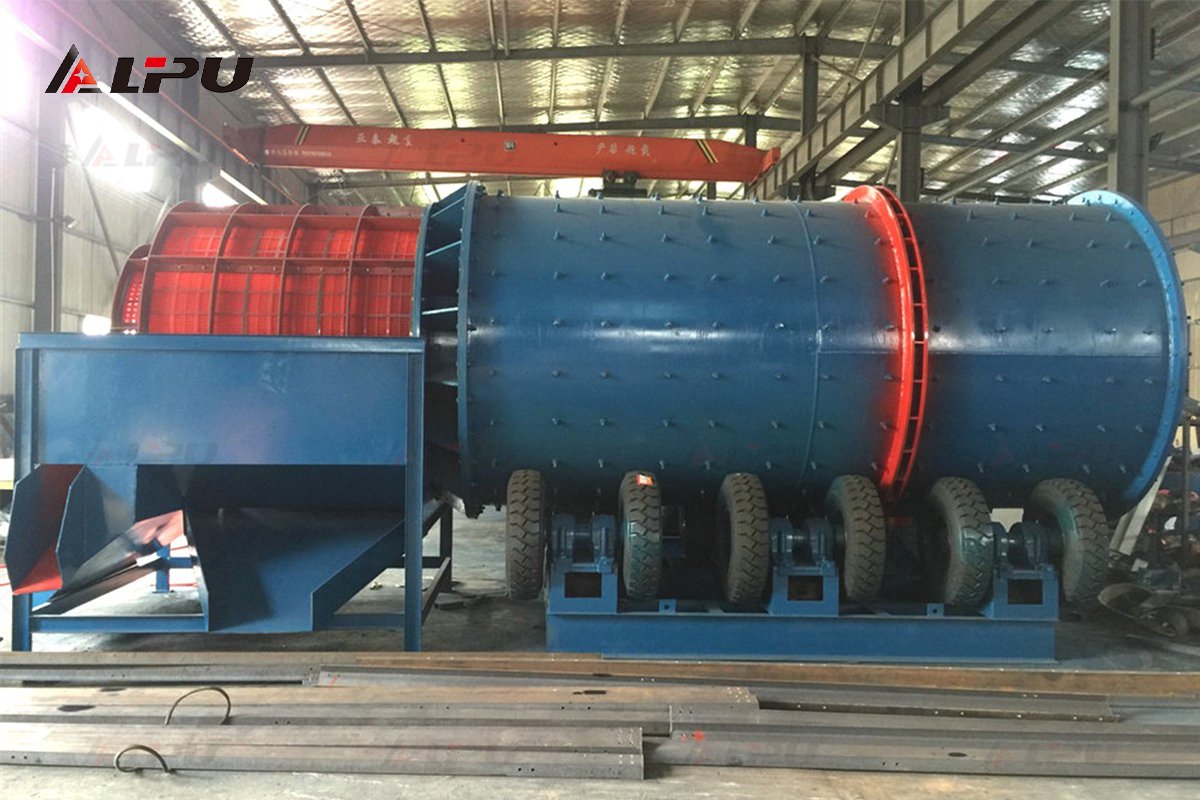
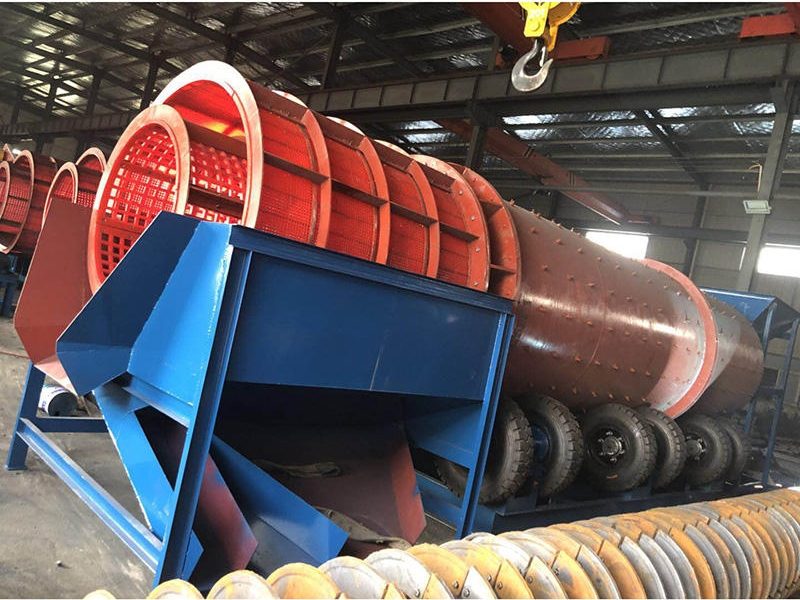
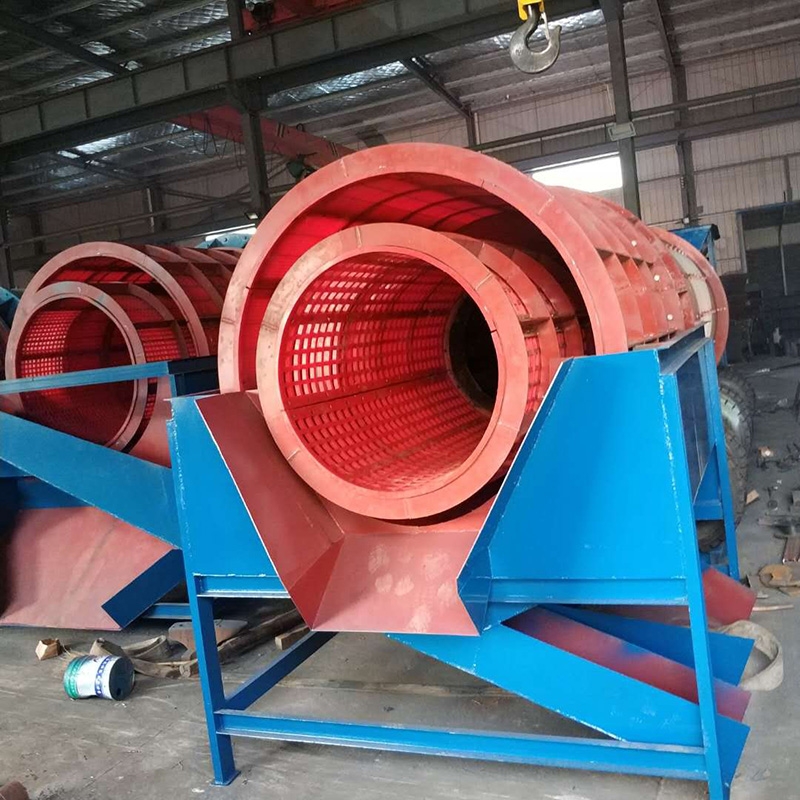
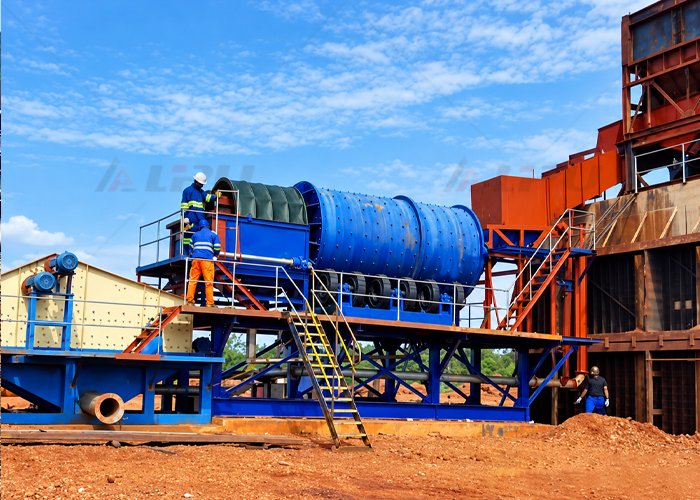
The LIPU Rotary Scrubber washes clay-bearing ore, rock, sand, gravel, and aggregates. Its rotating drum tumbles the feed with water to loosen clay and mud coatings. An integrated screen section separates the washed material by size before it moves to the next processing stage.
Capacity: 1–400 TPH, depending on model
Maximum Feed Size: 80–100 mm, depending on model
Screen Mesh Size: 20–50 mm, depending on model
Configuration: Stationary or mobile; electric motor or diesel generator, depending on project requirements
A rotary scrubber is a drum-type washing machine for materials coated with clay, mud, or other removable impurities. As the drum rotates, the feed tumbles and mixes with water. Repeated movement helps break down clay lumps and release coatings from the material surface.
Many rotary scrubbers combine a washing drum and a screening section. After washing, the screen separates material by size and helps remove loosened fines and wastewater.
What Materials Can a Rotary Scrubber Process?
Rotary scrubbers are commonly used to wash:
Clay-bearing ore and rock
Sand and gravel
Aggregates with water-soluble clay
Mineral feed requiring washing before screening or separation
Material suitability depends on clay content, feed size, material hardness, required capacity, and target product size. A material test can help confirm the appropriate configuration.
How Does a Rotary Scrubber Work?
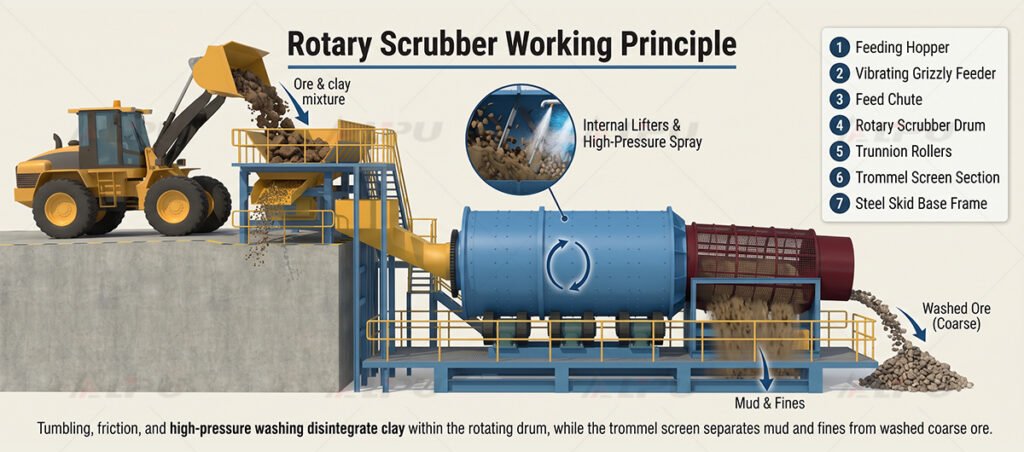
The rotary drum tumbles and scrubs the feed, while the discharge screen separates washed material from clay and fines
Feed material and wash water enter the rotating drum. The drum’s internal liners lift and tumble the material as it moves toward the discharge end. This action, combined with water, loosens clay and mud coatings.
The washed material then moves through the screening section, where it is separated by size. Washed product and wastewater or loosened fines leave through their designated discharge paths. The exact flow arrangement depends on the selected machine configuration.
How a Rotary Scrubber Fits into a Processing Circuit
A rotary scrubber is generally used as a washing and pretreatment stage. A typical circuit may include a feed hopper or conveyor, rotary scrubber, screening or classification equipment, and downstream separation equipment selected for the material.
The scrubber washes and screens the feed; downstream equipment performs the required mineral separation or recovery.
Benefits of a Rotary Scrubber
Loosens water-soluble clay and mud coatings from feed material.
Combines drum washing and screening in one machine.
Offers model options for capacities from 1 to 400 TPH.
Supports different drum lengths, liner materials, screen sizes, and configurations.
Can be configured as a stationary or mobile unit, depending on project needs.
Main Components of a Rotary Scrubber
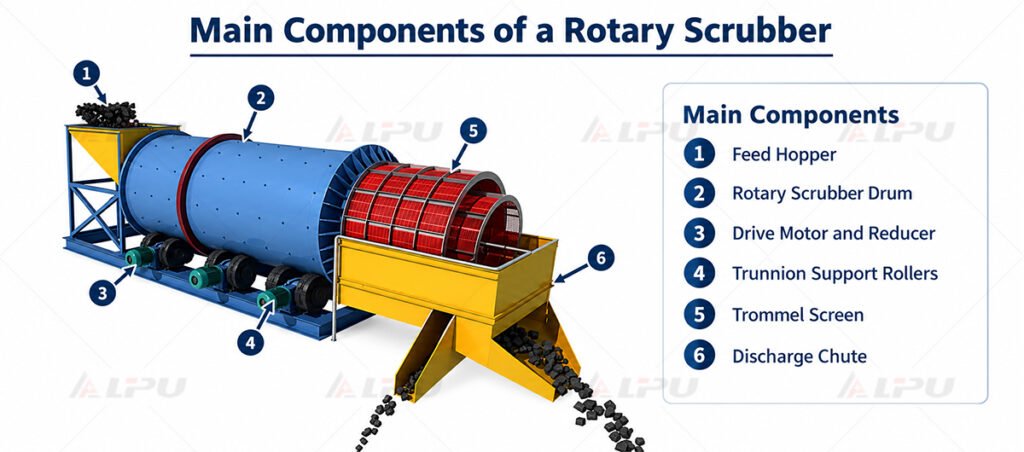
Key components of the rotary scrubber, from the feed hopper and rotating drum to the screen and discharge chute
Washing Drum: Rotates and tumbles the feed during washing.
Wear Liners: Protect the drum and help move material through the washing section.
Screen Section: Separates washed material by size.
Drive System: Rotates the drum at the specified operating speed.
Wash Water System: Supplies water for scrubbing and rinsing.
Support Frame and Discharge: Support the machine and guide washed material and wastewater out of the unit.
Rotary Scrubber Technical Specifications
Model
Drum Diameter (mm)
Drum Length + Screen Length (m)
Screen Mesh Size (mm)
Rotation Speed (r/min)
Feeding Size (mm)
Inclination (°)
Capacity (t/h)
Motor Power (kW)
LIPU-400
400
2 + 1.2
≤20
27.9
≤80
≤10
1–5
3
LIPU-600
600
2 + 1.2
≤25
27.6
≤80
≤10
5–10
4
LIPU-750
750
2.5 + 1.5
≤25
27.6
≤100
≤10
10–20
5
LIPU-900
900
3 + 1.8
≤25
27.6
≤100
≤10
20–40
11
LIPU-1200
1,200
4 + 2
≤25
17
≤100
≤10
40–70
15
LIPU-1500
1,500
4 + 2
≤50
16
≤100
≤10
70–100
30
LIPU-1800
1,800
4 + 2
≤50
16
≤100
≤10
100–150
18.5 × 2
LIPU-2100
2,100
4 + 2
≤50
16
≤100
≤10
150–200
22 × 2
LIPU-2400
2,400
6 + 2.5
≤50
16
≤100
≤10
200–250
22 × 4
LIPU-2700
2,700
6 + 2.5
≤50
16
≤100
≤10
250–270
55 × 2
LIPU-3000
3,000
6 + 2.5
≤50
16
≤100
≤10
270–300
30 × 4
LIPU-3200
3,200
6 + 2.5
≤50
16
≤100
≤10
300–340
37 × 4
LIPU-3400
3,400
6 + 2.5
≤50
16
≤100
≤10
340–370
45 × 4
LIPU-3600
3,600
6 + 2.5
≤50
16
≤100
≤10
370–400
55 × 4
Confirm the selected model, capacity, feed size, screen mesh, and motor configuration with LIPU before ordering.
Installation and After-Sales Support
LIPU provides installation guidance, commissioning support, operating instruction, maintenance assistance, and spare-parts service. Confirm the service scope and warranty terms in the equipment proposal.
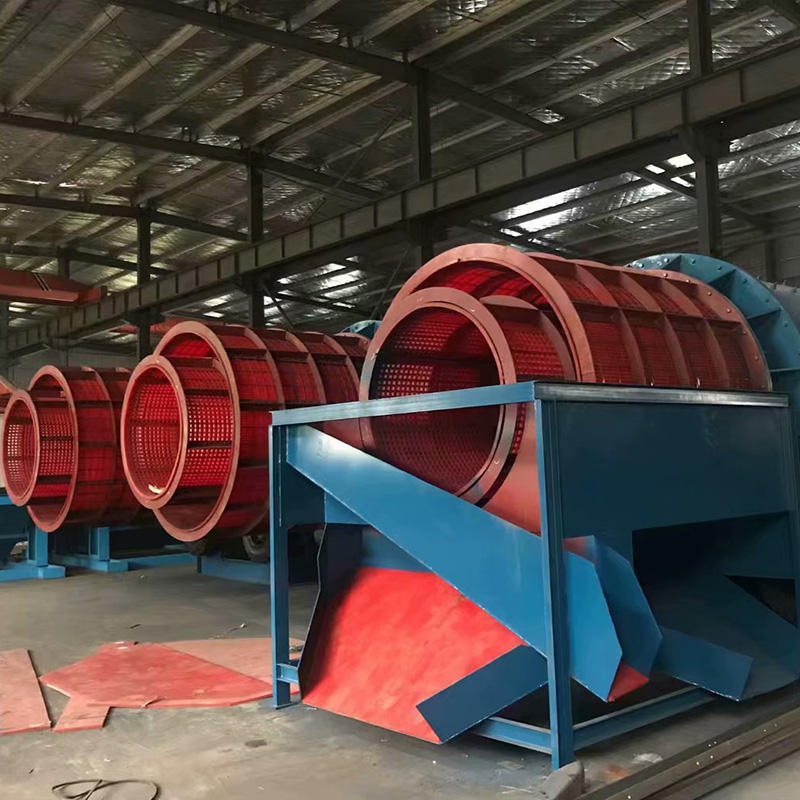
Rotary scrubber installed for ore washing at a mineral processing site
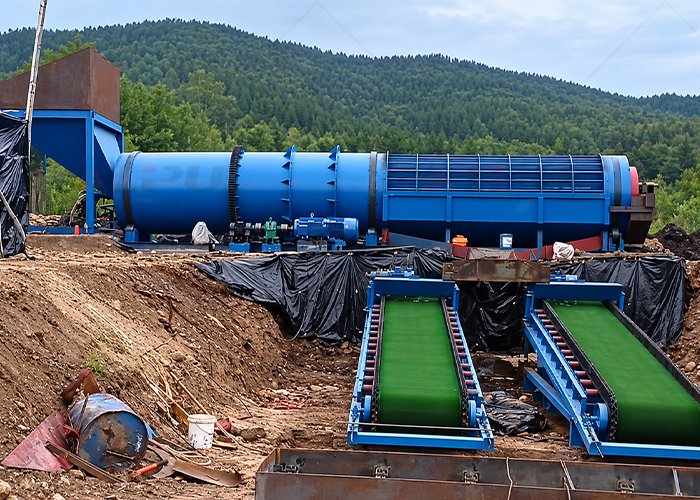
Rotary scrubber washing manganese ore at a processing plant
Rotary Scrubber FAQs
What materials can a rotary scrubber wash?
It can wash clay-bearing ore, rock, sand, gravel, and aggregates. The correct configuration depends on the feed properties and required product size.
Does a rotary scrubber recover gold?
No. A rotary scrubber washes and screens feed material. Gold recovery requires downstream separation equipment selected for the ore and process.
What capacity can a rotary scrubber handle?
The listed models cover capacities from 1 to 400 TPH. Actual capacity depends on the selected model and material conditions.
What is the maximum feed size?
The listed models accept feed sizes up to 80 or 100 mm, depending on the model.
Can the rotary scrubber be customized?
Drum dimensions, liner material, screen mesh, and stationary or mobile configuration can be selected according to project requirements. Confirm the options for the required model with LIPU.