Send your ore analysis and capacity to discuss your plant.
Start with the Lithium Mineral—Not Just the Lithium Grade
A lithium assay tells you how much lithium is present. It does not tell you how easily that lithium can be recovered.
For plant design, the important questions are which minerals contain the lithium, how closely they are mixed with waste rock, and which impurities must be removed.
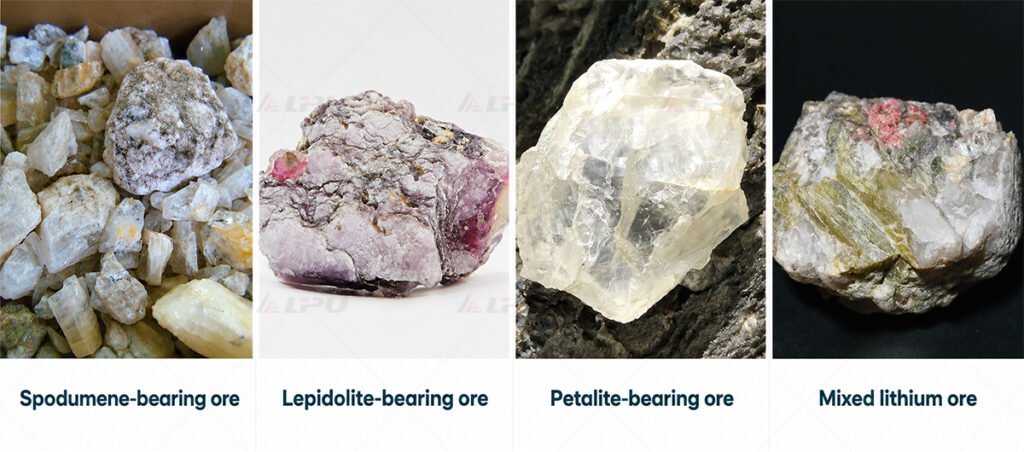
Different lithium minerals need different processing routes
Ore type
What matters during processing
Main consideration
Spodumene-bearing ore
Spodumene grain size and separation from quartz, feldspar and mica
Whether coarse separation, flotation or a combined route is suitable
Lepidolite-bearing ore
Distribution of lithium-bearing mica and its association with other minerals
Selective flotation and control of fine material
Petalite-bearing ore
Mineral composition, liberation and intended product use
A test-based separation route and buyer specification
Mixed lithium ore
Lithium distributed across more than one mineral
Recovery of each valuable mineral and suitability of the resulting product
A higher feed grade does not automatically mean easier processing. An ore with well-separated lithium minerals may be simpler to upgrade than a richer ore in which valuable minerals are finely locked in the surrounding rock.
This solution focuses on hard-rock lithium beneficiation. Lithium extraction from brines requires a different process.
Can You Remove Waste Before It Reaches the Mill?
Grinding is a major plant operating cost. Where the ore allows it, removing low-value rock before grinding can reduce the material entering the wet processing circuit.
For suitable spodumene ores, dense media separation may recover a coarse concentrate or reject waste before flotation. Its suitability depends on mineral liberation, feed size and the density difference between valuable minerals and waste rock.
The practical question is straightforward:
Can waste be rejected without losing too much lithium?
Testwork should compare the lithium remaining in the rejected material with the reduction in grinding and downstream processing load. Fine or closely intergrown ore may need to proceed directly to grinding and flotation.
Pre-concentration is therefore an option to evaluate, rather than a standard stage to add to every lithium plant.
Follow the Ore from Crushing to Lithium Concentrate
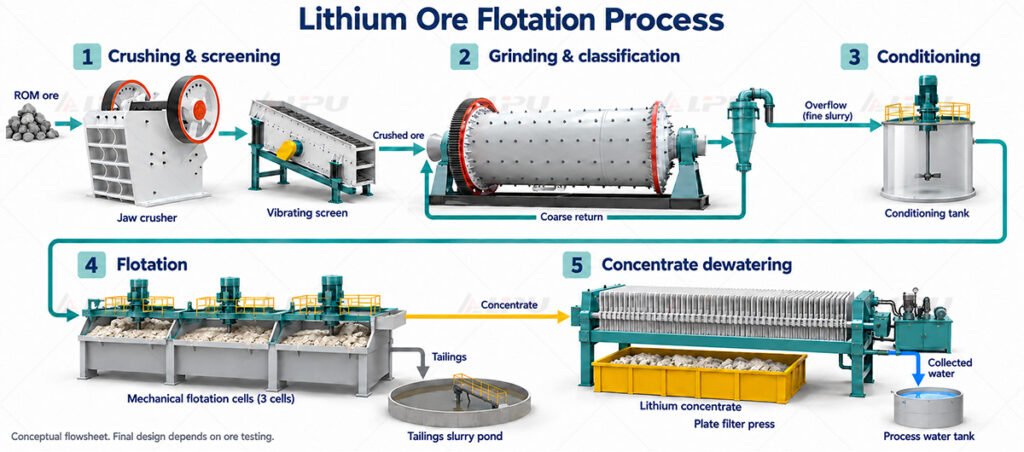
A flotation-based hard-rock lithium plant can follow this general route:
Crushing and screening → Grinding and classification → Feed preparation and conditioning → Flotation → Concentrate dewatering
A flotation-based route for hard-rock lithium ore
Optional stages, such as coarse waste rejection, mica removal or magnetic cleaning, are added only where the ore and product requirements justify them.
Crushing and screening
Run-of-mine rock is reduced to a size suitable for the next stage. A jaw crusher can provide primary crushing, followed by secondary crushing and screening where required.
The crushing arrangement should provide steady feed and limit unnecessary fines, particularly when coarse separation is being considered.
Grinding and classification
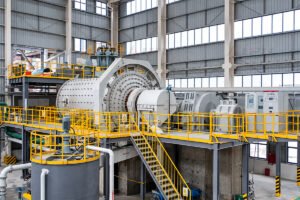
Grinding releases lithium minerals from the surrounding rock. A ball mill can operate with classification equipment to return coarse particles for further grinding while allowing sufficiently fine material to advance.
The objective is adequate mineral liberation. Grinding everything as fine as possible can increase cost and create slimes that make separation more difficult.
Feed preparation and conditioning
Before flotation, the slurry may require scrubbing, controlled desliming or removal of interfering minerals.
Water, slurry concentration and reagent addition are adjusted to prepare the feed for separation. This stage deserves particular attention when weathered surfaces, clay or mica affect flotation.
Flotation
Flotation separates selected lithium minerals from unwanted material. The circuit may include roughing, cleaning and scavenging stages, with intermediate streams returned where appropriate.
The number of stages and reagent conditions should be established through testing, rather than copied from another lithium project.
Concentrate dewatering
The concentrate is thickened where necessary and filtered to reach the required handling condition. The resulting product can then move to storage, dispatch or further treatment.
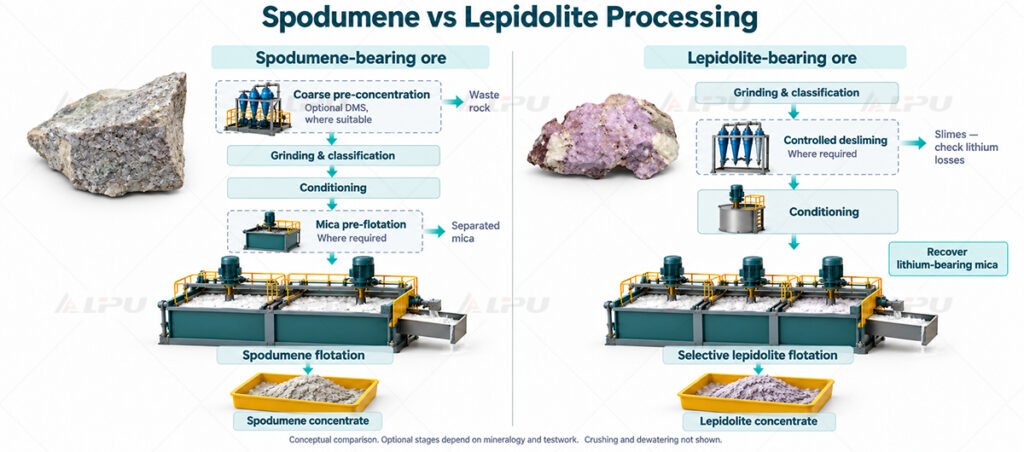
Spodumene and Lepidolite Need Different Flotation Strategies
Both minerals contain lithium, but they should not be treated as interchangeable flotation feeds.
Match the separation strategy to the lithium mineral
For spodumene, the circuit must separate the valuable mineral from minerals such as quartz, feldspar and mica. Depending on the ore, removing unwanted mica before spodumene flotation may improve selectivity.
Coarse separation may also form part of a spodumene flowsheet when sufficient liberation is available at a suitable particle size.
For lepidolite, lithium is carried by a mica mineral. The process must recover that lithium-bearing mica selectively, rather than treating all mica as waste.
This distinction matters. A mica-removal step that is useful for one spodumene ore could discard valuable lithium from a lepidolite-bearing feed.
LIPU flotation machines can be arranged for different circuit duties. The mineralogy and test results determine the appropriate arrangement.
Keep Slimes and Impurities from Diluting Your Product
Producing more concentrate is useful only when that concentrate meets the required quality.
Several features of lithium ore can make upgrading difficult:
Processing challenge
Why it matters
What to evaluate
Clay and very fine particles
Can interfere with flotation and carry unwanted material into concentrate
Scrubbing, classification and controlled desliming
Incomplete mineral liberation
Valuable minerals remain attached to waste rock
Grinding size and selective regrinding
Unwanted mica
May compete with the target mineral or dilute the concentrate
A suitable mica separation stage
Iron-bearing minerals
May affect acceptance for certain end uses
Magnetic separation or other selective cleaning
Changes in ore composition
Can cause unstable grade and recovery
Representative testing, blending and operating control
Desliming also needs care. Fine material should be assayed before it is rejected, because it may contain recoverable lithium.
Magnetic separation can help remove responsive iron-bearing impurities. It is a supporting cleaning method where applicable, rather than a universal way to recover lithium minerals.
Define the Concentrate Before Choosing the Plant
The plant should be designed around an agreed product specification.
A buyer may assess more than lithium content. Mineral type, impurities, moisture and consistency can all affect whether a concentrate is suitable for the intended use.
Before finalizing the flowsheet, establish:
Required lithium grade, normally expressed as Li₂O.
Acceptable iron and other impurity levels.
Moisture and material-handling requirements.
Whether different lithium minerals can be accepted in the same product.
Sampling, quality-control and delivery conditions.
Use Li₂O and elemental lithium consistently. They are different reporting bases and should not be compared as though they were the same.
A spodumene concentrate specification should not automatically be applied to lepidolite or petalite. The target must match the mineral and the receiving process.
Recover Water While Preparing Concentrate for Dispatch
Flotation concentrate contains water and normally requires dewatering before storage or transport.
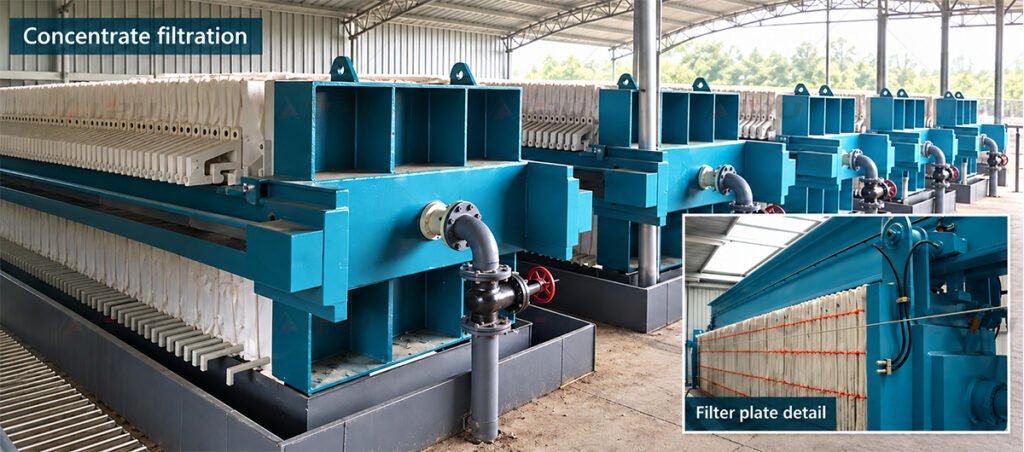
Concentrate → Thickening where required → Filtration → Storage or dispatch
Concentrate filtration and water collection
Collected water can be considered for reuse after its suitability has been checked. Suspended solids and dissolved substances may affect flotation, so water management belongs in the process design from the beginning.
Tailings require their own handling and water-recovery arrangement. The appropriate system depends on the material, site conditions and project requirements.
Additional concentrate drying is included only when the buyer or downstream process needs it.
Choose Equipment Around the Duty It Must Perform
A lithium plant needs more than a list of machines. Each stage must deliver material in the condition required by the next.
Plant section
Typical equipment
Selection priority
Crushing and screening
Feeders, crushers and vibrating screens
Ore size, hardness and steady feed
Grinding and classification
Ball mill, hydrocyclones or classifiers
Liberation size and circulating load
Slurry preparation
Scrubbing equipment, tanks and pumps
Surface cleaning and consistent conditioning
Flotation
Flotation cells and supporting air and reagent systems
Required separation duties and residence time
Impurity removal, where needed
Magnetic separators or additional cleaning equipment
Impurity response and product specification
Dewatering
Thickeners, filters and water collection equipment
Settling, filtration and moisture requirements
The plant layout should also provide access for liner replacement, filter maintenance, sampling and routine inspection.
Build the Flowsheet Around Representative Test Results
A sample from one high-grade section may not represent the material a plant will process throughout its life.
A useful testing program should include the main ore types and expected changes in weathering, mineral composition and feed grade.
The results should help establish:
Which minerals contain the lithium.
The particle size needed for separation.
Whether early waste rejection is worthwhile.
The flotation route and achievable product quality.
Lithium losses to rejected rock, slimes and tailings.
Concentrate settling and filtration behavior.
The objective is a practical balance between concentrate quality, lithium recovery and operating cost.
Know Where Beneficiation Ends and Lithium Refining Begins
A lithium mineral concentrate is an intermediate product. It is not battery-grade lithium carbonate or lithium hydroxide.
Beneficiation upgrades the lithium-bearing mineral. Producing lithium chemicals requires additional conversion, extraction, purification and finishing stages suited to that mineral.
For projects supplying an external refinery, the concentrate specification should be agreed early. For integrated projects, beneficiation and chemical extraction need to be evaluated together.
This helps avoid building a plant that produces a concentrate the next stage cannot use efficiently.
Share the Ore Details That Shape Your Plant
To begin a useful equipment and process discussion, provide:
Ore type and available mineralogical information.
Feed grade and chemical analysis, with units clearly stated.
Required processing capacity and operating hours.
Feed size and available hardness or grinding data.
Target concentrate specification or buyer requirements.
Site location, water supply and power conditions.
Available samples and previous test results.
If the lithium-bearing mineral is still uncertain, identifying it is the first step.
Contact LIPU with your ore information to discuss the equipment and configuration your project may require.
Frequently Asked Questions
Can spodumene and lepidolite use the same processing plant?
Some equipment types may be shared, but the preparation steps, flotation conditions and product targets can differ. A plant intended to handle both needs suitable testing and operating flexibility.
Does every lithium ore need flotation?
No. Some suitably liberated ores may respond to coarse separation. Other ores need flotation, or a combination of separation methods, to reach the required product quality.
Can magnetic separation produce a lithium concentrate on its own?
It should not be assumed to do so. Its role depends on the magnetic response of the minerals present. It is often evaluated for impurity removal within a wider beneficiation circuit.
What concentrate grade can the plant achieve?
The achievable grade depends on the lithium mineral, its association with waste rock and the selected process. A credible target requires representative testwork and a defined buyer specification.
Does a lithium beneficiation plant produce battery-grade lithium chemicals?
No. It produces a lithium mineral concentrate. Further processing is required to manufacture lithium carbonate or lithium hydroxide.