The first design decision is whether the plant will recover molybdenite directly from ore or separate it from a copper-molybdenum bulk concentrate.
These routes share some equipment but have different conditioning, flotation, and product requirements.
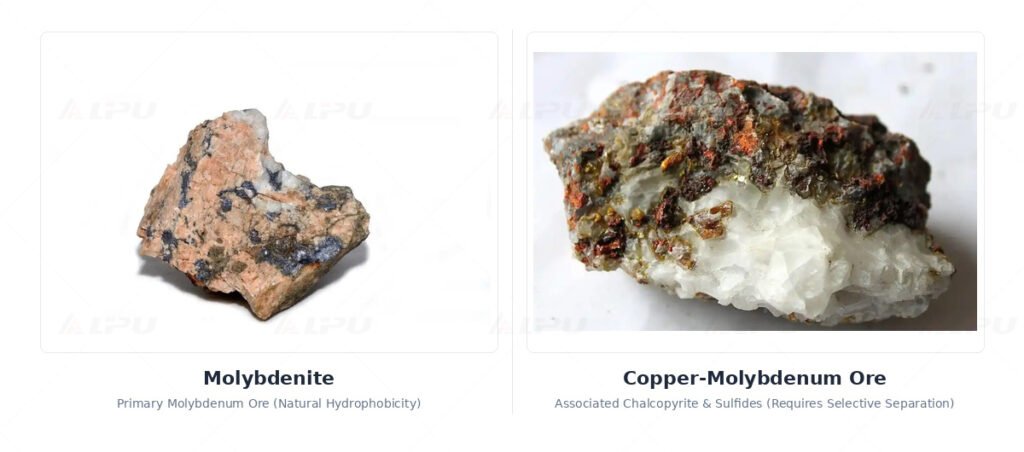
Molybdenite and copper-molybdenum ore specimens
Feed Type
Processing Objective
Main Design Considerations
Primary molybdenum ore
Recover molybdenite into a saleable mineral concentrate
Liberation, gangue rejection, cleaning requirements, and concentrate impurities
Copper-molybdenum ore
Recover both metals and produce separate concentrates
Bulk flotation performance, copper depression, molybdenite recovery, and product specifications
Molybdenum-bearing polymetallic ore
Recover molybdenum alongside other valuable minerals
Mineral associations, recovery sequence, and compatibility between processing stages
Mineralogical analysis should identify the molybdenum-bearing phases and their association with copper sulfides, pyrite, and gangue.
Oxidized molybdenum minerals may respond differently from molybdenite. Their presence should be assessed before selecting a conventional sulfide flotation route.
Selecting the Flotation Route
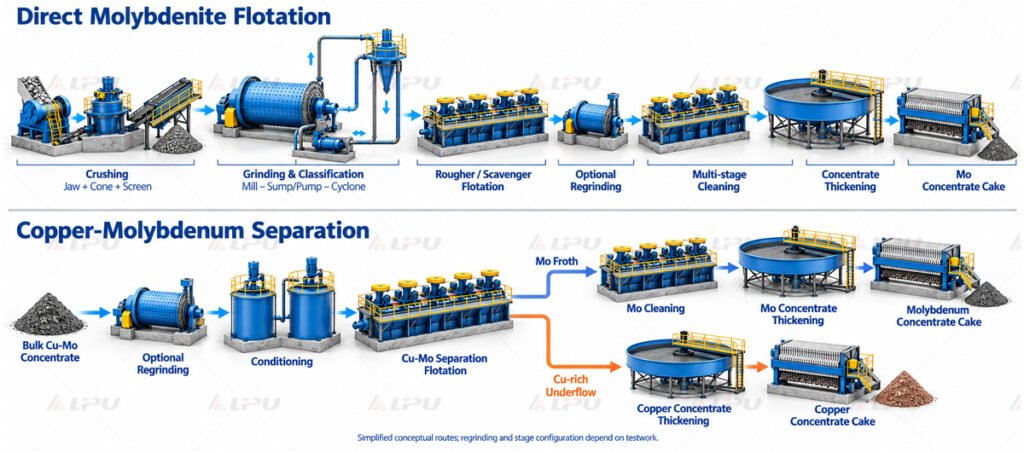
Simplified molybdenum flotation and copper-molybdenum separation routes
Direct Molybdenite Flotation
For suitable primary molybdenum ores, the circuit recovers molybdenite through rougher and scavenger flotation, followed by concentrate cleaning.
Intermediate regrinding and additional conditioning may be included where they improve liberation and selectivity.
Copper-Molybdenum Bulk Flotation and Separation
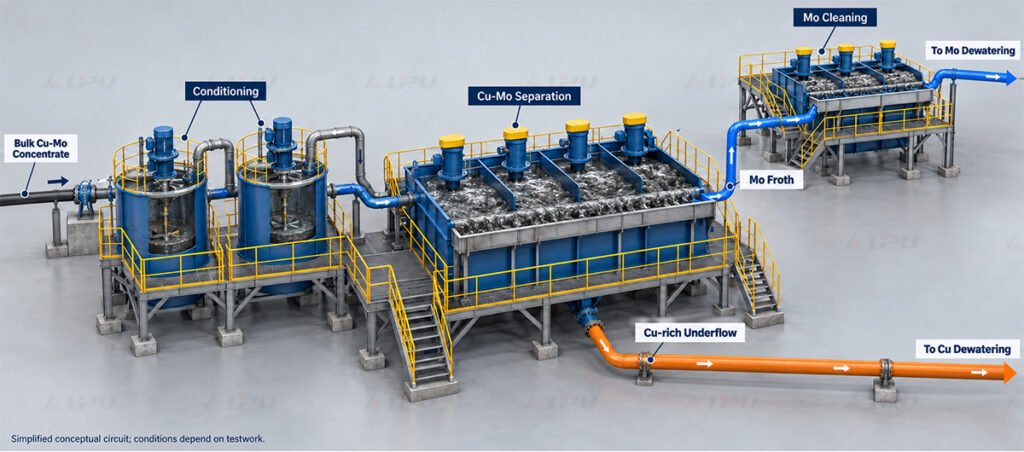
For suitable copper-molybdenum ores, bulk flotation first produces a combined concentrate. A dedicated separation circuit then recovers molybdenite while depressing copper minerals.
The bulk circuit and separation circuit should be evaluated together. Recovery in one stage affects the feed composition and operating requirements of the next.
Alternative sequences may be considered where mineralogy and testwork support them. LIPU’s sulfide ore flotation plant solutions provide a related framework for bulk recovery, while molybdenum-specific testing establishes the separation and cleaning duties.
Grinding, Liberation and Regrinding
Grinding should release molybdenite from associated minerals while limiting unnecessary fines.
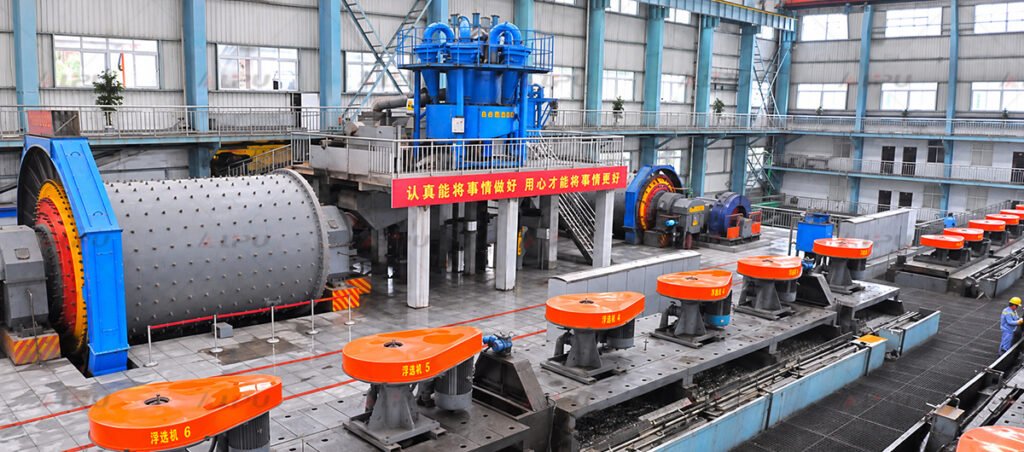
The primary grinding circuit is selected around ore hardness, throughput, liberation characteristics, and flotation response. A ball mill can operate with classification equipment that returns coarse particles for further grinding.
A fixed mesh specification should not replace liberation analysis. The appropriate grind is the one that supports the required recovery and selectivity under tested conditions.
Regrinding serves a different duty from primary grinding. It treats selected concentrate or intermediate streams where locked particles limit subsequent separation.
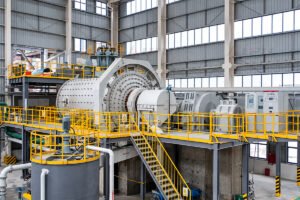
Grinding and classification equipment
Regrind decisions should consider:
Which stream contains the locked minerals.
How much additional liberation is required.
Whether finer grinding improves cleaning or copper-molybdenum separation.
The effect on fines generation, flotation response, and energy consumption.
Stage regrinding can be useful, but its location and duty should follow test results rather than a predetermined number of grinding stages.
Molybdenite Recovery and Multi-Stage Cleaning
Molybdenite has naturally hydrophobic surfaces, but its recovery still depends on particle size, surface condition, reagent selection, and operating conditions.
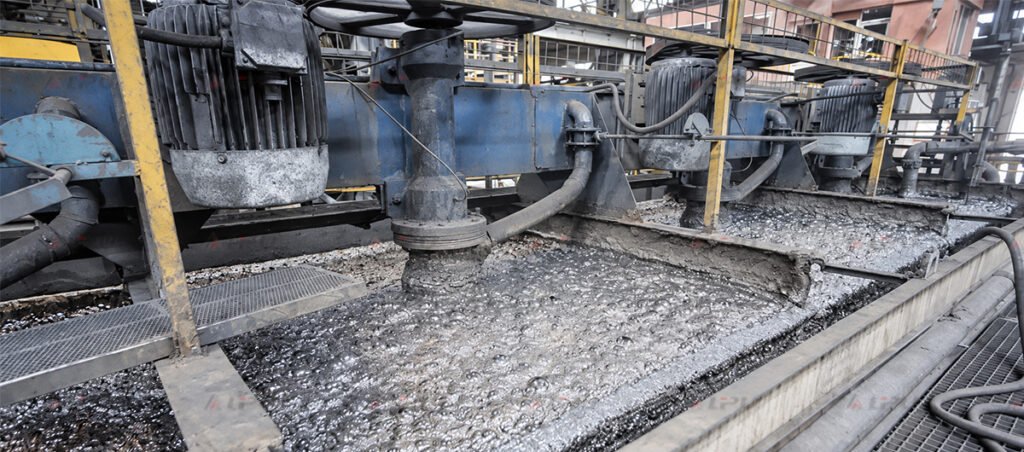
Rougher flotation aims to recover molybdenite efficiently. Scavenger flotation recovers material remaining in rougher tailings, while cleaning stages reject entrained gangue and unwanted minerals.
The cleaning circuit should balance concentrate quality with molybdenum recovery. Adding stages without evaluating intermediate streams can increase circulating loads or valuable-mineral losses.
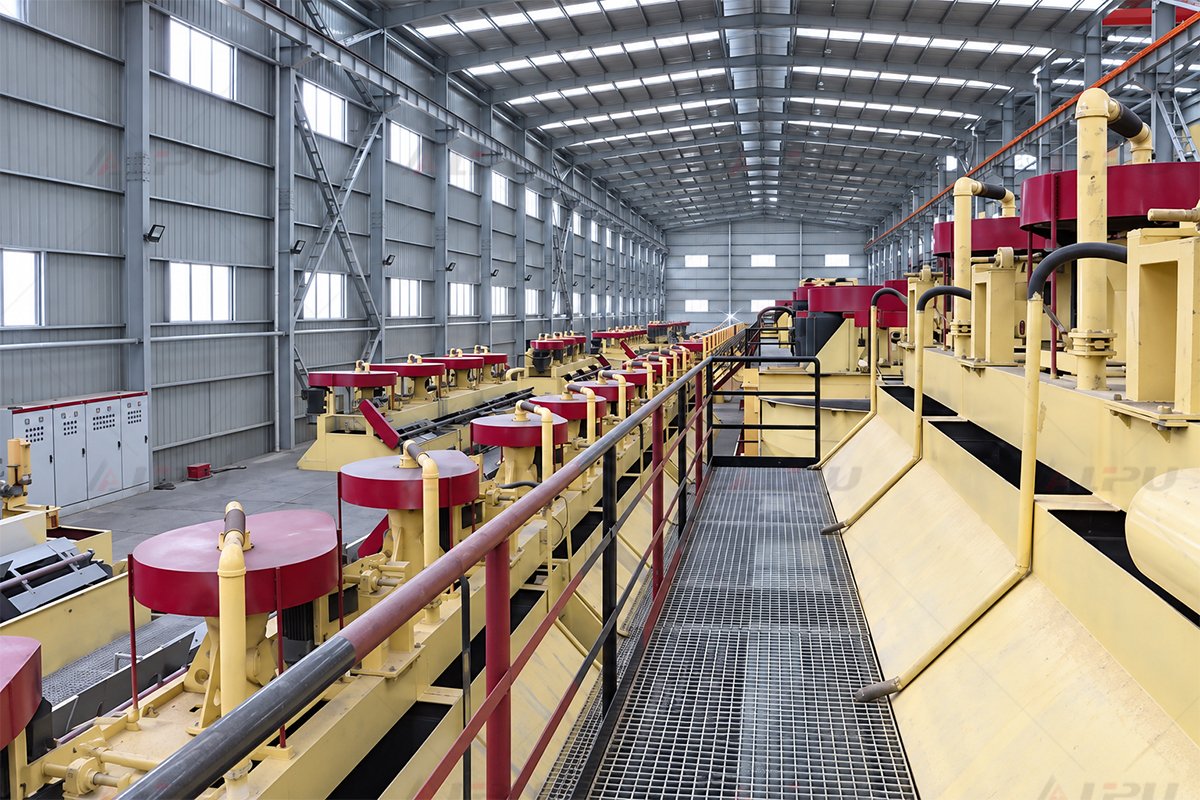
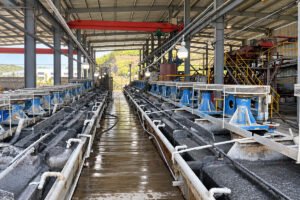
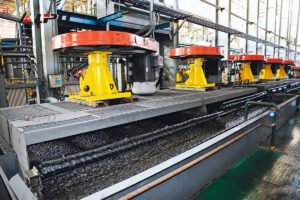
Operating flotation cells with mineralized froth
Important operating factors include:
Recovery of coarse and fine molybdenite.
Gangue entrainment and associated sulfide recovery.
Reagent dosage and conditioning.
Froth depth, stability, and collection.
Water quality and the behavior of recycled streams.
A flotation machine should be selected for its stage duty, considering throughput, flotation kinetics, and slurry characteristics.
The number of cleaning stages, need for regrinding, and return points for intermediate products should be established through circuit testing.
Copper-Molybdenum Separation
Copper-molybdenum separation is a dedicated selective flotation duty rather than a simple continuation of bulk flotation.
The circuit commonly depresses copper minerals while recovering molybdenite into a separate concentrate. Its performance depends on mineral composition, residual reagents, surface condition, and liberation.
Testwork should establish the conditioning and reagent strategy needed for the actual bulk concentrate. Washing, regrinding, or additional cleaning may be required where they improve separation.
Copper-molybdenum separation circuit
Design Factor
Why It Matters
Bulk concentrate composition
Determines the minerals and impurities entering separation
Residual flotation reagents
Can influence copper depression and molybdenite selectivity
Mineral liberation
Controls whether copper and molybdenite can be separated effectively
Water chemistry
Affects reagent response and circuit stability
Intermediate-stream handling
Influences circulating loads and metal losses
Product specifications
Defines acceptable copper contamination and molybdenum recovery
Both products should be evaluated: copper contamination in the molybdenum concentrate and molybdenum losses to the copper concentrate.
Reagent storage, dosing, ventilation, and process controls should match the selected chemistry.
Concentrate Quality and Dewatering
Concentrate quality should be defined before the cleaning and dewatering equipment is selected.
The receiving facility may specify molybdenum grade, copper and other impurity limits, moisture, and handling requirements. These specifications provide the basis for evaluating the flotation product.
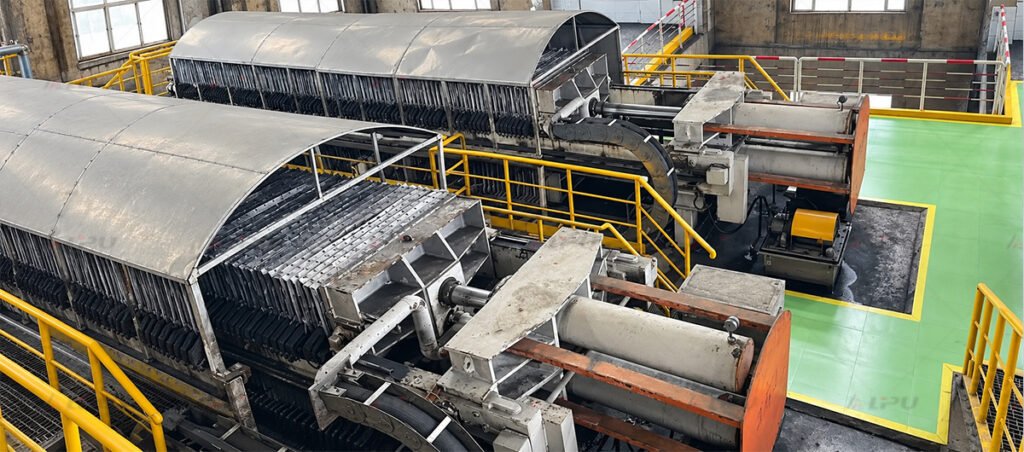
Concentrate filtration equipment
Thickening and filtration prepare concentrate for storage, transport, or further treatment:
Thickening increases slurry solids concentration.
Filtration removes additional water.
Drying may be included where product specifications or downstream processing require it.
These operations remove moisture; they do not inherently increase dry-basis molybdenum grade.
Equipment selection should consider particle size, settling behavior, filtration performance, throughput, and target moisture. Storage and loading arrangements should also limit product losses and contamination.
Testwork and Plant Configuration
A plant proposal should translate representative test results into clearly defined equipment duties.
For primary molybdenum ore, testing should establish rougher recovery, cleaning requirements, and the value of intermediate regrinding.
For copper-molybdenum ore, testing should cover both bulk flotation and selective separation. The composition of the bulk concentrate forms the design basis for the downstream circuit.
Useful project inputs include:
Mineralogical analysis and molybdenum occurrence.
Molybdenum, copper, and relevant impurity assays.
Ore hardness, feed size, and variability.
Planned processing capacity.
Existing grinding and flotation test results.
Target concentrate specifications.
Site conditions, power availability, and water quality.
Equipment Selected Around the Tested Route
Equipment or System
Selection Basis
Feeders, crushers, and screens
Feed characteristics and required grinding feed size
Primary mills and classification equipment
Throughput, hardness, and liberation requirements
Regrinding equipment
Liberation needs of selected intermediate streams
Conditioning tanks and reagent systems
Required chemistry and conditioning duty
Rougher and scavenger flotation cells
Recovery requirements and flotation kinetics
Cleaner flotation equipment
Concentrate quality and intermediate-stream behavior
Copper-molybdenum separation equipment
Selective separation requirements
Thickeners and filters
Settling, filtration, throughput, and moisture requirements
Pumps, tanks, and controls
Stream transfer, circuit balance, and operating stability
LIPU uses these inputs to develop an equipment configuration and plant proposal matched to the selected route.
Process Water and Tailings Considerations
Water circulation should be considered during process development because bulk flotation, molybdenum cleaning, and copper-molybdenum separation may have different chemical requirements.
Recycled water should be assessed for residual reagents, dissolved substances, and suspended fines that could affect flotation performance.
Tailings handling and water recovery arrangements depend on material properties, site conditions, water availability, and the selected storage or disposal method.
These systems should be integrated into the plant configuration so that water balance and return-water quality support stable operation.
Frequently Asked Questions
What is the difference between primary molybdenum flotation and copper-molybdenum separation?
Primary molybdenum flotation recovers molybdenite from ore. Copper-molybdenum separation treats a combined concentrate to produce separate copper and molybdenum products.
Does every molybdenum ore need regrinding?
No. Regrinding is included where additional liberation improves separation sufficiently to justify the equipment and operating cost.
Why are several cleaning stages sometimes required?
Cleaning stages reject gangue and unwanted minerals to meet concentrate specifications. Their number and arrangement depend on the feed and test results.
Can the same flotation conditions be used for bulk recovery and copper-molybdenum separation?
Not necessarily. The two duties have different objectives and may require different conditioning, reagents, and water-management arrangements.
Does thickening produce dry concentrate?
No. Thickening produces a higher-solids slurry. Filtration and, where required, drying provide further moisture removal.
What information is needed for a plant proposal?
Representative ore data, test results, planned capacity, concentrate requirements, and site conditions provide the main design inputs.