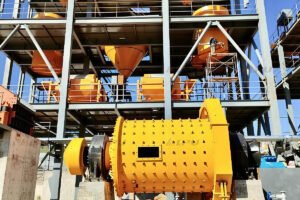
Magnetite is a strongly magnetic iron oxide mineral Fe₃O₄, commonly upgraded through grinding and low-intensity magnetic separation. LIPU helps select processing equipment based on your ore characteristics, capacity and concentrate requirements.
Send your ore analysis and required capacity to discuss a suitable processing route
How to Choose a Magnetite Processing Route
Magnetite’s strong magnetic response makes it suitable for low-intensity magnetic separation, but mineral liberation determines how effectively it can be separated from gangue.
Process selection should consider the proportion of magnetite, its association with other iron minerals, the distribution of impurities and the required product specifications.
Ore Characteristics
Route to Evaluate
Key Consideration
Coarse material with separable magnetic and non-magnetic fractions
Dry magnetic preconcentration before grinding
Confirm gangue rejection and magnetite losses through testing
Magnetite liberated at a relatively coarse grind
Grinding, classification and wet low-intensity magnetic separation
Establish the minimum grinding needed for acceptable separation
Finely disseminated magnetite
Staged grinding and magnetic separation
Regrind selected material while controlling excessive fines
Additional liberation, magnetic cleaning and, where justified, reverse flotation
Balance impurity removal against recovery and operating cost
Mixed magnetite–hematite ore
Low-intensity magnetic recovery of magnetite plus a separate hematite recovery route
Low-intensity separation alone may not recover weakly magnetic iron minerals
Magnetite associated with sulfides or other valuable minerals
Magnetic separation combined with a tested flotation route
Determine recovery objectives and the appropriate stage order
These routes are starting points for evaluation. Feed iron grade or a single particle-size threshold should not be used alone to select the flowsheet.
Main Magnetite Beneficiation Methods
Low-Intensity Magnetic Separation
Low-intensity magnetic separation, commonly abbreviated as LIMS, is the main separation method evaluated for strongly magnetic magnetite.
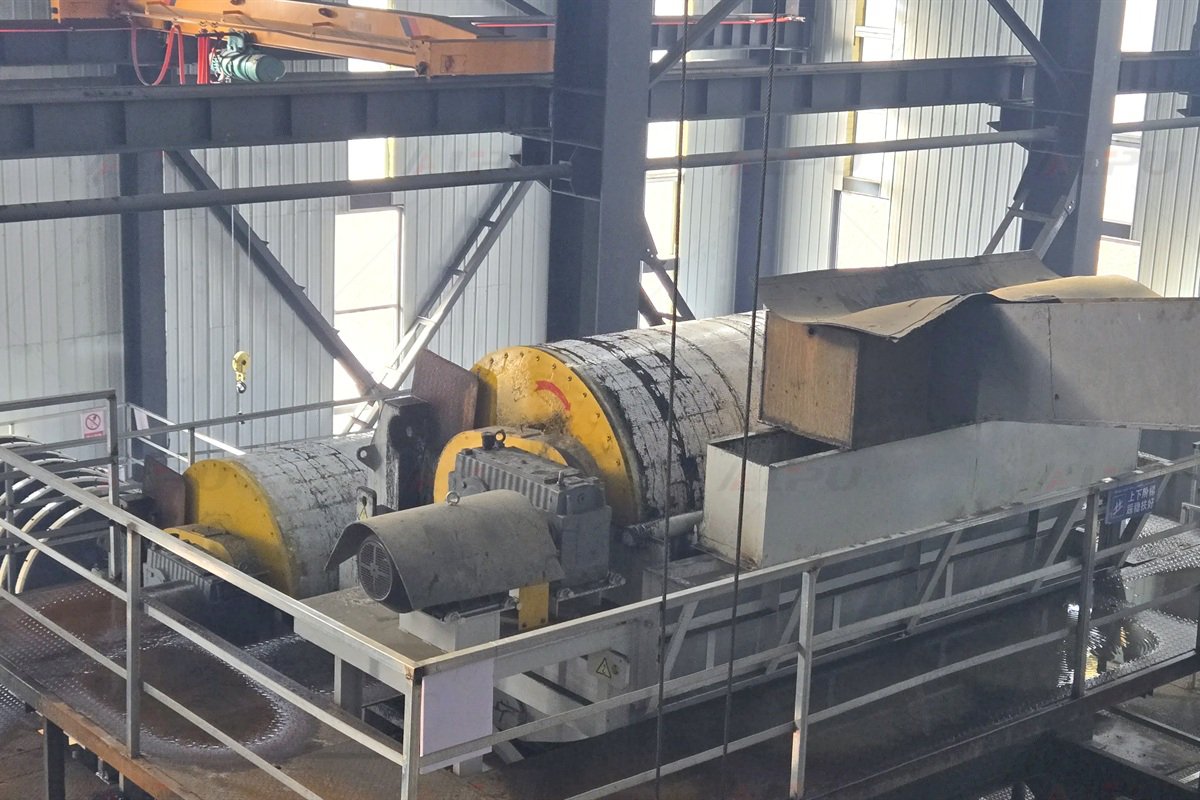
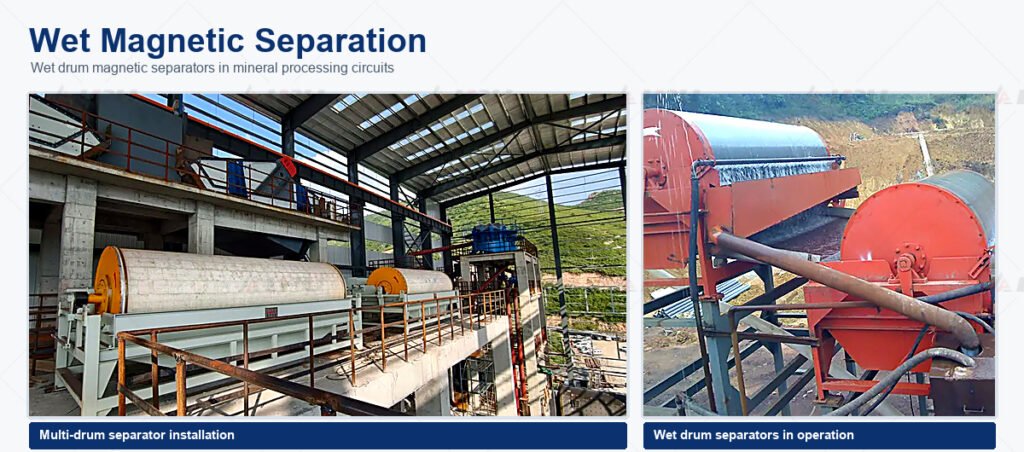
In wet circuits, magnetic drums recover suitable magnetic particles from a slurry while much of the non-magnetic gangue reports to the tailings. Roughing, cleaning and scavenging stages can be arranged according to test results.
Separation performance depends on liberation, feed size, slurry conditions, magnetic system design and drum operating conditions. Increasing magnetic strength alone does not guarantee a cleaner concentrate.
Explore our Magnetic Separator options and provide your feed characteristics to discuss a suitable separation duty.
Wet magnetic separation recovers liberated magnetite
Dry Magnetic Preconcentration
Dry magnetic separation may reject suitable non-magnetic material before grinding, reducing the amount of material entering the wet circuit.
Its suitability depends on particle size, liberation, moisture, feed presentation and the distribution of magnetite between particles. Sticky or fine material may require a different approach.
Dry preconcentration is an optional stage. Limited water availability alone does not establish the suitability of a fully dry processing route.
Staged Grinding and Magnetic Cleaning
Finely disseminated ore may benefit from magnetic separation between grinding stages.
An initial magnetic stage can reject some liberated gangue. Selected magnetic material or middlings can then be reground to improve liberation before further cleaning.
This approach should be compared with alternative grinding arrangements using testwork, energy requirements and the expected grade–recovery balance.
Flotation for Additional Impurity Removal
Flotation may be evaluated when magnetic cleaning alone cannot meet the required impurity limits.
Reverse flotation can remove suitable silicate gangue from an iron-rich product. Where sulfide minerals are present, a separate flotation duty may be needed to remove or recover them.
The flotation stage order, reagent scheme and water requirements depend on mineralogy and test results. Flotation is not required in every magnetite plant.
Review our Flotation Machine options where testwork supports an additional flotation stage.
Magnetite Processing Plant Flow
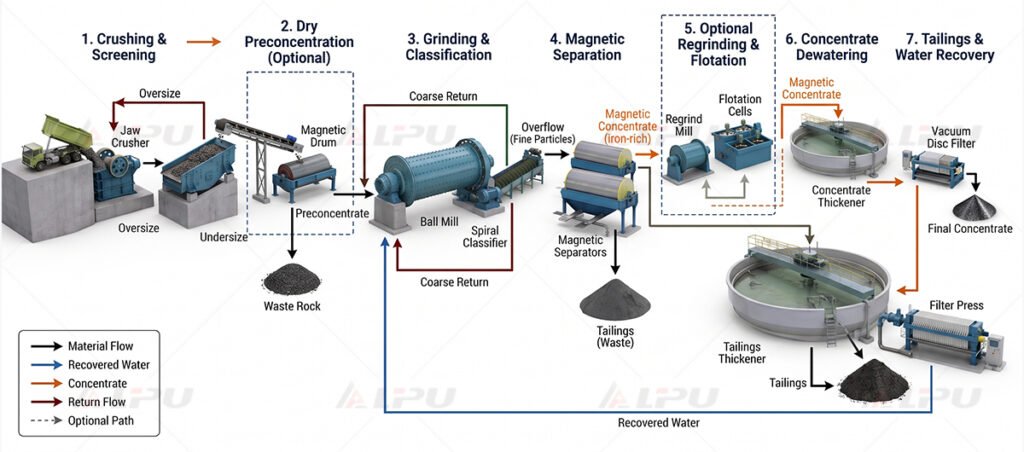
A typical wet magnetite circuit combines crushing, grinding, classification, magnetic separation and dewatering.
Illustrative magnetite beneficiation process
Illustrative main flow:
Crushing and screening → Grinding and classification → Wet low-intensity magnetic separation → Magnetic cleaning → Concentrate thickening and filtration
Optional stages:
Dry magnetic preconcentration before grinding.
Selective regrinding followed by further magnetic cleaning.
Flotation where additional impurity removal is required.
A separate recovery circuit for weakly magnetic iron minerals.
Tailings and water stream:
Tailings collection → Thickening and site-specific management → Recovered water return
1. Crushing and Screening
A feeder supplies run-of-mine ore to a Jaw Crusher for primary crushing.
Secondary crushing and screening prepare a controlled feed for the grinding circuit. In a closed crushing circuit, screen oversize returns for further size reduction while suitable material advances.
The number of crushing stages depends on feed size, ore competency, abrasiveness and the required mill feed. It should not be selected from iron grade alone.
Share your maximum feed size and required throughput to discuss crushing equipment.
2. Optional Dry Preconcentration
Where testing confirms suitable separation, a dry magnetic stage can reject non-magnetic material before wet grinding.
Both magnetic and rejected products should be assessed for iron distribution. Rejecting too much material can also discard locked magnetite and reduce overall recovery.
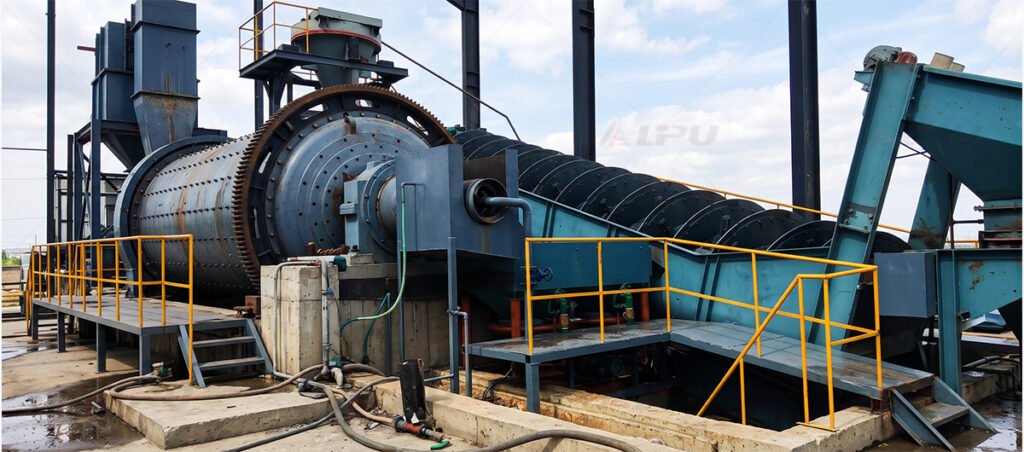
3. Grinding and Classification
Controlled grinding improves magnetite liberation
A Ball Mill prepares the ore for mineral liberation. The grinding target should balance separation performance, energy consumption and the risk of producing excessive fines.
A suitable classification system separates material ready for the next stage from coarse particles requiring further grinding. A Spiral Classifier may be evaluated where its operating range suits the duty; other classification equipment may be appropriate for different targets.
The required grinding size should be established through liberation and separation testing rather than a universal mesh specification.
4. Magnetic Recovery and Cleaning
Wet low-intensity magnetic separators recover magnetite from the prepared slurry.
Roughing produces an initial magnetic product. Cleaning reduces entrained or associated gangue, while scavenging may recover suitable magnetic material from selected streams.
Selected material can return for regrinding when inadequate liberation limits concentrate quality. The number of stages and stream routing depend on the test results.
5. Optional Concentrate Upgrading
If magnetic cleaning cannot meet the product specification, evaluate the reason before adding equipment.
Residual impurities may result from locked particles, entrainment or unwanted minerals associated with magnetite. Selective regrinding, improved classification, additional magnetic cleaning or flotation may address different causes.
Any additional stage should be evaluated for its effect on concentrate grade, iron recovery and operating requirements.
6. Concentrate Dewatering
Concentrate thickening and filtration prepare the product for handling and transport.
Settling and filtration tests help determine equipment sizing and achievable moisture. Product particle size, slurry properties and downstream requirements affect the dewatering arrangement.
Drying is included only where a confirmed product or handling requirement justifies it.
7. Tailings and Water Management
Tailings are collected for thickening and site-specific storage or dewatering.
Recovered water can return to the plant where its quality is compatible with grinding and separation. The system should account for water balance, solids settling, seasonal conditions and the selected tailings management approach.
Equipment for a Magnetite Processing Plant
Equipment should be selected as a coordinated circuit rather than as separate machines with matching nominal capacities.
Processing Stage
Equipment to Evaluate
Selection Basis
Primary crushing
Jaw crusher and feeder
Feed top size, ore competency, abrasiveness and throughput
Secondary crushing and screening
Suitable crusher and vibrating screen
Mill feed requirement and circulating load
Dry preconcentration, where justified
Suitable dry magnetic separation equipment
Feed size, moisture, magnetic response and rejection tests
Grinding and regrinding
Ball mill
Grindability, liberation target and capacity
Classification
Spiral classifier or another suitable classification system
Separation size, slurry conditions and circulating load
Magnetite recovery
Low-intensity magnetic separation equipment
Feed size, slurry flow, magnetic system and required separation
Optional flotation
Flotation cells and conditioning equipment
Impurity targets, kinetics and reagent requirements
Dewatering
Thickener, suitable filter, pumps and water-return equipment
Settling, filtration and plant water balance
Send your ore data and capacity to discuss an integrated equipment configuration.
What Determines Concentrate Grade and Recovery?
A suitable magnetite circuit balances product quality, iron recovery and operating requirements.
Important factors include:
Magnetite content and the distribution of other iron minerals.
Mineral liberation and gangue associations.
Grinding size and classification efficiency.
Magnetic separator loading and operating conditions.
Fine-particle losses and gangue entrainment.
Silica, alumina, phosphorus, sulfur and other product limits.
Concentrate particle size and moisture.
Total iron analysis alone does not show how much iron is recoverable by low-intensity magnetic separation. Mineralogical analysis and magnetic separation tests help establish realistic targets.
No single concentrate grade, recovery or energy-consumption figure applies to every magnetite deposit.
Frequently Asked Questions
Why is low-intensity magnetic separation used for magnetite?
Magnetite is strongly magnetic, allowing suitable liberated particles to be recovered with low-intensity magnetic equipment. The separator design and operating conditions still need to match the feed.
Can magnetite be processed without water?
Dry magnetic separation may be suitable for coarse preconcentration or certain dry processing duties. Fine or closely intergrown ore may still require grinding and wet separation. Limited water availability alone does not establish the suitability of a fully dry route.
How fine should magnetite ore be ground?
The required grind depends on mineral liberation and the product specification. Excessive grinding increases energy demand and may complicate recovery and dewatering. Representative grinding and separation tests help determine a suitable target.
Does every magnetite plant need flotation?
No. Flotation is considered when magnetic cleaning alone cannot achieve the required impurity limits, or when associated minerals require separate treatment.
What information is needed for an equipment proposal?
Provide your project location, dry feed capacity, maximum feed size, ore analysis, target concentrate specification and available water and power. Mineralogical reports, magnetic separation tests and representative samples help establish a reliable design basis.
Discuss Your Magnetite Processing Project
Planning a new plant or improving an existing circuit?
Send your ore data and project requirements to discuss a suitable processing route and equipment configuration.
Include the following details in your enquiry:
Project country and location.
Required dry feed capacity in t/h.
Maximum feed size.
Ore analysis and available mineralogical information.
Target concentrate specifications.
Water and power availability.
Existing test reports or current plant performance.