Manganese ore beneficiation upgrades manganese-bearing minerals while rejecting unwanted gangue. The suitable route depends on mineralogy, liberation size, clay content, associated minerals and the required product specification.Oxide, carbonate and mixed manganese ores can require different combinations of washing, gravity separation, magnetic separation, flotation and dewatering. LIPU helps discuss equipment configurations based on your ore and required capacity.
Send your ore analysis and capacity to discuss a suitable process route
How to Select a Manganese Beneficiation Route
Manganese grade alone does not define the process. Representative samples should be tested to establish mineral associations, liberation, manganese distribution in fines and the behavior of impurities such as silica, iron, phosphorus and clay.
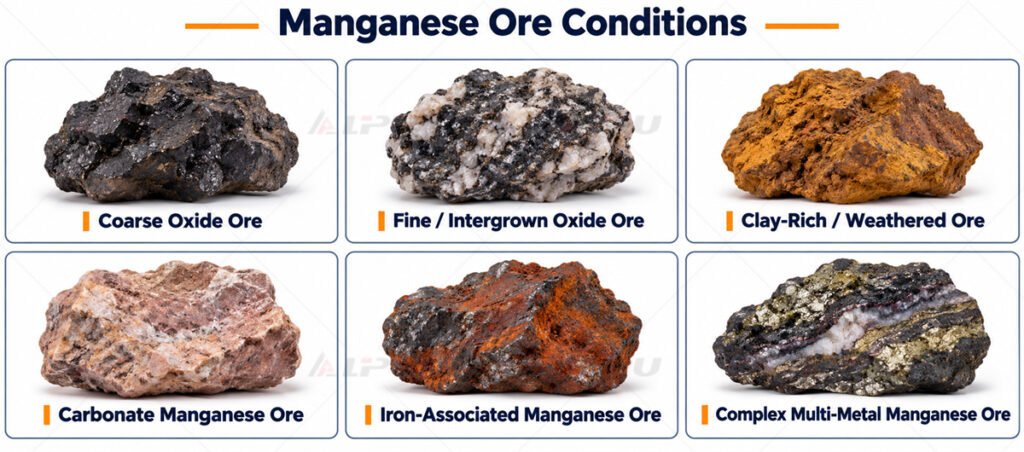
Common manganese ore conditions requiring different beneficiation routes
Ore condition
Route to evaluate
Main consideration
Coarse oxide ore with a clear density contrast
Washing and sized gravity separation
Establish the effective size range and manganese loss to light products
Fine or closely intergrown oxide ore
Grinding, classification, high-intensity magnetic separation and/or flotation
Confirm liberation before selecting cleaning stages
Clay-rich or weathered manganese ore
Scrubbing, washing and controlled desliming
Assay slimes before rejection because they may contain recoverable manganese
Carbonate manganese ore
Grinding followed by tested gravity, magnetic or flotation options
Carbonate mineralogy and gangue response must be confirmed by testing
Manganese ore associated with iron minerals
Magnetic separation with a route designed for selectivity
Determine whether iron removal, recovery or a separate product is required
Complex multi-metal manganese ore
Combined route developed from mineralogical and metallurgical tests
Define recovery priorities for manganese and associated valuable minerals
These are route-selection guidelines. Equipment type, process order and product targets should be confirmed through representative testwork.
Main Manganese Ore Beneficiation Methods
Crushing and Screening
Crushing and screening prepare ore for washing, grinding or separation. A Jaw Crusher can be evaluated for primary size reduction, followed by the required secondary crushing and screening stages.
Screen oversize can return for further crushing in a closed circuit. Crusher selection depends on feed top size, ore hardness, abrasiveness, moisture and the required downstream feed size.
Washing and Desliming
Scrubbing and washing can remove clay coatings, loose fines and surface contamination before concentration. Where a significant fine fraction is present, desliming conditions must be tested because valuable manganese can report to slimes.
Washing is therefore an ore-specific preparation stage, not a standard requirement for every manganese ore plant.
Gravity Separation
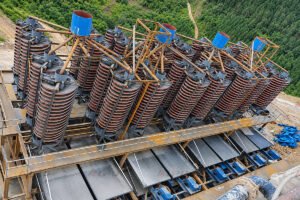
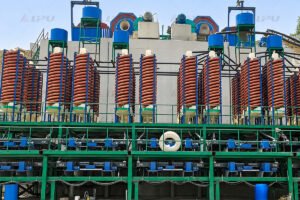
Gravity separation uses density differences between liberated manganese minerals and lighter gangue. Jigs, spirals and selected table-cleaning duties can be evaluated when feed size and mineral liberation are suitable.
It is most effective within an appropriate particle-size range. Excessive slimes, closely locked particles or low density contrast may require a different or combined route.
Magnetic Separation
Magnetic separation can be evaluated according to the magnetic response of the target minerals and associated gangue. Low-, medium- or high-intensity equipment is selected only after confirming the separation duty through tests.
A Magnetic Separator can be reviewed as part of the equipment evaluation. Magnetic separation should not be described as a universal manganese recovery method because different manganese minerals and impurities respond differently.
Flotation
Flotation may be evaluated when physical separation cannot meet the required concentrate grade or impurity limits. It may target suitable manganese-bearing minerals, gangue minerals or associated sulfides depending on the ore.
Reagent selection, conditioning, water chemistry and flotation stage order require testwork. Flotation is an option for suitable ores rather than a mandatory processing stage.
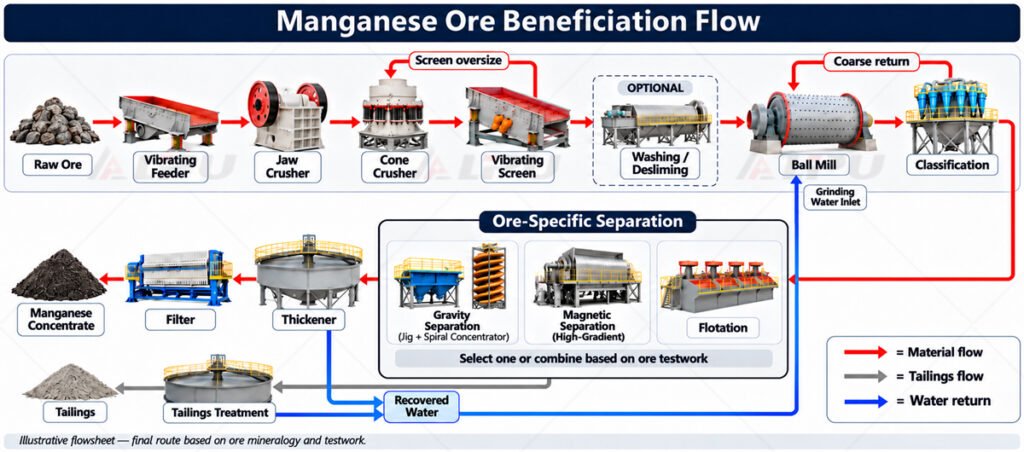
Typical Manganese Ore Processing Plant Flow
The following is an illustrative structure, not a fixed plant design:
Manganese beneficiation routes are selected by ore mineralogy and testwork
The separation section may use gravity separation, magnetic separation, flotation, or a tested combination of these stages. Selective regrinding can be added where middlings remain locked.
Tailings are directed to a site-specific thickening, storage or dewatering arrangement. Recovered water can return to appropriate process stages where water quality permits.
Manganese Processing Stages
1. Feed Preparation
A feeder supplies run-of-mine ore to the crushing circuit at a controlled rate. Primary crushing, secondary crushing and screening prepare a suitable feed for the selected downstream route.
Feed preparation design should consider ore competency, moisture, clay content and the required plant operating schedule.
2. Optional Washing and Desliming
Where tests support the duty, scrubbers, washers and screens remove clay or prepare a size fraction for concentration. Sampling of wash water and fine fractions helps prevent unnecessary manganese losses.
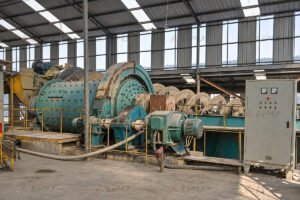
3. Grinding and Classification
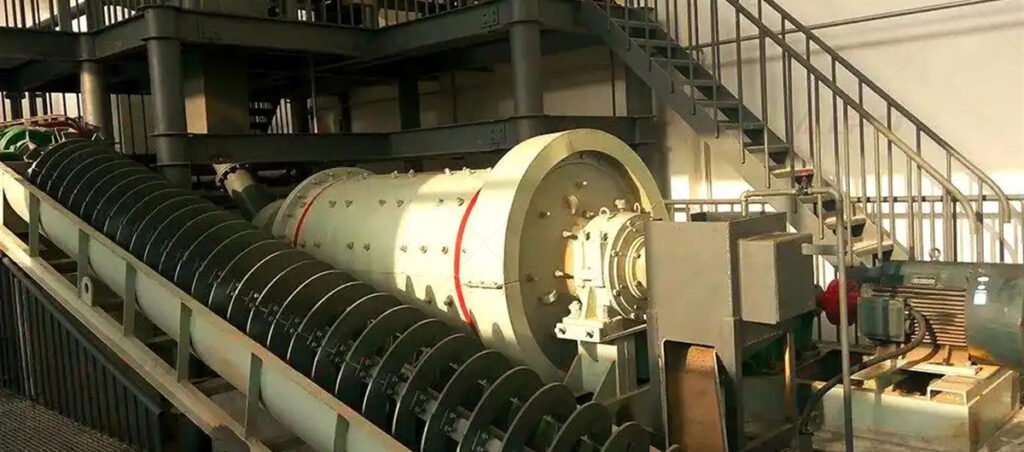
Grinding and classification prepare manganese ore for separation
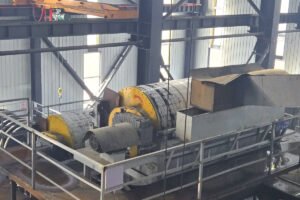
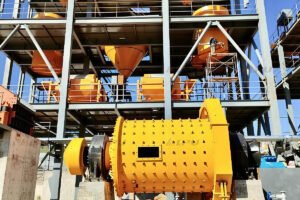
Grinding liberates manganese minerals from associated gangue. A Ball Mill can be evaluated where the ore and duty suit ball-mill grinding.
Classification controls the material advancing to separation and returns coarse material for further grinding. A Spiral Classifier may suit selected duties; other classification systems may be suitable for different feed conditions and separation targets.
The target grind must be based on liberation and separation tests. Finer grinding can improve liberation but also increases energy demand and may create difficult-to-recover slimes.
4. Ore-Specific Separation and Cleaning
The separation circuit is configured around the ore:
Coarse, liberated manganese minerals may be evaluated by gravity separation.
Magnetic separation may remove or recover minerals where their magnetic response supports the duty.
Flotation may be evaluated for fine material or complex impurity removal.
Selected middlings can return for regrinding and cleaning when testwork supports the added stage.
The goal is a practical balance between concentrate quality, manganese recovery and operating requirements.
5. Concentrate Dewatering
Concentrate thickening and filtration prepare the product for handling and transport. Equipment selection depends on settling behavior, particle size, slurry properties and the required product moisture.
Drying should be included only where the confirmed product specification or handling conditions require it.
6. Tailings and Water Management
Tailings design should account for water balance, solids settling behavior, site conditions and applicable requirements. Recovered water can reduce fresh-water demand when its quality is compatible with the selected processing route.
Equipment for a Manganese Ore Processing Plant
Processing stage
Equipment to evaluate
Selection basis
Feed preparation
Feeder, primary crusher, secondary crusher and vibrating screen
Feed top size, ore competency, moisture and required feed size
Washing and desliming
Scrubber, washer, screen and desliming equipment
Clay content, fine-particle behavior and water availability
Grinding
Ball mill and suitable classification system
Grindability, liberation target and circulating load
Gravity separation
Jigs, spirals or selected cleaning equipment
Particle size, density contrast and capacity
Magnetic separation
Suitable magnetic separation equipment
Mineral magnetic response, feed size and test results
Send your ore data and throughput requirement to discuss an integrated equipment configuration.
What Determines Concentrate Grade and Recovery?
The objective is a balanced result: suitable manganese grade, practical recovery and stable plant operation.
Key factors include manganese mineralogy, liberation size, manganese distribution in fines, gangue composition, iron and phosphorus content, classification efficiency, separation conditions, water quality and product moisture.
No universal grade or recovery applies to all manganese deposits. Representative testwork and a confirmed sales specification are needed to set realistic targets.
Frequently Asked Questions
What is the best beneficiation method for manganese ore?
There is no universal route. Gravity separation may suit liberated coarse material, while fine, clay-rich, carbonate or complex ores can require washing, grinding, magnetic separation, flotation or a tested combination.
Does manganese ore always need washing?
No. Washing is evaluated when clay, loose fines or surface contamination affects downstream separation. Fine fractions should be tested before rejection because they may contain recoverable manganese.
Can magnetic separation recover manganese ore?
It can be useful for suitable manganese ores or associated minerals, but performance depends on mineral magnetic response and liberation. Magnetic separation should be selected from test results rather than assumed for all manganese ore.
When is flotation used for manganese ore?
Flotation is considered when gravity or magnetic separation cannot meet concentrate quality or impurity limits, especially for fine or complex ores. The reagent scheme and operating conditions require testing.
What information is needed for a proposal?
Provide the project location, dry feed capacity, feed size, ore analysis, mineralogy if available, target concentrate specification and water and power availability. Representative samples and test reports improve the design basis.