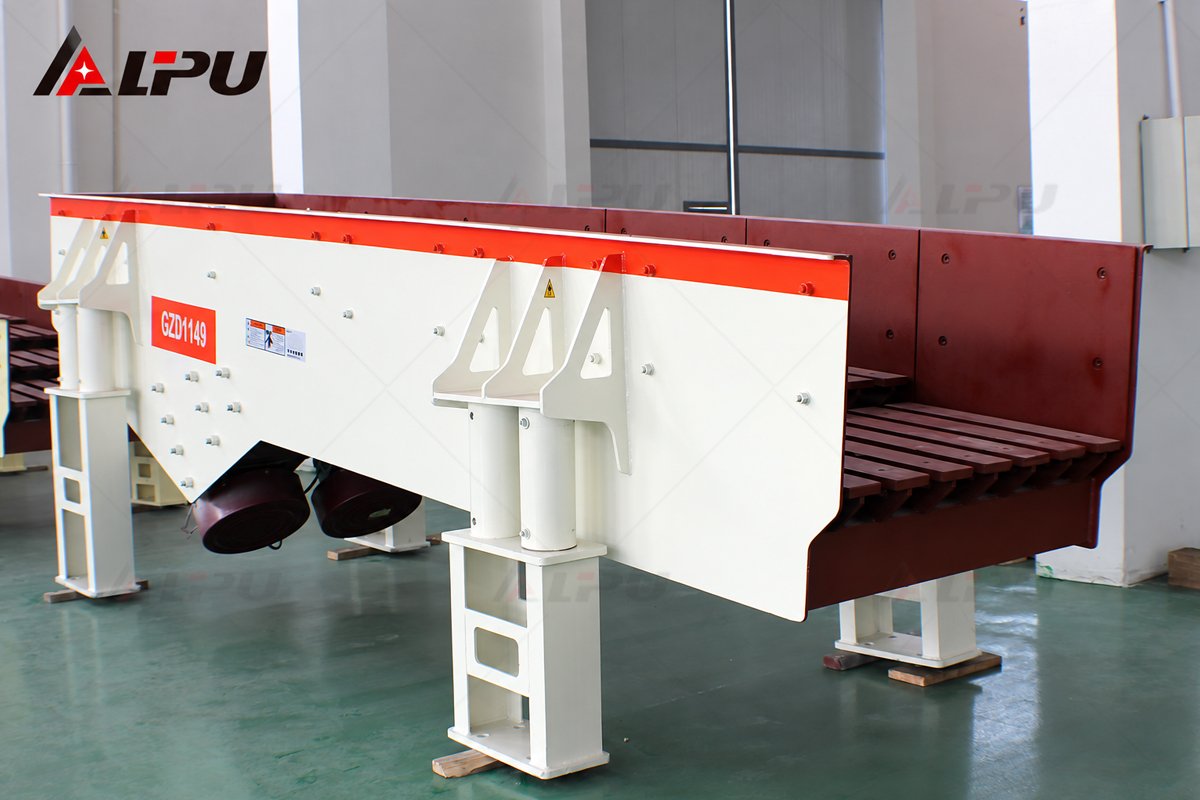
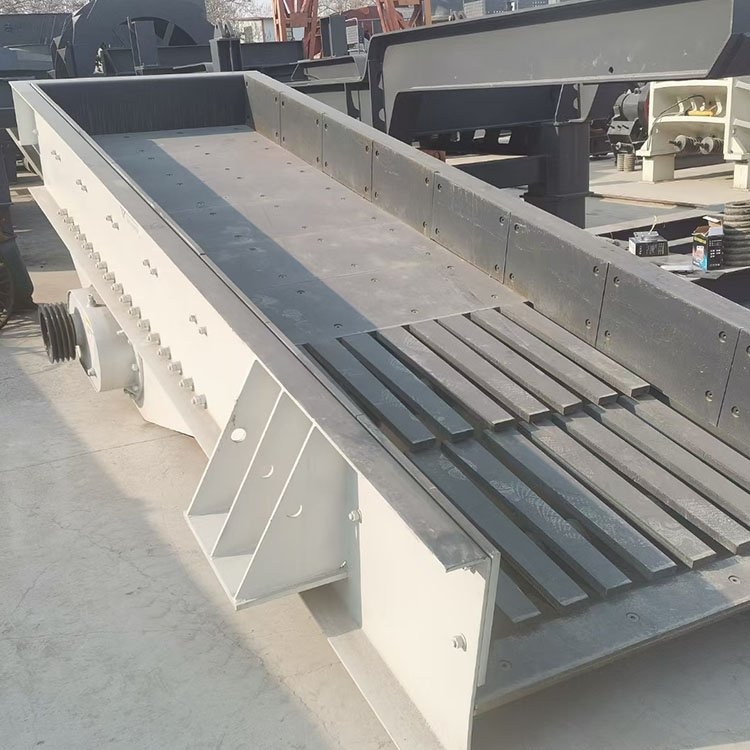
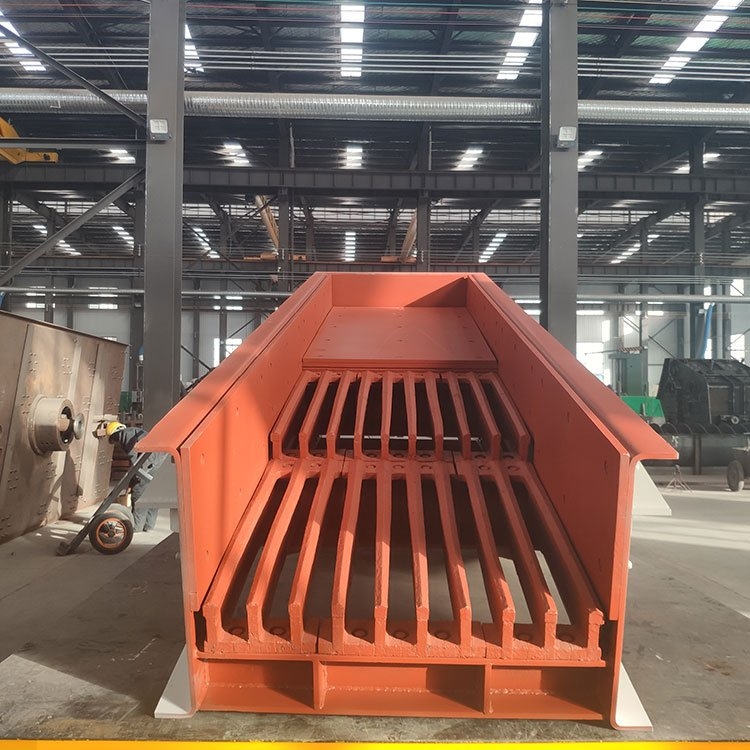
LIPU vibrating feeders are designed to provide continuous and controlled feeding of rock, ore, and aggregate from hoppers or storage bins to downstream crushing and screening equipment.
They are commonly installed before primary crushers to regulate material flow, reduce sudden load changes, and help maintain more stable operation throughout the crushing circuit.
Listed Capacity Range: 80–600 t/h
Maximum Feed Size of Listed Models: Up to 650 mm
Available Series: GZD and ZSW
Typical Applications: Mining, quarrying, aggregate production, mineral processing, and crushing plants
A vibrating feeder is a material-handling machine used to transfer bulk solids from a hopper or storage bin to the next stage of processing at a controlled rate.
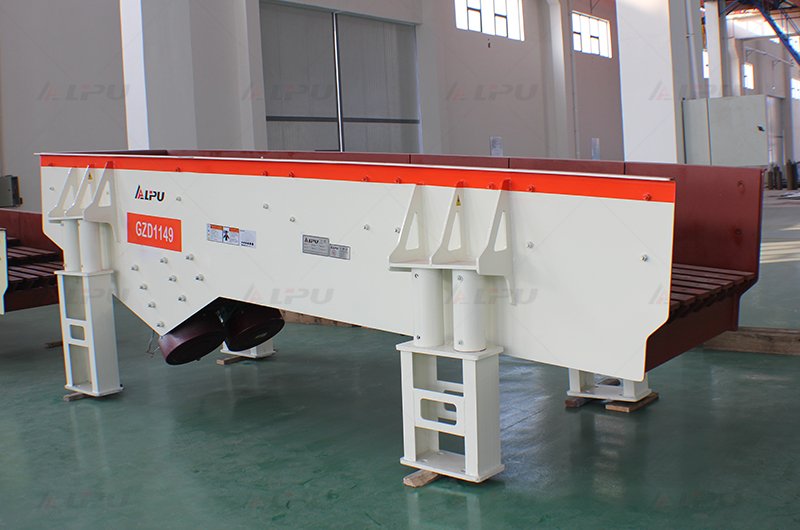
Vibrating feeder demonstration
Vibrating feeder
In crushing plants, it is commonly installed before a jaw crusher or other primary crushing equipment.
Instead of allowing large quantities of material to enter the crusher at once, the feeder meters the material continuously. This helps reduce uneven crusher loading and supports more stable plant operation.
Depending on the feeder configuration, grizzly bars can also remove part of the undersize material before primary crushing.
Material enters the feeder from a hopper or storage bin.
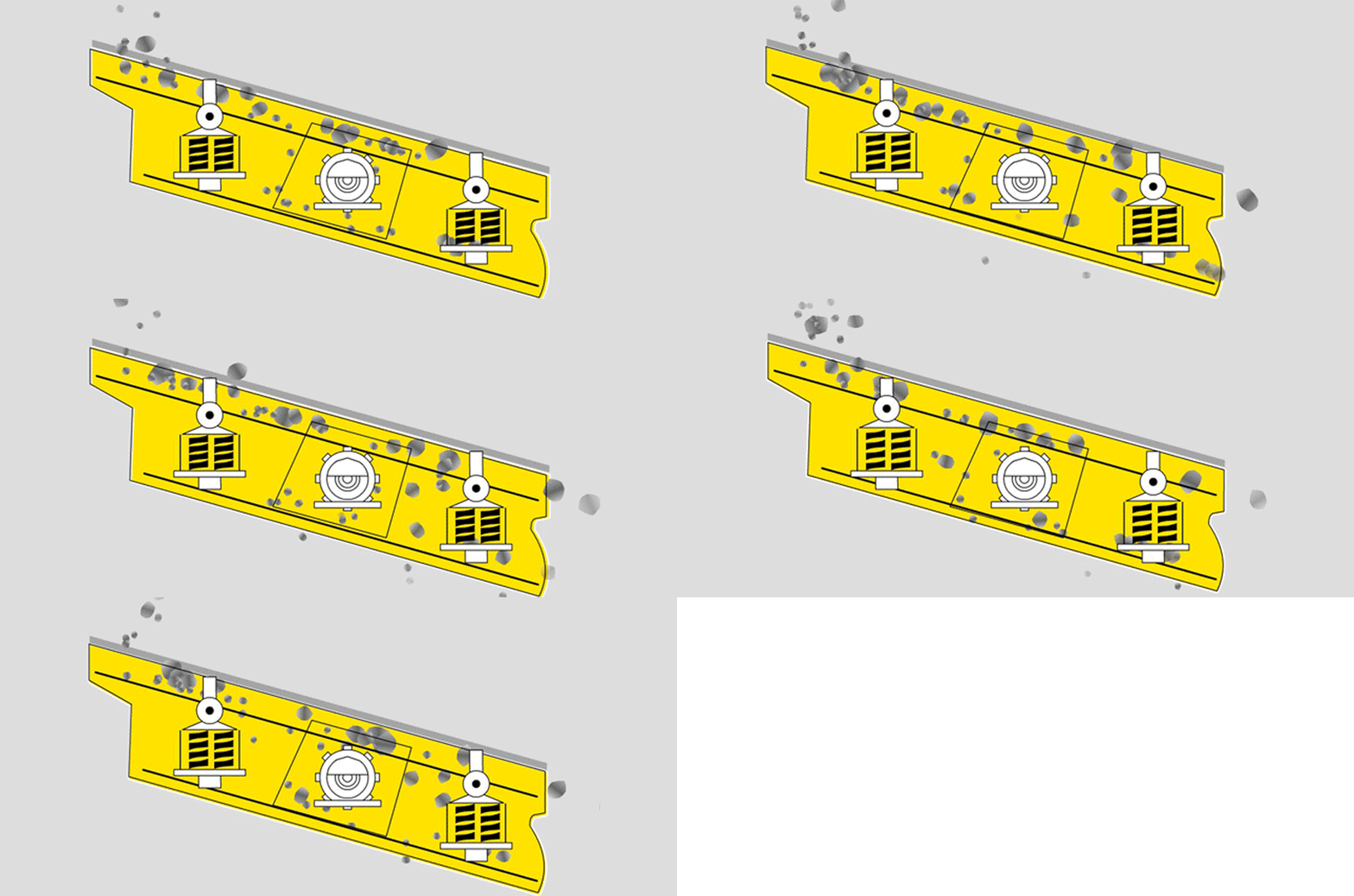
The vibration system causes the feeder trough to move in a controlled reciprocating motion. This vibration advances the material toward the discharge end and into the downstream crusher, screen, or conveyor.
Working principle of vibrating feeder
The feeding rate can be adjusted according to:
Required production capacity
Material characteristics
Hopper discharge conditions
Downstream crusher capacity
Operating requirements
For feeders equipped with grizzly bars, smaller particles can pass through the openings before the remaining material enters the primary crusher.
This can reduce unnecessary crushing of material that is already below the required feed size.
Why Stable Feeding Matters Before Crushing
The vibrating feeder is not only a conveying device. Its main process value is to regulate the flow of material entering the crushing circuit.
More Stable Crusher Loading
Large fluctuations in feed rate can cause uneven crusher loading.
A controlled feeder helps supply material more consistently so that the crusher can operate under more stable conditions.
Reduced Material Surging
Direct discharge from a hopper can allow too much material to enter the crusher at one time.
A vibrating feeder meters the material and reduces sudden surges.
Preliminary Removal of Fine Material
When grizzly bars are used, part of the undersize material can bypass the primary crusher.
This can reduce unnecessary crushing load and improve the efficiency of the primary crushing stage.
Better Matching Between Plant Stages
The feeder should be matched to the capacity of the crusher and the complete production line.
A feeder that is too small can restrict plant capacity, while an oversized or poorly controlled feeder may overload downstream equipment.
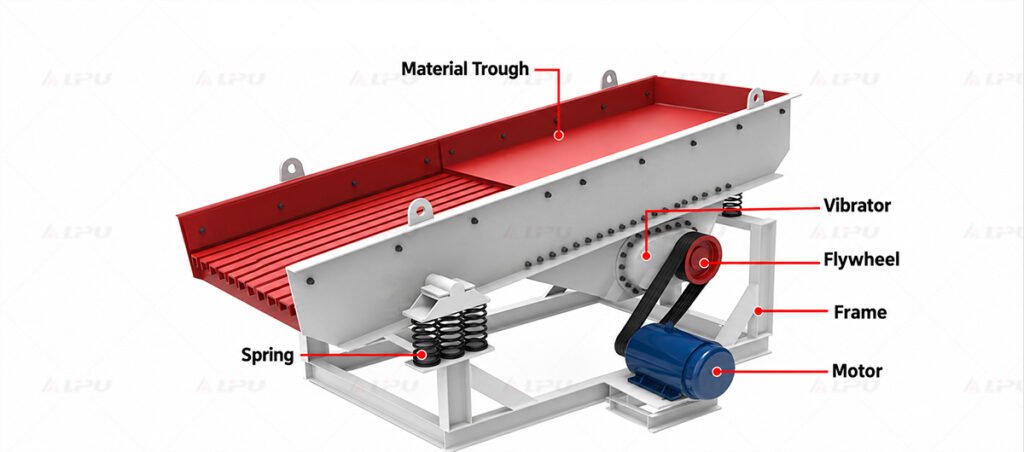
Main Components
A typical vibrating feeder consists of:
Main components of a vibrating feeder and its vibration drive system
Feeding trough
Vibration exciter or vibration motors
Drive system
Springs
Grizzly bars, where fitted
Support frame
Feed section
Discharge section
The feeding trough carries the material, while the vibration system provides the force required to move it forward.
Springs support the vibrating structure and allow controlled movement during operation.
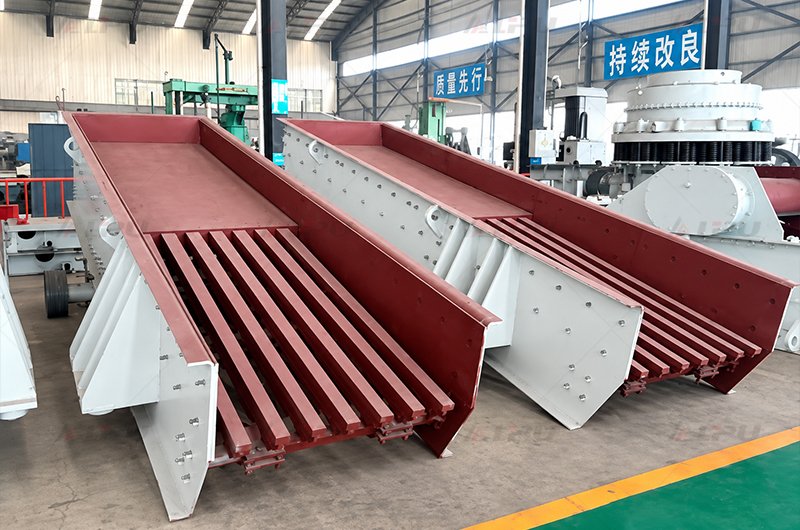
For grizzly-type feeders, the bar section provides preliminary separation of smaller material before crushing.
Suitable Materials and Applications
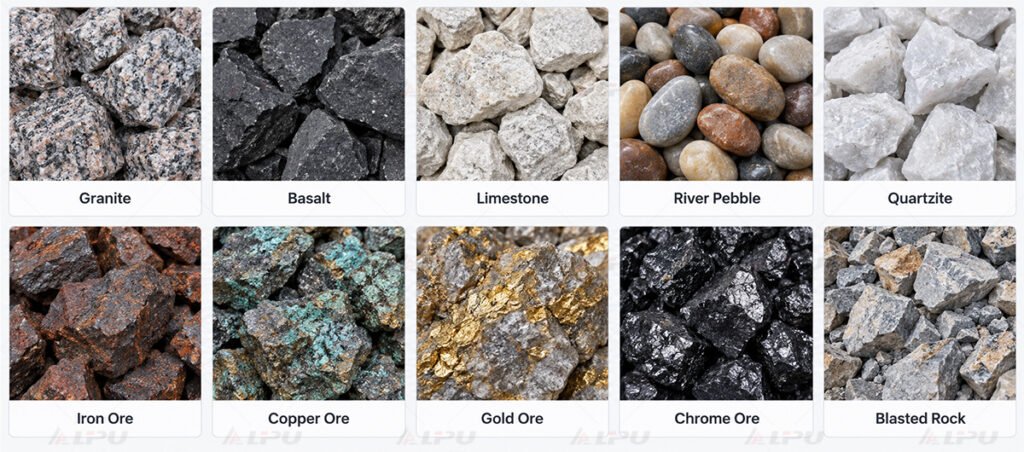
LIPU vibrating feeders can be used with a wide range of rock, ore, and aggregate materials.
Typical materials include:
Typical rock, ore, and aggregate materials handled by vibrating feeders in mining, quarrying, and crushing plants
Granite
Basalt
Limestone
River pebble
Quartzite
Iron ore
Copper ore
Gold ore
Chrome ore
Other blasted rock and mineral feed
Typical applications include:
Primary crushing plants
Quarry aggregate production
Hard-rock crushing
Mineral processing plants
Mobile crushing systems
Hopper discharge
Feeding before screening
Preliminary screening before primary crushing
The feeder should be selected according to material size, bulk density, moisture, stickiness, required capacity, and downstream equipment.
GZD and ZSW Vibrating Feeder Series
The current LIPU vibrating feeder range includes both GZD and ZSW series models.
GZD Vibrating feeder
ZSW Vibrating Feeder
The listed GZD models cover:
400–650 mm input size
80–600 t/h capacity
The listed ZSW models cover:
500–630 mm input size
96–400 t/h capacity
The two series are available in different trough sizes, motor powers, capacities, and installation dimensions.
The correct series and model should be selected according to the project requirements rather than by model name alone.
For project selection, confirm:
Maximum lump size
Required throughput
Hopper outlet dimensions
Material bulk density
Fine-material content
Grizzly requirement
Downstream crusher type
Note: Exact structural differences between individual GZD and ZSW configurations should be confirmed from the corresponding equipment drawing or technical specification before final selection.
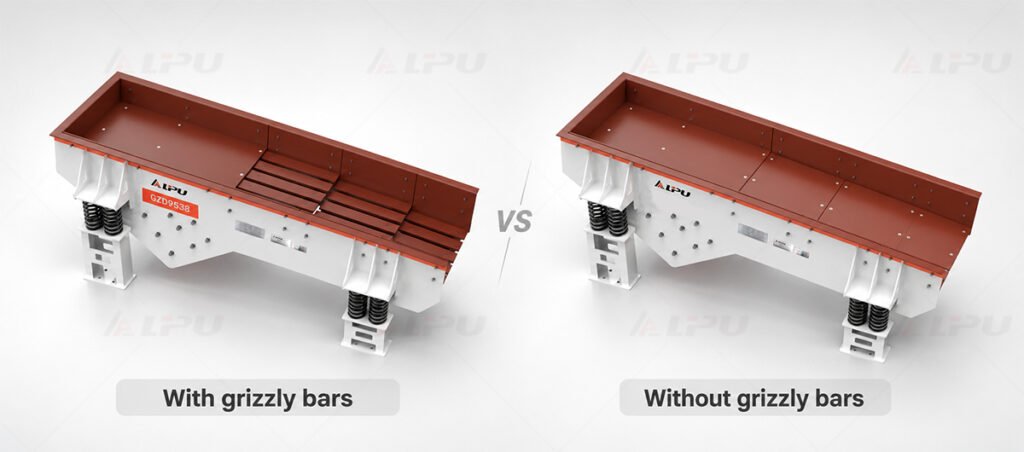
Vibrating Feeder With Grizzly vs Without Grizzly
Some crushing plants require only controlled feeding, while others also benefit from preliminary screening.
Vibrating feeder comparison: with grizzly bars vs without grizzly bars
Factor
Feeder Without Grizzly
Feeder With Grizzly
Main function
Controlled feeding
Feeding + preliminary screening
Fine-material bypass
No
Yes
Typical feed
More uniform material
Mixed-size blasted rock
Primary crusher load
All material enters crusher
Some undersize material can bypass crusher
Typical position
Hopper discharge or transfer point
Before primary crusher
A grizzly-type feeder can be useful where the raw feed contains a significant amount of material that is already smaller than the primary crusher feed requirement.
However, the bar spacing should be selected according to the process and required bypass size.
How to Select the Right Vibrating Feeder
Vibrating feeder selection should be based on the complete feeding and crushing system.
Maximum Feed Size
The maximum lump size must remain within the allowable input size of the selected feeder.
The current listed models cover input sizes from 400 mm to 650 mm.
Required Capacity
Feeder capacity should be matched to the required plant throughput and the capacity of the downstream crusher.
The listed models cover approximately 80–600 t/h.
The feeder should have sufficient operating margin for normal fluctuations in feed conditions.
Material Bulk Density
Capacity can be affected by material density.
Dense ore and lighter aggregate may behave differently even when the nominal volumetric feed rate is similar.
Material Size Distribution
The proportion of large lumps, intermediate particles, and fines affects how material moves across the feeder.
Mixed-size blasted rock may benefit from grizzly pre-screening.
Moisture and Stickiness
Wet or sticky material can reduce flowability and may accumulate on the feeder or grizzly bars.
These conditions should be considered during equipment selection.
Hopper Outlet Size
The hopper discharge opening should be matched to the feeder width and material flow characteristics.
Poor hopper-feeder matching can cause bridging, uneven loading, or restricted capacity.
Downstream Crusher
The feeder should be selected together with the primary crusher.
For example, a jaw crusher requires a stable feed rate that matches its feed opening, crushing capacity, and operating conditions.
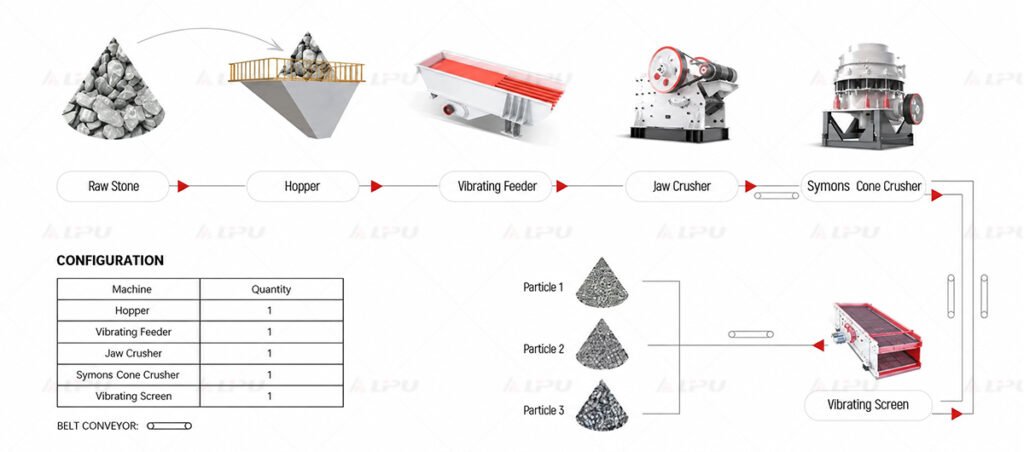
Typical Crushing Circuits
A vibrating feeder normally works as part of a complete crushing and screening system.
For hard rock:
Typical crushing circuit showing the vibrating feeder supplying material to primary and secondary crushing and screening stages.
The final configuration should be selected according to:
Material hardness
Maximum feed size
Required capacity
Final product size
Number of product specifications
Site conditions
Open- or closed-circuit requirement
Technical Parameters
GZD Vibrating Feeder
Model
Funnel Size (mm × mm)
Input Size (mm)
Capacity (t/h)
Motor Power (kW)
Weight (kg)
Dimensions (mm)
GZD-800×3000
800×3000
400
80–120
2.2
3195
3110×1800×1600
GZD-960×3800
960×3800
500
120–210
2.2×2
3375
3850×1950×1630
GZD-1100×4200
1100×4200
580
200–430
3.7×2
4400
4400×2050×1660
GZD-1100×4900
1100×4900
580
280–500
5.5×2
4675
5200×2050×1700
GZD-1300×5200
1300×5200
650
450–600
7.5×2
5400
5200×2350×1750
ZSW Vibrating Feeder
Model
Funnel Size (mm × mm)
Input Size (mm)
Capacity (t/h)
Motor Power (kW)
Weight (kg)
Dimensions (mm)
ZSW-950×3800
950×3800
500
96–160
11
4100
3882×2224×2121
ZSW-1100×4200
1100×4200
580
120–240
15
4745
4310×2500×1365
ZSW-1100×4900
1100×4900
580
120–280
15
5420
4957×2500×1365
ZSW-1100×5900
1100×5900
630
160–350
22
6100
6000×2500×2150
ZSW-1300×5900
1300×5900
630
250–400
37
6300
Verify before publishing
The specifications above are based on the current data published on the LIPU vibrating feeder page.
Actual capacity can vary according to material bulk density, feed gradation, moisture, feeder settings, hopper conditions, and downstream equipment.
Customer Applications
Vibrating feeders are commonly installed at the beginning of crushing and mineral-processing circuits.
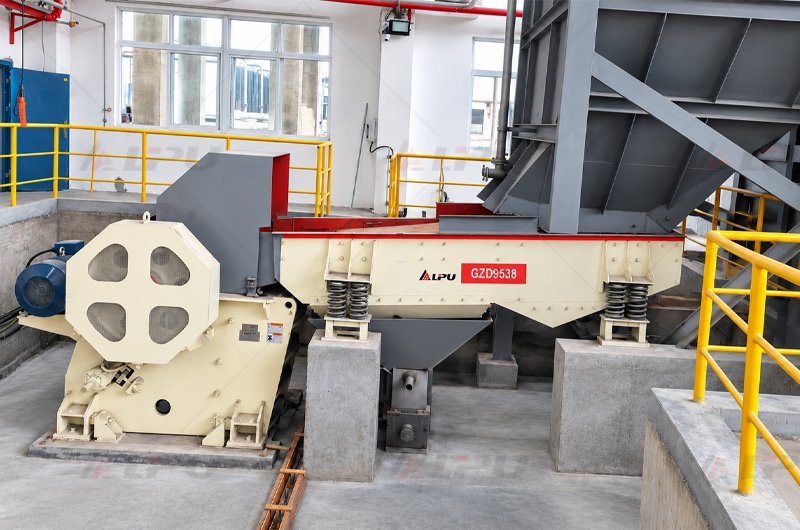
Vibrating feeder feeding a jaw crusher in a primary crushing circuit
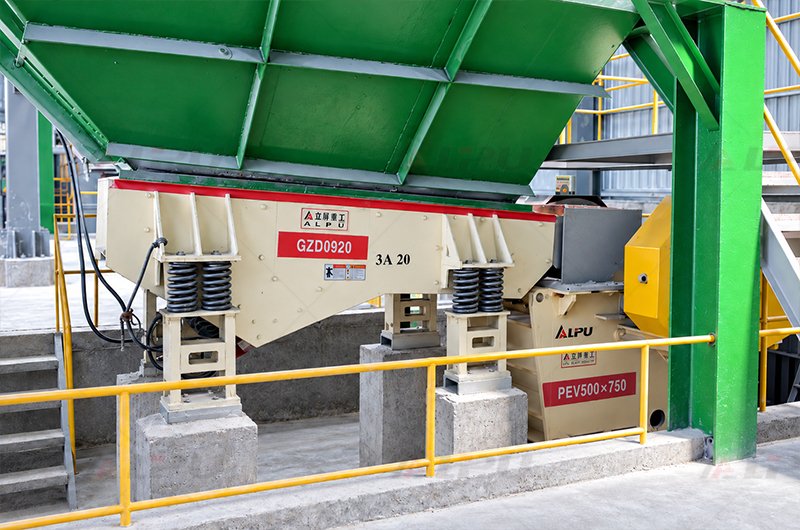
Vibrating feeder installed below the hopper for controlled crusher feeding
Typical installations include:
Granite and basalt crushing plants
Limestone aggregate plants
Iron ore crushing circuits
Copper and gold ore processing plants
Quarry production lines
Stationary crushing plants
Mobile crushing stations
At a project site, the feeder should be evaluated together with the hopper, primary crusher, conveyors, screening equipment, and control system.
This helps ensure that the complete line operates at a balanced feed rate.
Frequently Asked Questions
What is the main purpose of a vibrating feeder? A vibrating feeder controls the flow of bulk rock, ore, or aggregate from a hopper to downstream equipment such as a crusher, screen, or conveyor.
Can a vibrating feeder remove fine material before crushing? Yes, if the feeder is equipped with grizzly bars. Smaller material can pass through the bar openings and bypass the primary crusher.
How should feeder capacity be matched with a jaw crusher? The feeder should provide enough capacity to support the crusher without continuously overloading it. Feed size, crusher opening, material characteristics, and required plant throughput should all be considered.
Can a vibrating feeder handle wet or sticky material? It can handle some moist material, but high moisture and sticky clay can reduce material flow and cause buildup. These conditions should be considered when selecting the feeder configuration.
What information is needed to select a vibrating feeder? Provide the material type, maximum feed size, required capacity, bulk density, moisture condition, hopper outlet size, required grizzly spacing, and downstream crusher model.