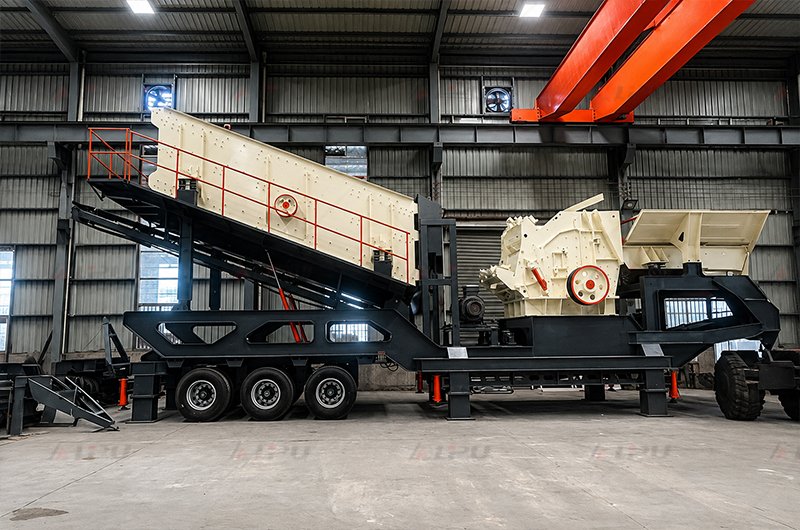
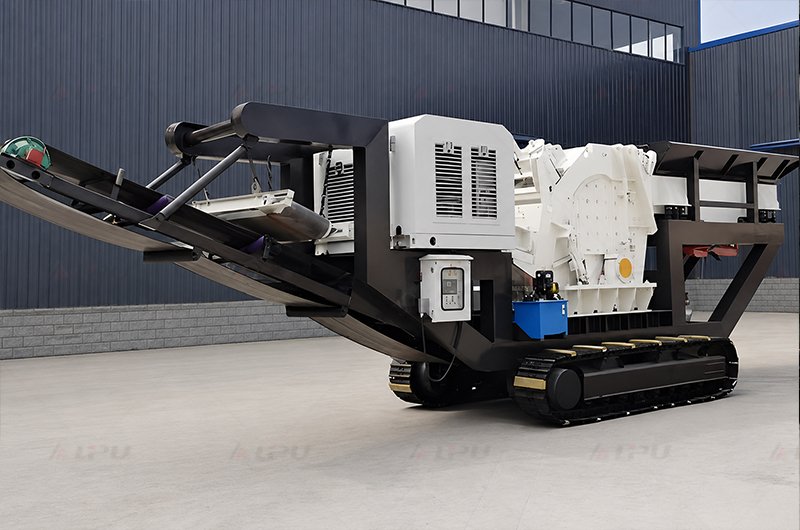
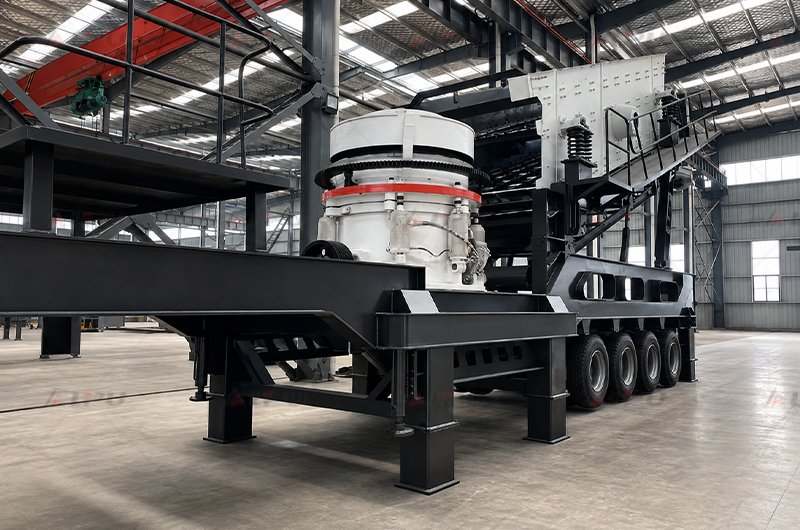
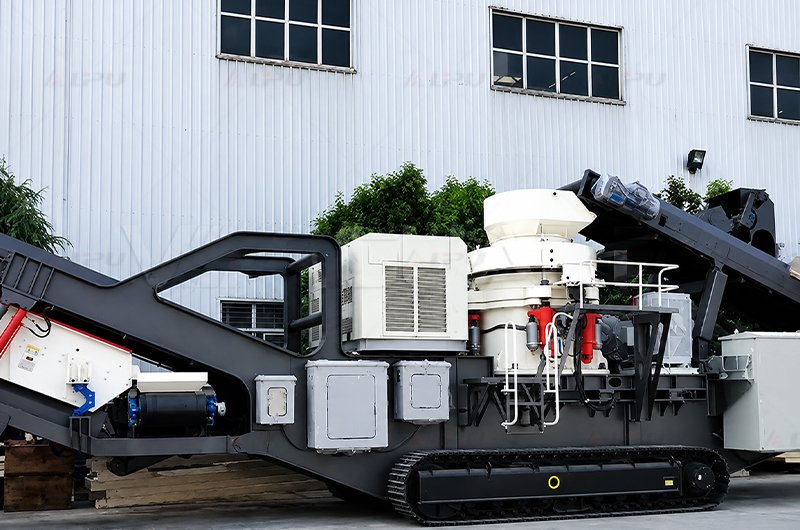
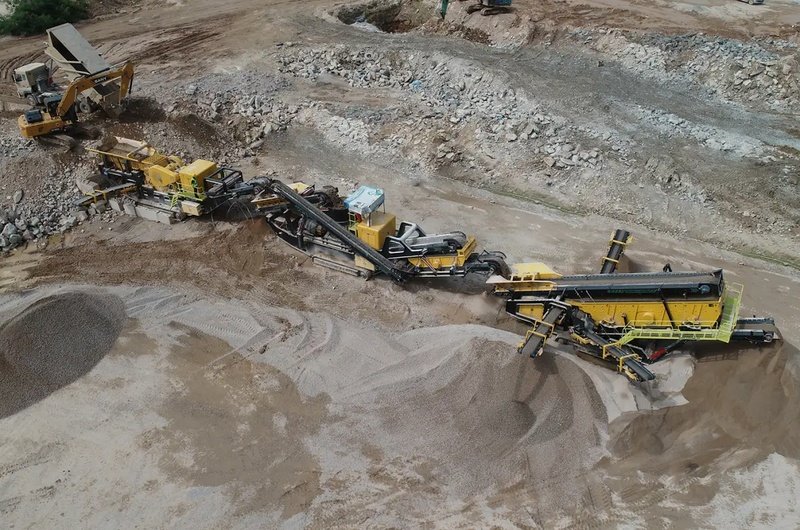
LIPU mobile crushing and screening plants integrate feeding, crushing, screening and conveying equipment into a flexible production system for quarrying, mining, aggregate production and construction material processing.
Different mobile units can be combined according to material type, maximum feed size, required capacity, final product size and site conditions. Depending on the project, the system can include mobile jaw crushing, impact crushing, cone crushing and screening units.
A mobile crushing and screening plant is a movable material-processing system that combines crushing, screening and conveying equipment on one or more mobile chassis.
Compared with a conventional stationary plant, mobile equipment can reduce permanent foundation requirements and make relocation between working areas easier.
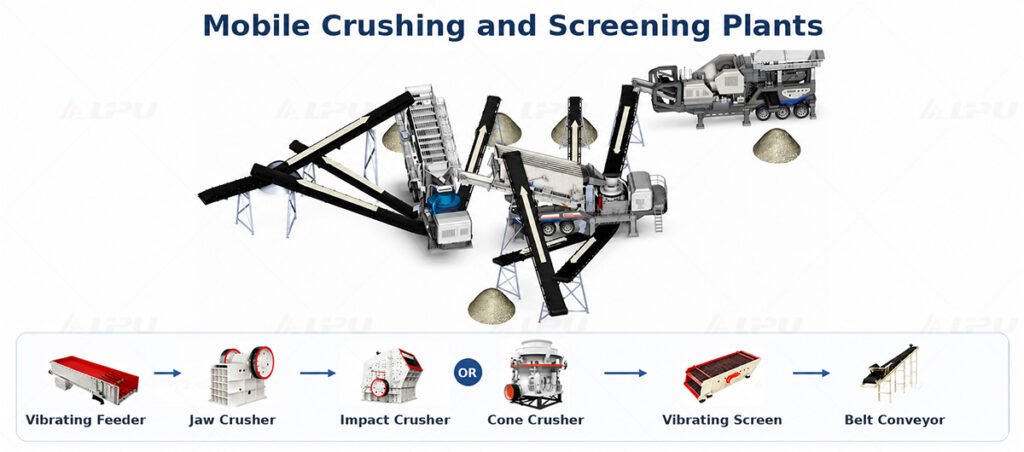
Typical mobile crushing and screening plant configuration
Depending on the required process, a mobile plant can perform:
Primary crushing
Secondary crushing
Fine crushing
Product screening
Closed-circuit crushing
Multi-size aggregate production
Construction waste processing
A project may use one mobile unit for a simple crushing duty or several mobile units connected together to form a complete crushing and screening line.
Main Configurations and Equipment Options
The crusher type should be selected according to material hardness, feed size, required product size and the position of the unit in the crushing circuit.
Mobile Jaw Crushing Plant
A mobile jaw crushing plant is mainly used for primary crushing.
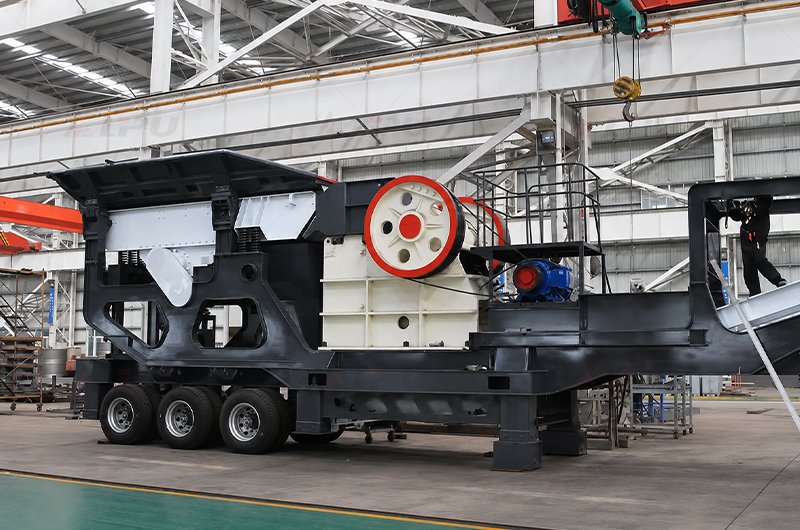
Tire-mounted mobile jaw crusher
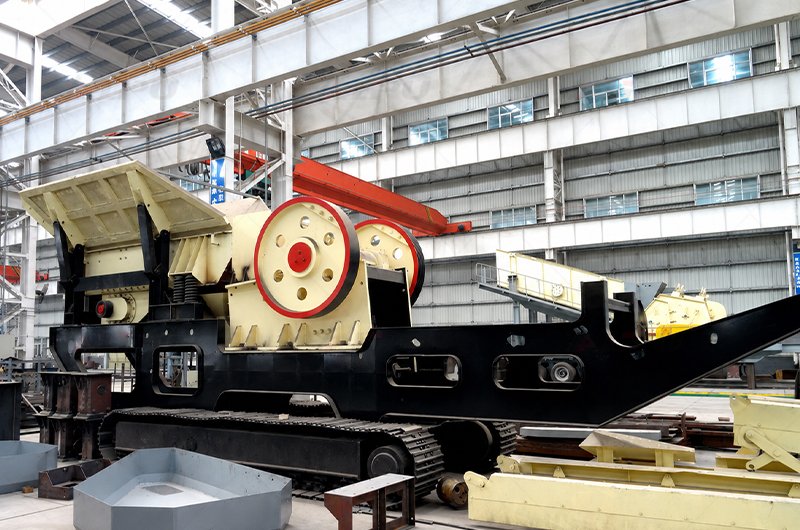
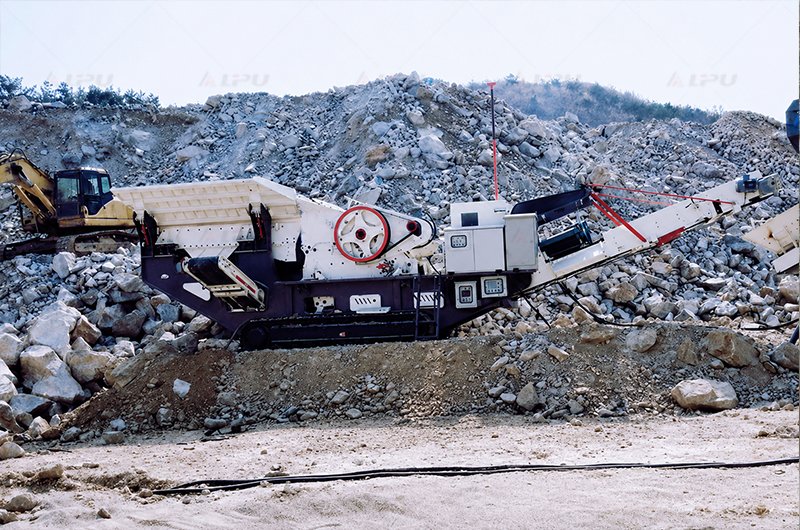
Track-mounted mobile jaw crusher
It is suitable for relatively large feed material such as:
Granite
Basalt
River pebble
Quartzite
Mining ore
Construction waste
The jaw crusher reduces large raw material before secondary crushing or screening.
Mobile Impact Crushing Plant
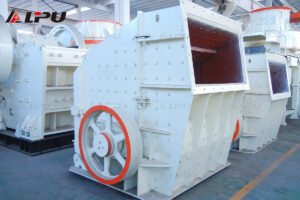
A mobile impact crushing plant is commonly used for medium-hard materials and projects where aggregate shape is important.
Tire-mounted mobile impact crusher
Track-mounted mobile impact crusher
Typical applications include:
Limestone
Concrete recycling
Construction waste
Road aggregate
Medium-hard quarry materials
Impact crushing is often selected where a relatively cubical final product is required.
Mobile Cone Crushing Plant
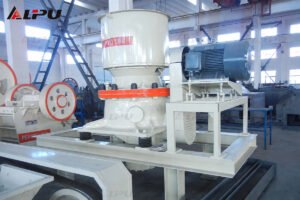
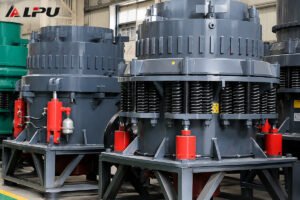
A mobile cone crushing plant is mainly used for secondary or tertiary crushing of medium-hard and hard materials.
Tire-mounted mobile cone crushing and screening plant
Track-mounted cone crushing and screening plant
Typical materials include:
Granite
Basalt
Quartzite
River pebble
Iron ore
Other hard rocks and ores
For hard-rock projects, a mobile cone crusher is commonly used after primary jaw crushing.
Mobile Screening Plant
A mobile screening plant separates crushed material into different size fractions.
It can operate independently or together with mobile crushing equipment for:
Final product classification
Oversize separation
Closed-circuit return
Multi-size aggregate production
Stockpile separation
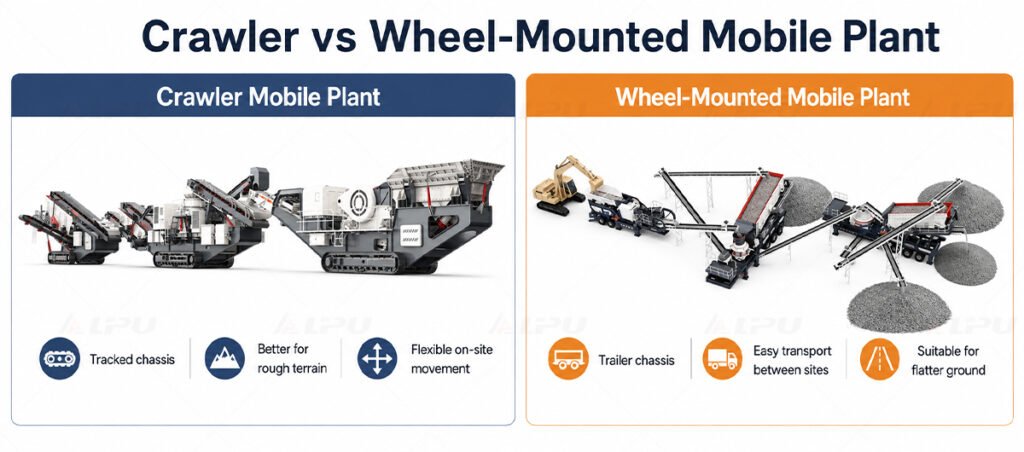
Crawler vs Wheel-Mounted Mobile Plant
Mobile crushing and screening equipment can be designed with crawler-mounted or wheel-mounted chassis.
Comparison of crawler and wheel-mounted mobile crushing plant configurations
Crawler-mounted plants are generally more suitable where equipment needs to move frequently within the quarry, mine or construction site.
Typical advantages include:
Better mobility on uneven ground
Convenient movement inside the job site
Reduced dependence on external towing during short-distance relocation
Wheel-mounted plants are commonly selected where the equipment is relocated between suitable working sites using a tractor or transport vehicle.
Typical advantages include:
Relatively simple chassis structure
Convenient integration with modular equipment
Suitable for projects involving periodic relocation
Practical for many quarry and aggregate applications
The chassis type should be selected according to site terrain, transport distance, road conditions and relocation frequency.
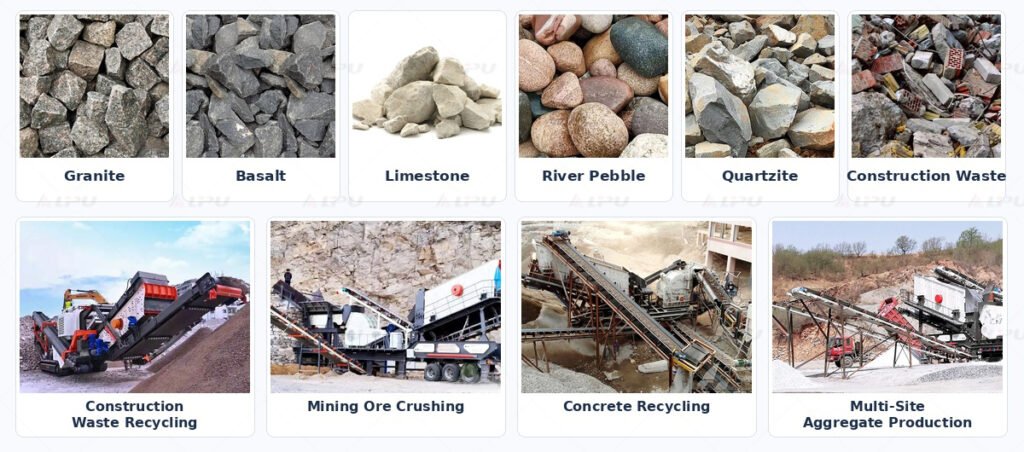
Materials and Applications
LIPU mobile crushing and screening plants can be configured for a wide range of rocks, ores and construction materials.
Typical materials include:
Typical materials and application scenarios for mobile crushing and screening plants
For limestone and recycling projects, an Impact Crusher may be selected according to feed conditions and required aggregate shape.
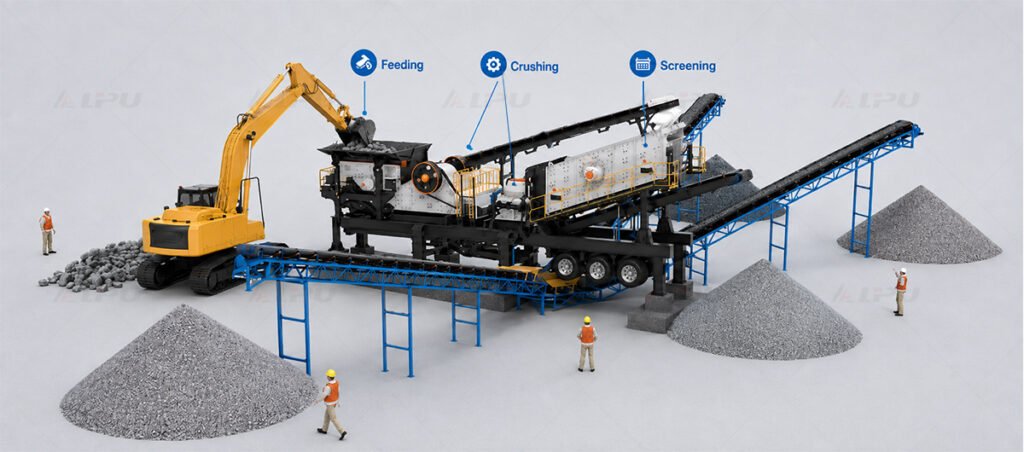
How Does a Mobile Crushing and Screening Plant Work?
The working process varies according to the selected equipment configuration.
Mobile aggregate crushing and screening production line
A typical mobile crushing and screening operation follows these steps:
Raw material is loaded into the feeding unit.
The feeder delivers material evenly to the primary crusher.
Large particles are reduced to a suitable intermediate size.
Material is transferred to secondary crushing or directly to screening.
The vibrating screen separates material into the required size fractions.
Qualified products are discharged by belt conveyors.
Oversized material can be returned to the crusher when a closed circuit is required.
The complete process should be designed according to:
Maximum feed size
Material hardness
Material abrasiveness
Required capacity
Final product size
Number of finished product sizes
Closed-circuit requirements
Site layout
Transport conditions
Main Components
Depending on the configuration, a mobile crushing and screening plant may include:
Mobile chassis
Vibrating feeder
Jaw crusher
Impact crusher
Cone crusher
Vibrating screen
Belt conveyors
Transfer chutes
Hydraulic support system
Electrical control system
Lubrication system
Dust-control components
Not every mobile unit contains all of these components.
For example, a mobile screening station mainly performs classification, while a complete multi-stage mobile plant may use separate primary crushing, secondary crushing and screening units.
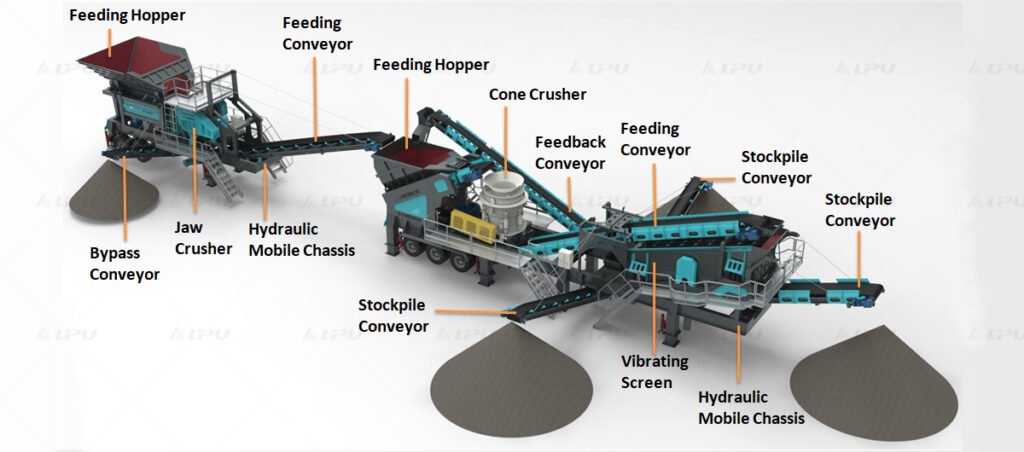
Typical Mobile Crushing and Screening Process
A mobile crushing and screening plant can be configured as a single-stage or multi-stage system according to material properties, feed size and final product requirements.
Process flow for mobile aggregate crushing and screening
For hard-rock applications, a common configuration is:
Mobile Jaw Crusher → Mobile Cone Crusher → Mobile Vibrating Screen
This configuration is suitable for materials such as granite, basalt, river pebble and quartzite.
For limestone, construction waste and other suitable medium-hard materials:
Mobile Jaw Crusher → Mobile Impact Crusher → Mobile Vibrating Screen
Where the incoming material size is already suitable for direct impact crushing, the primary jaw crushing stage may be omitted.
For closed-circuit production:
Mobile Crusher → Mobile Vibrating Screen → Oversize Return → Mobile Crusher
Qualified material leaves the system as finished aggregate, while oversized particles are returned for further crushing.
The final process should be selected according to material characteristics, feed size, required capacity, final product specifications and site conditions.
Mobile Crushing and Screening Plant Technical Parameters
The following parameters apply to the current LIPU ZDM series mobile screening configurations.
Mobile Crushing and Screening Plant
Model
ZDM3S1848
ZDM3S1860
ZDM3S2160
Transportation Length(mm)
10280
11480
11480
Transportation Width(mm)
2830
2830
3150
Transportation Height(mm)
4350
4350
4350
Maximum Length(mm)
11100
11800
11800
Maximum Width(mm)
3600
3600
3970
Maximum Height(mm)
6000
6000
6500
Weight(t)
16
18
19
Tire Configuration
biax fitted
biax fitted
biax fitted
Vibrating Screen
3YZS1848
3YZS1860
3YZS2160
These specifications describe the current ZDM mobile screening station configurations.
A complete mobile crushing plant will have different technical parameters depending on the selected crusher, feeder, screen, conveyors and chassis arrangement.
For project-specific equipment selection, the material type, maximum feed size, required capacity and final product size should be confirmed first.
How to Select the Right Mobile Crushing Plant
Mobile crushing equipment should be selected according to the entire production process rather than nominal crusher capacity alone.
Important project information includes:
Material type
Maximum feed size
Required capacity
Final product size
Number of finished aggregate sizes
Material hardness
Material abrasiveness
Moisture condition
Project location
Site terrain
Transport conditions
Relocation frequency
For Hard Rock
A typical combination is:
Mobile Jaw Crusher + Mobile Cone Crusher + Mobile Screen
This configuration is generally suitable for granite, basalt, quartzite, river pebble and similar hard materials.
For Limestone and Recycling
A common configuration is:
Mobile Jaw Crusher + Mobile Impact Crusher + Mobile Screen
Impact crushing can provide good particle shape for many aggregate and recycling applications.
For Screening-Only Projects
Where the upstream material has already been crushed to a suitable size, a mobile screening station may be sufficient without an integrated crusher.
The final configuration should be determined from the actual process requirements rather than selecting equipment only by price or theoretical capacity.
Why Choose LIPU?
LIPU Heavy Industry provides crushing, screening and mineral processing equipment for quarrying, mining and aggregate projects.
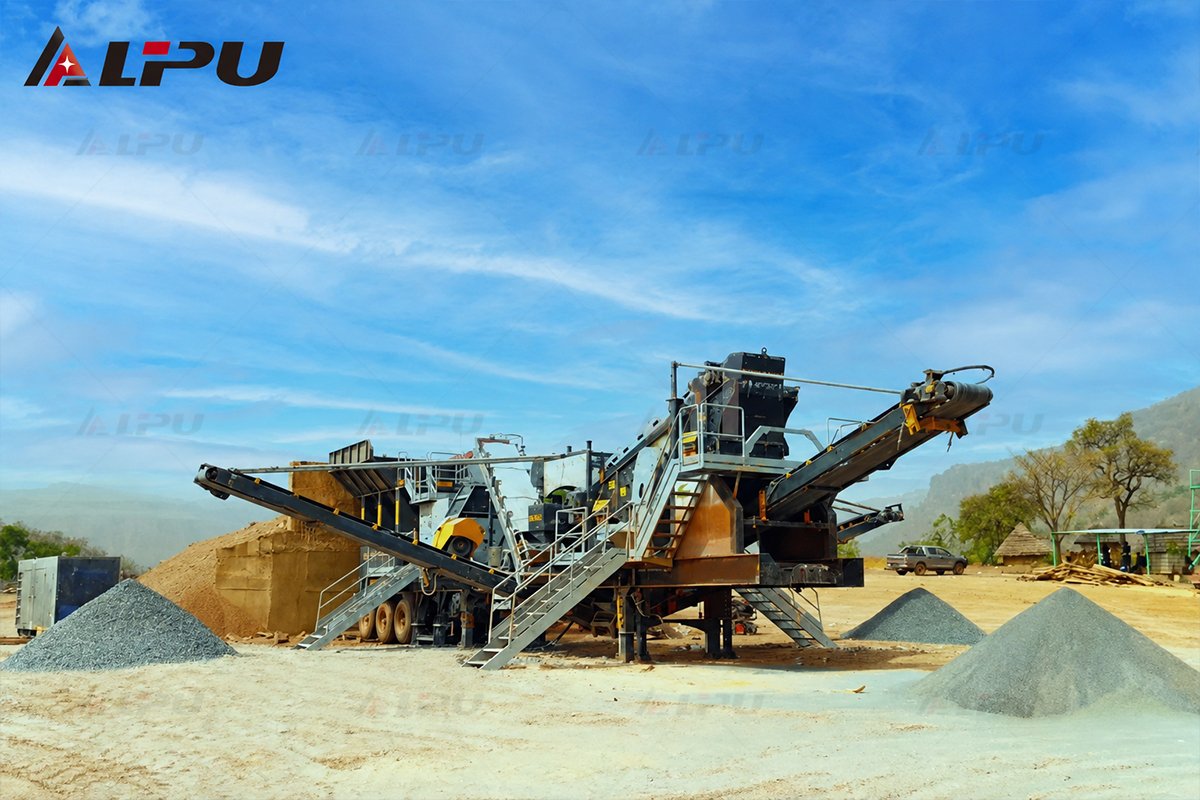
Mobile crushing and screening plant at a quarry site
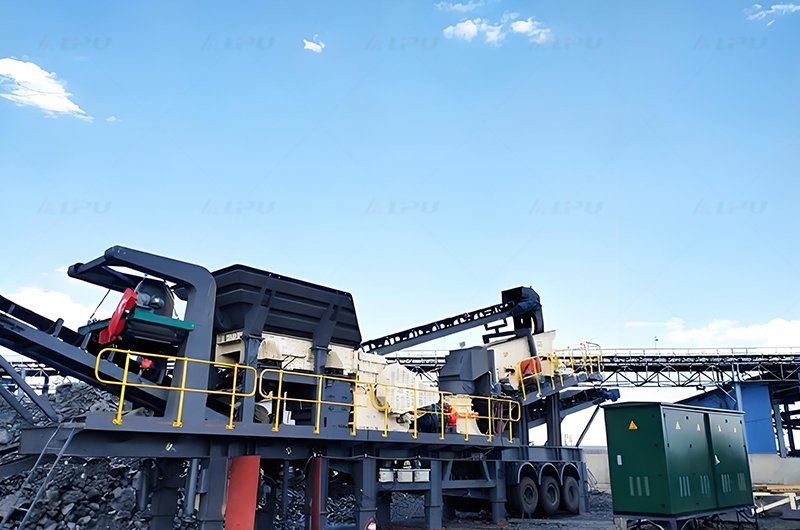
Wheel-mounted crushing and screening plant in operation
Mobile jaw crusher processing blasted rock
For mobile crushing and screening projects, LIPU can assist with:
Material and process analysis
Crusher selection
Screen selection
Mobile chassis configuration
Crushing circuit design
Closed-circuit configuration
Equipment manufacturing
Factory inspection and testing
Installation guidance
Commissioning support
Wear parts supply
Spare parts supply
After-sales technical support
Mobile equipment can also be combined with stationary crushing, screening and conveying systems where project conditions require a hybrid layout.
Frequently Asked Questions
What materials can a mobile crushing and screening plant process?
Typical materials include granite, basalt, limestone, river pebble, quartzite, construction waste, concrete and suitable mining ores. The correct crusher should be selected according to material hardness and abrasiveness.
What is the difference between a mobile crusher and a mobile screening plant?
A mobile crusher reduces material size, while a mobile screening plant separates crushed material into different size fractions. They can operate independently or together in one production system.
Can a mobile crushing plant process hard rock?
Yes. Hard-rock applications commonly use mobile jaw crushing for the primary stage followed by mobile cone crushing and screening.
Can oversized material be returned to the crusher?
Yes. A closed-circuit system can return oversized material from the vibrating screen to the crusher for additional size reduction.
What information is needed to select a mobile crushing and screening plant?
The main information includes material type, maximum feed size, required capacity, final product sizes, site conditions and transport requirements. These factors are used to determine the crusher type, screening configuration and mobile chassis.