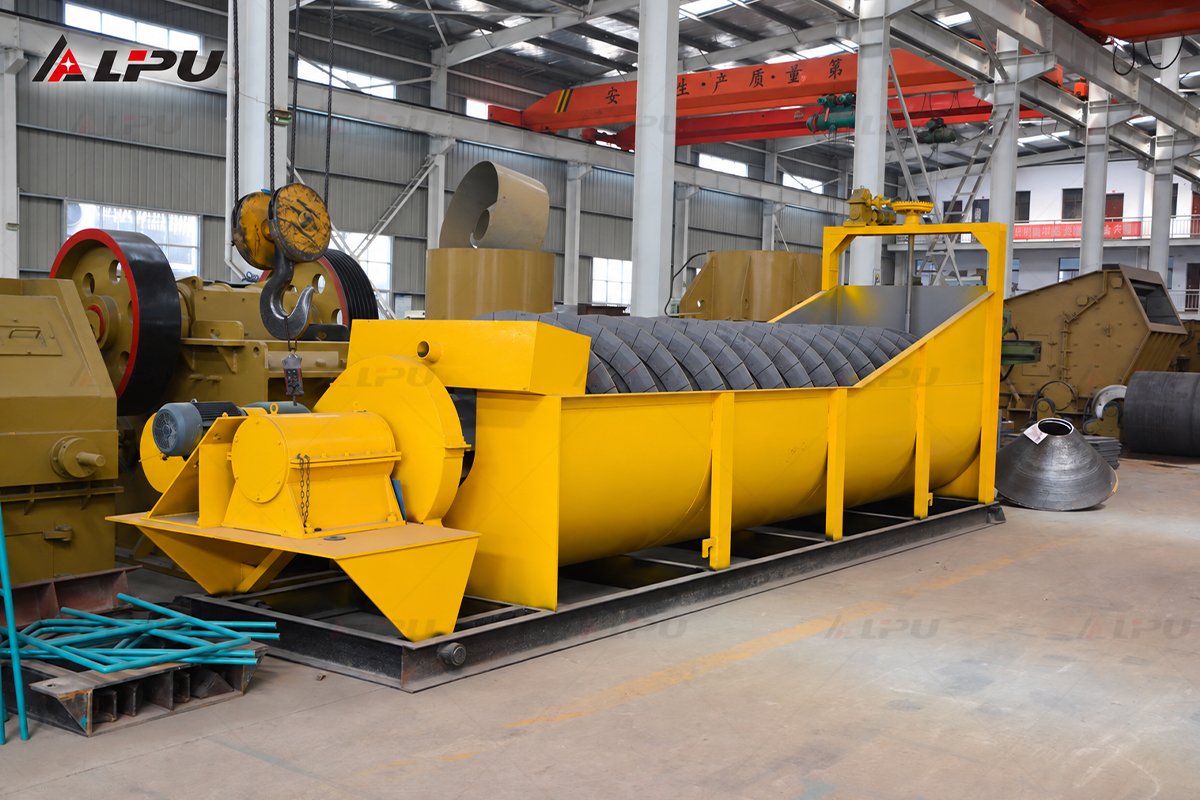
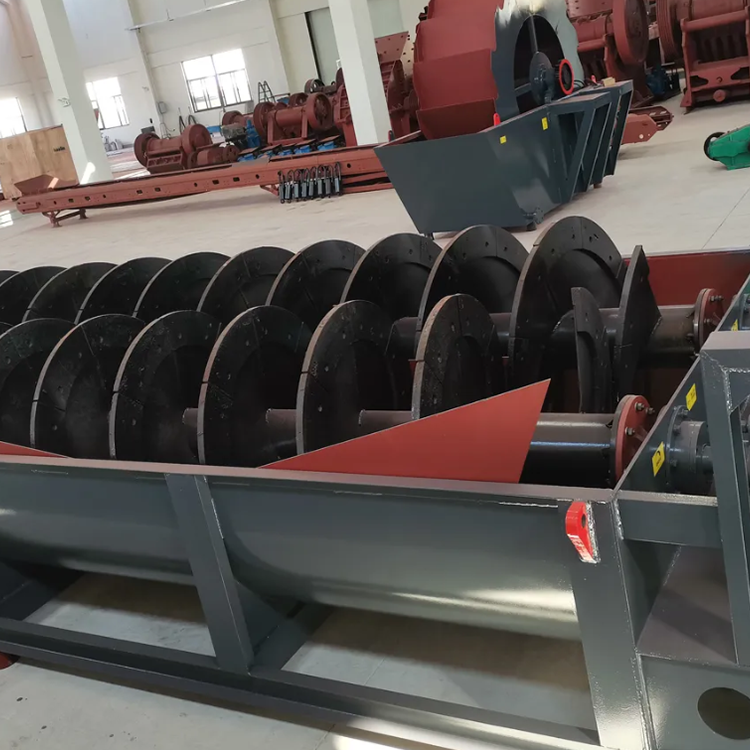
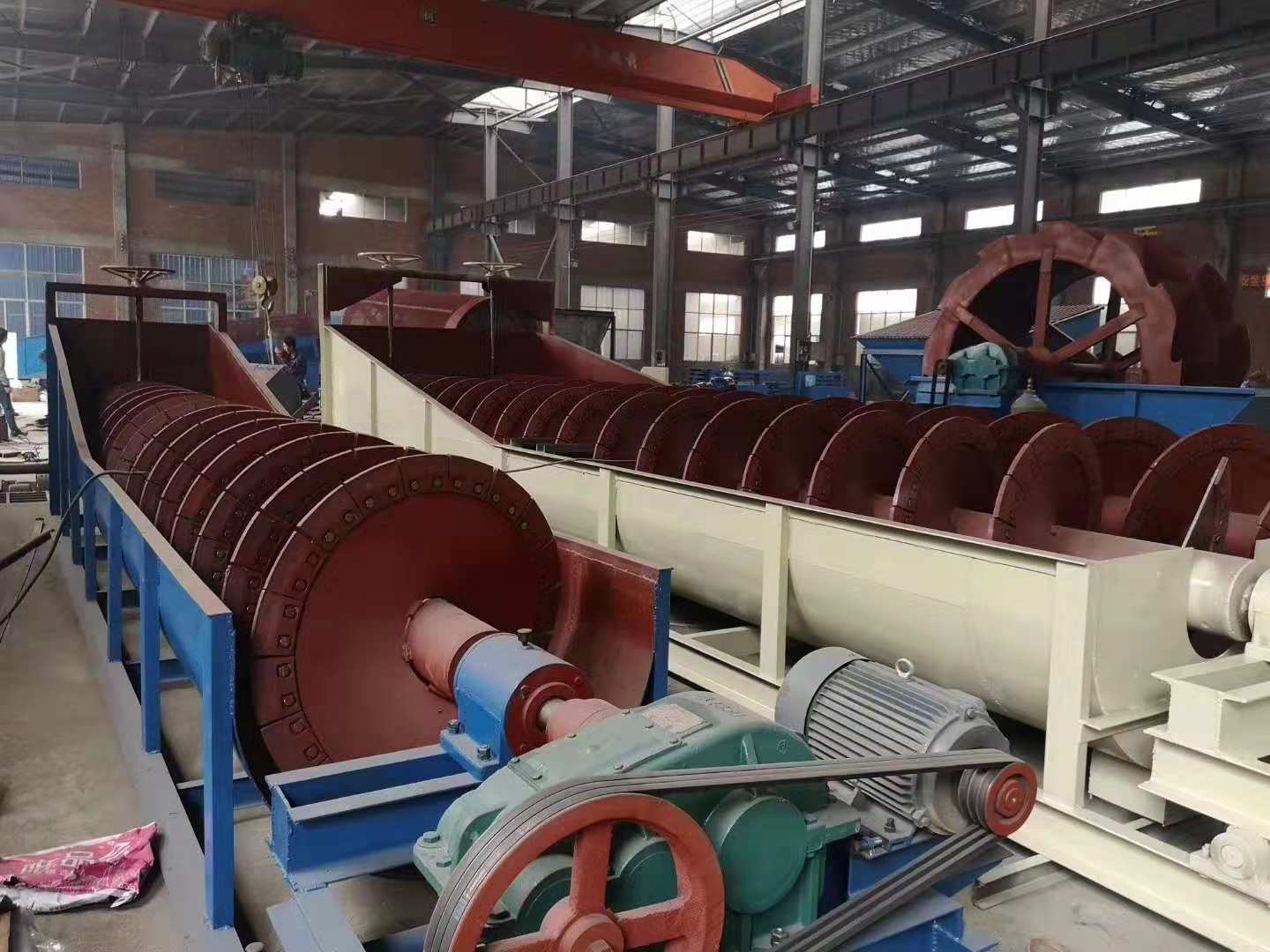
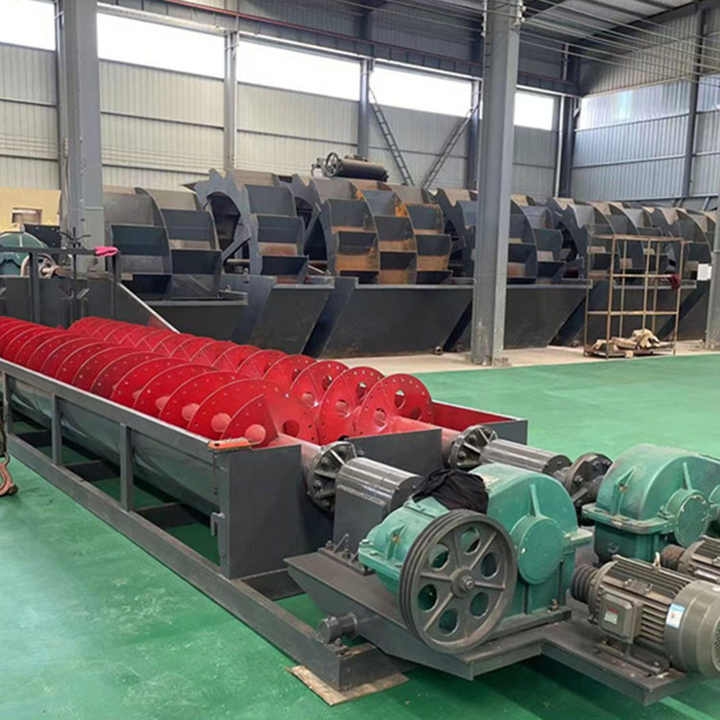
LIPU spiral sand washing machines are designed for continuous washing, grading and cleaning of natural sand, manufactured sand and fine aggregate. The rotating spiral blades help remove clay, dust and other impurities while conveying the washed material toward the discharge end.
Capacity: 20–400 t/h
Feed Size: <10–20 mm
Spiral Type: Single or double spiral
Applications: Natural sand, manufactured sand and aggregate washing
A spiral sand washing machine, also called a screw sand washer, is equipment used to wash sand and fine aggregate by removing clay, dust and other unwanted impurities.
The machine uses one or two rotating spiral shafts installed inside an inclined washing tank. During operation, the sand is mixed with water while the spiral blades continuously stir and move the material.
This washing action loosens clay and surface contamination from the sand particles. Suspended fines and impurities are carried away with the washing water, while the cleaned sand is gradually conveyed toward the discharge end.
Unlike a spiral classifier used in mineral grinding circuits, a spiral sand washing machine is mainly designed for sand cleaning, clay removal and aggregate washing.
Spiral sand washing machine(2XL-750)
Spiral sand washing machine(2XL-1000)
Spiral sand washing machine(2XL-1200)
How Does a Spiral Sand Washing Machine Work?
The washing process can be summarized as:
Feed Material + Water → Spiral Agitation → Clay and Impurity Removal → Material Conveying → Clean Sand Discharge
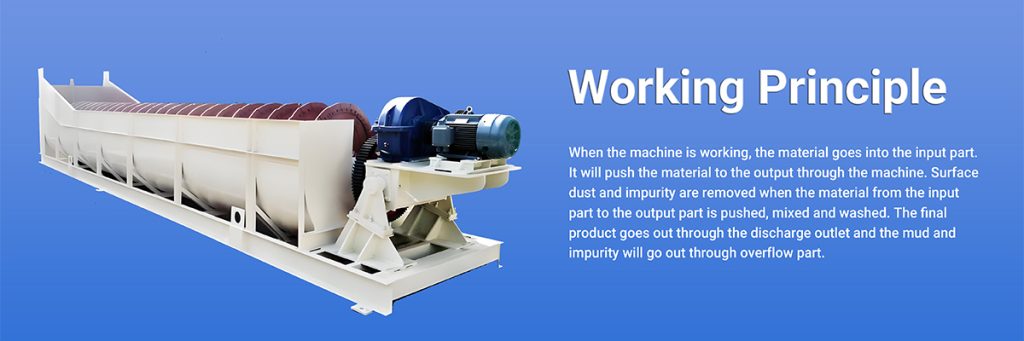
Working Principle of the Spiral Sand Washer
Sand enters the washing tank together with process water. A motor and reducer drive the spiral shaft at a controlled speed.
As the spiral blades rotate, the sand is repeatedly stirred and rubbed in the washing tank. This action helps separate clay, dust and other impurities attached to the particle surfaces.
The loosened impurities become suspended in the water and are discharged with the wastewater. At the same time, the spiral blades continuously move the cleaned sand toward the upper discharge end.
This design combines washing and material conveying in one machine, making it suitable for continuous sand and aggregate processing.
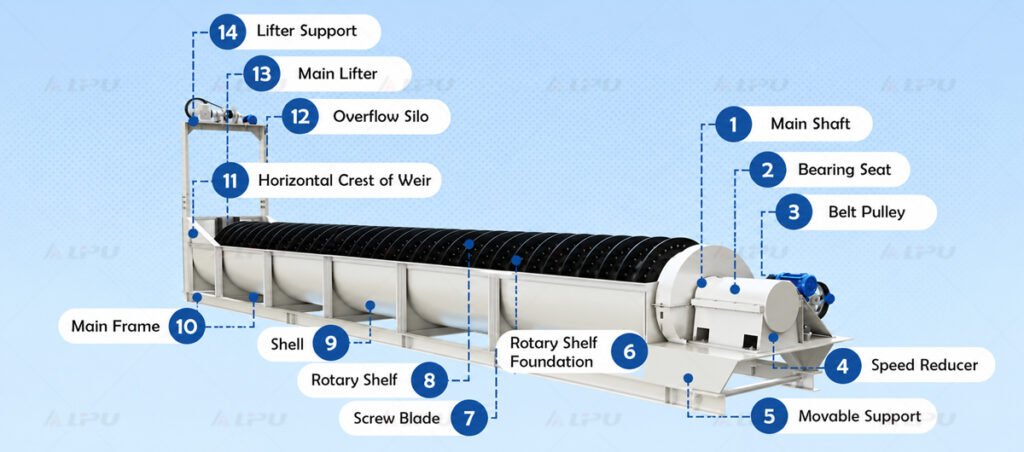
Main Components
The main components of a spiral sand washing machine include:
Main components of the spiral sand washer
Spiral shaft
Spiral blades
Washing tank
Feed section
Discharge section
Motor
Reducer
Transmission system
Support frame
Drainage and overflow section
The transmission components are positioned away from the main washing zone to reduce direct exposure to water, sand and abrasive material.
Single Spiral vs Double Spiral Sand Washer
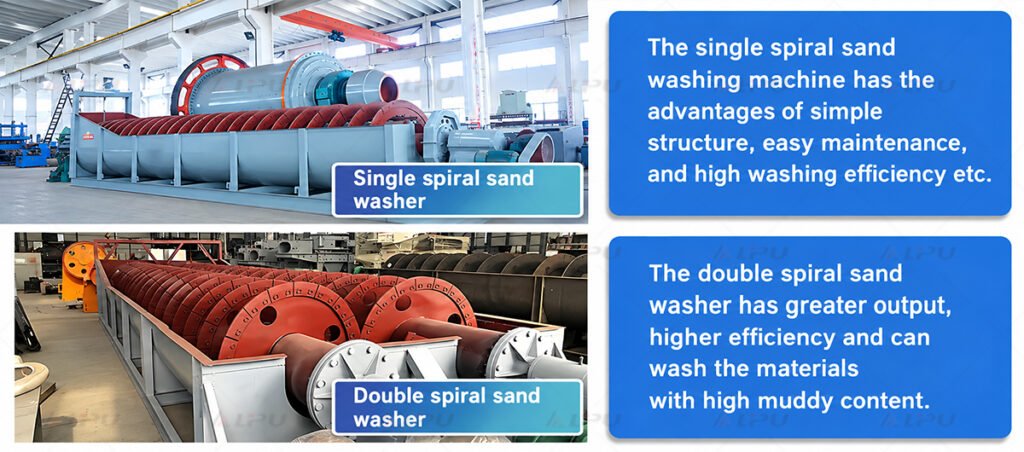
LIPU provides both single-spiral XL models and double-spiral 2XL models.
Both types use the same basic washing principle, but the double-spiral configuration provides a larger working area and higher throughput for applications with greater production requirements.
Single-Spiral Sand Washer vs. Double-Spiral Sand Washer
Factor
Single Spiral
Double Spiral
Spiral shafts
1
2
Structure
More compact
Wider washing tank
Capacity
Low to high
Medium to high
Installation width
Smaller
Larger
Typical use
Standard sand washing
Higher-throughput washing
Models
XL Series
2XL Series
For example, the XL-1000 has a rated capacity of 50–80 t/h, while the 2XL-1000 is rated at 100–150 t/h.
The XL-1500 handles 150–200 t/h, while the 2XL-1500 is rated at 200–300 t/h.
The final selection should consider required capacity, feed condition, clay content and available installation space.
Applications in Sand and Aggregate Processing
Spiral sand washing machines are commonly used in sand production plants, aggregate processing systems and quarry operations.
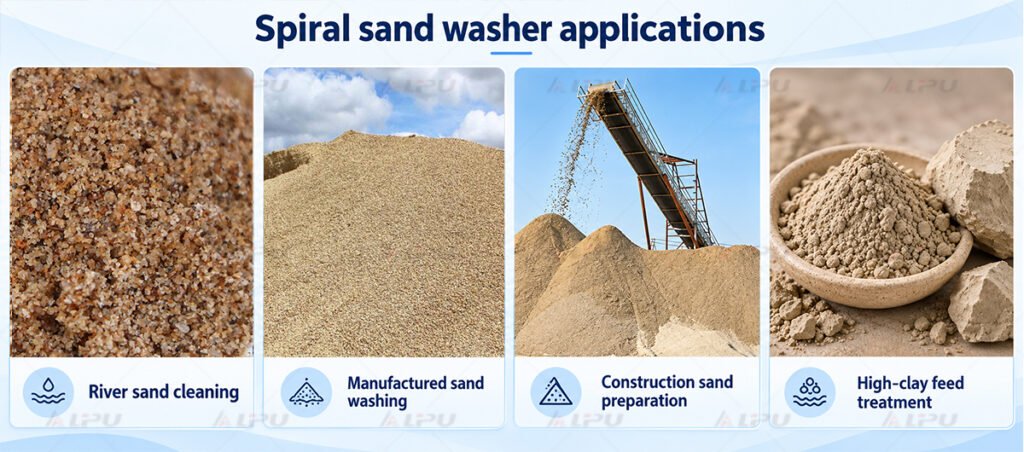
Typical Applications of Spiral Sand Washers
Manufactured sand washing
After crushing and sand making, the spiral washer removes dust, clay and fine impurities from manufactured sand.
River sand cleaning
Natural river sand may contain silt, mud and unwanted fines. Spiral washing helps improve sand cleanliness before further processing or use.
Quarry aggregate washing
Fine aggregate from quarry operations can be washed to remove surface contamination and clay before dewatering or stockpiling.
Construction sand preparation
Washed sand can be prepared for concrete, mortar and other construction material applications.
High-clay feed treatment
For feed containing noticeable clay or surface impurities, the stronger agitation of a spiral washer can provide effective washing action.
Advantages of Spiral Sand Washing Machine
LIPU spiral sand washing machines provide several practical advantages for continuous sand and aggregate washing.
Strong washing action: Rotating spiral blades continuously agitate the material and help loosen clay and impurities.
High processing capacity: XL and 2XL models cover capacities from 20 to 400 t/h.
Single and double spiral options: Different configurations are available for different throughput requirements.
Continuous material conveying: The machine washes and transports sand in one continuous process.
Protected transmission system: Bearings and drive components are separated from the main washing area.
Simple structure: The machine is designed for stable operation and straightforward maintenance.
Flexible plant integration: It can work with crushers, screens, sand makers and dewatering equipment.
Actual performance depends on the feed characteristics and operating conditions.
Spiral Sand Washer vs Wheel Bucket Sand Washer
Both spiral sand washers and wheel bucket sand washers are used for cleaning sand, but they are better suited to different operating conditions.
Factor
Spiral Sand Washer
Wheel Bucket Sand Washer
Main structure
Spiral screw
Rotating wheel bucket
Washing action
Stronger agitation
Gentler washing
Capacity
Medium to high
Usually small to medium
Clay removal
Better for clay-rich feed
Better for relatively clean sand
Material conveying
Spiral conveying
Bucket lifting
Installation
Longer washing tank
More compact structure
Typical use
Strong washing and high throughput
Final rinsing and sand cleaning
A spiral washer is generally more suitable when the feed contains more clay or requires stronger washing action.
A Wheel Bucket Sand Washer can be more suitable when the sand is already relatively clean and the main goal is final rinsing with lower washing intensity.
The best choice depends on feed condition, capacity and the required final sand quality.
Spiral Sand Washing Machine Technical Parameters
LIPU provides the following XL and 2XL spiral sand washing machine models:
Model
Screw Dia. (mm)
Screw No.
Feed Size (mm)
Capacity (t/h)
Water Consumption (m³/h)
Motor Power (kW)
Overall Dimensions (mm)
XL-750
750
1
<10
20–40
9–60
7.5
7000 × 950 × 1330
2XL-750
750
2
<10
50–70
18–120
2 × 7.5
7000 × 1750 × 1330
XL-1000
1000
1
<10
50–80
10–70
11
8070 × 1200 × 1638
2XL-1000
1000
2
<10
100–150
20–140
2 × 11
8070 × 2250 × 1638
XL-1200
1200
1
<20
100–120
20–140
18.5
9070 × 1430 × 1900
2XL-1200
1200
2
<20
150–180
40–280
2 × 18.5
9070 × 2700 × 1900
XL-1500
1500
1
<20
150–200
60–300
22
10800 × 1720 × 1900
2XL-1500
1500
2
<20
200–300
120–450
2 × 22
10800 × 3300 × 1900
XL-2000
2000
1
<20
250–320
160–460
37
11000 × 2200 × 2100
XL-2400
2400
1
<20
320–400
200–620
45
12500 × 2700 × 2200
Actual processing capacity and water consumption can vary according to feed condition, clay content, water supply and required washing quality.
How to Select the Right Spiral Sand Washer
Selecting the correct spiral sand washer requires consideration of the feed condition as well as production capacity.
Feed size
The XL-750 and XL-1000 series are designed for feed sizes below 10 mm, while larger models can accept feed sizes below 20 mm.
The upstream crushing and screening system should therefore control the material size before washing.
Required capacity
For smaller or medium-capacity lines, a single-spiral machine may provide sufficient throughput.
For larger production requirements, a double-spiral model or larger-diameter single-spiral machine may be more suitable.
Clay and impurity content
Feed containing more clay generally requires stronger agitation and sufficient washing time.
The actual feed condition should therefore be considered together with the nominal capacity.
Water availability
Different models have different water-consumption ranges. Water supply, recycling and sedimentation systems should be considered as part of the complete plant design.
Installation space
Double-spiral machines have a wider washing tank than comparable single-spiral models. Sufficient installation and maintenance space should be reserved.
Spiral Sand Washer in a Sand Making Line
A spiral sand washing machine is commonly installed near the final stage of a sand or aggregate production line.
A typical process may follow:
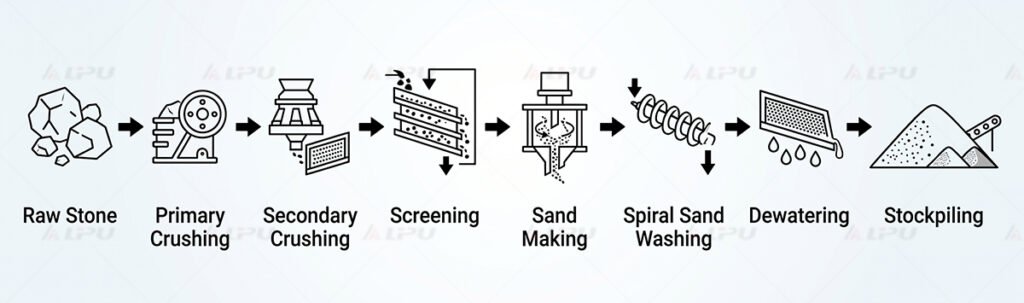
Raw Stone → Primary Crushing → Secondary Crushing → Screening → Sand Making → Spiral Sand Washing → Dewatering → Stockpiling
Manufactured Sand Production Process Flowsheet: From Raw Stone to Final Stockpiling
A VSI Sand Maker can then produce manufactured sand with the required particle size and shape.
After screening, the sand enters the spiral washing machine to remove clay, dust and other impurities.
The washed sand can then proceed to dewatering or final stockpiling.
Why Choose LIPU?
LIPU provides spiral sand washing machines for different feed sizes and production capacities, from compact XL models to larger high-capacity machines.
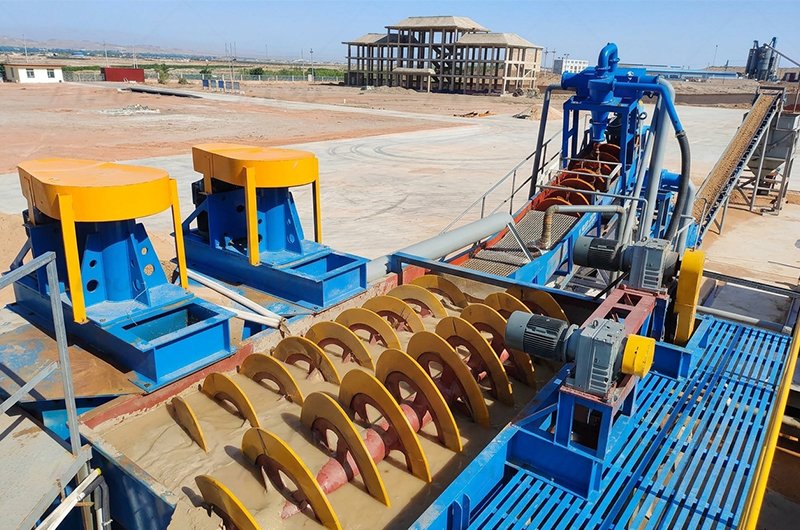
Spiral Sand Washing & Dewatering Plant Overview
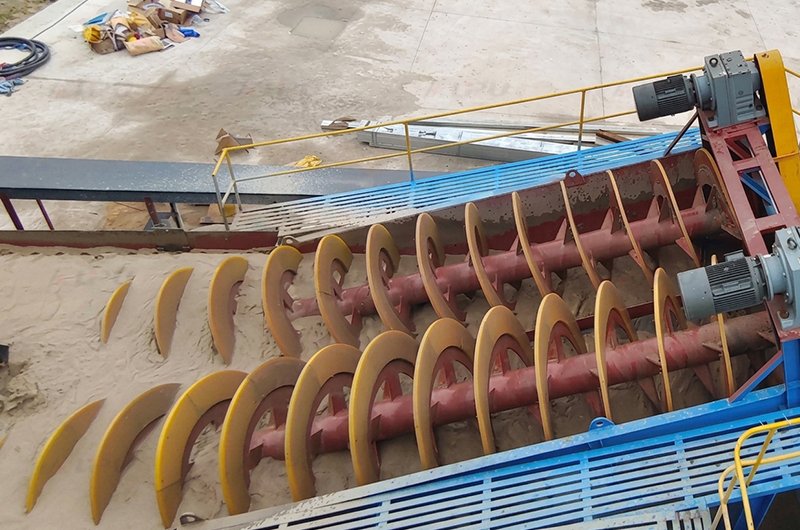
Double Spiral Washer Blade Mechanism Close-up
Equipment selection can be based on:
Required capacity
Feed particle size
Clay and impurity content
Water availability
Single or double spiral configuration
Plant layout
Upstream and downstream equipment
LIPU can also integrate sand washing equipment with crushing, screening, sand-making and dewatering equipment to configure a complete sand and aggregate processing line.
Frequently Asked Questions
What is a spiral sand washing machine used for?
A spiral sand washing machine is used to remove clay, dust and other impurities from natural sand, manufactured sand and fine aggregate.
What feed size can a spiral sand washer handle?
Depending on the model, LIPU XL and 2XL spiral sand washers accept feed sizes below 10 mm or below 20 mm.
What is the capacity of a spiral sand washing machine?
The current LIPU XL and 2XL series covers capacities from 20 to 400 t/h, depending on the model.
Should I choose a single or double spiral sand washer?
Single-spiral machines are suitable for many standard washing applications, while double-spiral models provide higher throughput. The final choice should consider feed condition, capacity and installation space.
What is the difference between a spiral sand washer and a spiral classifier?
A spiral sand washer is mainly used for washing sand, removing clay and cleaning aggregate. A spiral classifier is mainly used in mineral processing for particle-size classification based on settling behavior. Although their structures may look similar, their process functions are different.
LET US REACH YOUNeed detailed customization and latest price? Chat online or leave message below!
How we use cookies
This Cookie Privacy Policy statement explains how Zoneding Machine (hereinafter referred to as "we", "our", or "this website") uses cookies and similar technologies (collectively referred to as "cookies") to identify you when you visit our website lepuu.com. It explains what these technologies are, why we use them, and your rights to control our use of them.
Privacy Policy
Leave a Message
We will reply to you within 24 hours
Hello, I am Lipu Heavy Industry, what can we do for you please?