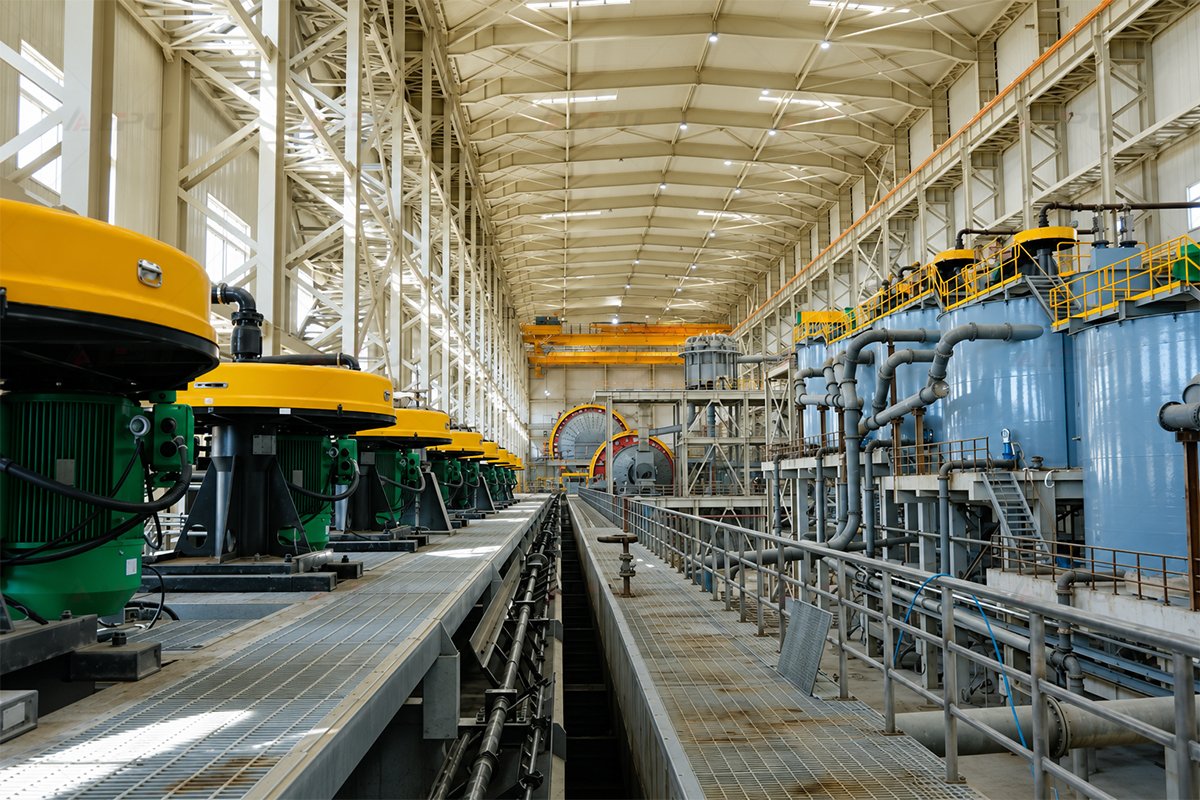
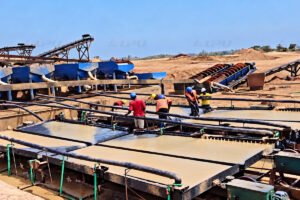
Copper ores need different treatment depending on whether the copper occurs as sulfides, oxidized minerals or native metal. The mineral composition determines which machines are useful and how the plant should operate.
LIPU supplies crushing, grinding, flotation and supporting equipment for copper beneficiation, with configurations matched to the ore, processing capacity and required product.
Send ore analysis and capacity to discuss your plant
Which Copper Ore Are You Processing?
The first decision is not the size of the flotation machine. It is identifying where the copper is held.
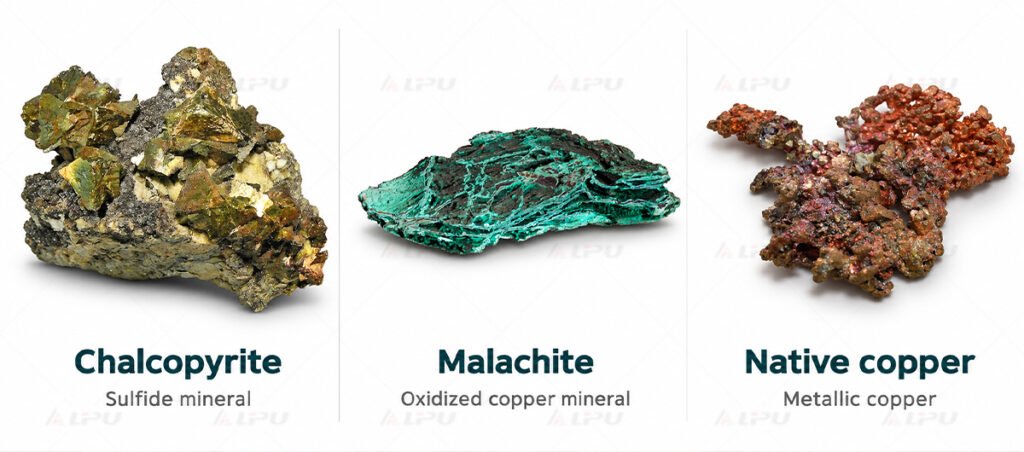
Chalcopyrite, bornite and chalcocite are copper sulfide minerals commonly considered for flotation. Malachite, azurite and other oxidized copper minerals need a separate assessment. Native copper occurs as metallic copper and may justify recovery methods that offer little benefit for finely disseminated sulfide ore.
Copper mineralogy guides process selection
Copper feed
Treatment direction to investigate
Main equipment implications
Sulfide ore
Flotation after sufficient mineral liberation
Crushing, grinding, classification, conditioning and flotation equipment
Oxidized ore
Suitable flotation methods or leaching
Preparation equipment depends on the selected recovery route
Mixed sulfide–oxide ore
Recovery of both mineral groups, together or in separate stages
Conditioning and flotation equipment, with additional treatment where justified
Ore containing liberated native copper
Early recovery of suitable metallic particles
Screening and selected gravity equipment may supplement the main circuit
These categories are a starting point. Copper grade alone does not show whether the minerals are liberated, whether clay will affect the process or whether unwanted minerals will enter the product.
Sulfide Copper: Release the Minerals, Then Float Them Selectively
For many sulfide copper ores, the main task is to separate copper minerals from the surrounding rock without carrying excessive pyrite or gangue into the concentrate.
Crushing prepares a stable mill feed. A jaw crusher normally handles primary size reduction. Secondary crushing and screening are added according to the incoming rock size, hardness and mill requirements. A fixed number of crushing stages is not suitable for every deposit.
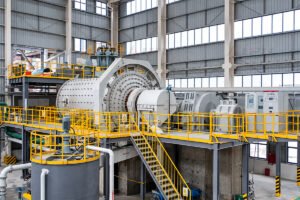
Grinding releases the copper minerals. A ball mill works with a classifier or hydrocyclone to control the material entering flotation. Coarser material returns for further grinding, while a suitable finer stream moves forward.
Conditioning prepares the slurry for separation. Mixing tanks provide contact between the slurry and the selected reagents. Stable feed density and controlled reagent addition help the flotation circuit operate consistently.
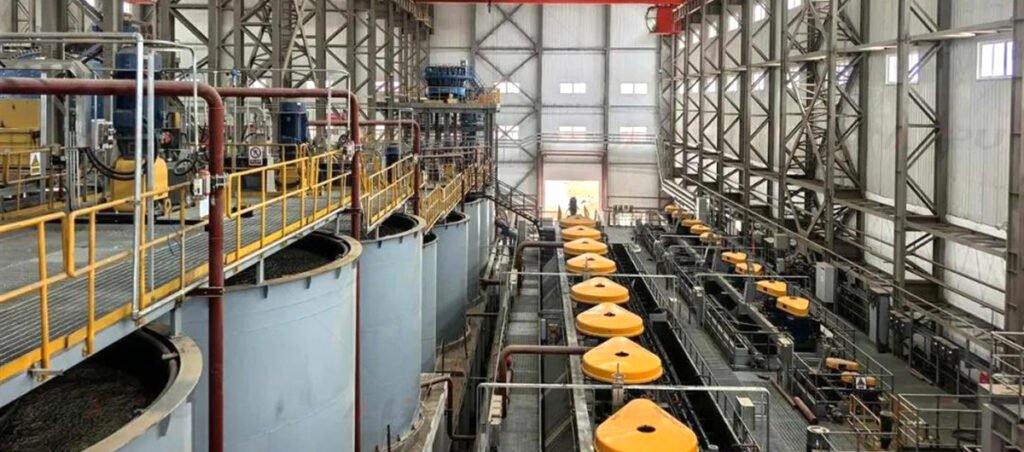
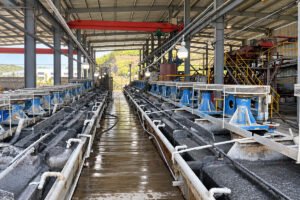
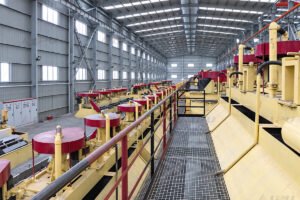
Flotation recovers and upgrades the copper. Rougher cells recover an initial concentrate. Scavenger cells recover additional copper from the remaining slurry, while cleaner cells reject unwanted material from the concentrate.
Flotation recovers and upgrades copper minerals
LIPU’s flotation machines can be considered for these different duties according to the tested circuit requirements.
This route is applicable to suitable chalcopyrite-, bornite- and chalcocite-bearing feeds. Mineral associations and surface oxidation can change how readily each ore responds.
The main difficulty is often selectivity. More froth or a larger quantity of concentrate does not necessarily mean better performance. The plant may simply be collecting more pyrite or fine gangue.
Where copper remains locked in the rougher concentrate, concentrate regrinding may improve cleaning without grinding the entire feed more finely.
Oxidized Copper: Compare Flotation with Leaching Before Buying Equipment
Oxidized copper ore should not automatically be sent through a sulfide flotation circuit.
Malachite, azurite, cuprite and copper-bearing silicates can behave differently. Their response also depends on surface condition, clay content and how the copper occurs within the surrounding material.
Where flotation is suitable, the plant may use crushing, grinding, classification, conditioning tanks and flotation cells. Sulfidization or other suitable reagent systems may be investigated, but their effectiveness must be established for the actual feed.
Conditioning is particularly important because the mineral surfaces need to respond to the selected treatment. Simply adding more reagent is not a reliable solution to poor recovery.
Where leaching is suitable, the preparation requirements change. Heap leaching may require crushed and screened material, with agglomeration where justified. Agitated leaching may require grinding, mixing tanks and solid–liquid separation.
Copper dissolved during leaching requires further solution treatment and metal recovery, such as solvent extraction and electrowinning where appropriate. These stages require a dedicated design beyond a conventional flotation equipment package.
The main difficulty is balancing extraction against treatment cost. Some surrounding minerals consume acid, while clay and fine material can interfere with solution movement through a heap. A high laboratory extraction result alone does not establish that a heap-leach installation will operate effectively.
Equipment selection should follow flotation and leaching results, including reagent consumption, treatment time and material handling behavior.
Mixed Copper Ore: Find Out What the First Circuit Leaves Behind
Mixed ore contains both sulfide and oxidized copper minerals. One part of the copper may recover readily while another remains in the tailings.
Before adding machines, determine which minerals contain the unrecovered copper.
If liberated oxidized copper remains after sulfide flotation, finer grinding alone may not improve recovery. Additional conditioning, a different flotation treatment or a separate recovery route may be needed.
If the remaining copper is still locked inside rock particles, improved liberation may be more useful than changing the reagent system.
Possible arrangements include separate flotation stages or flotation combined with suitable leaching treatment. The additional recovery must justify the extra equipment, reagent use and operating complexity.
Feed variation is another major challenge. As mining moves between fresh and weathered zones, the proportion of oxidized copper can change. Stockpile management and controlled blending may help the plant maintain a more consistent feed.
For these ores, equipment selection should allow the required treatment time and operating flexibility. A circuit selected from a single unrepresentative sample can perform poorly when the ore changes.
When Does Gravity Recovery Add Value?
Gravity separation can be useful when copper occurs as sufficiently coarse, liberated particles with a suitable density difference from the surrounding material.
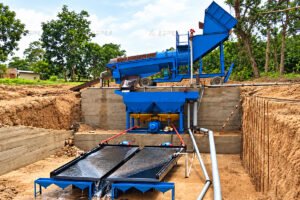
For selected native-copper-bearing feeds, early recovery may be investigated using a jig, shaking table or another suitable gravity device. Screening and size control are important because different particle sizes do not separate equally well.
A jig may be considered for an appropriate coarser fraction, while a shaking table may help evaluate or clean a suitable finer fraction. Their usefulness must be demonstrated by the feed characteristics and test results.
This does not make a spiral chute and shaking table a standard replacement for flotation in finely disseminated copper sulfide ore.
Magnetic separation has a more specific supporting role. It may remove or recover particular magnetic minerals where this benefits the overall circuit, but it is not a general method for recovering all copper minerals.
An additional separation stage should create a measurable benefit. If it rejects valuable copper or produces little useful separation, it adds complexity without improving the plant.
Solve Copper Losses at Their Source
Poor performance does not always mean that the plant needs a larger mill or more flotation cells.
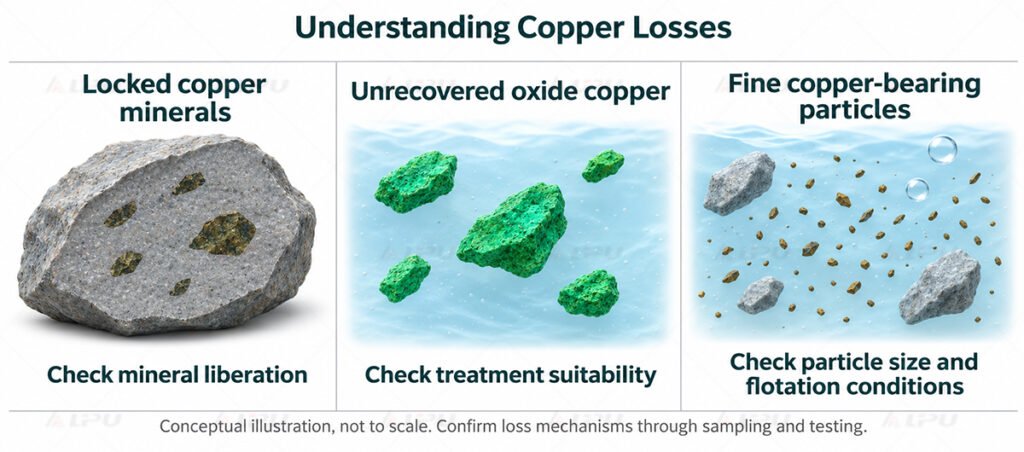
The first step is to establish whether copper is being lost because it remains locked, does not respond to the selected treatment or is not being effectively recovered under the operating conditions.
Different copper losses need different solutions
What the plant experiences
Possible causes to investigate
What to check first
Copper remains in coarse tailings particles
Incomplete liberation
Copper mineral associations and size-by-size recovery
Fine copper is lost despite adequate grinding
Unsuitable surface chemistry, flotation conditions or excessive fines
Mineral type, conditioning and flotation response
Concentrate quantity rises but copper grade falls
More pyrite or gangue is being collected
Cleaning performance, entrainment and reagent selectivity
Recovery changes with the mining area
Changing oxidation, clay content or mineral composition
Representative sampling and ore blending
Oxide flotation consumes more reagent without clear improvement
Poor response to the selected treatment
Mineral identification and alternative treatment tests
Concentrate remains difficult to filter
Fine particles or unsuitable slurry characteristics
Settling and filtration tests
Useful plant samples include the feed, concentrate and final tailings. Testing them together helps distinguish a liberation problem from a separation problem.
Where arsenic-bearing or other penalty minerals occur, their behavior should also be investigated. Improving copper recovery is not enough if the resulting concentrate becomes difficult to sell.
Define the Copper Product Before Finalizing the Plant
A flotation plant normally produces a copper-bearing concentrate for further treatment. It does not directly produce refined copper metal.
The intended buyer’s requirements should guide concentrate grade, acceptable impurities and handling moisture. Where gold or silver is present, its distribution and potential value should also be established.
Thickening and filtration may be required before dispatch. The filter type should follow the concentrate’s settling behavior, particle size and filtration response rather than being fixed in advance as a disc filter or filter press.
Water recovered from these stages may be returned to the plant where its quality is suitable. Dissolved substances, residual reagents and suspended solids can affect flotation, particularly as recycled water becomes a larger part of the supply.
A leaching project has different product and equipment requirements. The intended downstream recovery method must be established before the solution-handling circuit can be finalized.
Tailings handling needs a separate assessment. The choice between slurry storage, thickening and filtration depends on the material and site requirements; tailings filtration is not automatically necessary for every copper plant.
Tell Us About the Ore, Not Just the Required Tonnes per Hour
To discuss a practical equipment configuration, send the available information about:
Copper grade, mineral composition and oxidation characteristics.
Feed size, hardness and expected variation between ore zones.
Required capacity and planned operating hours.
Existing flotation, leaching or gravity test results.
Intended concentrate specification or downstream treatment.
Site layout, water supply and power availability.
If the project includes both fresh and weathered ore, provide separate information where possible. This helps establish whether the feeds can share one circuit or need different treatment conditions.
Send your ore analysis and project requirements through the inquiry form below.
Frequently Asked Questions
Can one plant process both sulfide and oxidized copper ore?
Sometimes, but the circuit must account for their different recovery behavior. A standard sulfide flotation arrangement may leave much of the oxidized copper unrecovered.
Does copper ore always need to be ground to 200 mesh?
No. The appropriate grind depends on mineral liberation and separation results. Some circuits benefit from concentrate regrinding rather than finer grinding of the entire feed.
Can gravity equipment replace flotation?
Only for suitable material. Gravity separation may help recover liberated native copper or selected coarse particles, but it is not a universal route for copper ore.
Should every copper plant include magnetic separation?
No. It is included only when the behavior of specific magnetic minerals creates a useful separation opportunity.