Lipu Disc Vacuum Filters provide continuous solid-liquid separation for mineral concentrates, fine tailings, and industrial slurry. Rotating filter discs form, dewater, and discharge filter cake in one continuous cycle, helping reduce product moisture and recover filtrate for reuse.
Filtration Area: 10–120 m²
Filter Disc Diameter: 2,100 mm or 3,100 mm
Discharge Method: Blowback discharge
Typical Capacity: 0.85–1.2 t/h·m², depending on material properties
A disc vacuum filter is continuous filtration equipment used to separate solids from slurry by vacuum pressure. It is commonly installed after a Mineral Thickener to reduce slurry volume before final concentrate filtration.
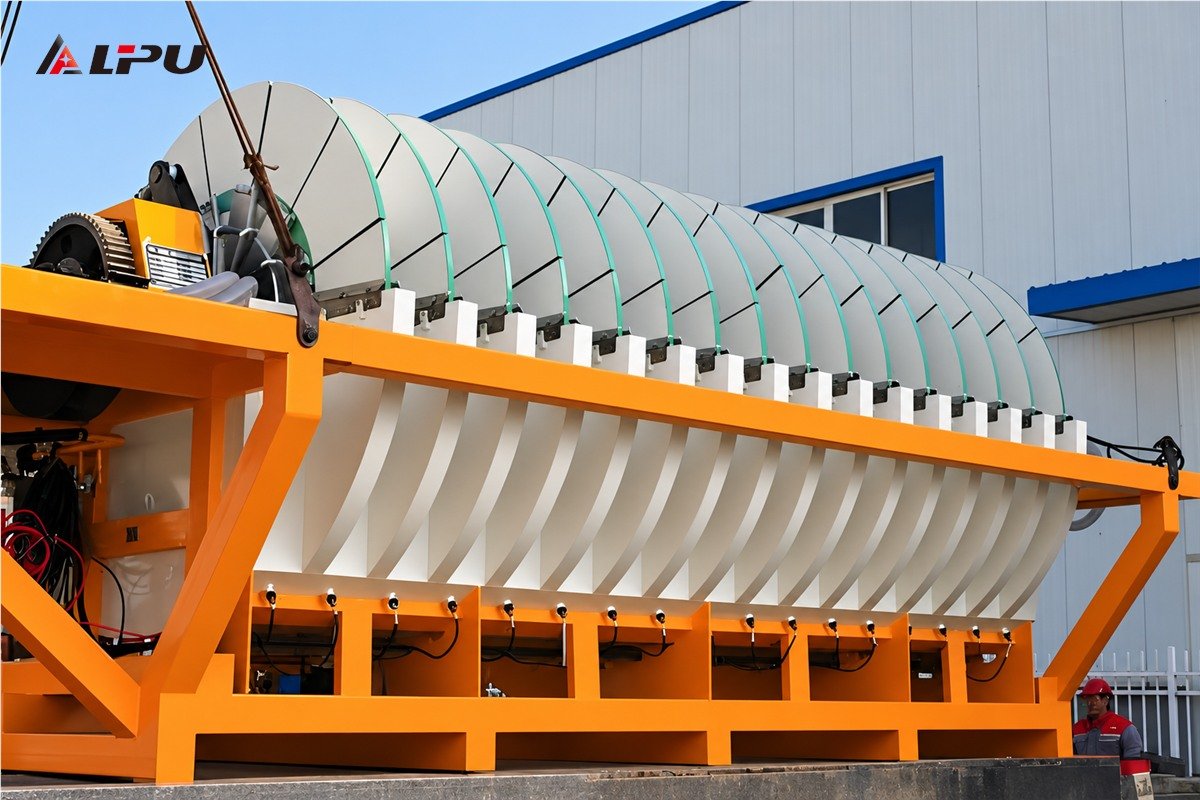
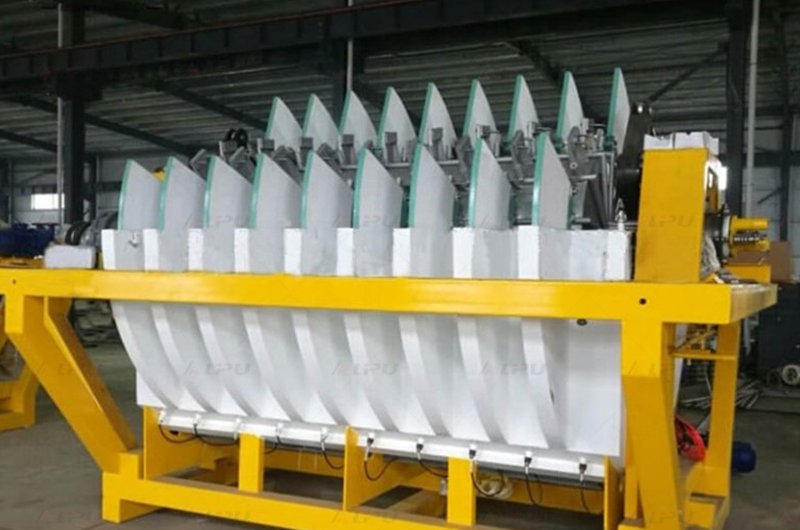
The machine uses several filter discs mounted on a rotating shaft. Each disc contains filter sectors covered with filter cloth or another suitable filter medium. As the discs rotate through slurry, vacuum draws liquid through the filter medium while solid particles remain on the surface and form a filter cake.
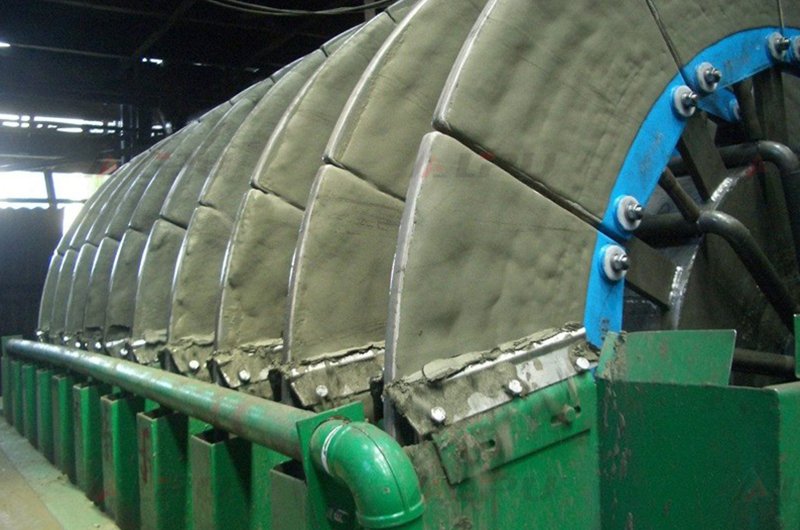
After leaving the slurry tank, the cake continues to dewater under vacuum. At the discharge zone, blowback air releases the dewatered cake for collection, conveying, stockpiling, or further processing.
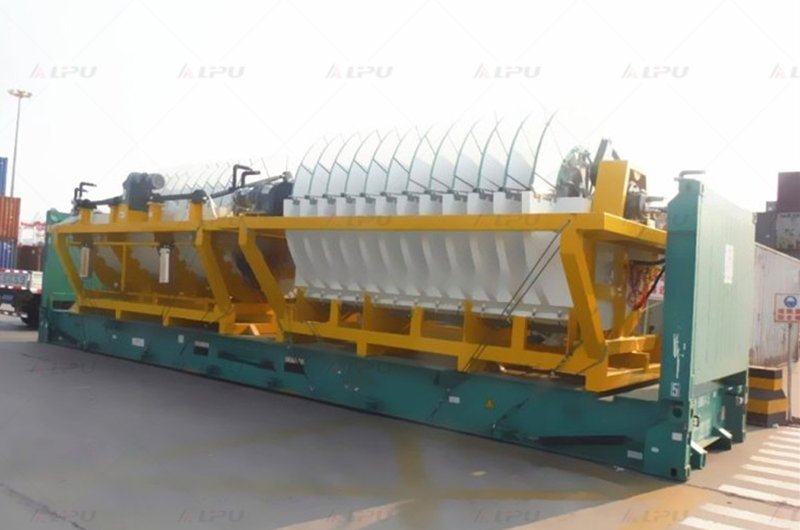
Disc vacuum filter prepared for shipment
Factory-assembled disc vacuum filter with multiple filter discs
Filter disc sectors used for continuous slurry dewatering
Typical Applications
Lipu Disc Vacuum Filters are suitable for fine-particle slurry requiring continuous dewatering and filtrate recovery.
Copper, lead-zinc, nickel, and molybdenum concentrates
Iron ore and magnetite concentrates
Gold-bearing mineral concentrates
Phosphate, fluorite, graphite, and other non-metallic mineral concentrates
Fine tailings and tailings retreatment streams
Coal slurry and coal preparation residues
Metallurgical, chemical, and industrial sludge
In a typical beneficiation circuit, concentrate produced by a Flotation Machine is thickened before entering the disc vacuum filter for final moisture reduction.
Working Principle
Slurry feeding and agitation: Conditioned slurry enters the filter tank. An agitator keeps solid particles suspended and helps maintain a consistent slurry concentration around the filter discs.
Vacuum filtration: The filter discs rotate slowly through the slurry. Vacuum pressure draws liquid through the filter cloth and internal channels, while solid particles remain on the surface of each filter sector.
Filter cake formation: As the discs leave the slurry, a filter cake forms on both sides of the filter sectors. Continued vacuum removes additional moisture during the rotation cycle.
Filtrate collection: Filtrate passes through the filter sectors, hollow shaft, and distribution head to the vacuum system. Depending on plant design and water quality, it can be recovered for reuse or sent to further treatment.
Cake discharge: At the discharge position, blowback air releases the dewatered cake from the filter sectors. The material falls into a discharge chute or conveyor for downstream handling.
Key Advantages
Continuous dewatering The rotating-disc system supports continuous cake formation, vacuum dewatering, and cake discharge without frequent batch interruptions.
Filtrate recovery Recovered filtrate can be returned to the process-water circuit when site conditions permit, helping reduce water consumption.
Flexible filtration area Multiple filter-disc quantities are available to match plant capacity, slurry volume, and required filtration area.
Stable cake discharge The blowback system helps release filter cake from the filter sectors for consistent downstream handling.
Material-based configuration Filter media and wetted components can be selected according to slurry abrasiveness, corrosion conditions, particle size, and filtration characteristics.
Easy process integration Disc vacuum filters can be installed after thickeners, flotation circuits, magnetic separation systems, or concentrate storage tanks. For tailings water recovery, they may also be used alongside a Dewatering Screen according to the material and site process requirements.
Main Components
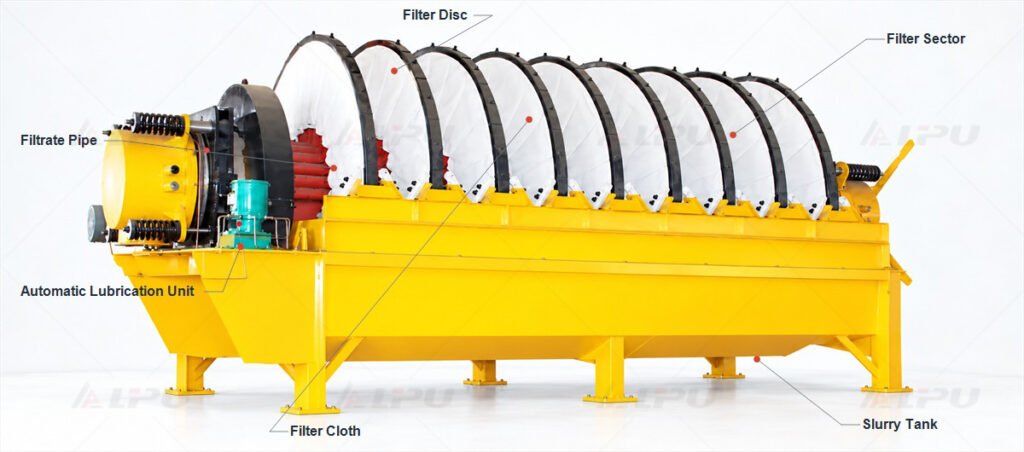
A typical Lipu Disc Vacuum Filter includes:
Main components and structure of an industrial disc vacuum filter
Filter discs and filter sectors
Filter cloth or selected filter medium
Main shaft and drive system
Slurry tank
Agitator and stirring motor
Distribution head
Vacuum receiver and vacuum system
Blowback system
Cake discharge chute
Frame and support base
Electrical control system
These components work together to maintain stable filtration, cake formation, dewatering, and discharge.
Typical Process Arrangement
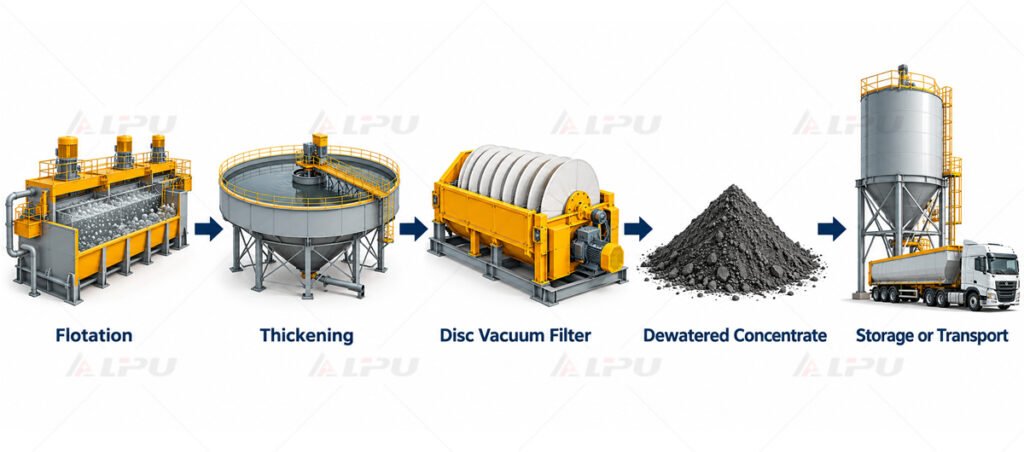
In a typical concentrate-dewatering circuit, slurry from a Flotation Machine is first concentrated in a Mineral Thickener, then fed to the disc vacuum filter for final moisture reduction.
Flotation concentrate dewatering and handling process
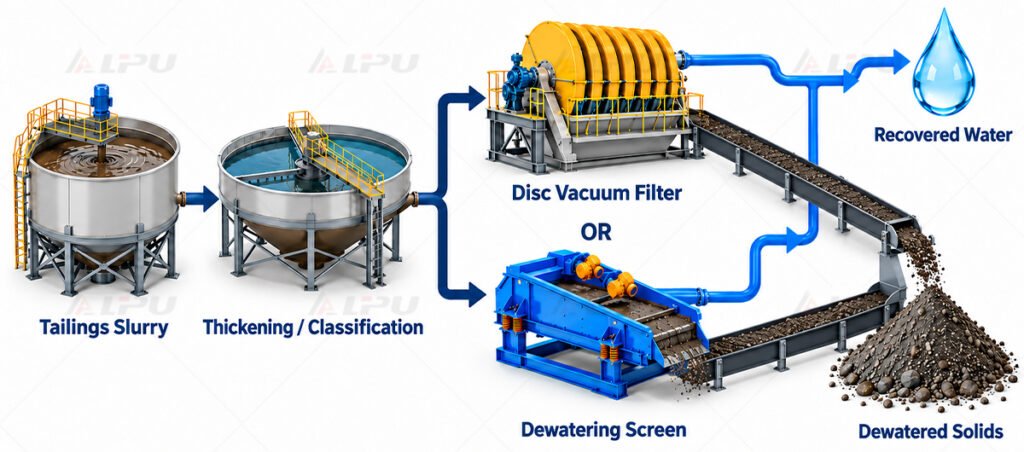
For tailings treatment, the filter can be integrated with a Dewatering Screen to improve water recovery and produce a more manageable solid product.
Tailings dewatering and water recycling flowsheet
For example, in an antimony ore processing plant, flotation concentrate can be thickened and filtered before final handling, while selected tailings streams can be treated for water recovery.
Technical Specifications
Filter Disc Diameter
Filtration Area
Disc Quantity
Main Shaft Motor
Agitator Motor
Discharge Method
Overall Dimensions (L × W × H)
Typical Capacity
2,100 mm
10–60 m²
2–12
2.2–5.5 kW
3–7.5 kW
Blowback
2,535–6,435 × 2,480 × 2,690 mm
0.85–1.2 t/h·m²
3,100 mm
60–120 m²
5.5–11 kW
7.5–15 kW
5–10
Blowback
4,735–7,235 × 4,280 × 3,740 mm
0.85–1.2 t/h·m²
Actual capacity and final cake moisture depend on mineral type, particle-size distribution, slurry concentration, filter-medium selection, vacuum conditions, and operating parameters.
How to Select a Disc Vacuum Filter
The following information helps determine a suitable machine configuration:
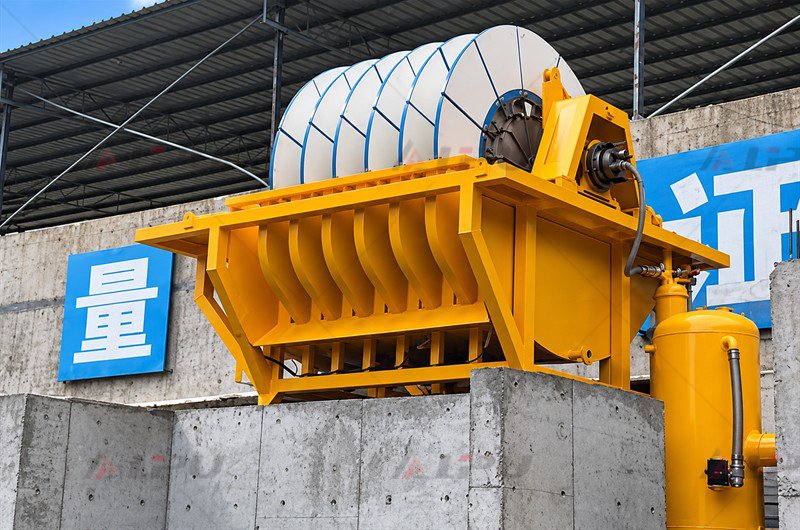
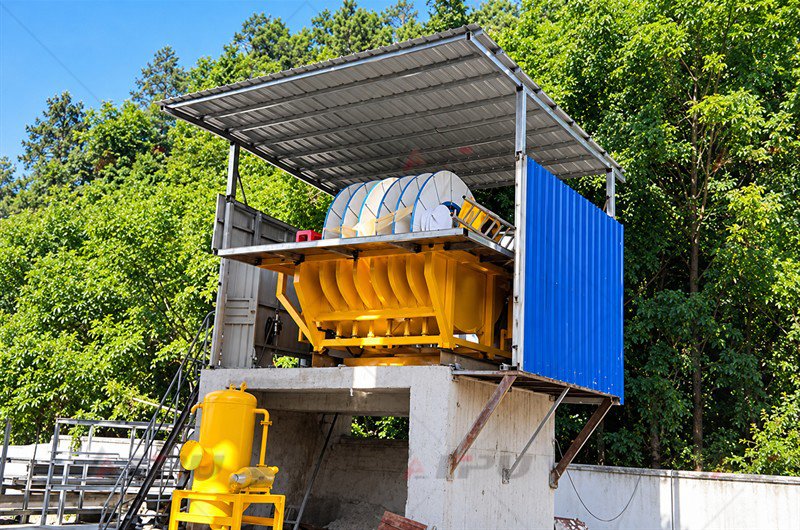
Disc vacuum filter operating above a concrete filtrate collection tank
Compact on-site disc filtration system for mineral slurry dewatering
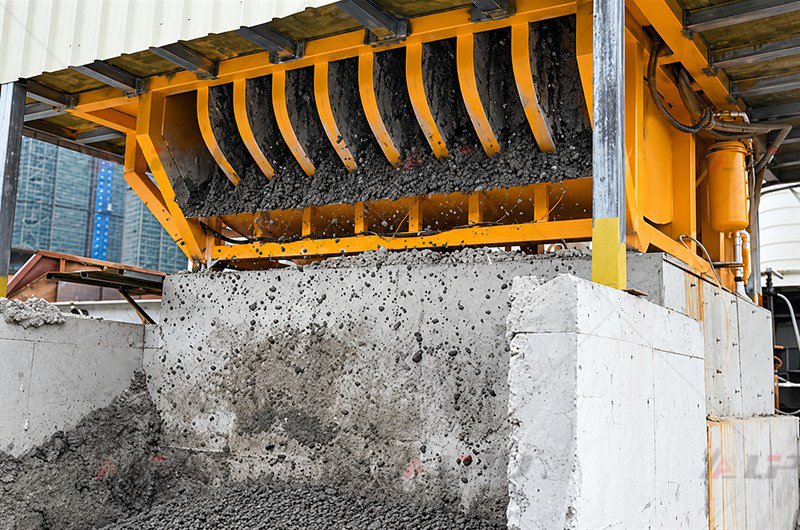
Filter cake is released continuously from the disc sectors into the collection area
Mineral type and slurry properties
Required processing capacity
Feed particle size and slurry density
Target cake moisture
Required filtration area
Filter cloth or filter-medium requirement
Available installation space
Vacuum-system and filtrate-recovery requirements
Upstream thickener or separation equipment
Providing slurry test data or existing operating data helps support more accurate filter-area and disc-quantity selection.
Service and Support
Lipu provides support throughout equipment selection and plant integration.
Equipment selection and process matching
Filter-area and disc-quantity recommendation
Layout and auxiliary-system guidance
Manufacturing and factory inspection
Installation and commissioning support
Operating training
Spare parts and filter-media supply
Maintenance and technical service
Frequently Asked Questions
What materials can a disc vacuum filter process? Disc vacuum filters are commonly used for mineral concentrates, fine tailings, coal slurry, industrial sludge, and other filterable fine-particle slurry.
Is a thickener required before a disc vacuum filter? In many mineral-processing circuits, a Mineral Thickener is installed before the filter to increase slurry density and reduce the liquid load. The final arrangement depends on the material and process requirements.
How is filter cake discharged? The standard configuration uses blowback air to release the dewatered cake from the filter sectors into a discharge chute or collection system.
Can the filtrate be reused? Yes. When water quality and plant design permit, filtrate can be returned to the process-water circuit or directed to further treatment.
What affects final cake moisture? Cake moisture depends on mineral properties, particle-size distribution, slurry concentration, filter-medium selection, vacuum conditions, cake thickness, and operating parameters.