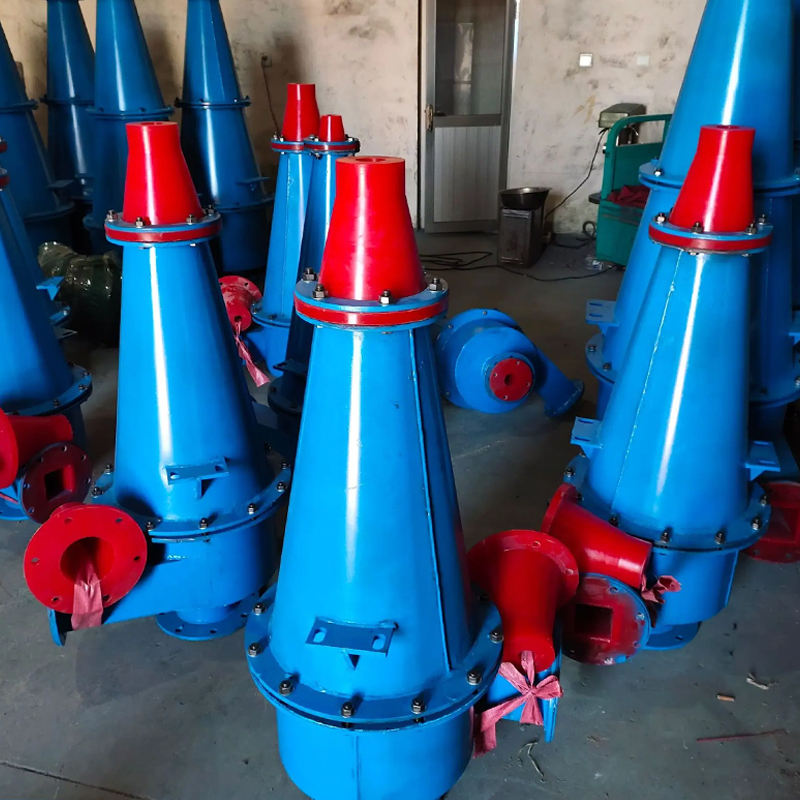
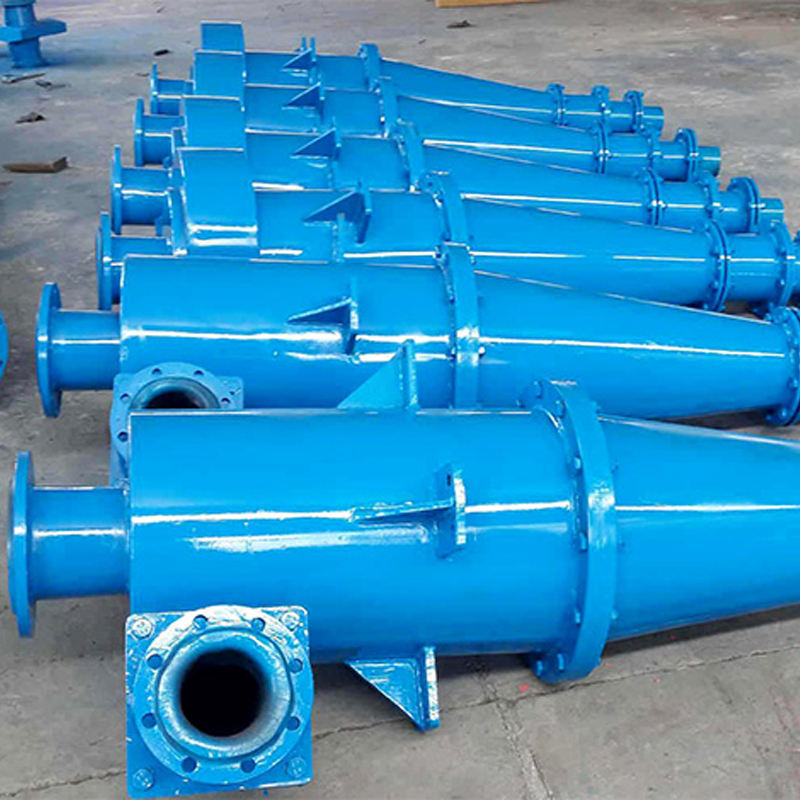
LIPU hydrocyclones are designed for continuous slurry classification, desliming and fine-particle separation in mineral processing circuits. Using centrifugal force generated by high-speed slurry rotation, a hydrocyclone separates coarser and denser particles from finer particles and water without mechanical moving parts inside the separation chamber.
The JAX series covers cyclone diameters from 75 to 660 mm and can be used in grinding circuits, beneficiation plants and other slurry classification applications.
Cyclone Diameter: 75–660 mm
Feed Pressure: 0.03–0.5 MPa
Separation Size: 20–200 μm
Applications: Grinding classification, desliming and mineral processing
A hydrocyclone is a separation device that uses centrifugal force to classify solid particles suspended in liquid.
Unlike a vibrating screen or spiral classifier, the hydrocyclone contains no mechanical moving parts inside the separation chamber. Slurry enters tangentially under pressure, creating a high-speed rotational flow.
Particles respond differently according to their size, density and settling behavior.
Coarser or denser particles tend to move toward the cyclone wall and travel downward toward the underflow outlet. Finer particles and a larger proportion of water move toward the center and leave through the overflow outlet.
Hydrocyclones are widely used in mineral processing because they provide continuous classification in a compact footprint.
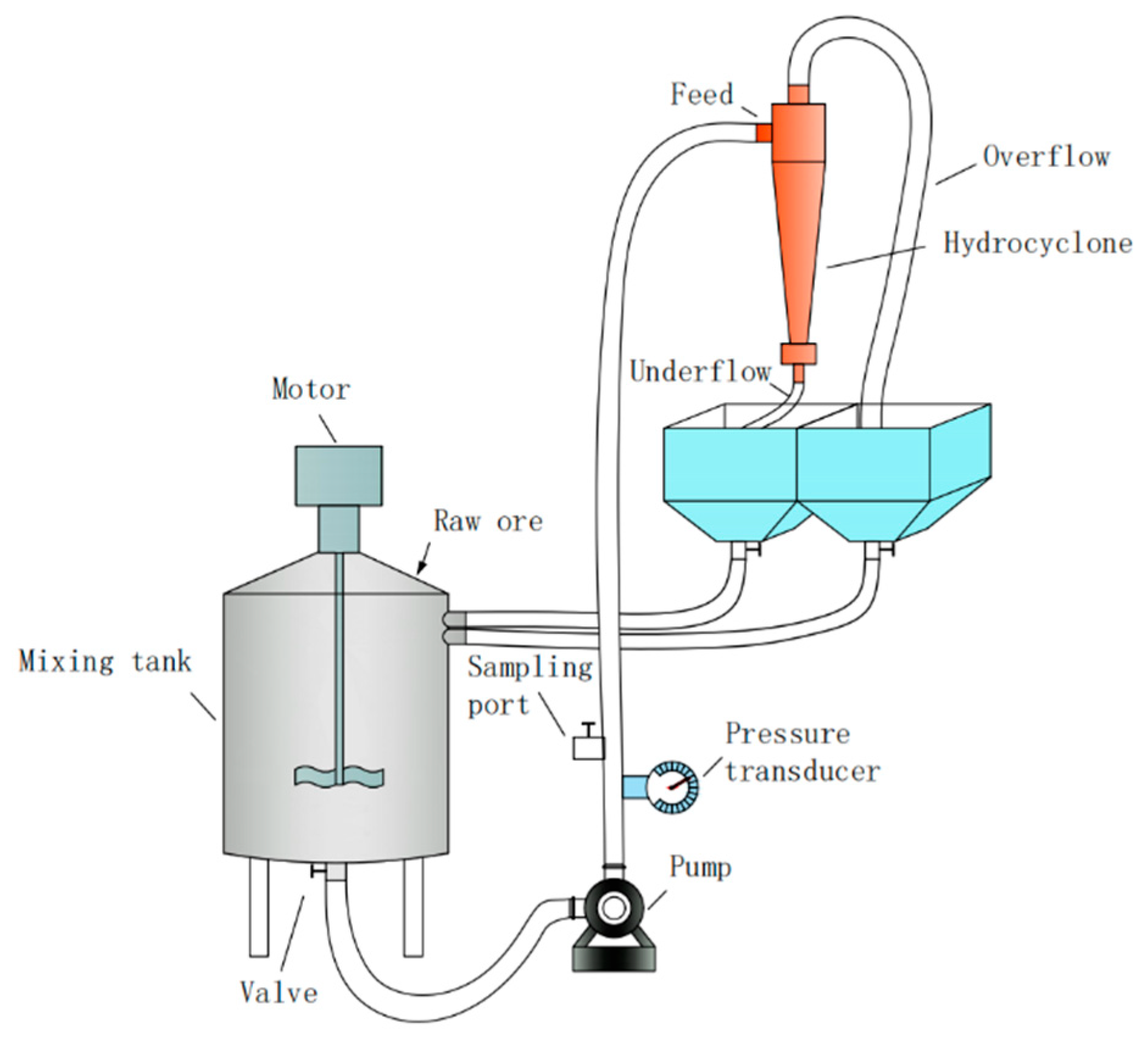
Slurry is pumped into the hydrocyclone through the tangential feed inlet.
The shape of the cylindrical and conical sections forces the slurry to rotate rapidly, producing a strong centrifugal field inside the cyclone.
Coarser and denser particles migrate toward the outer wall. They move downward along the outer vortex and discharge through the apex as underflow.
Finer particles and much of the liquid move toward the center of the cyclone. The inner vortex then carries this material upward through the vortex finder and overflow outlet.
The separation result depends on several factors, including feed pressure, cyclone diameter, slurry concentration, particle size distribution and cyclone geometry.
Main Components
The main components of a hydrocyclone include:
Feed inlet
Cylindrical section
Conical section
Vortex finder
Overflow outlet
Apex
Underflow outlet
Wear-resistant lining or internal surface
The vortex finder controls the overflow path, while the apex controls the underflow discharge.
These components influence the separation size, slurry split and operating stability.
Hydrocyclone Applications
Hydrocyclones can perform several functions in mineral processing plants.
Grinding circuit classification
One of the most common applications is separating fine particles from coarse particles after grinding.
Desliming
Hydrocyclones can remove fine clay and slime fractions before gravity, magnetic or flotation separation.
Fine-particle separation
Different particle-size fractions can be separated according to the required downstream process.
Dewatering and concentration assistance
In suitable applications, hydrocyclones can increase the solids concentration of the underflow before further processing.
Pre-classification before beneficiation
Hydrocyclones can help control feed size before equipment such as flotation machines, magnetic separators or gravity separators.
Hydrocyclone in a Grinding Circuit
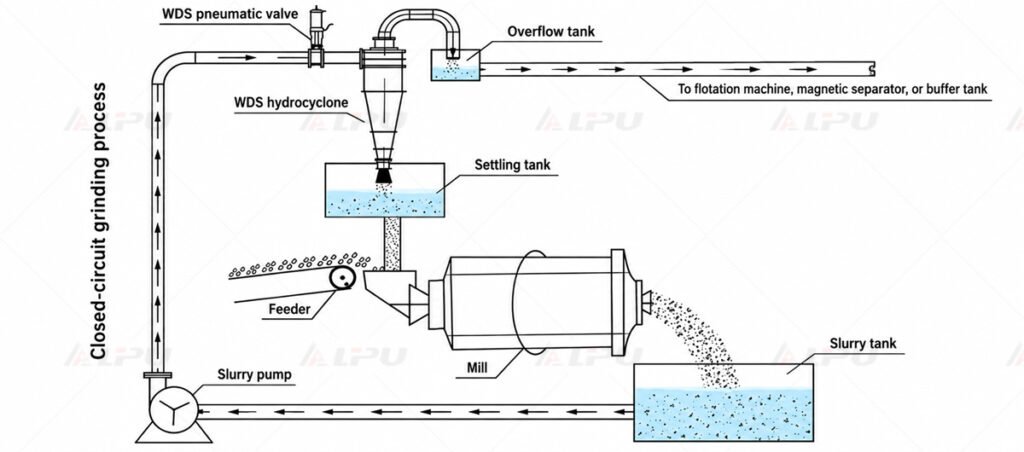
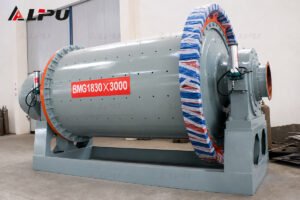
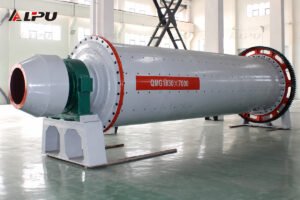
Hydrocyclones are commonly used together with ball mills in closed-circuit grinding systems.
A typical circuit may follow:
Ball Mill → Slurry Pump → Hydrocyclone → Overflow to Next Process / Underflow Return to Ball Mill
Typical closed-circuit grinding process using a ball mill, slurry pump and hydrocyclone
A Ball Mill reduces the ore to the required liberation size. The resulting slurry is pumped to the hydrocyclone for classification.
The fine overflow can proceed to downstream beneficiation equipment such as a Flotation Machine or Magnetic Separator, depending on the ore characteristics.
The coarse underflow can return to the ball mill for further grinding.
This closed-circuit arrangement helps control the particle-size range entering the separation stage.
Hydrocyclone vs Spiral Classifier
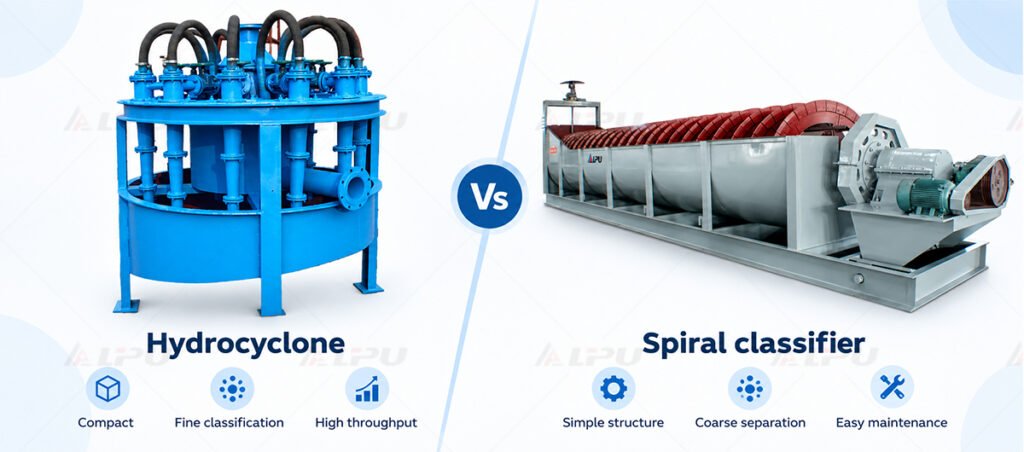
Hydrocyclones and spiral classifiers can both be used for mineral slurry classification, but their operating principles and process characteristics are different.
Comparison of hydrocyclone and spiral classifier for mineral slurry classification
Factor
Hydrocyclone
Spiral Classifier
Separation principle
Centrifugal force
Gravity settling
Moving parts
No internal moving parts
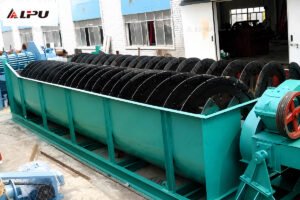
Rotating spiral
Installation space
Compact
Larger footprint
Feed requirement
Pressurized slurry
Gravity or controlled feed
Classification response
Fast
Slower settling process
Typical use
Fine classification and closed grinding circuits
Grinding classification and settling-based separation
A Spiral Classifier may be more suitable where settling behavior and mechanical conveying of coarse particles are required.
A hydrocyclone is often preferred when compact installation, rapid classification and high centrifugal separation are important.
The correct choice depends on ore characteristics, required cut size, slurry concentration and plant layout.
Advantages of Hydrocyclone
LIPU hydrocyclones offer several practical advantages for slurry classification and mineral processing.
No internal moving parts: The separation chamber operates without a mechanical drive.
Compact footprint: Hydrocyclones require relatively little installation space.
Continuous operation: Slurry can be classified continuously.
Strong centrifugal separation: High rotational velocity promotes rapid particle separation.
Suitable for closed-circuit grinding: Hydrocyclones can work with ball mills and slurry pumps.
Flexible configuration: Cyclone diameter, feed pressure, vortex finder and apex dimensions can influence separation performance.
Scalable capacity: Multiple cyclones can be installed in parallel for larger processing requirements.
Actual performance depends on feed characteristics and operating conditions.
Hydrocyclone Technical Parameters
LIPU provides the following JAX series hydrocyclones:
Model
Diameter (mm)
Height (mm)
Feed Pressure (MPa)
Separation Size (μm)
Weight (kg)
JAX-75
75
472.5
0.1–0.5
20–60
4
JAX-100
100
499
0.05–0.4
20–60
8
JAX-125
125
590
0.05–0.4
25–65
10
JAX-150
150
786
0.05–0.4
30–75
22
JAX-200
200
1114
0.05–0.4
40–100
36
JAX-250
250
1380
0.05–0.4
40–100
63
JAX-300
300
1490
0.03–0.4
50–150
88
JAX-350
350
1674
0.03–0.4
50–150
135
JAX-500
500
2280
0.03–0.4
74–200
416
JAX-660
660
2720
0.03–0.4
74–200
950
The actual separation size and operating performance can vary according to feed pressure, slurry concentration, particle-size distribution and material density.
How to Select the Right Hydrocyclone
Hydrocyclone selection should be based on the required separation result rather than cyclone diameter alone.
Required separation size
Smaller cyclone diameters are generally used for finer classification, while larger cyclones handle coarser separation ranges.
Feed pressure
Feed pressure directly affects slurry velocity and centrifugal force. The selected pump and piping system should provide stable operating pressure.
Slurry concentration
High solids concentration can change flow behavior and influence classification efficiency.
Particle-size distribution
The proportion of coarse and fine particles in the feed should be evaluated before selecting the cyclone.
Material density
Particle density affects the movement of solids within the centrifugal field.
Processing capacity
For larger plants, several hydrocyclones can be installed in parallel instead of relying on a single large unit.
Apex and vortex finder configuration
These dimensions influence the overflow and underflow split and should be matched to the required process conditions.
Single Hydrocyclone vs Hydrocyclone Cluster
A single hydrocyclone is suitable for relatively small slurry flow rates or individual classification duties.
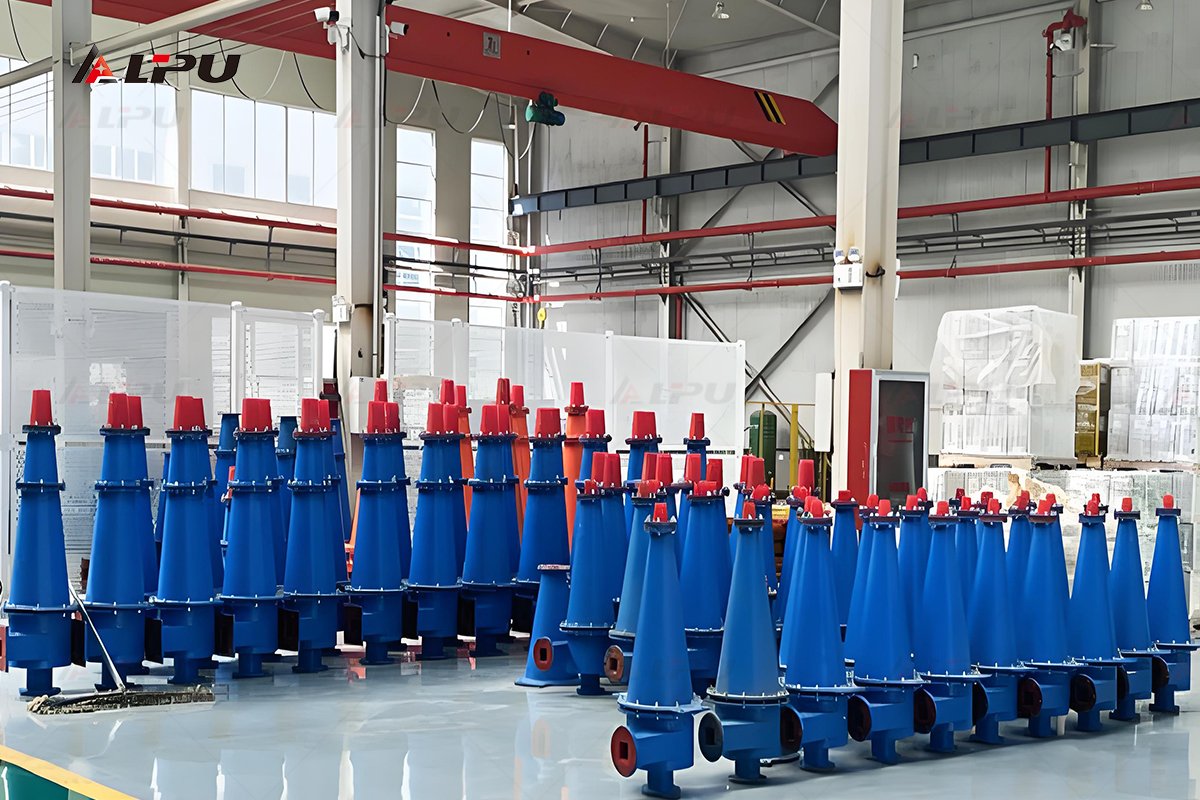
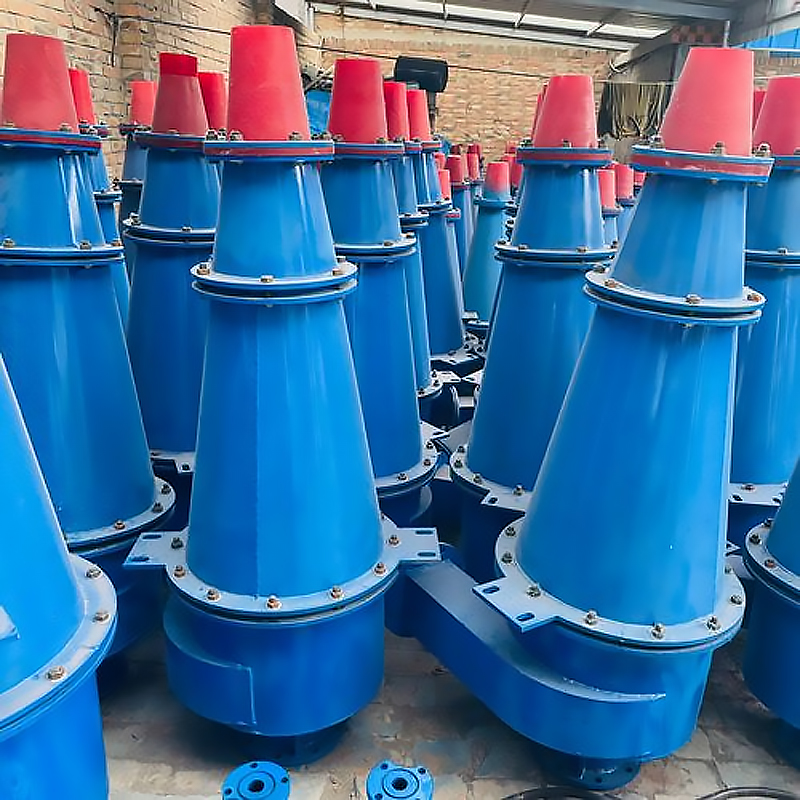
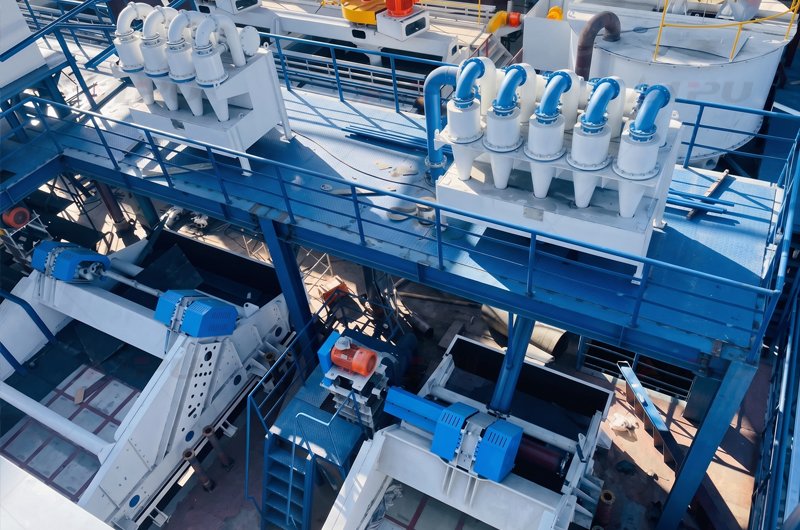
For larger processing plants, several hydrocyclones can be installed together as a hydrocyclone cluster.
A cluster offers several advantages:
Higher total processing capacity
Flexible operation by opening or closing individual cyclones
Easier maintenance without stopping the entire classification system
Better adaptation to changing plant throughput
The number and size of cyclones should be selected according to feed flow, pressure and required separation size.
Why Choose LIPU?
LIPU provides hydrocyclones for mineral classification, desliming and grinding circuits with multiple JAX models covering different diameters and separation ranges.
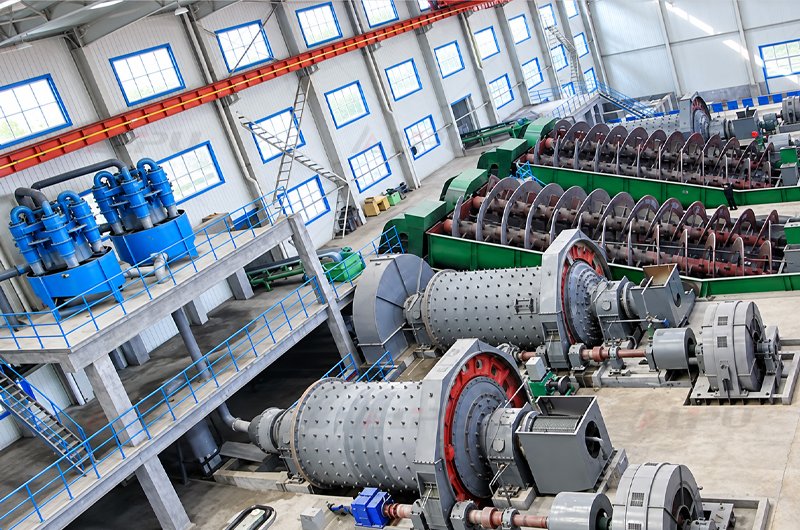
Hydrocyclone Cluster in Closed Grinding Circuit Classification
Dewatering & Thickening Hydrocyclone Cluster for Tailings Management
Equipment selection can consider:
Required separation size
Feed pressure
Slurry concentration
Particle-size distribution
Solids density
Required processing capacity
Single or multi-cyclone configuration
LIPU can also integrate hydrocyclones with grinding and beneficiation equipment to configure a complete mineral processing circuit.
Frequently Asked Questions
What is a hydrocyclone used for?
A hydrocyclone is used for slurry classification, desliming and fine-particle separation in mineral processing. It is commonly installed in closed-circuit grinding systems.
What is the difference between hydrocyclone overflow and underflow?
Overflow generally contains finer particles and more water, while underflow contains a higher proportion of coarse or denser particles.
What affects hydrocyclone separation size?
Important factors include cyclone diameter, feed pressure, slurry concentration, particle-size distribution, material density, apex size and vortex finder configuration.
Can a hydrocyclone replace a spiral classifier?
In some grinding circuits, yes, but the two machines use different separation principles. Hydrocyclones use centrifugal force, while spiral classifiers rely mainly on gravity settling and mechanical conveying.
How do I choose the correct hydrocyclone diameter?
Selection should consider the required cut size, processing capacity, feed pressure, solids concentration and complete circuit requirements.