LIPU wet pan mills are designed for small-scale mineral grinding and gold processing applications. They are widely used where simple operation, relatively low investment, and compact plant configuration are important.
Different models can be selected according to feed size, required capacity, mineral characteristics, target particle size, and downstream recovery process.
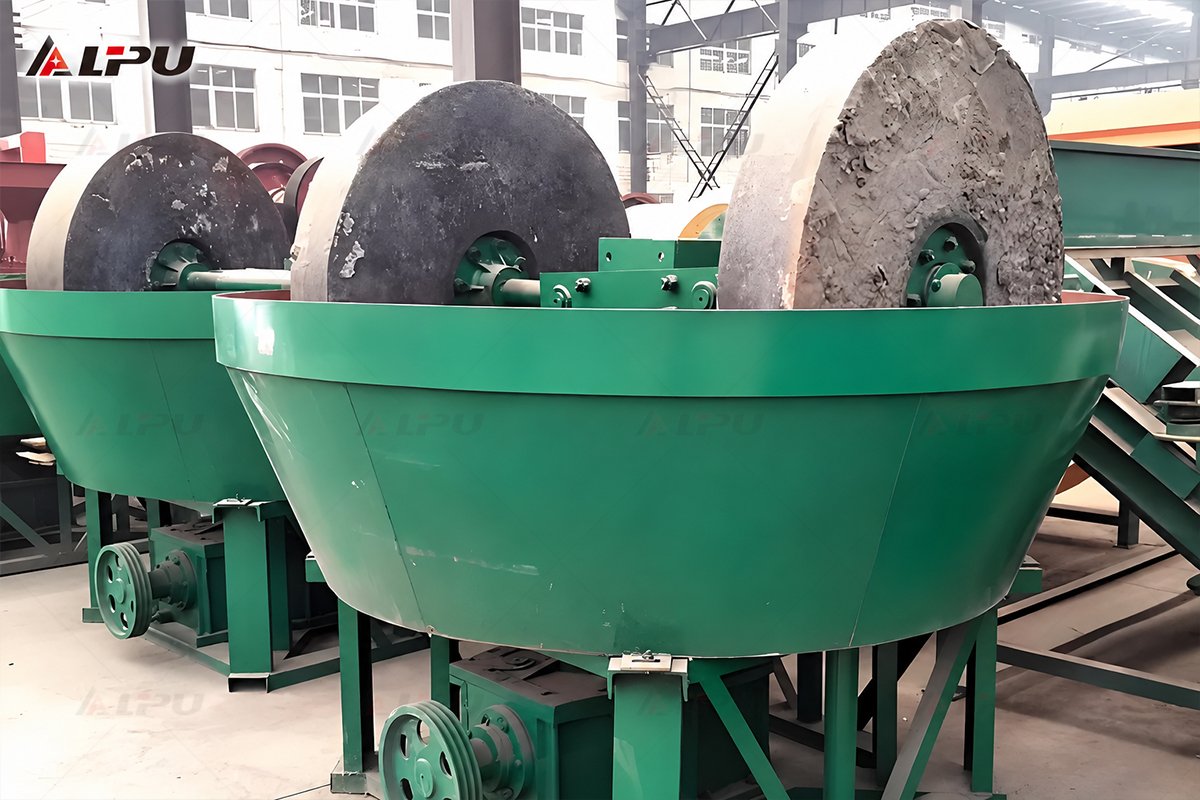
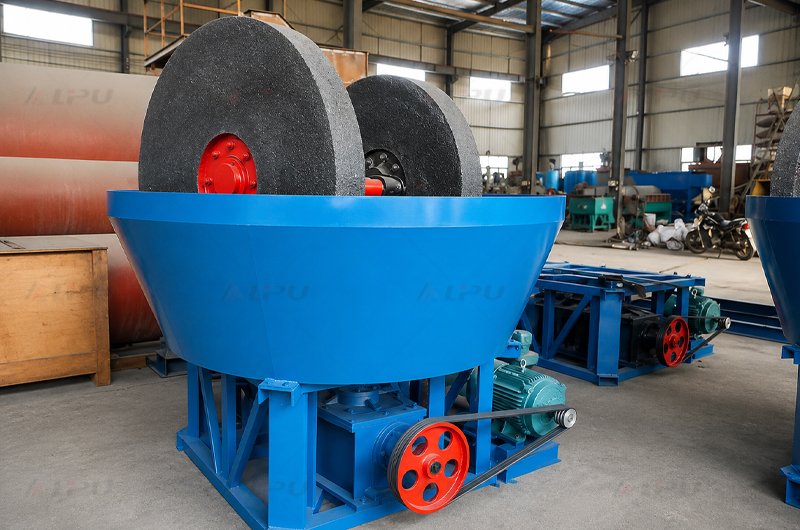
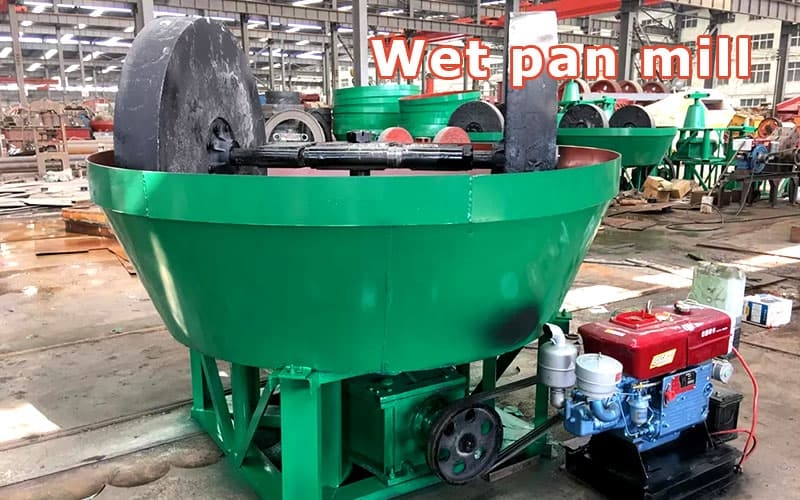
A wet pan mill, also known as a wet grinding mill or wheel pan mill, is a mineral grinding machine that uses heavy grinding rollers and a rotating grinding pan to crush and grind ore.
Two-Roller Wet Pan Mill
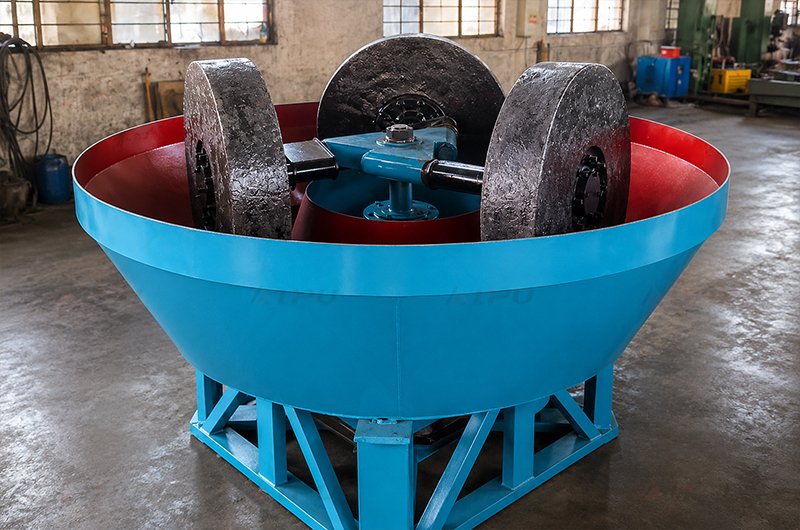
Three-Roller Wet Pan Mill
During operation, ore is mixed with water inside the pan. The grinding rollers continuously roll over the material, applying pressure, friction, and shearing force to reduce particle size.
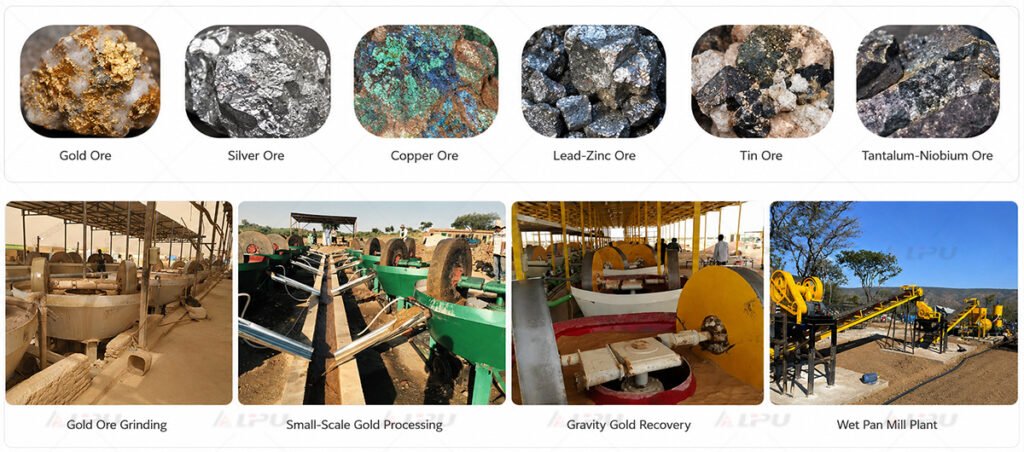
Wet pan mills are commonly used in small and medium mineral processing plants, especially for gold ore grinding and gravity recovery preparation.
They can also be used for grinding selected silver, copper, lead-zinc, tin, and other mineral ores.
Compared with larger grinding systems, wet pan mills are generally easier to install and operate, making them suitable for smaller processing plants and projects with limited initial investment.
Wet Pan Mill Types and Features
Wet pan mills can be configured according to pan diameter, roller size, installed power, capacity, and the required mineral processing duty.
Standard Wet Pan Mill
Standard wet pan mills use one or more heavy grinding rollers operating inside a circular grinding pan.
Typical features include:
Simple mechanical structure
Wet grinding operation
Compact equipment footprint
Low-speed grinding
Easy operation and maintenance
Suitable for small and medium processing plants
Can be integrated with gravity separation equipment
The 1100, 1200, 1400, 1500, and 1600 models are commonly selected according to required throughput and feed conditions.
Gold Processing Wet Pan Mill
For small-scale gold ore processing, the wet pan mill can be used after crushing to reduce ore particle size before gravity concentration.
Typical downstream equipment may include:
Centrifugal concentrator
Shaking table
Sluice box
Other gravity recovery equipment
The wet pan mill itself is primarily a grinding machine. Final gold recovery depends on ore characteristics and the downstream beneficiation process.
Materials and Applications
Wet pan mills are mainly used for mineral grinding in small and medium processing plants.
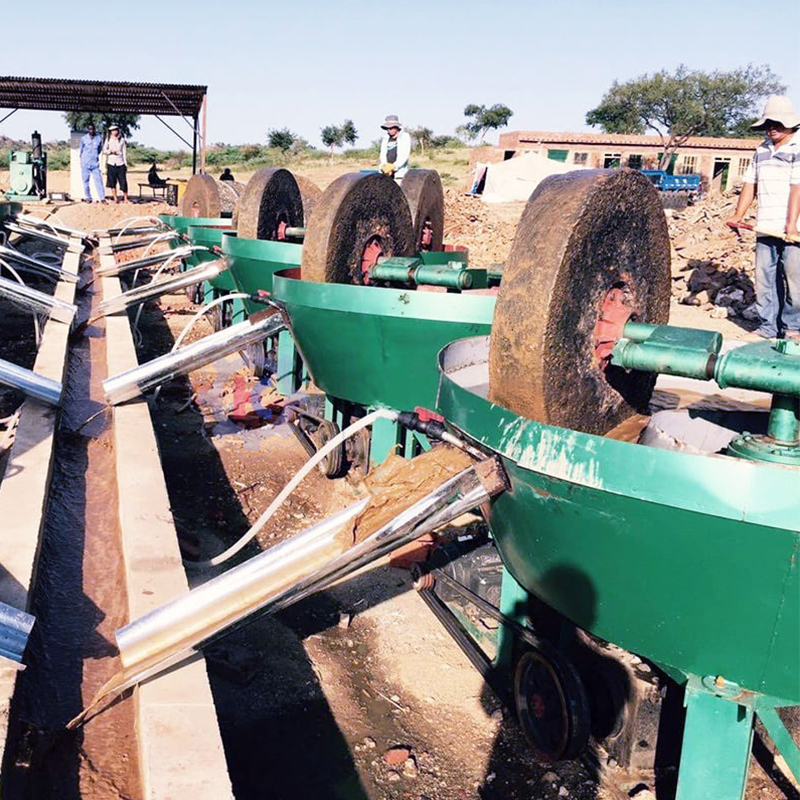
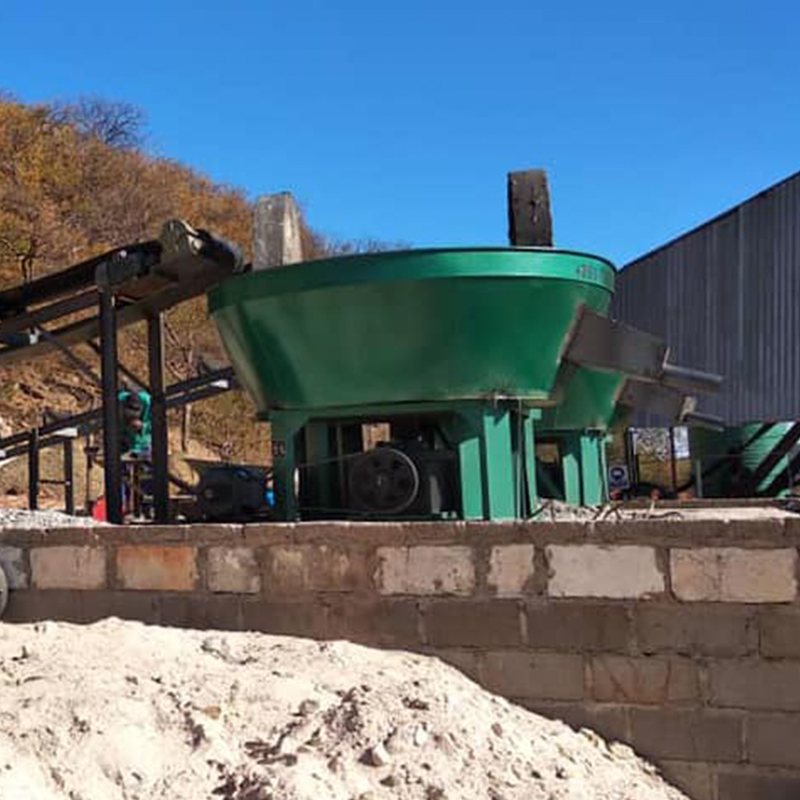
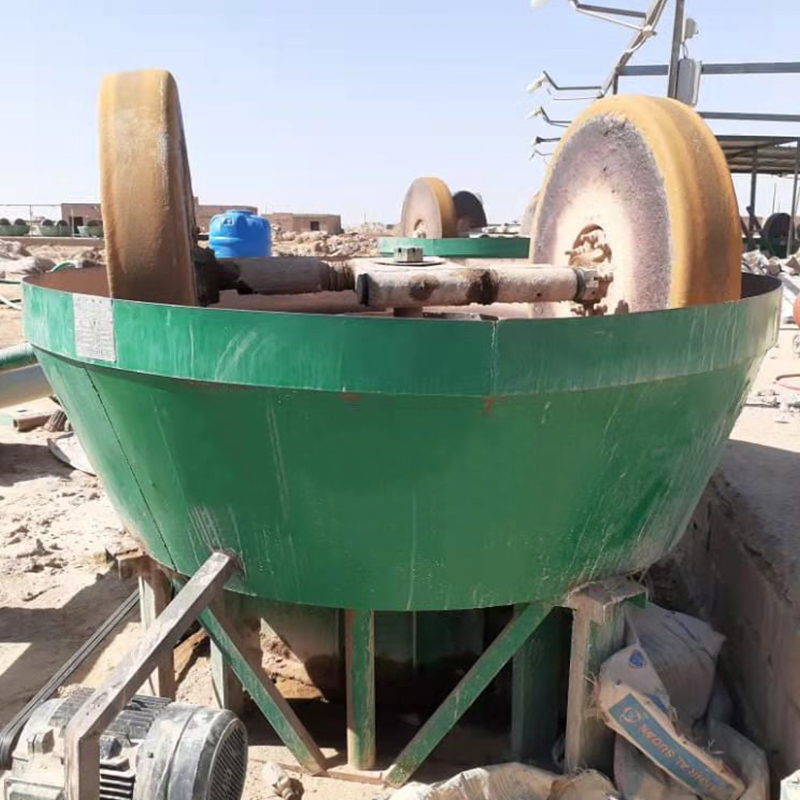
Typical wet pan mill application sites for gold ore grinding and small-scale mineral processing
Typical materials include:
Gold ore
Silver ore
Copper ore
Lead-zinc ore
Tin ore
Molybdenum ore
Tantalum-niobium ore
Other suitable metallic ores
Typical applications include:
Small-scale gold processing
Grinding before gravity concentration
Fine grinding after jaw crushing
Mineral liberation before separation
Small beneficiation plants
Pilot or lower-capacity mineral processing projects
For gold processing, the wet pan mill is commonly installed after primary and secondary crushing.
A typical upstream crushing section may include a Jaw Crusher or other suitable crushing equipment.
How Does a Wet Pan Mill Work?
The motor transfers power through the reducer or transmission system to the central shaft and grinding mechanism.
The grinding rollers rotate around the central axis while rolling over the material inside the grinding pan.
Ore and water are continuously mixed in the pan.
As the rollers move over the material, the ore is subjected to:
Compression
Rolling
Friction
Shearing
These forces progressively reduce the particle size.
Material that has not reached the required fineness remains in the grinding zone for further processing, while sufficiently fine slurry can move to the downstream recovery stage.
Grinding performance is influenced by:
Roller weight
Roller diameter
Pan diameter
Rotation speed
Feed size
Ore hardness
Water addition
Operating time
Feed rate
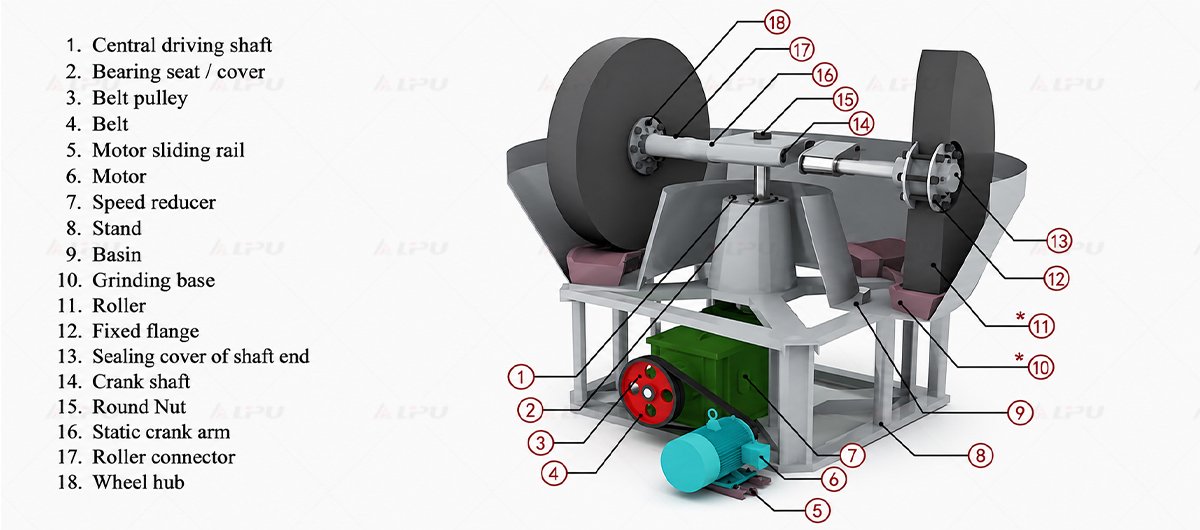
Main Wet Pan Mill Components
A typical wet pan mill includes:
Main structural components and transmission system of a wet pan mill used for mineral grinding
Grinding pan
Grinding rollers
Roller shaft
Central vertical shaft
Reducer
Drive motor
Transmission system
Supporting frame
Scraper system
Feed area
Slurry discharge area
The grinding rollers and grinding pan are the main working components.
During operation, these parts are continuously exposed to ore and slurry, so wear resistance and proper maintenance are important for stable long-term operation.
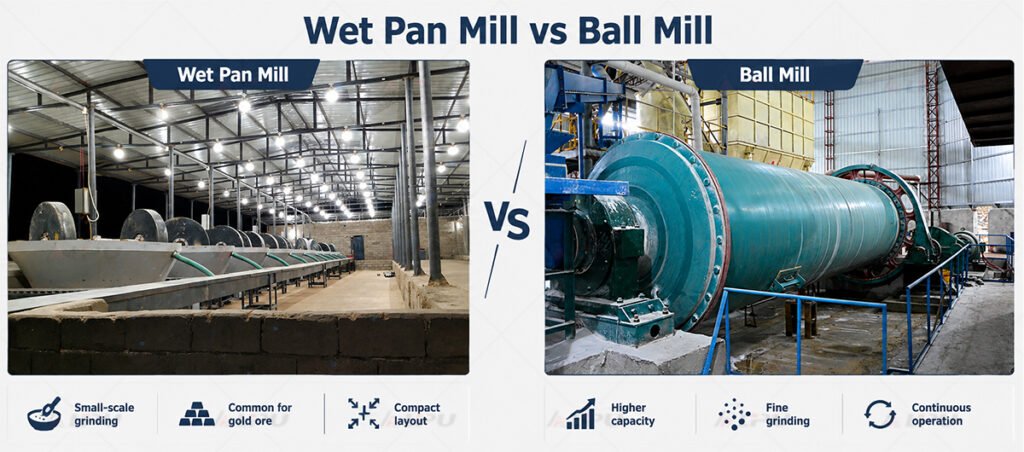
Wet Pan Mill vs Ball Mill
Wet pan mills and ball mills can both be used for mineral grinding, but they are normally selected for different project scales and process requirements.
Item
Wet Pan Mill
Ball Mill
Typical Plant Scale
Small to medium
Small to large
Grinding Method
Roller and pan grinding
Grinding media inside rotating cylinder
Installation
Relatively simple
More complete foundation and auxiliary systems
Capacity Range
Generally lower
Wider capacity range
Grinding Control
Suitable for simple circuits
Better suited to controlled grinding circuits
Typical Application
Small gold and mineral plants
Industrial mineral processing plants
Downstream Process
Often gravity concentration
Classification, flotation, magnetic separation, gravity separation
A wet pan mill is often selected when the project requires a simple, lower-capacity grinding solution.
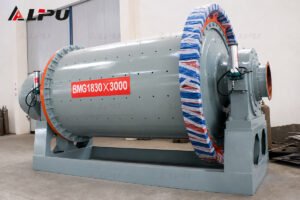
A Ball Mill is generally more suitable when higher throughput, finer controlled grinding, or a larger continuous processing circuit is required.
Wet pan mills should therefore not be described as a universal replacement for ball mills. The correct choice depends on plant scale, mineral characteristics, target particle size, and downstream process.
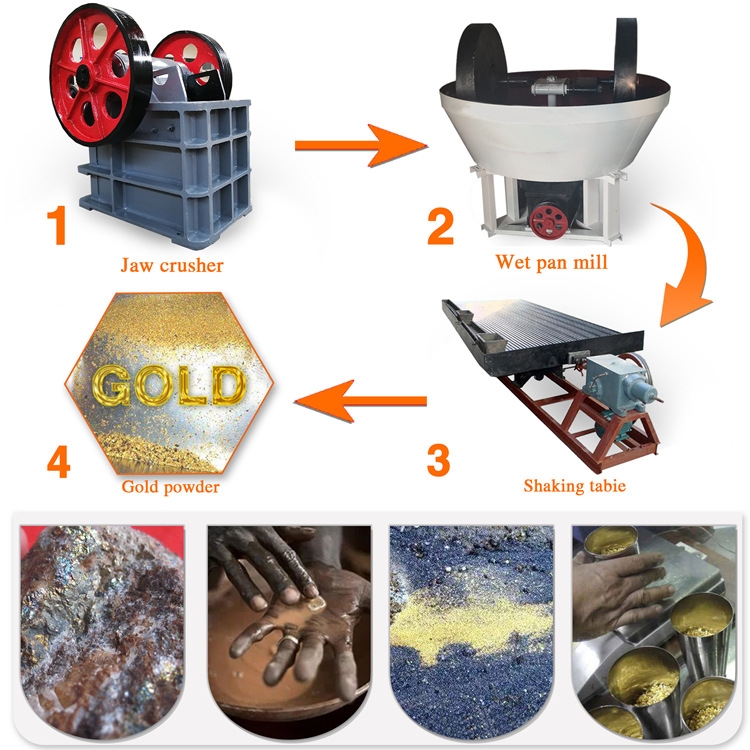
Gold Grinding and Recovery Process
In small-scale gold processing, the wet pan mill normally works as part of a complete crushing, grinding, and recovery circuit.
Wet Pan Mill gold processing plants
A typical process can be arranged as:
Feeding → Jaw Crushing → Fine Crushing → Wet Pan Mill → Gravity Concentration → Concentrate Collection
It does not independently guarantee final gold recovery. Recovery performance depends on factors such as:
Gold particle size
Degree of mineral liberation
Ore mineralogy
Feed size
Grinding fineness
Gravity recoverability
Downstream equipment configuration
For suitable free-milling gold ores, gravity concentration can be used after wet grinding to recover liberated heavy gold particles.
For more complex ores, additional beneficiation stages may be required.
Wet Pan Mill Technical Parameters
LIPU wet pan mills are available in several sizes for different small-scale mineral grinding requirements.
Wet Pan Mill
Model
Feeding size(mm)
Output size(mm)
Capacity(t/h)
Rotation speed
(r/min)
Power(kw)
Weight(t)
1100
<20mm
<1mm
0.5T/H
11-19RPM
5.5KW
4.8T
1200
<20mm
<1mm
0.5-1T/H
11-19RPM
7.5KW
5.2T
1400
<20mm
<1mm
1-1.5 T/H
18-21RPM
15KW
9.5T
1500
<30mm
<1mm
1.5-2T/H
18-22 RPM
22KW
11T
1600
<30mm
<1mm
2-3 T/H
18-20 RPM
30/37KW
12.5T
Actual processing capacity may vary according to ore hardness, feed size, feed rate, water addition, operating conditions, and required grinding fineness.
The technical parameters should therefore be used for preliminary model selection.
How to Select the Right Wet Pan Mill
Wet pan mill selection should be based on the complete mineral processing requirement rather than only the machine diameter.
For preliminary selection, please provide:
Ore type
Maximum feed size
Required capacity
Required grinding size
Ore hardness
Moisture condition
Gold or valuable mineral characteristics
Downstream recovery method
Daily operating hours
Project location
Important selection factors include:
Feed Size
The feed should match the allowable inlet size of the selected model. Oversized material should be crushed before entering the wet pan mill.
Required Capacity
For lower-capacity plants, 1100 or 1200 models may be suitable depending on actual feed conditions.
Larger 1400, 1500, and 1600 models are generally selected when higher throughput is required.
Target Grinding Size
Grinding requirements should be determined according to mineral liberation and downstream recovery equipment.
Ore Hardness
Harder ore generally requires more grinding time and may reduce actual throughput.
Downstream Recovery Process
Wet pan mills are commonly used before gravity concentration. The grinding stage should therefore be matched with the concentrator, shaking table, or other downstream equipment.
Plant Scale
For significantly higher throughput or a more controlled industrial grinding circuit, a ball mill may be more suitable.
Why Choose LIPU?
LIPU Heavy Industry provides crushing, grinding, classification, gravity separation, flotation, magnetic separation, and supporting mineral processing equipment.
Thailand Customer Site
South African customer site
India Customer Site
For wet pan mill applications, LIPU can assist with:
Wet pan mill model selection
Crushing and grinding equipment matching
Gold gravity recovery circuit configuration
Equipment manufacturing
Factory inspection and testing
Installation guidance
Commissioning support
Wear parts supply
Technical service
For complete small-scale gold processing projects, the wet pan mill can be selected together with crushing and gravity recovery equipment according to the ore characteristics and required capacity.
Frequently Asked Questions
What is a wet pan mill mainly used for?
A wet pan mill is mainly used for wet grinding of mineral ores, particularly in small-scale gold processing and gravity concentration circuits.
Can a wet pan mill process ores other than gold?
Yes. Depending on the mineral characteristics, it can also be used for selected silver, copper, lead-zinc, tin, molybdenum, tantalum-niobium, and other metallic ores.
What is the difference between a wet pan mill and a ball mill?
A wet pan mill uses heavy rollers and a grinding pan and is generally suited to lower-capacity, simpler processing plants. A ball mill uses grinding media inside a rotating cylinder and is better suited to larger and more controlled grinding circuits.
What feed size is suitable for a wet pan mill?
According to the current LIPU models, recommended maximum feed size is generally below 20 mm for smaller models and below 30 mm for larger models.
Can LIPU provide a complete small-scale gold processing line?
Yes. LIPU can configure crushing, wet grinding, gravity concentration, conveying, and supporting equipment according to ore characteristics and required plant capacity.