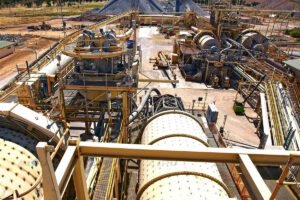
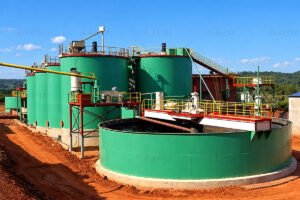
LIPU configures sulfide ore flotation plants for copper, lead-zinc, gold-bearing, and polymetallic sulfide ores.The route is selected around mineralogy, liberation characteristics, flotation testwork, capacity, and concentrate requirements.
Sulfide ores commonly contain valuable minerals such as chalcopyrite, galena, sphalerite, pyrite, pyrrhotite, and gold-bearing sulfides. Their recovery depends on how the target minerals occur, their association with gangue minerals, and the required concentrate products.
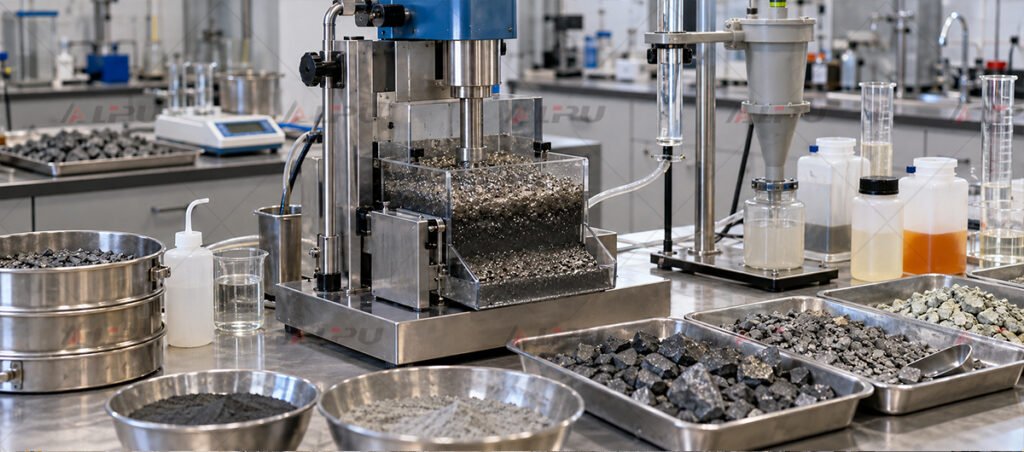
A practical flotation solution begins with representative testwork. The results help define the target grind size, reagent scheme, flotation stages, concentrate grade, and expected recovery range.
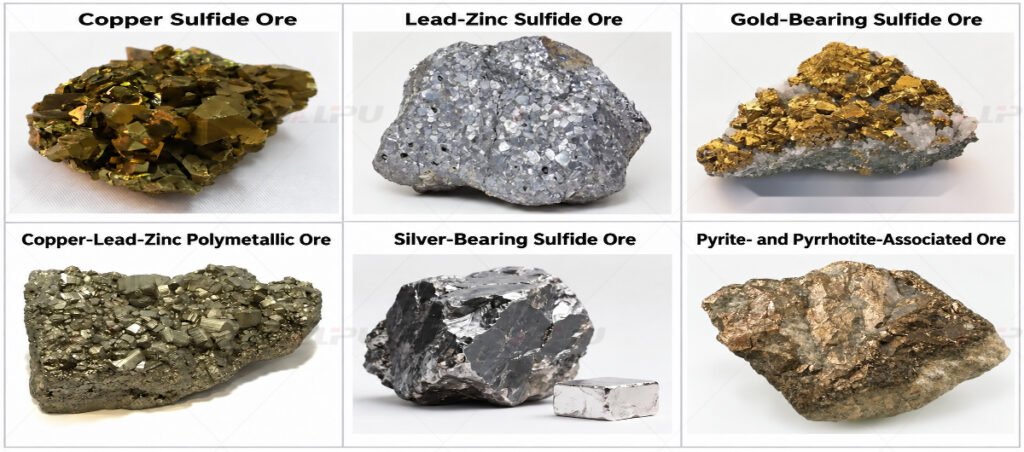
Typical applications include:
Representative sulfide ore types considered when selecting a flotation process route
The selected circuit depends on whether the project requires a bulk concentrate, separate concentrates, or a pre-concentrate for downstream treatment.
Copper Sulfide Flotation
Copper sulfide ore is commonly ground to the liberation size, conditioned with suitable reagents, and processed through roughing, scavenging, and cleaning stages to produce copper concentrate.
Lead-Zinc Flotation
Lead-zinc ores may use sequential flotation, typically recovering lead minerals first and zinc minerals in a later circuit. The circuit arrangement is defined by mineral association and concentrate-quality requirements.
Gold-Bearing Sulfide Flotation
For gold associated with sulfide minerals, flotation can recover a sulfide-rich concentrate for downstream treatment. Depending on testwork, this may be evaluated together with gold processing plant solutions.
Polymetallic Sulfide Flotation
Copper, lead, zinc, silver, and gold may occur together in polymetallic ores. Selective separation, bulk flotation, or a combined route may be applied according to test results and saleable concentrate requirements.
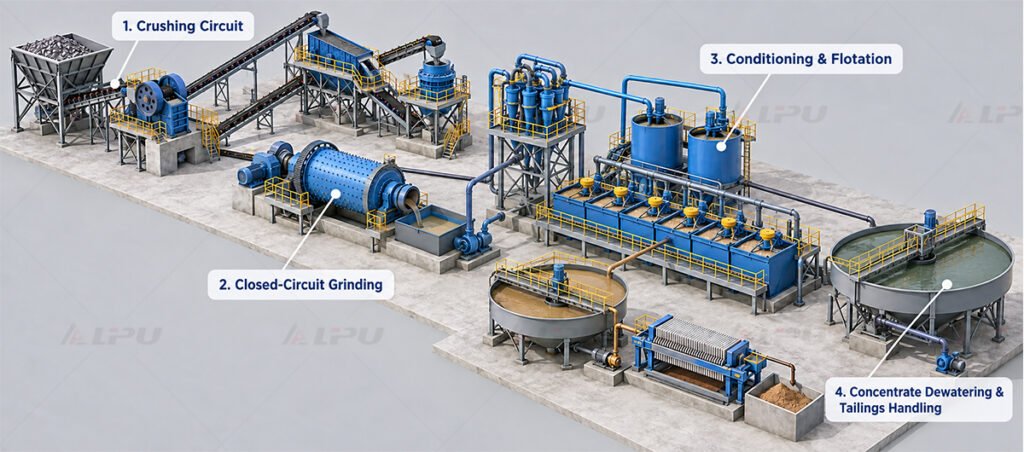
The flowsheet is configured around ore behavior rather than a fixed equipment sequence. Testwork determines the required grinding fineness, reagent conditions, cell volume, circuit stages, and recycle streams.
Crushing, Grinding and Classification
Run-of-mine ore is reduced through primary crushing, secondary crushing, and screening as required. The crushing circuit prepares a controlled feed size for grinding.
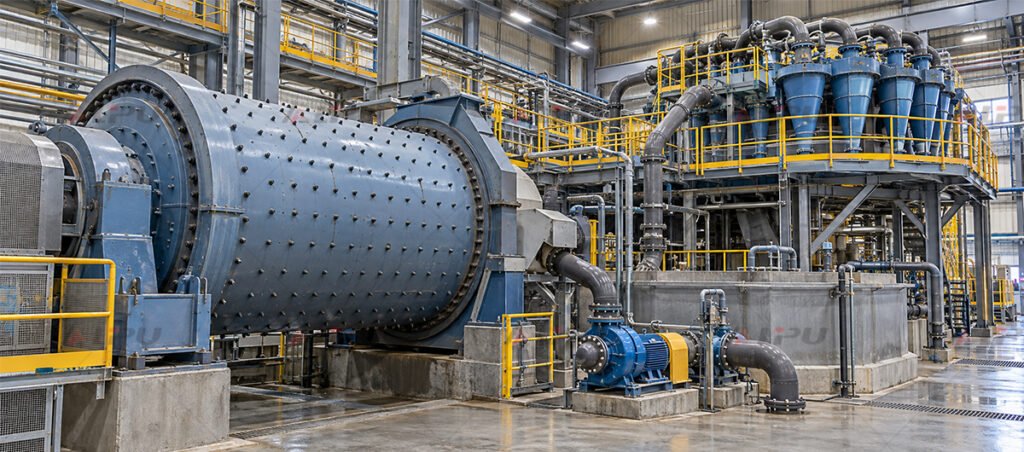
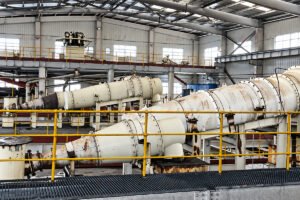
Closed-circuit grinding and classification prepare sulfide minerals for flotation
Grinding is normally carried out in a ball mill with a hydrocyclone cluster or spiral classifier. Classifier overflow proceeds to flotation at the selected particle size, while coarse material returns to the mill for further grinding.
A closed grinding circuit supports stable flotation feed and helps avoid unnecessary overgrinding.
Conditioning and Flotation Circuit Design
Before flotation, the classified slurry enters an agitation tank for reagent conditioning. Collectors, frothers, pH modifiers, and depressants are selected according to mineralogy and testwork.
The flotation circuit may include:
Rougher flotation for primary mineral recovery
Scavenger flotation to recover remaining valuable sulfides
Cleaner flotation to improve concentrate grade
Recleaner stages where higher concentrate quality is required
Middlings recycle where suitable for the selected circuit
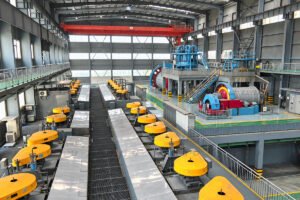
Flotation machines are selected according to capacity, flotation stage, slurry conditions, aeration requirements, and the overall circuit arrangement.
Concentrate Dewatering and Handling
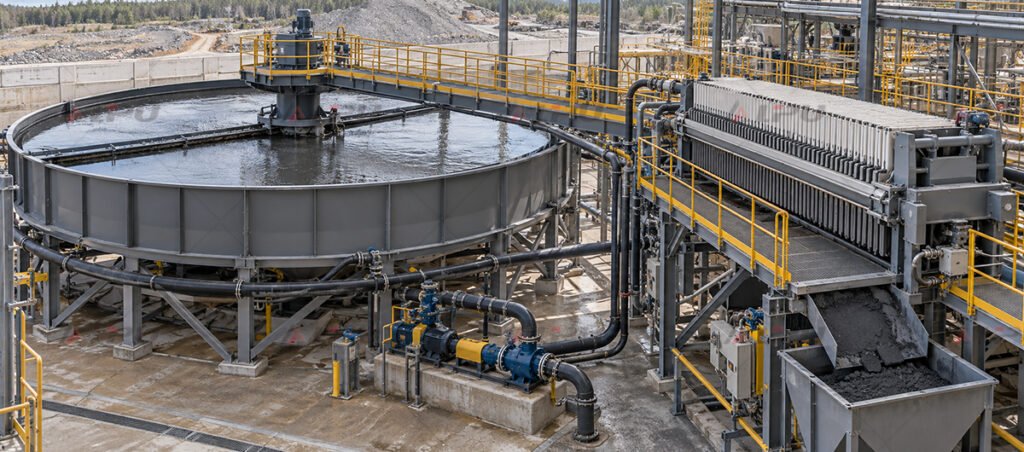
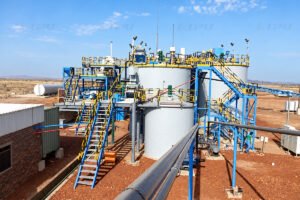
Thickening and filtration reduce concentrate moisture for handling or downstream treatment
Flotation concentrate is commonly thickened before filtration. A concentrate thickener increases slurry density and recovers process water, while a vacuum filter or filter press reduces moisture for transport, storage, or downstream treatment.
The final dewatering configuration depends on concentrate volume, required moisture content, and handling conditions.
Tailings Management
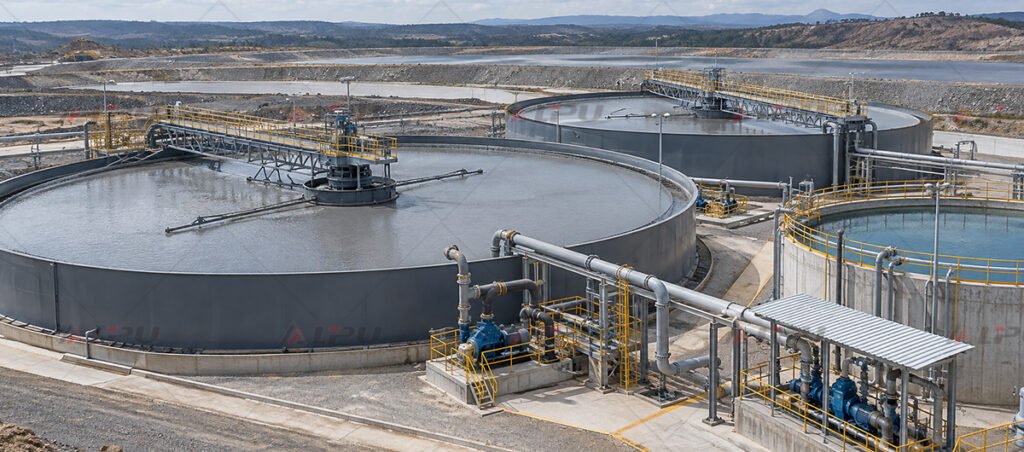
Flotation tailings can be pumped to a tailings thickener for water recovery and further treatment. The selected system may include thickening, filtration, dry stacking, or conventional tailings storage according to site conditions and project requirements.
Tailings thickening and water recovery support efficient process-water reuse and selected tailings handling
Water recovery and tailings handling should be considered during flowsheet design rather than added after the flotation circuit is selected.
Tailings thickener, slurry pumps, filter press, or tailings transport system
From Testwork to Plant Proposal
A sulfide ore flotation plant should be designed from representative ore data. LIPU can configure equipment and circuit arrangements around:
Flotation testwork helps define the selected circuit, reagent conditions, and equipment configuration
Ore mineralogy and oxidation condition
Valuable mineral association and liberation size
Flotation testwork results
Target concentrate products and quality
Required plant capacity
Water availability and site conditions
Tailings management requirements
Local power, transport, and installation conditions
Why Work With LIPU
LIPU provides equipment matching and plant configuration for crushing, grinding, classification, flotation, thickening, filtration, and related mineral-processing stages.
The objective is to match the process route to the ore and project requirements—not to force every project into a standard flowsheet.
Request a Sulfide Ore Flotation Plant Proposal
Send your ore information, target capacity, mineral analysis, flotation test data, and concentrate requirements. Our team can help develop an appropriate sulfide ore flotation flowsheet and equipment configuration.
Frequently Asked Questions
What sulfide ores can be processed by flotation?
Flotation is commonly used for copper, lead-zinc, gold-bearing, silver-bearing, and polymetallic sulfide ores. Suitability depends on mineralogy, liberation, and flotation response.
Is a fixed recovery rate available for every sulfide ore?
No. Recovery and concentrate grade depend on ore characteristics, grinding size, reagent conditions, circuit design, and operating control. Representative testwork is required for reliable targets.
Can LIPU provide separate lead and zinc concentrates?
Where mineralogy and testwork support selective flotation, the circuit can be configured for separate lead and zinc concentrate production.
Is a hydrocyclone always required?
Not always. Hydrocyclones are common in closed-circuit grinding, while spiral classifiers may suit some plant configurations. The choice depends on capacity, particle-size control, and project requirements.
Can sulfide flotation concentrate be treated further?
Yes. Depending on the concentrate and project objective, it may be filtered for sale, smelted by a third party, or evaluated for downstream treatment.