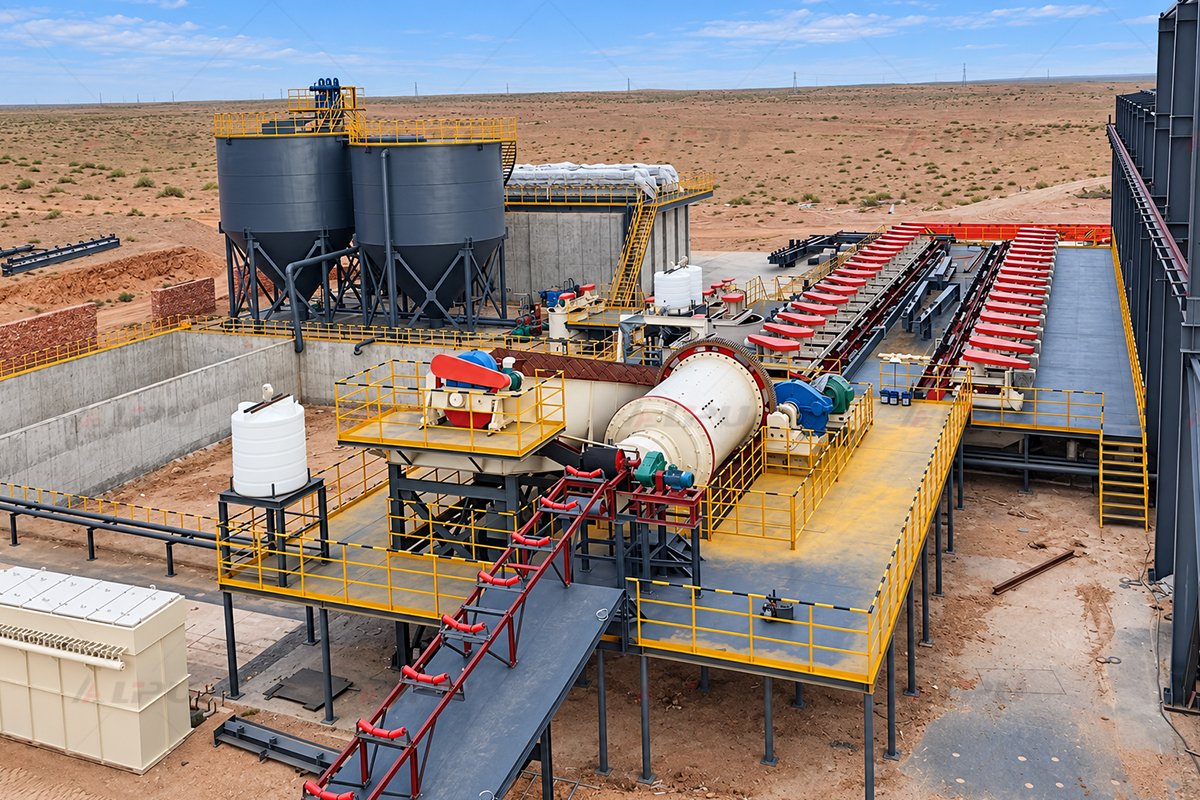
LIPU provides crushing, grinding, gravity separation, flotation and supporting equipment for tungsten ore beneficiation.Processing routes are selected for wolframite, scheelite or mixed ores, based on mineral composition, recovery tests and concentrate requirements.
Send ore analysis and capacity to discuss your plant
Two Tungsten Minerals, Two Different Starting Points
Wolframite and scheelite are the main minerals recovered commercially for tungsten production. Both are dense minerals, but their separation behavior differs.
Identifying the mineral is the first step. The next is understanding how it occurs in the ore: as coarse grains that can be recovered early, or as fine particles locked in surrounding rock.
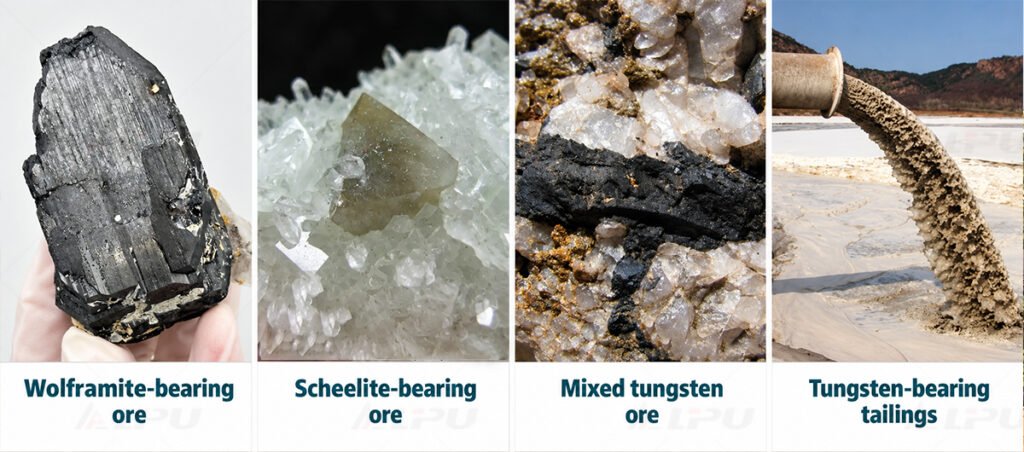
Different tungsten-bearing materials need different recovery strategies
Ore type
Main processing opportunity
What needs attention
Wolframite-bearing ore
Gravity recovery, with magnetic separation considered for suitable cleaning duties
Fine-particle losses and separation from other heavy minerals
Scheelite-bearing ore
Gravity recovery where liberation allows, or flotation for suitable finer feeds
Separation from calcium-bearing minerals and other impurities
Mixed tungsten ore
A combined route that accounts for both minerals
Different responses to gravity, magnetic separation and flotation
Tungsten-bearing tailings
Recovery of remaining liberated tungsten
Particle size, previous processing and achievable product quality
A total tungsten assay cannot show whether the same process will recover both minerals effectively. Mineral identification and size-by-size testing help establish the practical route.
Recover Tungsten Before It Becomes Difficult-to-Catch Fines
One important challenge in tungsten processing is avoiding unnecessary production of fine material.
Crushing and grinding release tungsten minerals from waste rock. However, excessive breakage can turn recoverable grains into fine particles that are harder to collect with conventional gravity equipment.
Where testing supports it, staged grinding and recovery can remove liberated heavy minerals early. Material that still needs liberation can receive further grinding.
The objective is to release the valuable mineral without repeatedly grinding material that is already ready for separation.
This approach must be checked against actual recovery results. Simply installing more recovery stages does not guarantee better performance.
Build the Wolframite Circuit Around Gravity Recovery
For many wolframite ores, gravity separation provides the main recovery route.
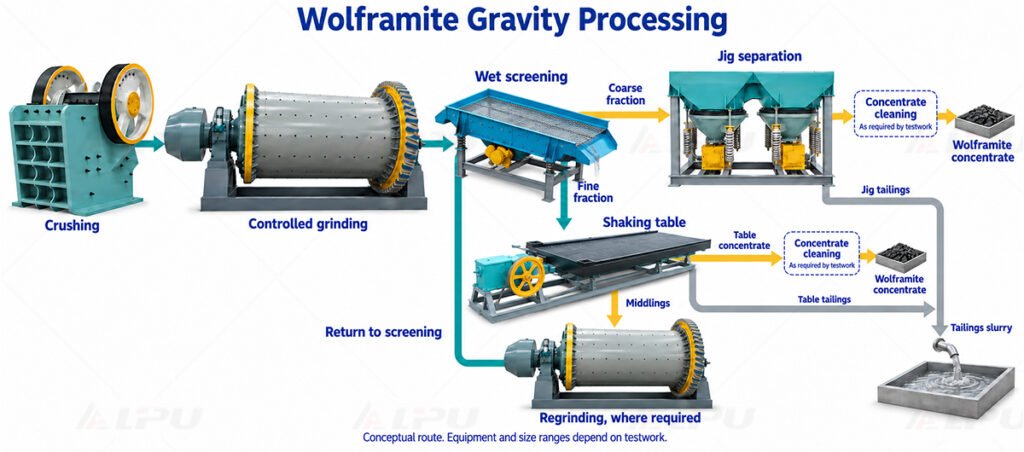
After crushing and controlled grinding, the ore is classified into suitable size fractions. Each fraction can then receive an appropriate gravity treatment, rather than sending a wide range of particle sizes to the same machine.
Recover liberated wolframite through staged gravity separation
Coarser material
Jigs may be evaluated for recovering sufficiently liberated coarse heavy minerals. Consistent feed and a controlled size range help maintain useful separation.
Finer material
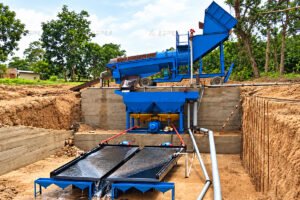
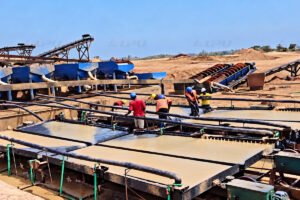
Shaking tables and other suitable gravity equipment can recover or clean finer heavy-mineral fractions. Feed rate, water flow and particle size all influence the result.
Intermediate products
Middlings may contain tungsten minerals still attached to waste rock. Selective regrinding and retreatment can be considered after checking their composition.
The gravity product is often a heavy-mineral concentrate rather than a finished saleable product. Further cleaning may be needed to remove sulfides, iron-bearing minerals or other heavy minerals.
Scheelite Flotation Needs More Than Good Recovery
Scheelite can respond to gravity separation when sufficiently liberated at a suitable size. Finer or closely intergrown scheelite may require flotation.
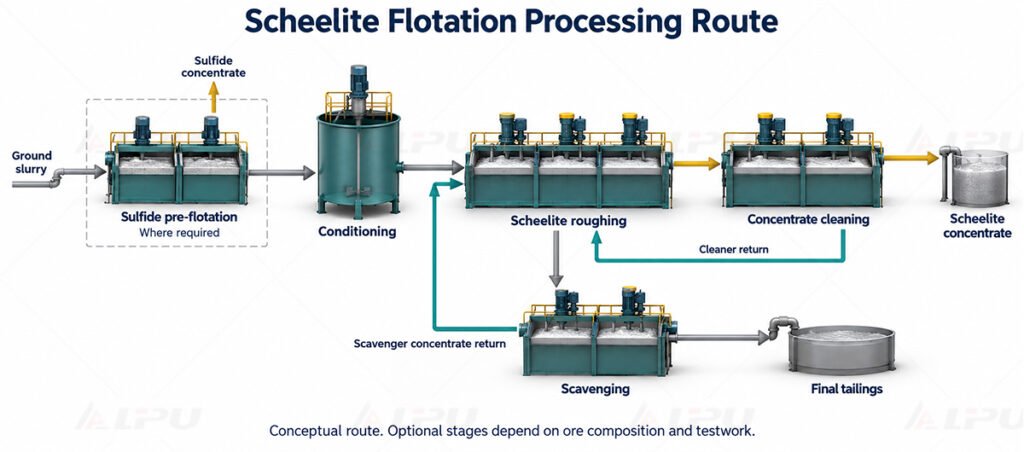
The ground slurry is conditioned before flotation. Roughing recovers the valuable mineral, while subsequent cleaning stages reduce unwanted material in the concentrate.
Where interfering sulfide minerals are present, a separate sulfide flotation stage may be evaluated before scheelite flotation.
The central challenge is selectivity. Minerals associated with scheelite, including calcite and fluorite, can be difficult to separate from it.
More froth does not necessarily mean a better tungsten concentrate. A successful circuit must recover scheelite while limiting the unwanted minerals that report to the product.
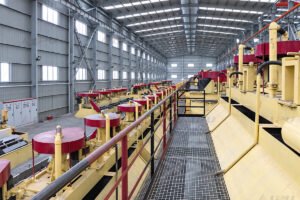
LIPU flotation machines can be arranged for different flotation duties. Reagent conditions and circuit stages should follow ore testing.
Use Magnetic Separation Where It Adds Value
Magnetic separation has different roles in different tungsten circuits.
For wolframite-bearing material, suitable high-intensity magnetic separation may help separate responsive wolframite from less magnetic minerals.
For scheelite circuits, magnetic separation is more commonly evaluated for removing responsive impurities rather than collecting scheelite itself.
The important question is what enters each magnetic and non-magnetic stream.
Before selecting a separator, testing should establish:
Which minerals respond to the magnetic field.
Whether tungsten follows the intended product.
What particle size gives useful separation.
Whether wet or dry treatment fits the surrounding process.
Magnetic separation should solve a defined separation problem. It should not be added as a standard stage simply because the ore contains tungsten.
Find Out Where Tungsten Is Being Lost
A concentrate sample shows product quality. Tailings and intermediate streams show what the plant is missing.
Useful checks include:
Where losses occur
Possible issue
What to investigate
Coarse tailings
Tungsten remains locked in waste rock
Liberation and selective regrinding
Fine tailings
Particles are difficult to recover with the existing equipment
Fine-particle recovery options and classification
Slimes
Valuable minerals leave with very fine material
Tungsten distribution before rejecting slimes
Gravity middlings
Heavy minerals remain mixed or incompletely liberated
Cleaning, regrinding and retreatment
Flotation tailings
Inadequate liberation or unsuitable operating conditions
Grind size, conditioning and flotation response
Cleaning rejects
Tungsten is lost while removing impurities
The balance between product grade and recovery
Check tungsten content before treating a stream as waste.
This is especially important for fine material. Removing slimes may simplify operation, but it can also discard valuable tungsten.
For an existing plant, comparing tungsten distribution across size fractions can help identify whether the priority is better liberation, improved classification or a different recovery method.
Make a Concentrate the Buyer Can Accept
The final product target should be agreed before the plant configuration is finalized.
Tungsten concentrate quality is commonly expressed as WO₃ content. However, the acceptable product also depends on mineral type, impurities, moisture and the receiving process.
Discuss the following with the intended buyer:
Minimum WO₃ grade.
Limits for arsenic, sulfur, phosphorus, molybdenum and other relevant impurities.
Moisture and packaging requirements.
Acceptance of wolframite, scheelite or a mixed concentrate.
Sampling and settlement procedures.
A higher concentrate grade may come at the cost of losing more tungsten during cleaning. Testwork should evaluate both grade and recovery.
Where tin or other valuable minerals occur with tungsten, their recovery and separation should be assessed rather than assumed.
Prepare Concentrate for Dispatch and Manage the Water
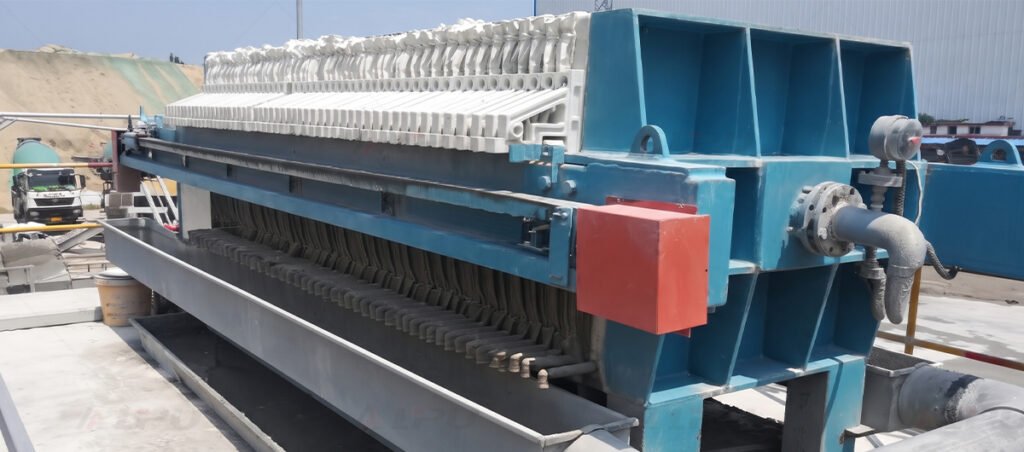
The concentrate is thickened where necessary and filtered to reach the moisture condition required for storage or dispatch. Equipment selection depends on the material’s settling and filtration behavior.
Filtration prepares concentrate for handling and dispatch
Thickening and filtration remove water. They do not replace the mineral cleaning stages needed to remove solid impurities.
Gravity concentrates and flotation concentrates can behave differently during dewatering, so the equipment should be selected for the actual product.
Collected water may be suitable for process reuse after its quality has been assessed. Fine solids and residual reagents can affect operation.
Tailings need a separate handling and water-management arrangement. Additional concentrate drying is included only when the product specification or subsequent process requires it.
Match Each Machine to the Tungsten Recovery Duty
Equipment should be selected as part of a connected circuit.
A jaw crusher can provide primary size reduction. Subsequent crushing and screening prepare material for the selected recovery route.
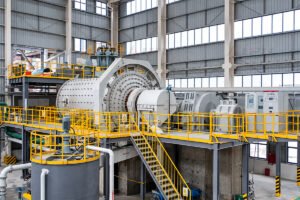
A ball mill can operate with classification equipment where grinding is needed. Its duty should follow liberation requirements and the need to control fines.
Circuit section
Equipment to evaluate
Main selection consideration
Crushing and screening
Crushers, feeders and screens
Feed size, rock properties and unnecessary fines
Grinding and classification
Mills, screens, classifiers or hydrocyclones
Liberation and control of the recovery feed size
Gravity recovery
Jigs, shaking tables and suitable gravity concentrators
Particle size, mineral density and feed consistency
Flotation
Conditioning tanks and flotation cells
Mineral selectivity and required circuit duties
Concentrate cleaning
Gravity, magnetic or flotation equipment
The impurities that must be separated
Dewatering
Thickeners and filters
Settling rate, filtration behavior and moisture target
Not every tungsten plant requires every equipment type. A simpler circuit can be preferable when it meets the recovery and product requirements.
Start with the Information That Changes the Design
To discuss a tungsten processing plant, provide:
Whether the ore contains wolframite, scheelite or both.
Feed analysis, clearly identifying whether values are reported as W or WO₃.
Required capacity and operating hours.
Feed size and available mineralogical information.
Associated minerals and impurity analysis.
Previous gravity, magnetic separation or flotation results.
Target concentrate specification.
Site water, power and space conditions.
For an existing plant, samples and operating data from concentrate, tailings and middlings can help identify improvement opportunities.
Contact LIPU with your ore information to discuss suitable equipment and process options.
Frequently Asked Questions
Is gravity separation suitable for every tungsten ore?
Both major tungsten minerals have high density, making gravity separation worth evaluating. Its effectiveness still depends on liberation, particle size and the other minerals present.
Does scheelite always require flotation?
No. Suitable liberated scheelite may be recovered by gravity methods. Flotation can become important for finer or more complex feeds, depending on test results.
Can magnetic separation recover wolframite and scheelite in the same way?
No. Their magnetic responses differ. Magnetic separation may recover wolframite under suitable conditions or remove responsive impurities from a scheelite circuit.
What concentrate grade and recovery can be guaranteed?
A credible performance target requires representative ore testing, an agreed feed range and a defined product specification. Results from another project should not be used as a guarantee.
Can old tungsten tailings be processed again?
Potentially. The remaining tungsten content, mineral liberation, particle size and achievable product quality must be evaluated before selecting a retreatment circuit.
Send your ore analysis and capacity to discuss your tungsten processing plant.