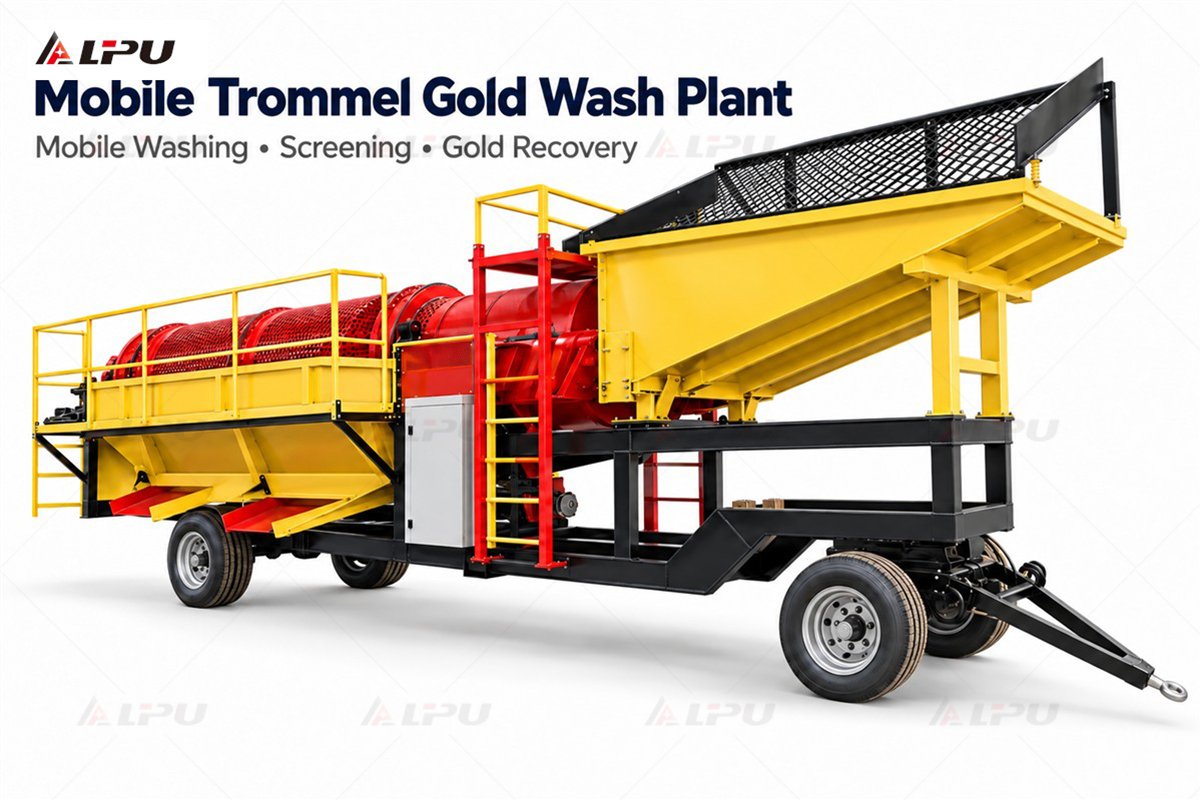
The Lipu Mobile Trommel Gold Wash Plant is an integrated solution for washing, screening and recovering gold from alluvial and placer deposits. Built on a mobile chassis, the plant combines a feed hopper, trommel screen, water-spray system, sluice box and optional gravity-recovery equipment in one compact unit.
It is designed for projects that need practical gold washing, flexible site relocation and fast deployment without the civil work required for a fixed plant.
Capacity: 1–200 TPH
Feed size: up to 100 mm, depending on configuration
Application: alluvial gold, placer gold, river sand, gold-bearing gravel and low-clay mineral feed
Available modules: trommel screen, water pump, sluice box, concentrator, shaking table and conveyors
A Mobile Trommel Gold Wash Plant is a movable mineral-processing unit for separating gold-bearing sand, gravel and alluvial material. Raw material enters the feed hopper, is washed and screened inside the rotating trommel, then flows to a sluice box or optional gravity concentrator for gold recovery.
The wheel-mounted or towable design helps operators move the plant between riverbeds, alluvial zones and temporary mining areas. It is a practical choice for exploration, test mining and small- to medium-scale placer gold projects.
Typical Applications
The Mobile Trommel Gold Wash Plant is suitable for:
Alluvial and placer gold deposits
Riverbed and floodplain gold recovery
Gold-bearing sand and gravel
Small- and medium-scale mobile gold washing projects
Exploration, test mining and pilot production
Feed requiring washing, screening and initial gravity concentration
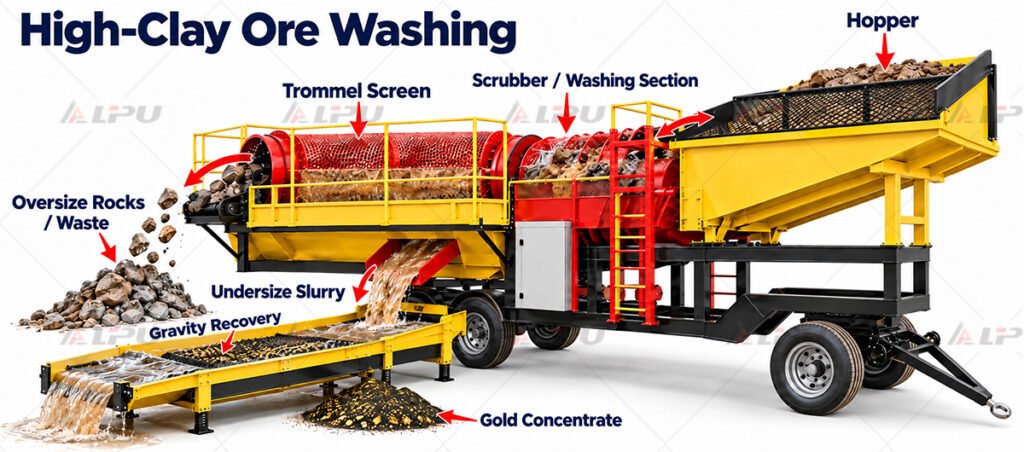
For feed with high clay content, sticky material or a high percentage of fines, the plant can be configured with a scrubber, enhanced washing section or additional classification equipment.
As a modular front-end washing unit, the plant can integrate into a complete alluvial gold processing plant with concentrate finishing and tailings management.
How Does a Mobile Trommel Gold Wash Plant Work?
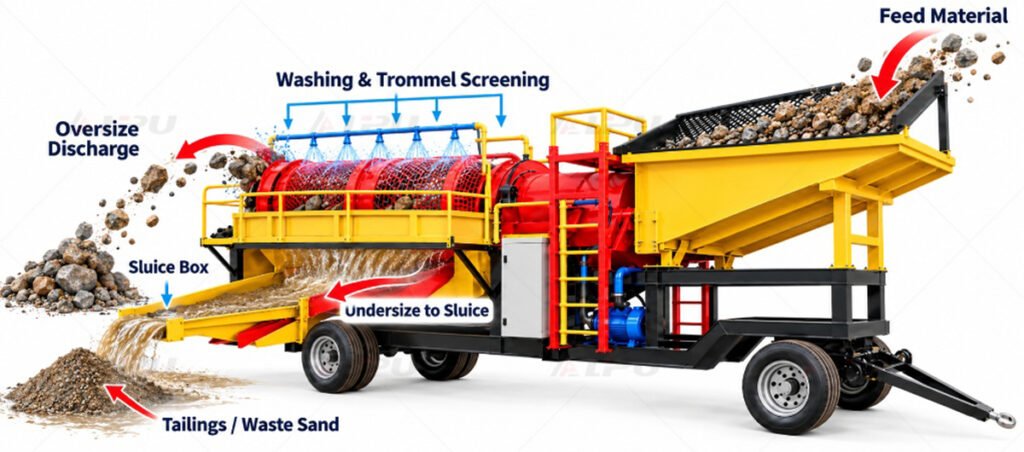
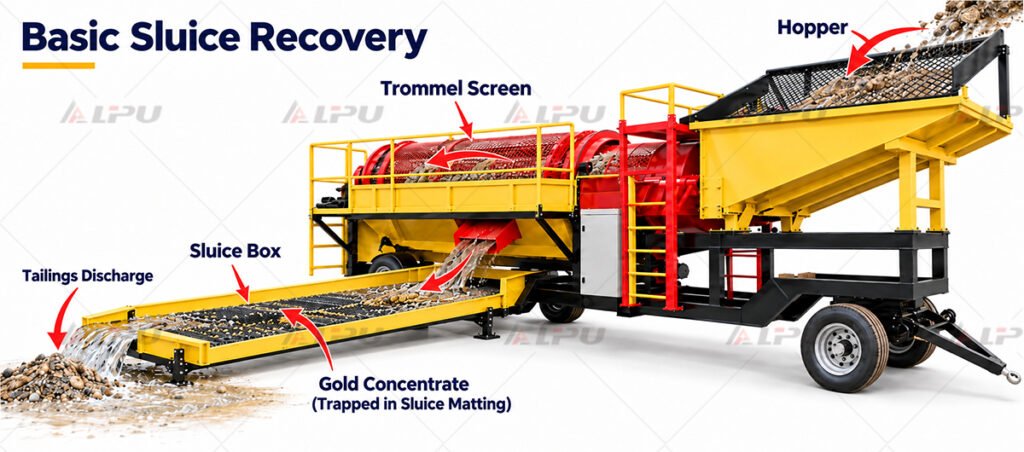
Gold-bearing material is loaded into the hopper by an excavator, loader or manual feed arrangement. Water sprays loosen soil, wash fine material and guide the feed into the trommel drum.
As the drum rotates at a slight incline, material is lifted, turned and washed across the screen surface. Fine material passes through the selected screen openings, while oversize rock leaves through the end discharge.
Operating process flow of the mobile trommel gold wash plant
The screened fraction flows to a sluice box or optional gravity-recovery equipment. Dense gold-bearing minerals are retained for further cleaning, while lighter material is discharged as tailings.
Main Components
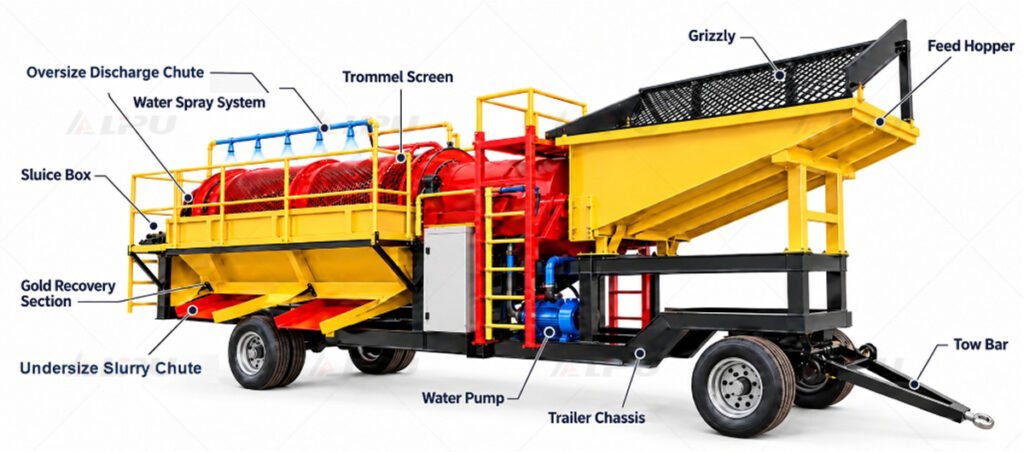
Key structural components of the mobile trommel gold wash plant
Feed Hopper and Grizzly
The feed hopper receives raw material from site equipment. An optional grizzly removes large rocks before they enter the washing and screening stage.
Trommel Screen
The rotating trommel performs washing, screening and oversize separation. Drum diameter, length and screen aperture are selected according to required capacity, feed size and cut size.
Water-Spray System
Water sprays help break up loose soil, wash material through the screen openings and reduce screen blockage. Pump capacity and spray layout can be matched to local water conditions.
Sluice Box
The sluice box captures gold-bearing heavy minerals after screening. Riffle design, recovery mat type and sluice length can be selected according to gold particle size and recovery requirements.
Optional Gravity-Recovery Equipment
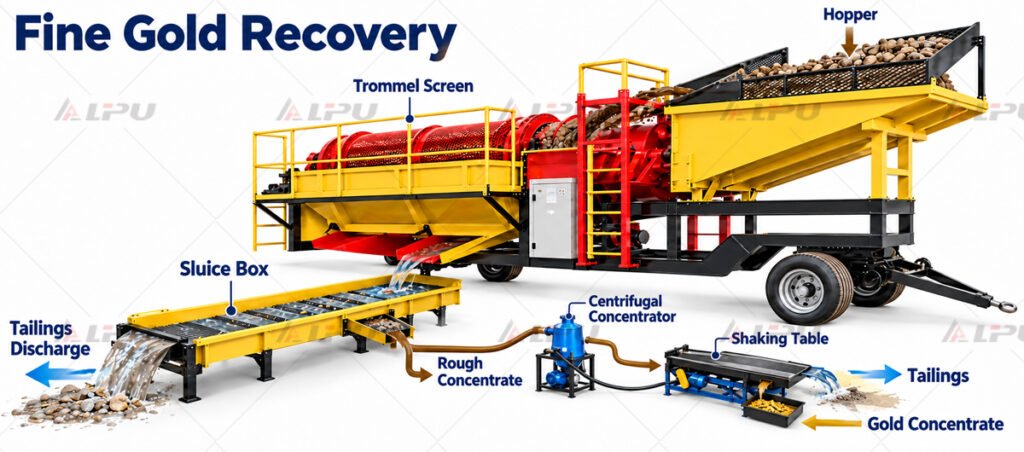
The plant can be configured with additional equipment for improved concentrate cleaning or fine-gold recovery:
Centrifugal concentrator
Shaking table
Jig separator
Vibrating sluice
Gold recovery mat
Concentrate-cleaning equipment
Mobile Chassis and Support Frame
The integrated frame can be supplied in wheel-mounted, skid-mounted or fixed-frame configurations. Stabilizer jacks support the plant during operation and help simplify relocation.
Standard Mobile Trommel Models
The following models are typical configurations. Final drum size, screen aperture, water demand and power source can be customized to match feed characteristics, clay content and project capacity.
Model
Capacity (TPH)
Drum Size (Dia. × Length)
Screen Mesh Options
Water Demand (m³/h)
Power Source / Power
Chassis Type
LPT-20
10–20
Φ800 × 2000 mm
2–10 mm, single or double layer
30–50
7.5 kW or diesel generator
Skid or single-axle wheels
LPT-50
30–50
Φ1000 × 3000 mm
2–12 mm
60–100
15 kW or diesel generator
Dual-axle wheels with tow bar
LPT-100
80–100
Φ1200 × 4000 mm
2–15 mm
120–180
22 kW or 50 kVA genset
Heavy-duty mobile trailer
LPT-150
120–150
Φ1500 × 4500 mm
2–20 mm
180–250
37 kW or 75 kVA genset
Heavy-duty mobile trailer
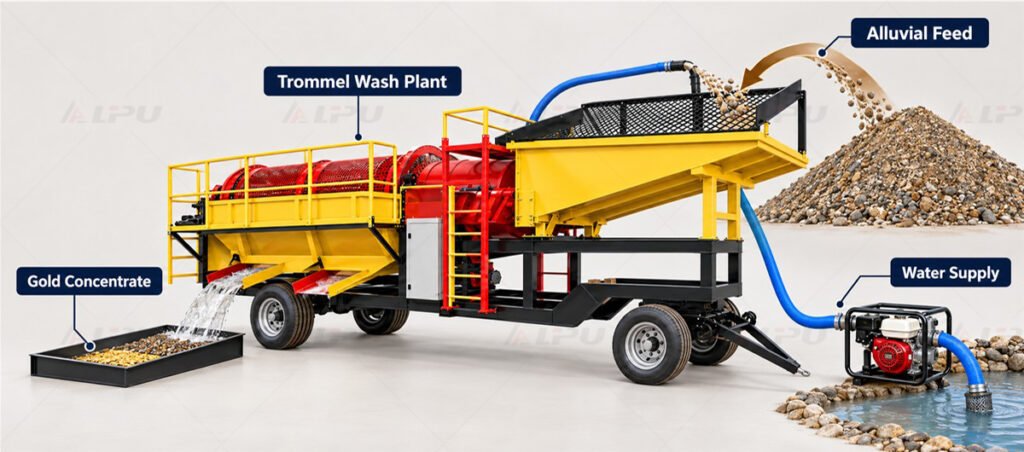
Mobile Trommel Gold Wash Plant Configuration
The plant combines feed handling, water supply, trommel washing and sluice recovery in one mobile system for alluvial gold operations.
Integrated mobile configuration for alluvial gold washing and recovery
Why Choose a Mobile Trommel Gold Wash Plant?
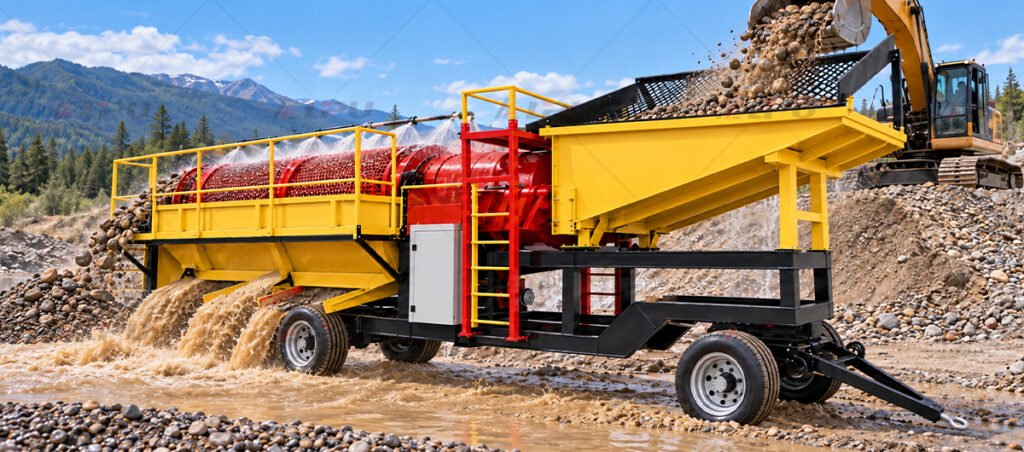
Mobile trommel gold wash plant processing alluvial gravel on site
Easier Site Relocation
The integrated design is suitable for projects that move between riverbeds, alluvial zones or temporary mining locations.
Washing and Screening in One Stage
The trommel combines material washing, size separation and oversize removal in a compact processing unit.
Flexible Gold-Recovery Configuration
The plant can operate with a simple sluice-box circuit or include centrifugal concentration, jigs or shaking tables where finer gold recovery is required.
Adjustable for Different Feed Conditions
Screen mesh, drum dimensions, spray pressure, hopper design and recovery modules can be selected around feed size, clay content and required throughput.
Reduced Civil-Work Requirements
Compared with a fixed wash plant, a mobile package usually requires less permanent foundation work and can be deployed more quickly.
High-clay ore washing and gravity recovery configuration
Suitable for sticky or agglomerated feed that requires stronger washing before screening.
Capacity-Based Configuration Reference
Capacity (TPH)
Trommel Size
Trommel Motor Power
Recommended Pump
Overall Dimensions
Suggested Generator
1–5 TPH
0.5 × 1.9 m
1.5 kW
1.5 in / 4 HP
2500 × 1000 × 1200 mm
Diesel engine or electric motor
5–10 TPH
0.8 × 1.8 m
3.0 kW
2.0 in / 5.5 kW
4000 × 1250 × 2200 mm
20 kW
20–30 TPH
1.2 × 2.8 m
5.5 kW
3.0 in / 15 kW
5200 × 2000 × 2500 mm
50 kW
50 TPH
1.3 × 4.0 m
7.5 kW
4.0 in / 22 kW
6800 × 2200 × 2800 mm
65 kW
100–150 TPH
1.5 × 4.5 m
15 kW
4.0 in / 2 × 22 kW
10800 × 2200 × 3000 mm
100 kW
150–200 TPH
1.8 × 5.0 m
18.5 kW
4.0 in / 3 × 22 kW
11900 × 2300 × 3500 mm
200 kW
Final configuration should be selected according to feed size, clay content, gold particle size, water availability and local power conditions.
Customization Available
Lipu can configure the Mobile Trommel Gold Wash Plant around your project requirements, including:
Trommel drum diameter, length and screen opening
Feed hopper and grizzly size
Water pump and spray arrangement
Sluice box dimensions and recovery mat type
Centrifugal concentrator, jig or shaking table
Oversize and tailings conveyors
Wheel-mounted, skid-mounted or fixed-frame design
Diesel generator or electric-motor power supply
How to Select the Right Plant
To recommend a suitable Mobile Trommel Gold Wash Plant, please provide:
Required processing capacity
Maximum feed size
Clay content and material moisture
Gold particle-size distribution
Available water supply
Available power supply
Required mobility method
Preferred recovery equipment
Site photographs or process information, if available
FAQ
What material is this plant designed for?
It is mainly designed for alluvial and placer gold deposits, including river sand, gold-bearing gravel and loose soil containing recoverable free gold.
Can the plant recover fine gold?
Yes. A sluice box can be combined with a centrifugal concentrator, shaking table or other gravity-recovery equipment when fine-gold recovery is required.
Can it process clay-rich material?
Yes. However, clay content should be assessed first. A scrubber, stronger spray system or modified washing section may be recommended for sticky feed.
How long does installation take?
Installation time depends on plant configuration, site preparation, power and water connections. The integrated mobile design helps shorten deployment compared with a fixed plant.
Can the trommel screen mesh be customized?
Yes. Screen aperture and screen-section arrangement can be selected according to the required separation size and feed condition.
Can this plant process hard rock gold ore? It is mainly designed for alluvial and placer deposits. For primary lode ore requiring crushing and grinding, see our hard rock gold mining process.