
How Classification Controls a Closed-Circuit Ball Mill
1855Learn how classification, coarse-particle return and product removal control grinding performance in a closed-circuit ball mill system.
View detailsSearch the whole station
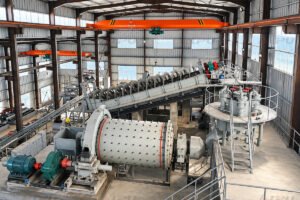
Learn how classification, coarse-particle return and product removal control grinding performance in a closed-circuit ball mill system.
View details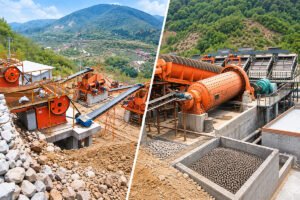
Learn how ore properties, feed size, liberation and separation requirements determine crushing and grinding circuit design in mineral processing.
View details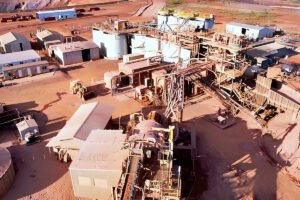
Learn how mineralogy, liberation, density, magnetic response and surface properties determine mineral separation strategy in ore processing.
View details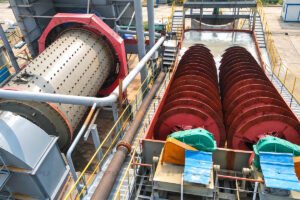
Learn how metallurgical testwork is converted into grinding, classification, separation, recycle and equipment decisions for mineral processing flowsheet development.
View details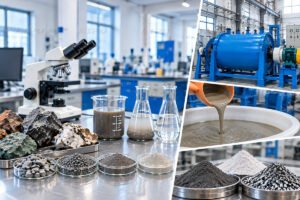
Learn which metallurgical tests are needed before mineral processing flowsheet design, including grinding, gravity, magnetic and flotation testwork.
View details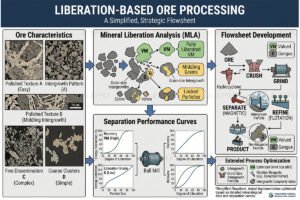
Learn what mineral liberation means, how it relates to particle size and grinding, and why liberation matters for mineral separation and flowsheet design.
View details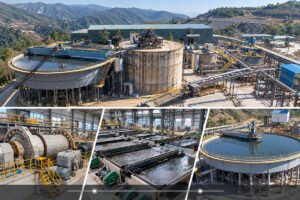
Learn what ore, mineralogical, metallurgical, production and site data engineers need before designing a mineral processing flowsheet.
View details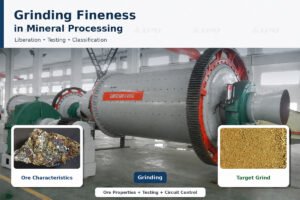
Learn how mineral liberation, ore texture, particle size and downstream separation requirements determine the right grinding fineness for mineral processing.
View details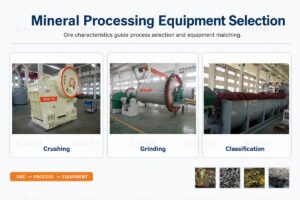
Learn how ore mineralogy, hardness, feed size, liberation and separation properties determine mineral processing equipment and circuit selection.
View details
Intermittent ball mill for batch grinding of chemical and mineral materials, providing flexible control of grinding time and product fineness.
View details
We provide a variety of mining and processing equipment, including feeders, rock crushers, grinders, classifying and screening machines, washing machines, gravity separators, flotation machines, magnetic separators, electric separators, dewatering equipment and laboratory mineral processing equipment.
We will reply to you within 24 hours