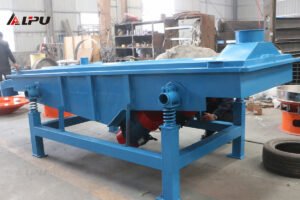
LIPU shaking tables are gravity concentration machines designed for separating fine mineral particles according to differences in density.
The table combines reciprocating deck motion, transverse water flow and an adjustable deck slope to separate valuable heavy minerals from lighter gangue.
Shaking tables are widely used in gold, tin, tungsten, chromite, manganese, tantalum, niobium and other mineral processing applications.
A shaking table is a gravity separation machine used to concentrate minerals with different specific gravities.
Shaking Table for Gravity Separation
Shaking table mineral processing
The ore slurry is distributed across an inclined riffled deck.
As the deck moves back and forth, particles are stratified according to density and particle size.
At the same time, water flows across the deck surface.
Heavier particles tend to remain closer to the riffles and move toward the concentrate side, while lighter particles are washed toward the tailings side.
This allows the shaking table to produce separate concentrate, middlings and tailings streams.
How Does a Shaking Table Work?
The shaking table uses three main operating effects:
Working Principle of the Shaker Table
Reciprocating deck motion
Transverse water flow
Adjustable deck inclination
During operation:
Mineral slurry enters the feed side of the table.
Water spreads across the deck surface.
The reciprocating motion causes particles to stratify.
Dense particles settle into the lower layers near the riffles.
Lighter particles remain closer to the upper layer.
The water flow moves lighter particles toward the tailings side.
Heavier particles gradually migrate toward the concentrate discharge area.
Intermediate-density particles are collected as middlings.
The final separation pattern depends on mineral density, particle size, feed rate, water flow and deck adjustment.
Main Components
A typical shaking table includes:
Main structural components of a shaking table
Riffled deck
Head motion mechanism
Feed box
Water distribution system
Support frame
Deck slope adjustment device
Concentrate discharge area
Middlings discharge area
Tailings discharge area
Drive motor
The deck surface and riffle configuration are selected according to feed particle size and separation requirements.
Shaking Table Deck Types
Different deck designs are used for different particle-size ranges.
Comparison of coarse sand, fine sand and slime decks for different feed particle sizes
Coarse Sand Deck
The coarse sand deck is designed for relatively coarse mineral particles.
It is commonly used where the feed contains larger particles and a stronger riffle structure is required.
Fine Sand Deck
The fine sand deck is suitable for finer mineral particles.
It provides more controlled stratification and water flow for fine-grained gravity separation.
Slime Deck
The slime deck is designed for very fine mineral particles.
It uses a finer deck structure and is typically applied where the feed contains a high proportion of fine material.
Selecting the correct deck type is important because particle size directly affects stratification and separation performance.
Suitable Materials and Applications
Shaking tables are suitable for minerals that can be separated according to differences in specific gravity.
Typical heavy minerals and ores suitable for shaking table gravity separation
Typical materials include:
Gold
Tin
Tungsten
Chromite
Manganese
Tantalum
Niobium
Titanium-bearing heavy minerals
Iron-bearing minerals
Silver-bearing minerals
Lead and zinc minerals
Garnet
Coal
Other heavy mineral concentrates
Typical applications include:
Gravity concentration
Fine mineral separation
Concentrate cleaning
Middlings recovery
Tailings reprocessing
Heavy mineral concentration
Pre-concentration before further processing
Shaking tables are often installed after crushing, grinding and classification.
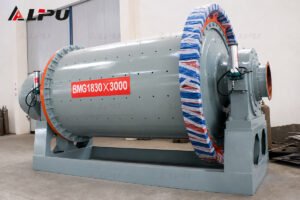
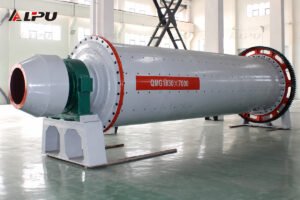
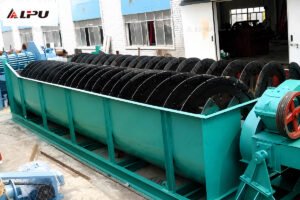
In a typical gravity concentration circuit, a Jaw Crusher reduces the raw ore size before a Ball Mill provides further grinding and mineral liberation. A Spiral Classifier can then control the particle-size range before the slurry enters the shaking table.
Shaking tables can also be used after other gravity separation stages for concentrate cleaning or final upgrading.
Concentrate, Middlings and Tailings Separation
One of the main advantages of a shaking table is the visible separation pattern formed across the deck.
During stable operation, three main product zones can usually be observed:
Concentrate
The concentrate zone contains the highest proportion of dense valuable minerals.
These particles remain closer to the riffles and move along the deck toward the concentrate discharge side.
Middlings
The middlings zone contains particles with intermediate density or partially liberated valuable minerals.
Depending on the process, middlings may be returned for regrinding or further separation.
Tailings
The tailings zone contains lighter gangue particles.
These particles are carried more strongly by the transverse water flow toward the tailings discharge side.
The position and width of these three zones can be adjusted through feed rate, water flow, stroke, frequency and deck slope.
Shaking Table Technical Parameters
LIPU provides different shaking table deck sizes for coarse sand, fine sand and slime separation.
Typical parameters include:
Model / Deck Type
Deck Size (mm)
Max. Feed Size (mm)
Capacity
Feed Density (%)
Stroke (mm)
Frequency
Motor Power (kW)
Coarse Sand Deck
4450 × 1855/1546
≤2
30–60 t/d
25–30
16–22
45–48
1.1
Fine Sand Deck
4450 × 1855/1546
≤0.5
10–20 t/d
20–25
11–16
18–53
1.1
Slime Deck
4450 × 1855/1546
≤0.15
15–25 t/d
15–25
8–16
50–57
1.1
3000 mm Deck
3000 × 1320/1100
0.1–2
0.4–1.5 t/h
10–30
6–30
210–320
1.1
2100 mm Deck
2100 × 1050/850
0.074–2
0.3–0.8 t/h
10–30
12–28
250–450
1.1
1100 mm Deck
1100 × 500/430
0.074–2
0.05–0.2 t/h
10–30
9–17
280–460
1.1
Deck length and width
Beneficiation area
Feed particle size
Feed capacity
Feed density
Stroke length
Stroke frequency
Water consumption
Deck inclination
Motor power
Different table models are available for laboratory, small-scale and industrial mineral processing applications.
The final model should be selected according to feed size, mineral density, required capacity and target recovery performance.
How to Select the Right Shaking Table
Shaking table selection should be based on the characteristics of the feed and the required separation result.
Important information includes:
Mineral type
Valuable mineral density
Gangue density
Feed particle size
Feed capacity
Feed slurry density
Required concentrate grade
Required recovery
Available water supply
Installation space
Particle Size
Particle size is one of the most important selection factors.
Coarse, fine and slime particles behave differently on the table deck.
A suitable deck type should therefore match the actual feed size distribution.
Density Difference
The greater the density difference between valuable minerals and gangue, the easier gravity separation generally becomes.
Minerals with only a small density difference may require finer feed preparation and more careful table adjustment.
Feed Preparation
Shaking tables perform best with relatively narrow and controlled particle-size ranges.
Screening or classification before the shaking table can improve separation stability.
Feed Rate
Excessive feed can overload the deck and reduce separation quality.
The feed rate should match the table size and particle-size range.
Why Choose LIPU?
LIPU Heavy Industry provides shaking tables and complete gravity separation systems for mineral processing plants.
Multi-deck shaking table slurry separation
Gravity Separation Using Spiral Chutes and Shaking Tables
Shaking table separation of fine-grained minerals
Project support can include:
Mineral test evaluation
Equipment selection
Deck type selection
Gravity separation circuit design
Crusher and grinding equipment matching
Classification equipment matching
Plant layout support
Equipment manufacturing
Factory testing
Installation guidance
Commissioning support
Spare parts supply
Technical service
Shaking tables can be integrated with crushing, grinding, classification and other gravity separation equipment as part of a complete beneficiation circuit.
Frequently Asked Questions
What minerals can a shaking table separate?
Shaking tables are commonly used for gold, tin, tungsten, chromite, manganese, tantalum, niobium and other heavy minerals.
What feed size is suitable for a shaking table?
The suitable feed size depends on the deck type. Coarse sand, fine sand and slime decks are designed for different particle-size ranges.
Can a shaking table produce concentrate and tailings in one step?
A shaking table can separate concentrate, middlings and tailings, but some ores may require multiple stages of cleaning or reprocessing to reach the required grade and recovery.
What affects shaking table separation performance?
Important factors include particle size, density difference, feed rate, slurry density, water flow, stroke, frequency and deck slope.
Can a shaking table be used after a ball mill?
Yes. Shaking tables are commonly used after grinding and classification when the mineral has been sufficiently liberated for gravity separation.