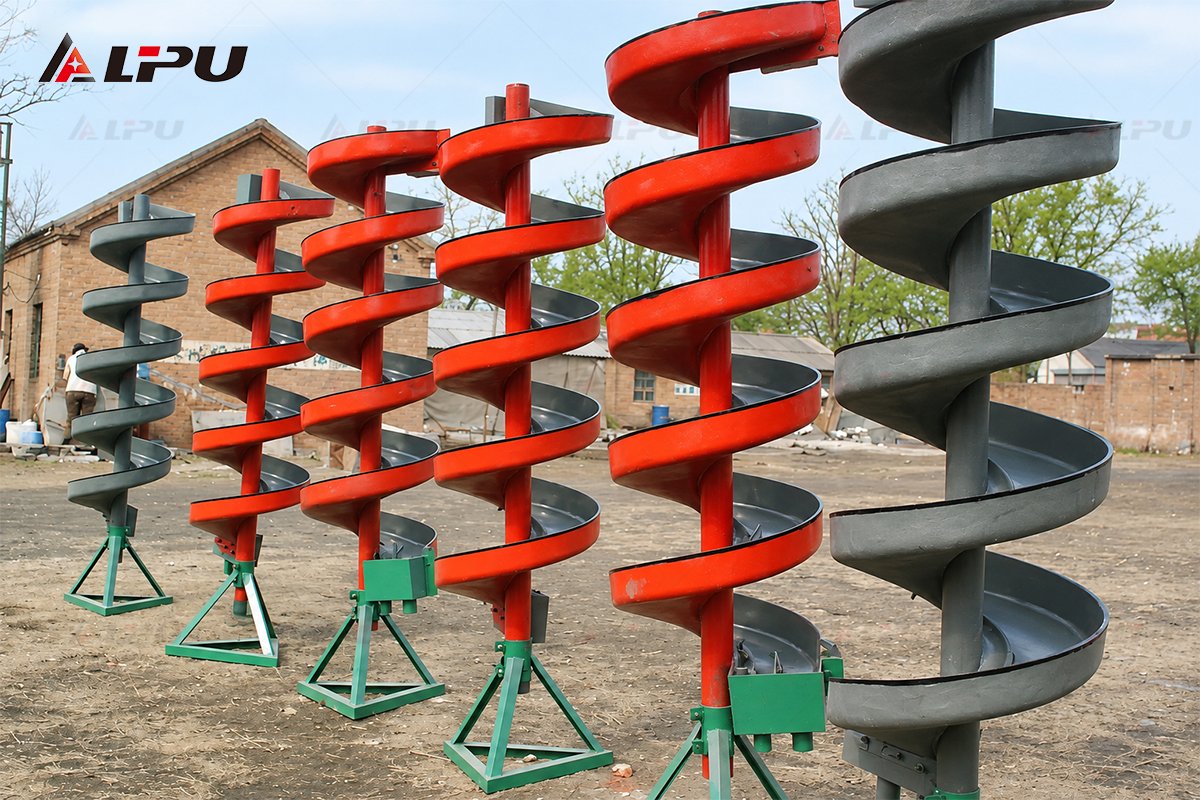
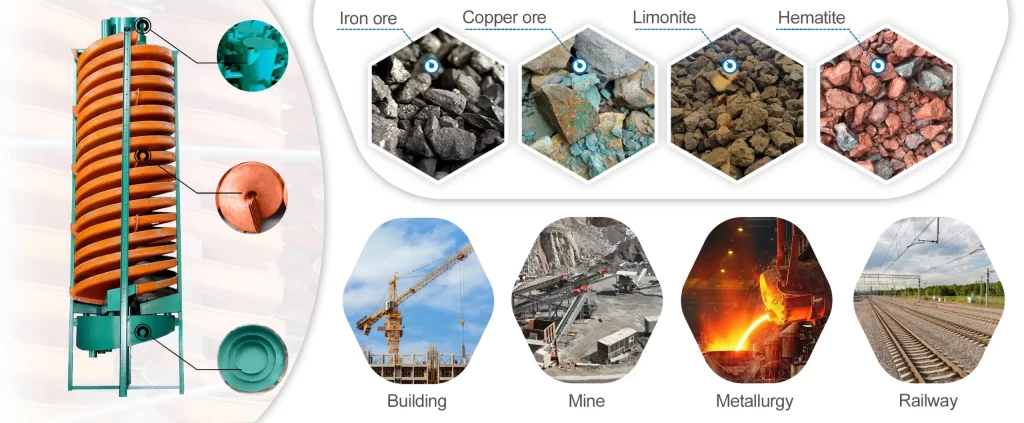
LIPU spiral chutes are continuous gravity separation equipment designed to recover heavy minerals from fine-grained ore and mineral sands. By using differences in mineral density and particle movement in flowing slurry, the spiral chute separates valuable heavy minerals from lighter gangue.
The 5LL series covers different feed sizes and processing capacities and is suitable for gold, chromite, ilmenite, zircon, rutile, tin, tungsten and other heavy-mineral applications.
Capacity: 0.15–10 t/h
Feed Size: 0.02–2 mm
Separation Method: Gravity separation
Applications: Heavy minerals, mineral sands and ore beneficiation
A spiral chute is a gravity concentrator used to separate mineral particles according to differences in density and their behavior in flowing slurry.
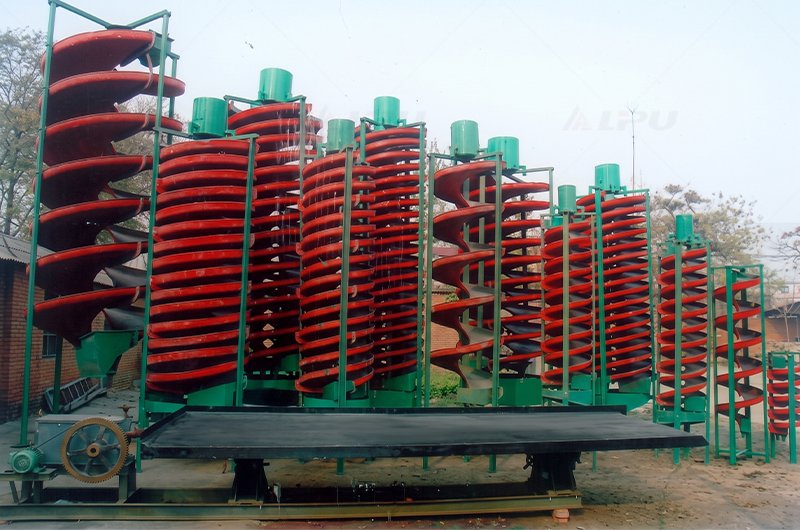
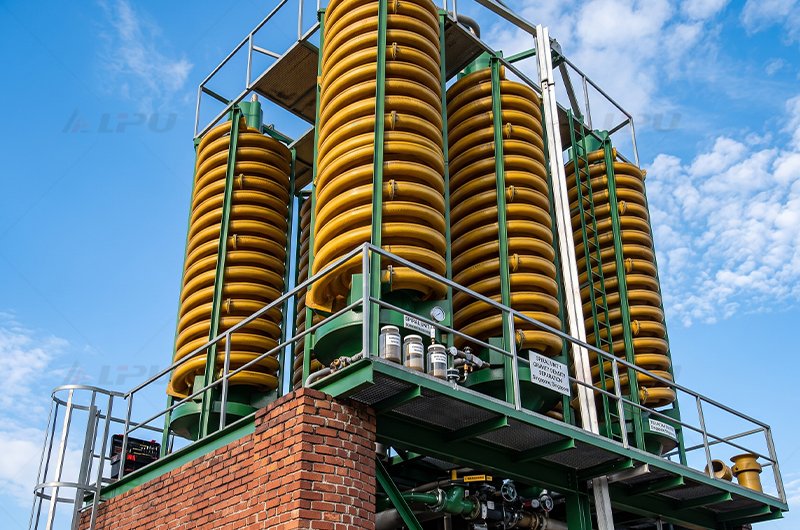
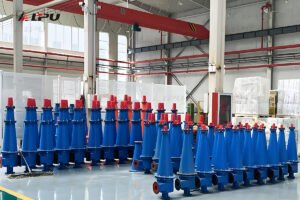
Spiral Chute Bank
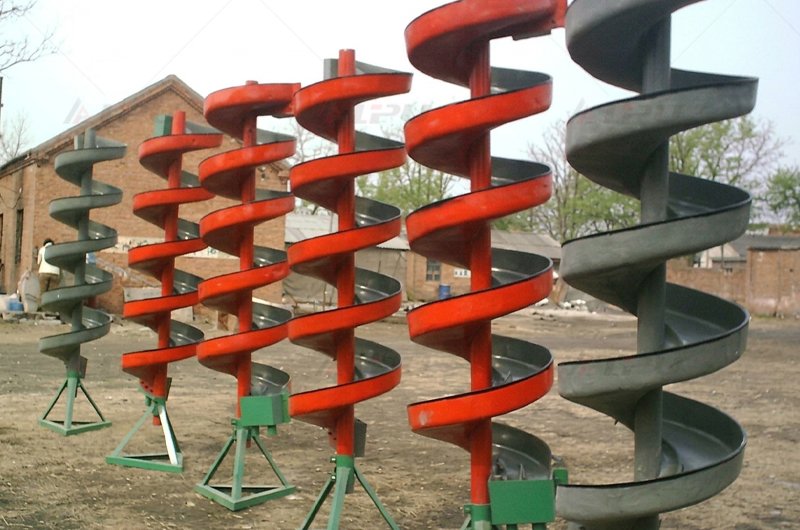
Spiral Concentrator Columns
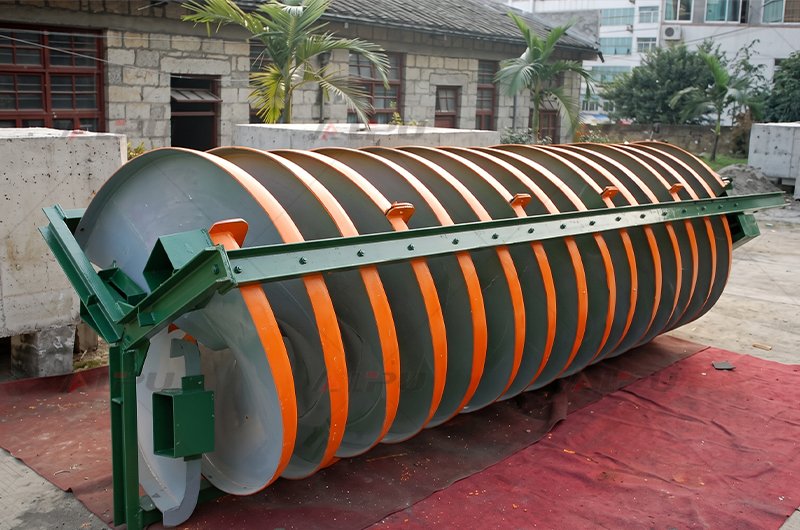
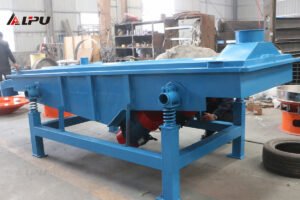
Horizontal spiral separator assembly
The equipment uses a spiral separation surface along which the slurry flows continuously from the upper feed point toward the lower discharge area. As particles move through the spiral channel, gravity, water flow, centrifugal effects and surface friction influence their movement.
Higher-density particles tend to migrate toward the inner part of the spiral, while lighter particles tend to move toward the outer region. The resulting mineral bands can then be collected separately.
Spiral chutes are particularly useful for continuous concentration of suitable fine-grained heavy minerals and mineral sands.
Feed slurry enters near the top of the spiral chute and flows downward along the inclined spiral surface. During this movement, particles are affected by gravity, water flow, centrifugal effects and friction with the separation surface.
Because particles with different densities and sizes respond differently to the flowing slurry, they gradually form separate bands along the spiral channel. Heavy particles tend to move toward the inner region, while lighter particles are carried toward the outer region.
At the lower end of the spiral, the separated streams are collected as concentrate, middlings and tailings.
Actual separation performance depends on feed particle size, mineral liberation, density difference, slurry concentration and operating conditions.
Main Components
A spiral chute mainly consists of the spiral separation trough, feed inlet, discharge section and supporting structure. The exact configuration depends on the equipment design and application.
The spiral trough provides the inclined surface where slurry flows and particles are separated. The feed section distributes the slurry onto the spiral surface, while the lower discharge area collects the separated mineral streams.
Applicable Materials for Spiral Chute
Spiral chutes are suitable for ores and mineral sands containing valuable minerals that can be concentrated through gravity separation.
Materials Suitable for Spiral Chutes
Typical materials include:
Gold ore
Chromite
Ilmenite
Zircon
Rutile
Tin ore
Tungsten minerals
Tantalum and niobium minerals
Monazite
Other heavy mineral sands
The feed should normally be prepared to a suitable particle-size range before entering the spiral chute. Depending on the ore characteristics, crushing, screening, grinding or classification may be required to improve liberation and control the feed size.
Spiral Chute Applications
Spiral chutes can be incorporated into different mineral beneficiation circuits, especially where gravity separation is suitable for concentrating heavy minerals.
Heavy Mineral Recovery
Spiral chutes are commonly used to concentrate heavy minerals from mineral sands and other suitable ore feeds.
Chromite and Ilmenite Concentration
Chromite and ilmenite can be processed by gravity separation when the feed characteristics provide a useful density difference between the valuable minerals and gangue.
Zircon, Rutile and Monazite Recovery
Spiral chutes can be used in heavy-mineral sand processing circuits to concentrate minerals such as zircon, rutile and monazite before further upgrading.
Gold, Tin and Tungsten Beneficiation
For suitable particle-size ranges and liberated minerals, spiral chutes can be incorporated into gravity concentration circuits for gold, tin and tungsten ores.
Real plant performance depends on the ore properties, feed preparation and complete process configuration.
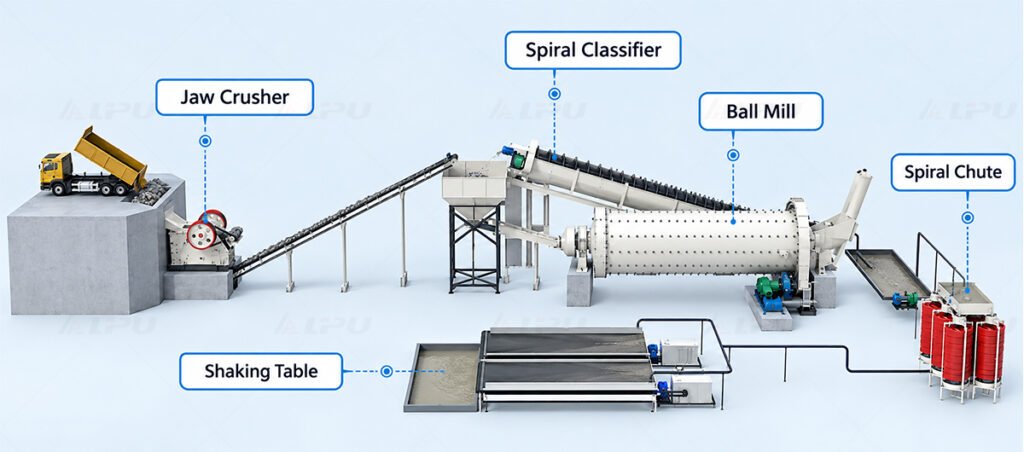
Spiral Chute in a Gravity Separation Circuit
A spiral chute is normally selected as part of a complete mineral processing circuit rather than as an isolated piece of equipment.
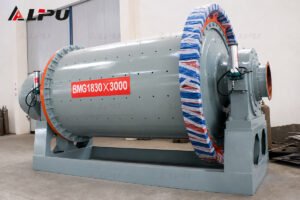
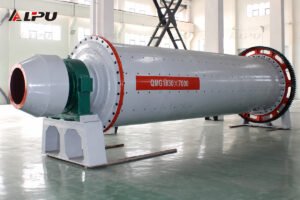
For example, a Jaw Crusher can reduce the initial feed size. When finer grinding is required for mineral liberation, a Ball Mill can provide further size reduction.
A Spiral Classifier can then help control the particle-size range before the slurry enters the gravity separation stage.
Depending on the mineral characteristics and required product quality, a Shaking Table or Magnetic Separator may be used after the spiral chute for further concentration or separation.
Spiral Chute Advantages
LIPU spiral chutes provide several practical advantages for suitable gravity separation applications:
Continuous operation: Feed and separation can proceed continuously.
Compact arrangement: Spiral units can be installed in a relatively compact area.
Simple separation mechanism: Separation relies mainly on slurry flow and particle-density differences.
Low mechanical complexity: The separation zone does not require a complex mechanical drive system.
Wide mineral applications: Suitable for many heavy minerals and mineral sands.
Easy circuit integration: Can be combined with crushing, grinding, classification, shaking tables and magnetic separators.
Separation performance depends on feed characteristics, particle size, mineral liberation, slurry conditions and overall circuit design. Equipment selection should therefore be based on the actual process requirements.
Spiral Chute Technical Parameters
LIPU currently lists the following 5LL series spiral chute models:
Model
Capacity (t/h)
Feed Size (mm)
Height (mm)
Weight (kg)
5LL-2000
7–10
2–0.04
5600
1200
5LL-1500
6–8
0.3–0.02
5230
800
5LL-1200
4–6
0.3–0.03
5230
600
5LL-900
2–3
0.3–0.03
4000
400
5LL-600
0.8–1.2
0.2–0.02
2600
150
5LL-400
0.15–0.2
0.2–0.02
1500
50
The product specifications also include parameters such as spiral diameter, pitch, pitch-to-diameter ratio, lateral slope, number of starts, feeding density, length and width.
These parameters should be evaluated together with the required capacity and feed characteristics when selecting a spiral chute.
How to Select the Right Spiral Chute
Selecting a spiral chute should start with the feed characteristics and processing requirements.
Feed particle size
Check whether the actual feed size falls within the effective range of the selected model. Oversized particles or excessive fines can affect the separation process.
Processing capacity
Compare the required processing rate with the capacity of the selected model. Larger plants may use multiple spiral units in parallel when additional capacity is required.
Mineral density difference
Gravity separation is more effective when the valuable mineral and gangue have a sufficient density difference and the valuable mineral is adequately liberated.
Feed concentration
Slurry concentration influences particle movement and separation conditions. The feed should therefore be prepared according to the requirements of the selected equipment and process.
Downstream requirements
A spiral chute may be used for rough concentration or as an intermediate separation stage. The downstream equipment should be selected according to the required concentrate grade and recovery.
For complex ores, LIPU can evaluate feed size, capacity, mineral characteristics and the complete processing circuit before recommending a suitable spiral chute configuration.
Why Choose LIPU?
LIPU provides mineral processing equipment for individual separation stages as well as complete beneficiation circuits.
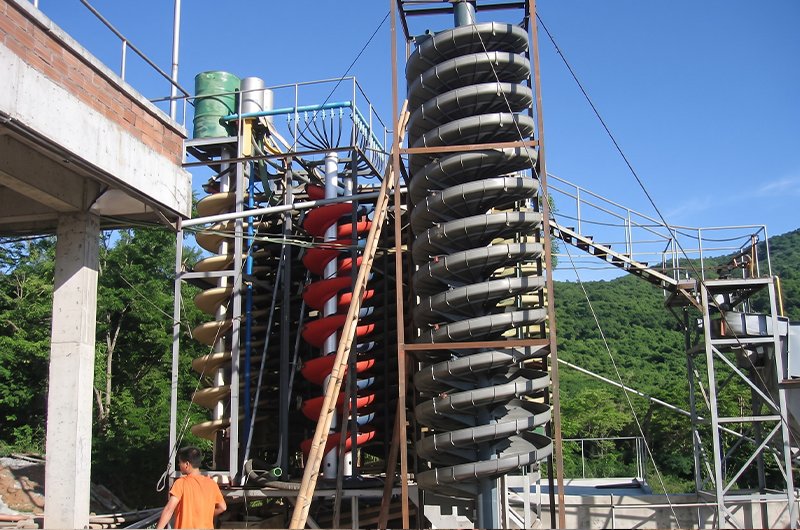
Elevated multi-turn spiral chute cluster for heavy mineral recovery in sand processing
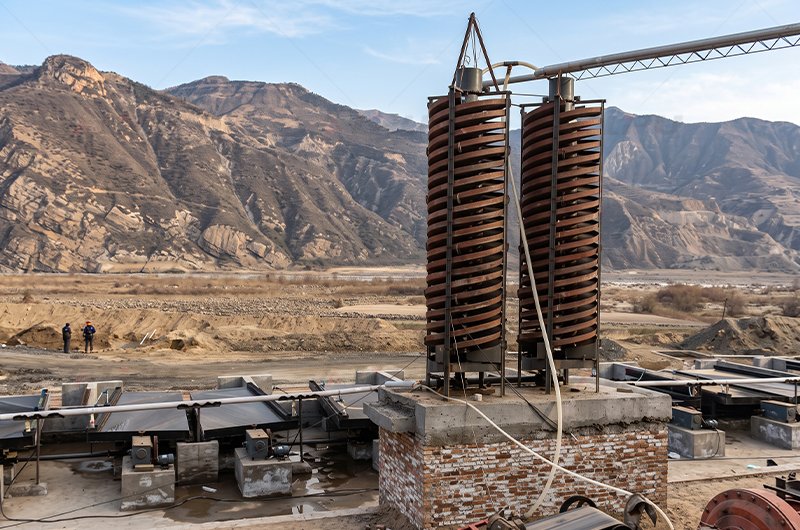
Industrial outdoor spiral chute bank operating for chromite and ilmenite concentration alongside shaking tables
Multi-stage spiral chute assembly integrated into a gravity concentration circuit for gold, tin, and tungsten beneficiation
For spiral chute projects, equipment selection can consider:
Feed particle size
Required processing capacity
Mineral density difference
Feed concentration
Mineral liberation
Separation stage
Downstream processing requirements
LIPU can also integrate spiral chutes with crushing, grinding, classification, gravity separation and magnetic separation equipment to develop a suitable mineral processing solution.
Frequently Asked Questions
What is a spiral chute used for?
A spiral chute is used for continuous gravity separation of heavy minerals from lighter gangue, particularly in suitable fine-grained ore and mineral-sand applications.
What materials can a spiral chute separate?
Typical materials include gold ore, chromite, ilmenite, zircon, rutile, tin, tungsten, tantalum-niobium minerals and monazite.
What is the feed size of a spiral chute?
The LIPU 5LL series covers different feed-size ranges, from approximately 2 mm down to 0.02 mm, depending on the model.
What is the capacity of a spiral chute?
The listed 5LL models have capacities from approximately 0.15 to 10 t/h, depending on the model and operating conditions.
How do I choose the right spiral chute model?
Selection should consider feed size, required capacity, slurry conditions, mineral density difference, liberation characteristics and the position of the spiral chute within the beneficiation circuit.
LET US REACH YOUNeed detailed customization and latest price? Chat online or leave message below!
How we use cookies
This Cookie Privacy Policy statement explains how Zoneding Machine (hereinafter referred to as "we", "our", or "this website") uses cookies and similar technologies (collectively referred to as "cookies") to identify you when you visit our website lepuu.com. It explains what these technologies are, why we use them, and your rights to control our use of them.
Privacy Policy
Leave a Message
We will reply to you within 24 hours
Hello, I am Lipu Heavy Industry, what can we do for you please?